
The Earth's Early Atmosphere:
Theories suggest that the Earth's original atmosphere (4.6 billion years ago) was very different from what it is today:
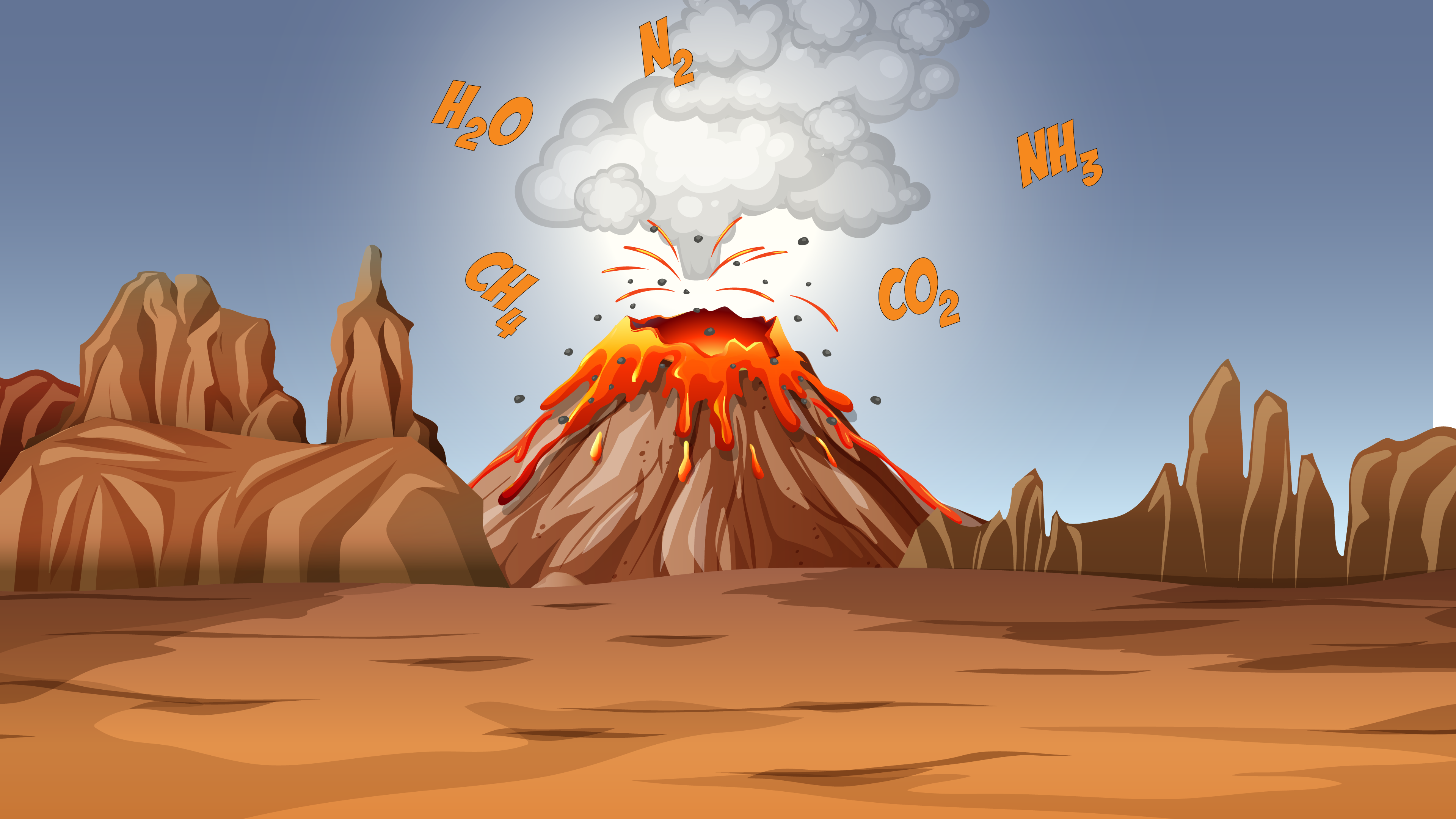
Volcanic Contributions:
- For the first billion years, the Earth was molten, and its atmosphere was formed from the gases given off by VOLCANOES. These gases likely included water vapor (H₂O), Carbon Dioxide (CO₂), Methane (CH₄), Ammonia (NH₃), and Nitrogen (N₂).
Ocean Formation and CO₂ Absorption:
- As the planet cooled, water vapour CONDENSED to form the OCEANS, which began ABSORBING CO₂. They also helped the formation of CARBONATE rocks, which created SEDIMENTS. This led to a REDUCTION in CO₂ levels in the atmosphere.
Early Atmospheric Conditions:
- Before life began, the Earth's atmosphere might have been similar to the atmospheres of Mars or Venus today — consisting of alot of Carbon Dioxide, with little to no Oxygen.
Nitrogen Accumulation:
- Nitrogen, released by volcanic activity, gradually built up in the atmosphere over time because it is relatively INERT (unreactive) and does not easily react to form new compounds.
Theories about what was in the Earth’s early atmosphere and how the atmosphere was formed have changed and developed over time. Evidence for the early atmosphere is limited because of the time scale of 4.6 BILLION YEARS.