
FRACTIONAL DISTILLATION OF CRUDE OIL
FRACTIONAL DISTILLATION is the method used to separate the MIXTURE OF HYDROCARBONS in crude oil.
The process includes:
HEATING AND VAPORISATION
- Crude oil is HEATED until most hydrocarbons turn into GAS.
- These gases enter a FRACTIONATING COLUMN where there's a TEMPERATURE GRADIENT (hot at the bottom, cooler as you go up).
SEPARATION BY BOILING POINTS
- LONGER HYDROCARBONS with HIGHER boiling points CONDENSE back into liquids at the LOWER part of the column.
- SHORTER HYDROCARBONS with LOWER boiling points travel further up and condense at higher levels.
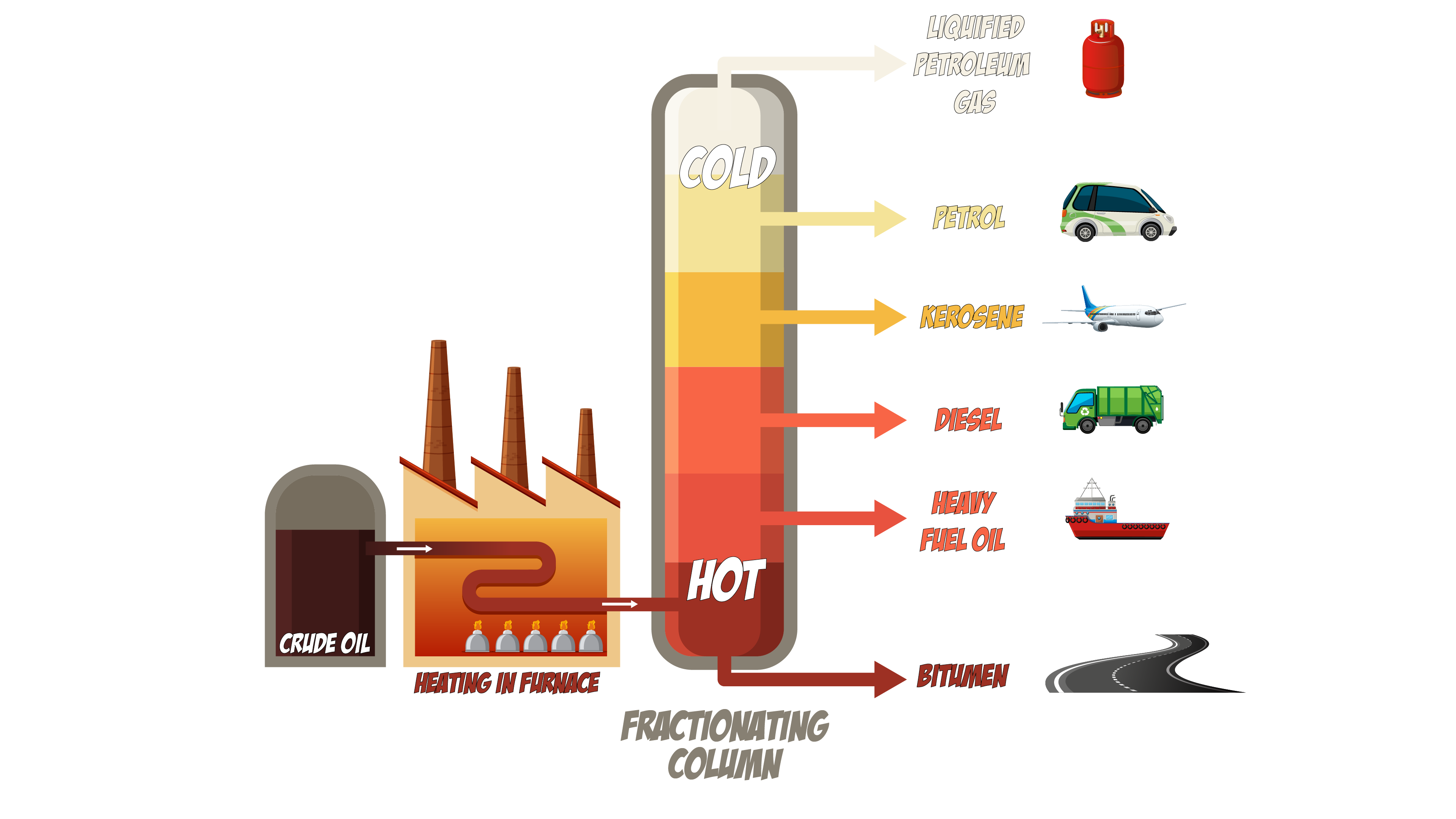
- The different hydrocarbon fractions are collected at various levels, each with a similar boiling points and HYDROCARBON LENGTH.
PRODUCTS FROM DISTILLATION
- The FRACTIONS produced from the fractional distillation include LPG, Petrol, Kerosene, Diesel, Heavy Fuel Oil and Bitumen.
- The fractions can then be processed to produce fuels and feedstock for the PETROCHEMICAL INDUSTRY.
- Many useful materials on which modern life depends on are produced by the petrochemical industry, such as SOLVENTS, LUBRICANTS, POLYMERS and DETERGENTS.