
Calculating Rate of Reaction
The RATE of a reaction tells you how FAST the reaction occurs and can be determined by two factors:
- The amount of REACTANTS USED UP in a given time.
- The amount of PRODUCTS FORMED in a given time.
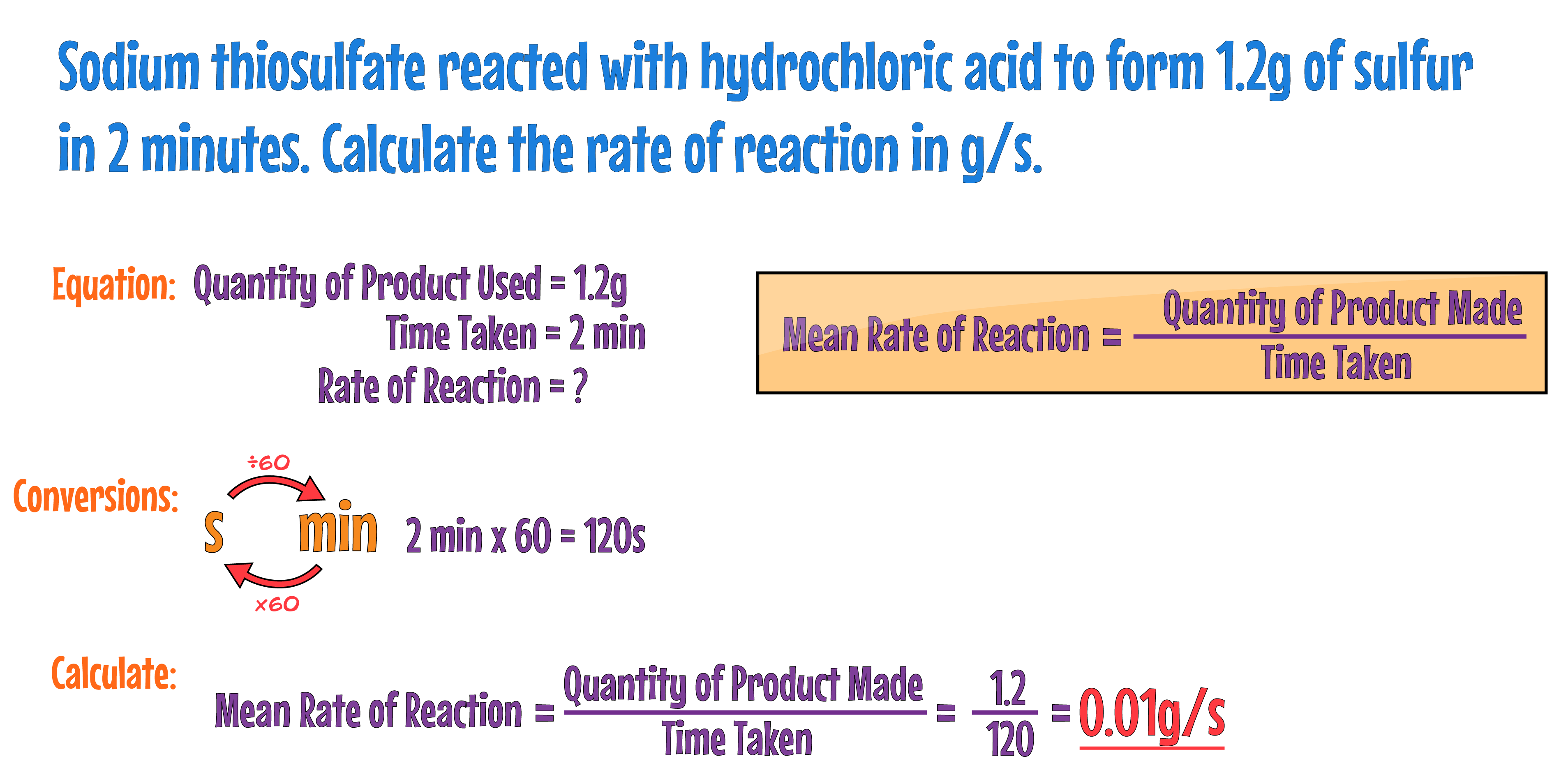
You can find the rate of a reaction by using the following equations:


The UNITS of rate of reaction are usually given in:
- GRAMS PER SECOND (g/s)
- CENTIMETRES CUBED PER SECOND (cm³/s)
- MOLES PER SECOND (mol/s)
Here is an example of a calculation:
RATE GRAPHS
Graphs of "reactants used up" or "products formed" can show how the rate changes throughout a reaction. Generally these graphs would look like this:
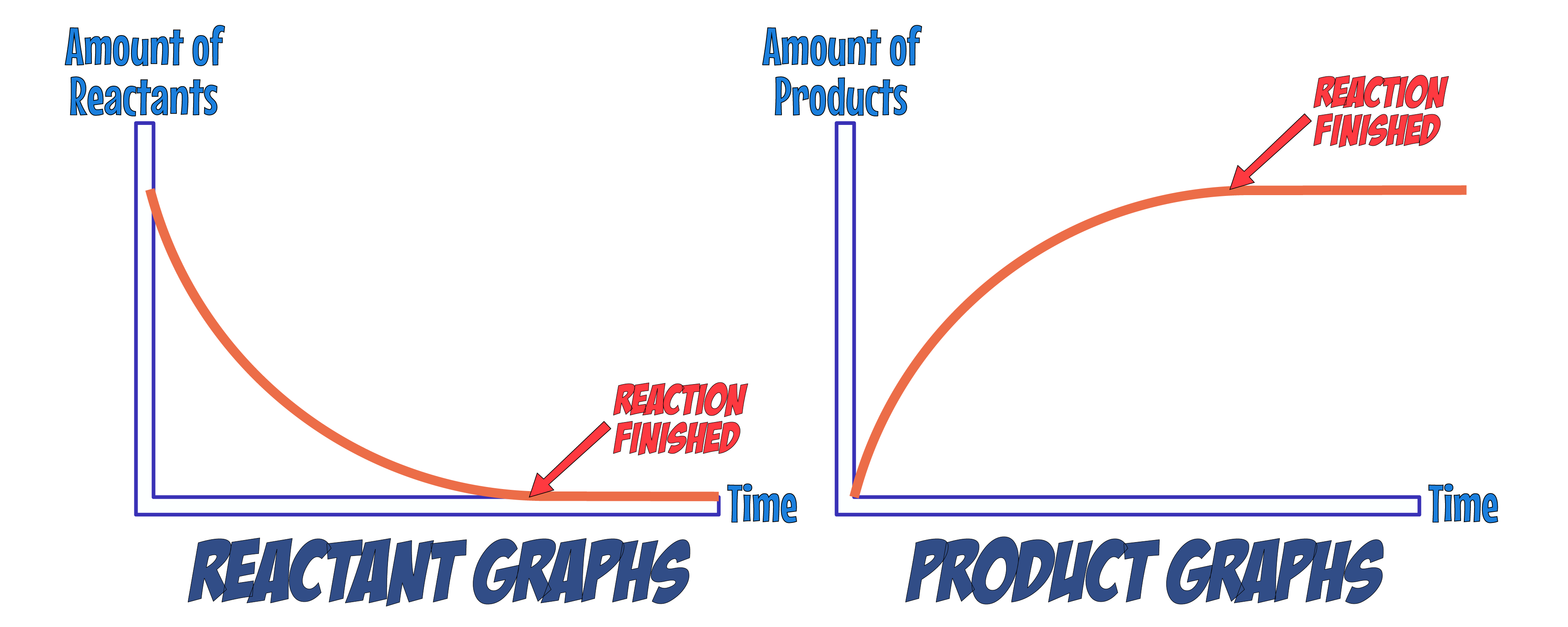
The rate of reaction is represented by the GRADIENT (steepness) of the line.
The STEEPER the line, the FASTER the rate of reaction.
Both graphs are the STEEPEST at the start, showing that the rate is the FASTEST when the reaction first begins.
The GRADIENT DECREASES as the reaction goes on because the reactant particles get USED UP.
When the line becomes FLAT the reaction is COMPLETE.
GRADIENTS
You can work out the GRADIENT of a line by dividing the 'change in y' value by the 'change in x' value.

Straight Lines
If the line is STRAIGHT, you can pick TWO POINTS and draw a TRIANGLE from them. Then divide the CHANGE IN Y (vertical length) by the CHANGE IN X (horizontal length).
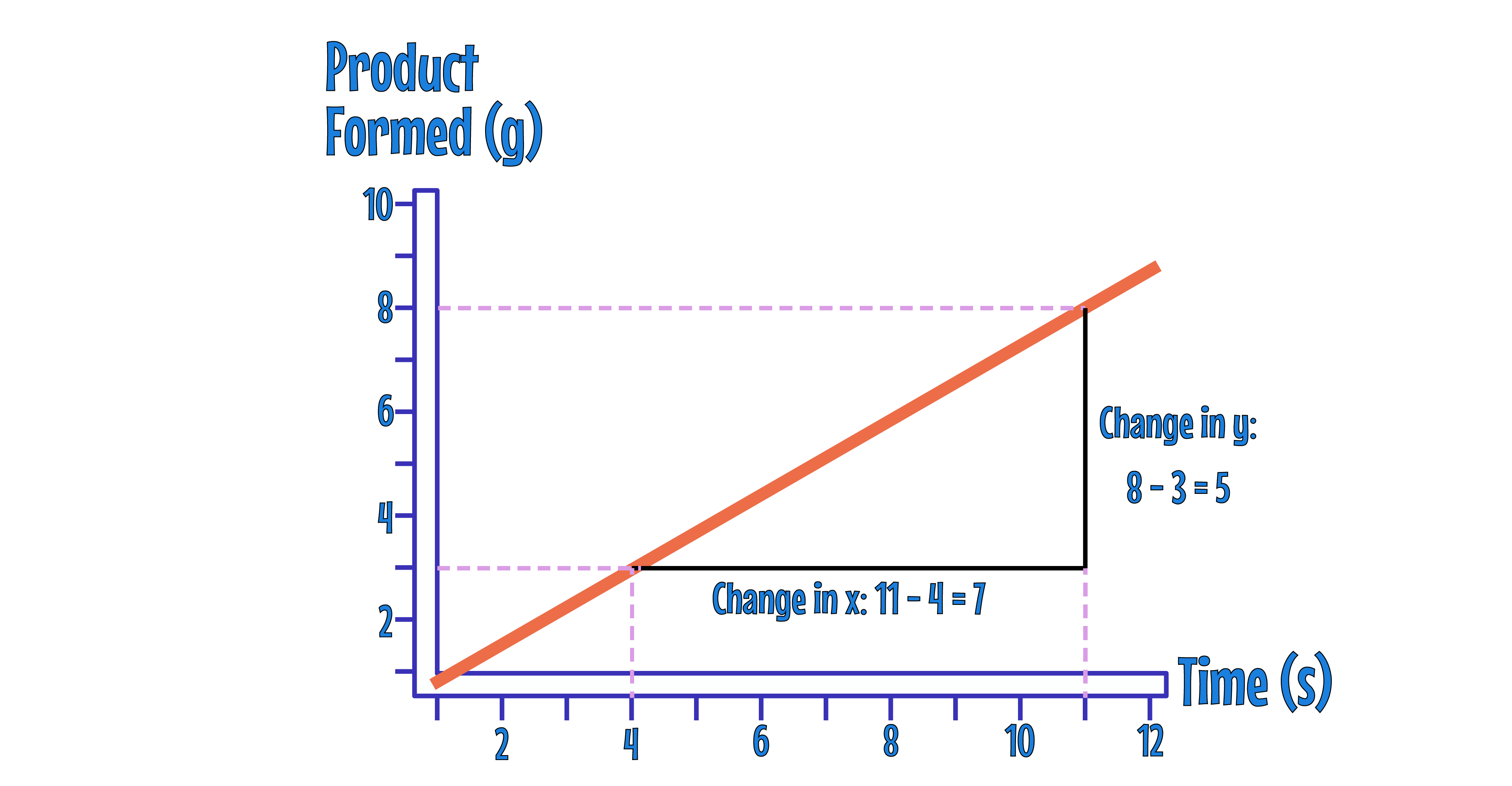
In this example, the rate would be calculated as 5/7 which gives a rate of 0.71 g/s.
Curved Lines
A curved line is one where the GRADIENT CHANGES.
You can work out the rate at a particular time by drawing a TANGENT.
A TANGENT is a line which touches the curve at ONE POINT and has the SAME GRADIENT as that point.
For example, if you wanted to find the rate of reaction after 3s, you would draw your tangent so it touches the curve at 3s.
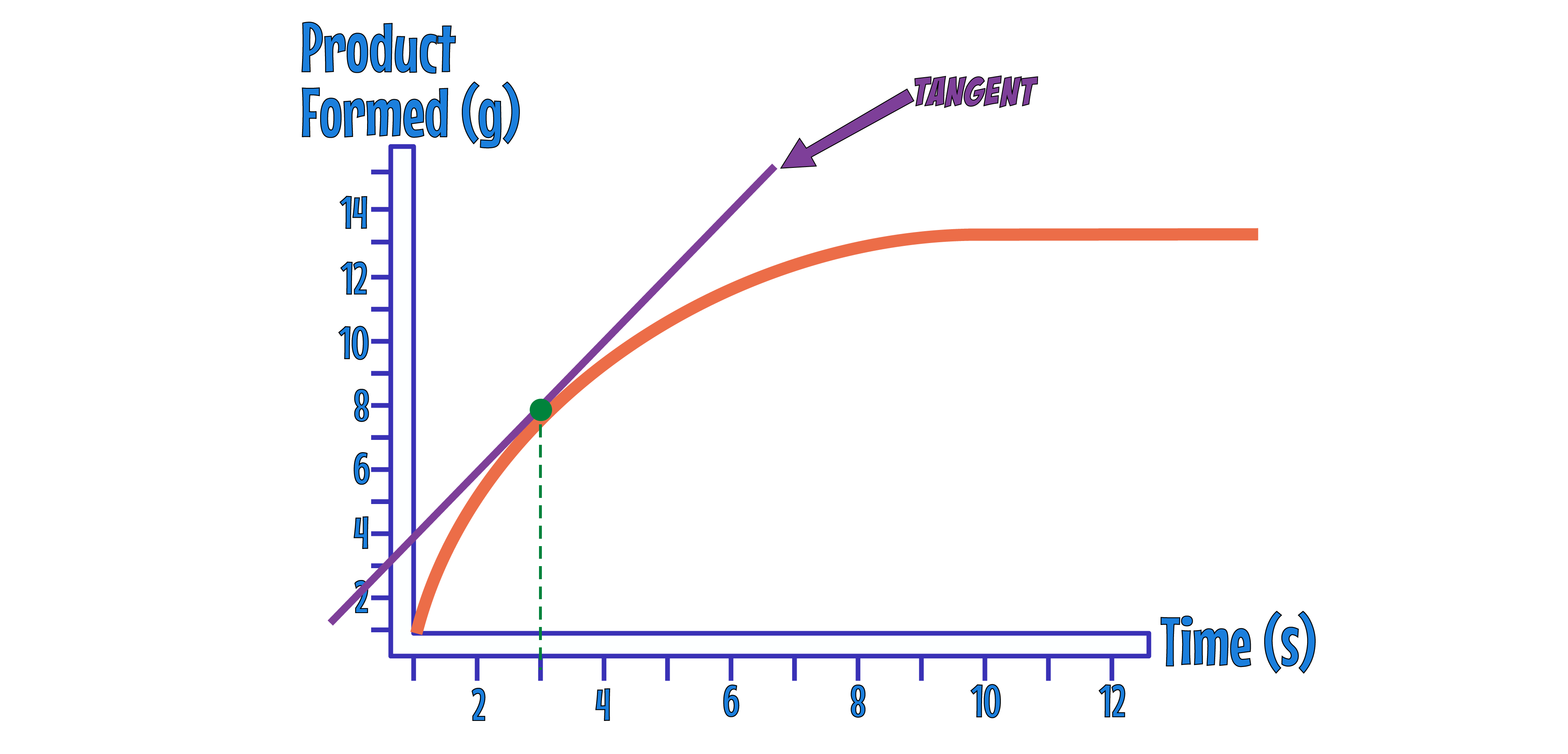
Now you can find the GRADIENT by drawing a triangle and finding the 'change in y' and the 'change in x'.
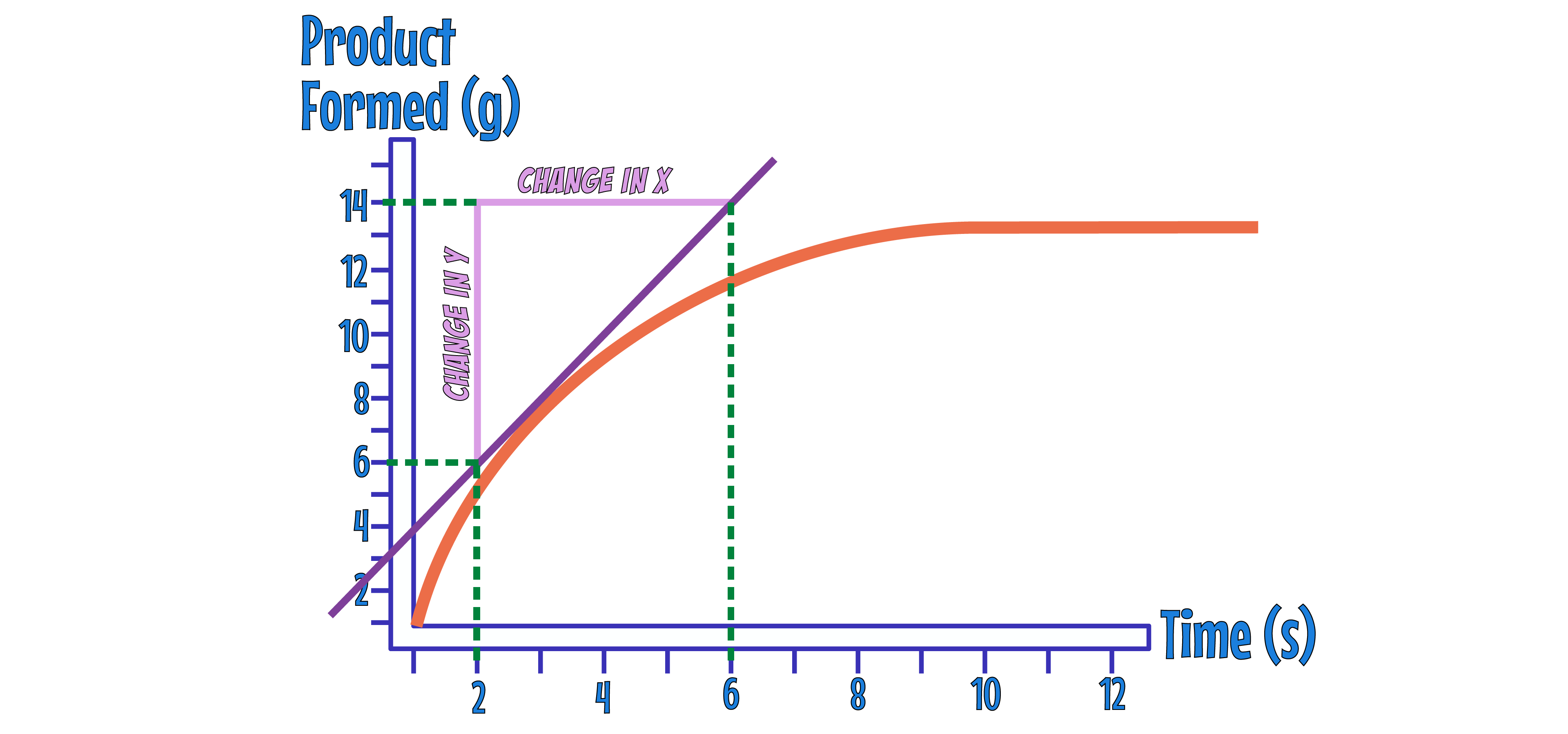
Change in y = 14 – 6 = 8
Change in x = 6 – 2 = 4
Gradient = 8/4 = 2 g/s
The rate of the reaction at 3s is 2g/s.