
Fuel Cells
FUEL CELLS produce electricity like CHEMICAL CELLS, but the way they do it is DIFFERENT.
FUEL CELLS are supplied by an EXTERNAL supply of FUEL (like hydrogen) AND oxygen or air. The fuel is OXIDISED electrochemically with the fuel cell to produce a potential difference (voltage).
HYDROGEN FUEL CELLS are a common example of a fuel cell. They have TWO electrodes:
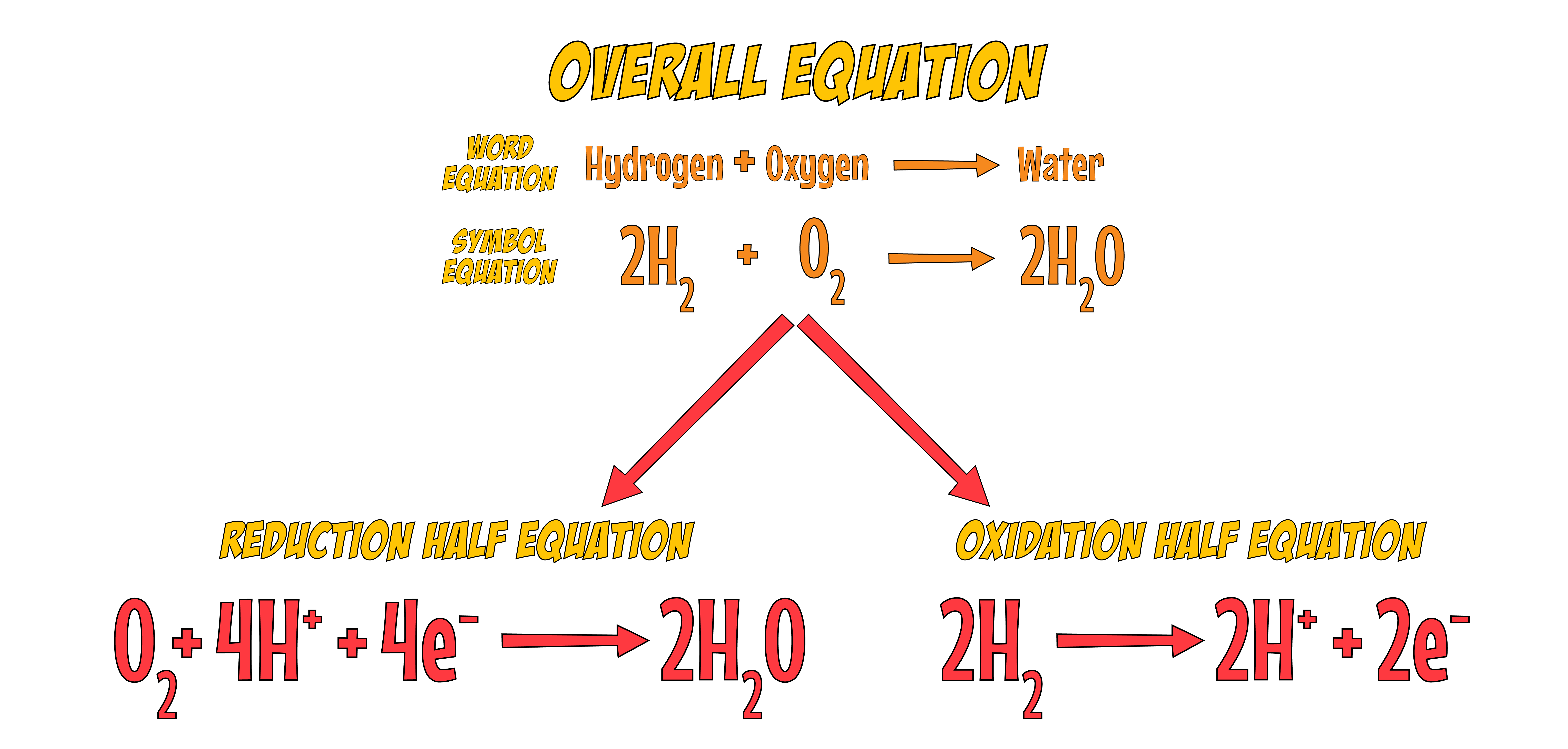
- At the ANODE: HYDROGEN is OXIDISED and LOSES ELECTRONS to produce H+ ions.
- At the CATHODE: OXYGEN is REDUCED and GAINS ELECTRONS. They then react with H+ ions to make WATER.
The OVERALL REACTION is HYDROGEN reacting with OXYGEN in an OXIDATION reaction to produce WATER.
HYDROGEN FUEL CELLS are a good ALTERNATIVE to RECHARGEABLE CELLS AND BATTERIES this is because:
- They DON'T release TOXIC chemicals when disposed of.
- They are FASTER to refuel when compared to CHARGING a battery.
- In CARS, they allow them to TRAVEL FURTHER before refuelling (when compared to recharging an ELECTRIC CAR)
However HYDROGEN-FUEL CELLS include some disadvantages:
- Hydrogen is made from FOSSIL FUELS which are NON-RENEWABLE.
- Hydrogen is DIFFICULT to store.
- Hydrogen is EXPLOSIVE.