
Cells and Batteries
CHEMICAL CELLS generate ELECTRICITY through chemical reactions between different metals and an ELECTROLYTE.
SIMPLE CHEMICAL CELLS are created by connecting two DIFFERENT metal ELECTRODES in an ELECTROLYTE.
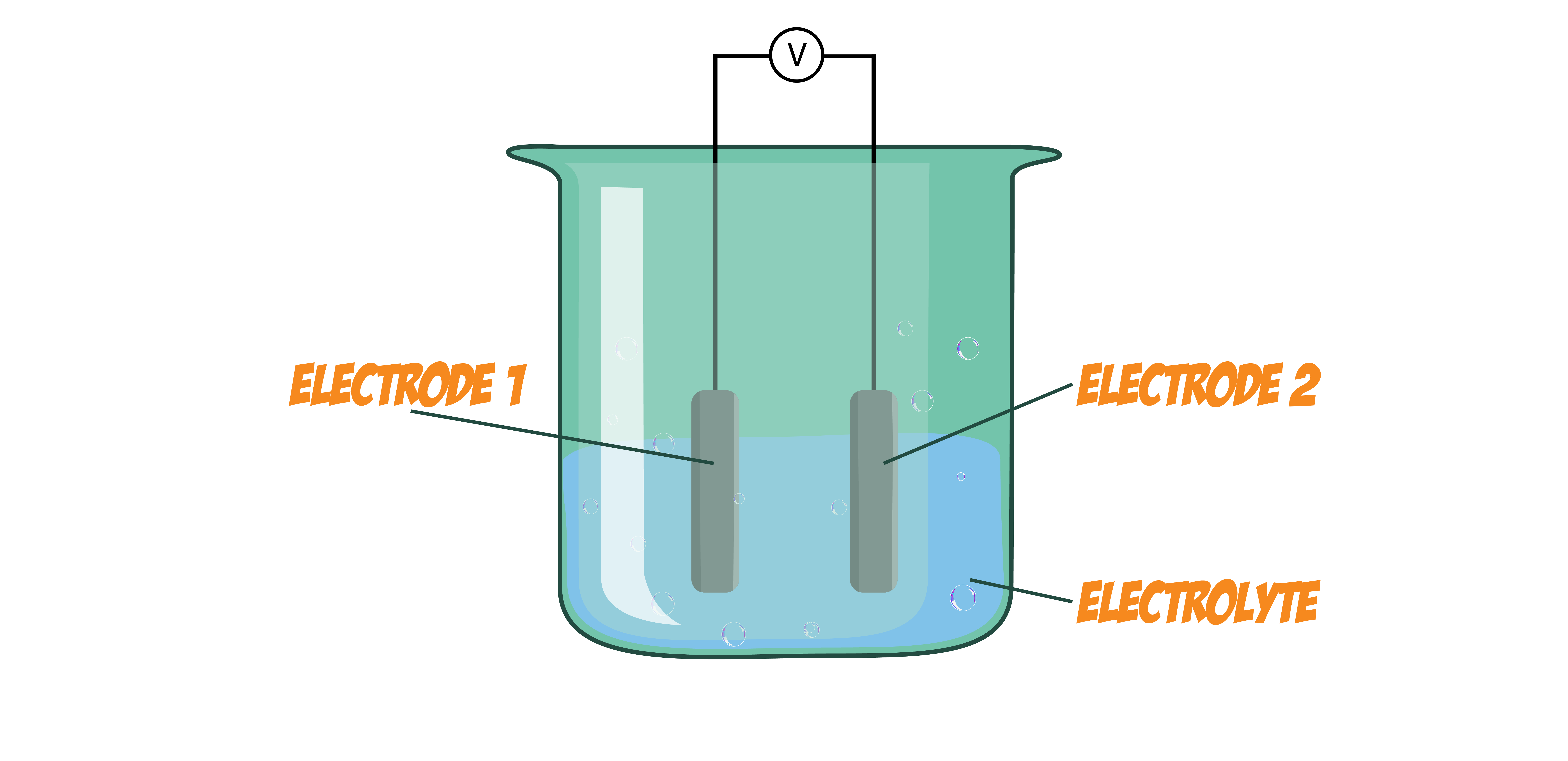
The set up looks similar to ELECTROLYSIS, but they have OPPOSITE FUNCTIONS:
ELECTROLYSIS: USES electricity to PRODUCE a chemical reaction.
FUEL CELLS: USES a chemical reaction to PRODUCE electricity.
The VOLTAGE of the electricity produced by a cell VARIES based on the ELECTRODES and the ELECTROLYTE used.
The BIGGER the DIFFERENCE in REACTIVITY of the ELECTRODES, the LARGER the VOLTAGE produced by the cell.

Using the table above, you can see that
- MAGNESIUM is the MOST reactive as it has the HIGHEST voltage.
- SILVER is the LEAST reactive as it has the LOWEST voltage.
- This means that using a MAGNESIUM and SILVER electrode in a chemical cell will produce the LARGEST possible voltage.
The IONS in the electrolyte also affect the size of the voltage, differents METAL IONS react with the metal electrodes differently. Pure water will NOT be a suitable electrolyte as it does NOT have any ions in it.
Batteries
BATTERIES are composed of multiple CELLS CONNECTED in SERIES to produce a GREATER VOLTAGE.
eg. if you had FOUR 3V chemical cells connected in series, you would produce a BATTERY with a voltage of 12V (4 x 3 =12).
NON-RECHARGEABLE CELLS stop working when when the REACTANTS are USED UP which causes the CHEMICAL REACTION to stop. ALKALINE BATTERIES are a common example of non-rechargeable batteries.
RECHARGEABLE CELLS AND BATTERIES can be RECHARGED because the chemical reaction are REVERSED when an external electrical CURRENT is supplied.