Energy Changes in Reactions
During any reaction there are TWO processes that occur:
1. Bond Breaking
2. Bond Forming
Let’s look at the reaction between Hydrogen and Chlorine as an example:
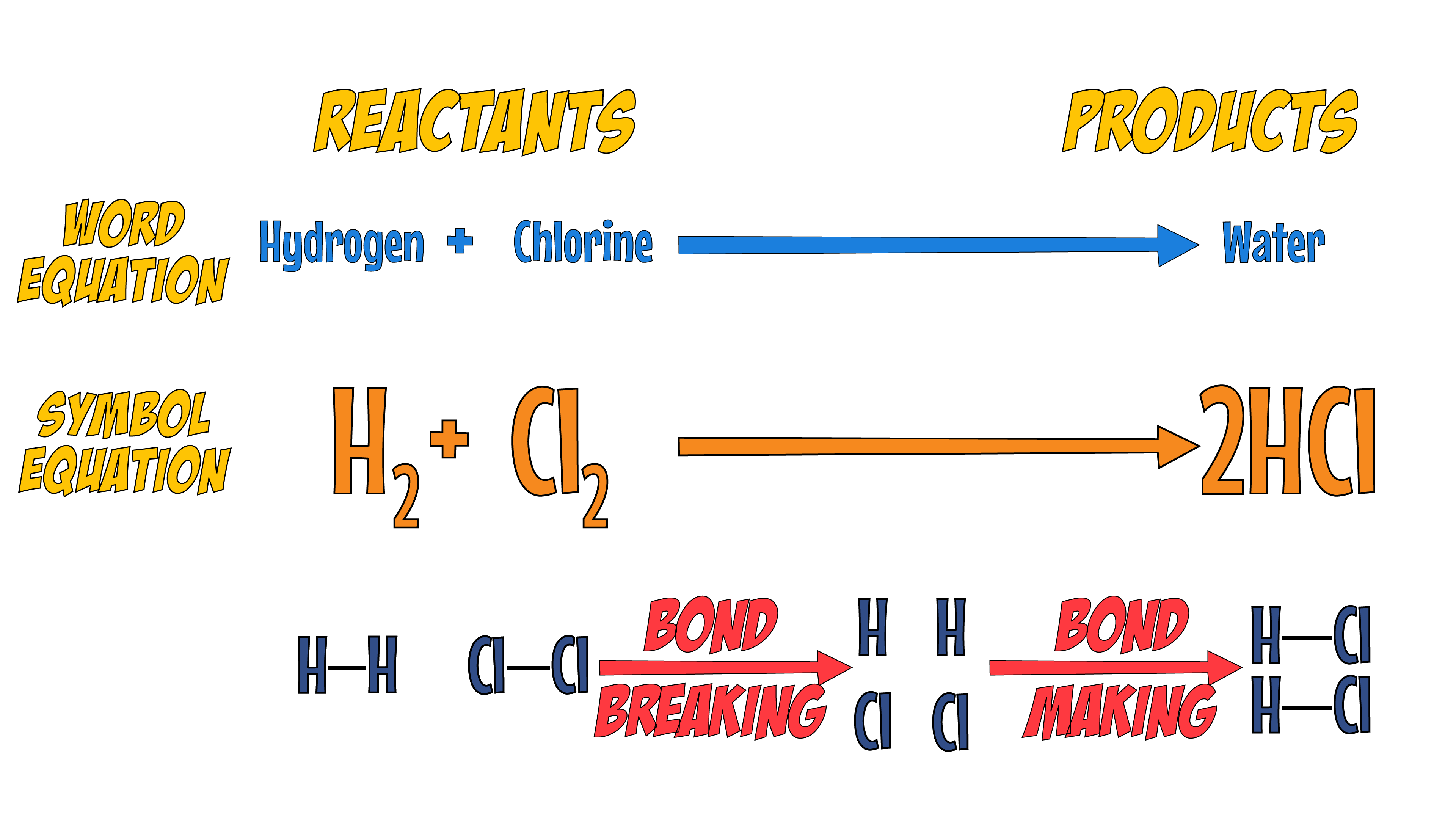
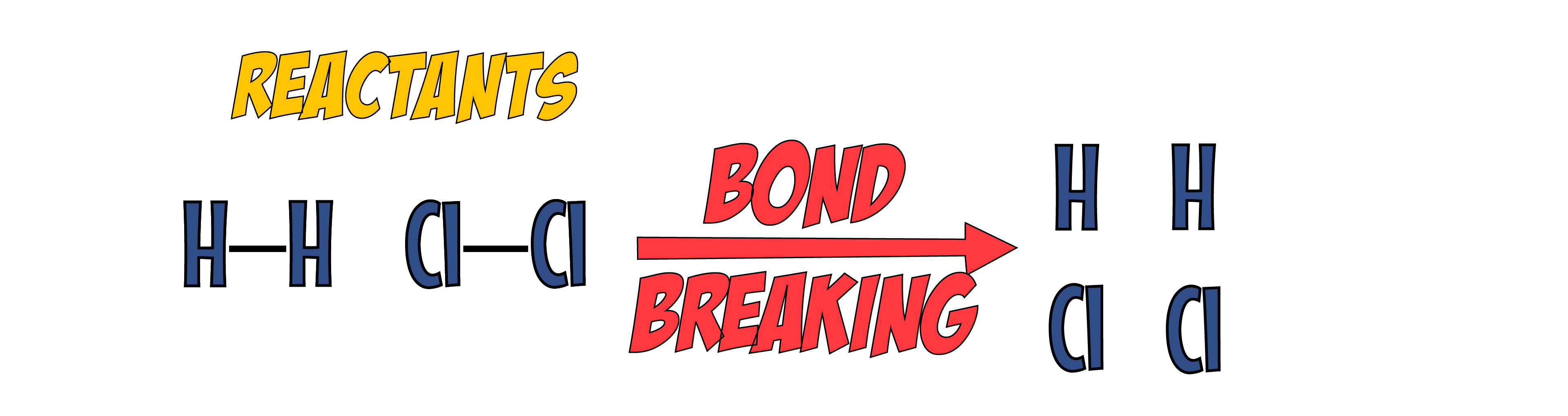
BOND BREAKING:
This is where all the bonds in the reactants are BROKEN.
This process TAKES IN ENERGY and is ENDOTHERMIC.
BOND FORMING:
The atoms rearrange themselves and new BONDS ARE FORMED to create the products.
This process RELEASES ENERGY, making it an EXOTHERMIC process.

EXOTHERMIC AND ENDOTHERMIC REACTIONS
The amount of energy RELEASED and TAKEN in from these two processes governs whether a reaction is EXOTHERMIC or ENDOTHERMIC:
- In an EXOTHERMIC reaction, more ENERGY is RELEASED during BOND FORMING than is TAKEN IN in BOND BREAKING.
-
In an ENDOTHERMIC reaction, more energy is TAKEN IN during BOND BREAKING than is RELEASED during BOND FORMING.
Bond Energy Calculations
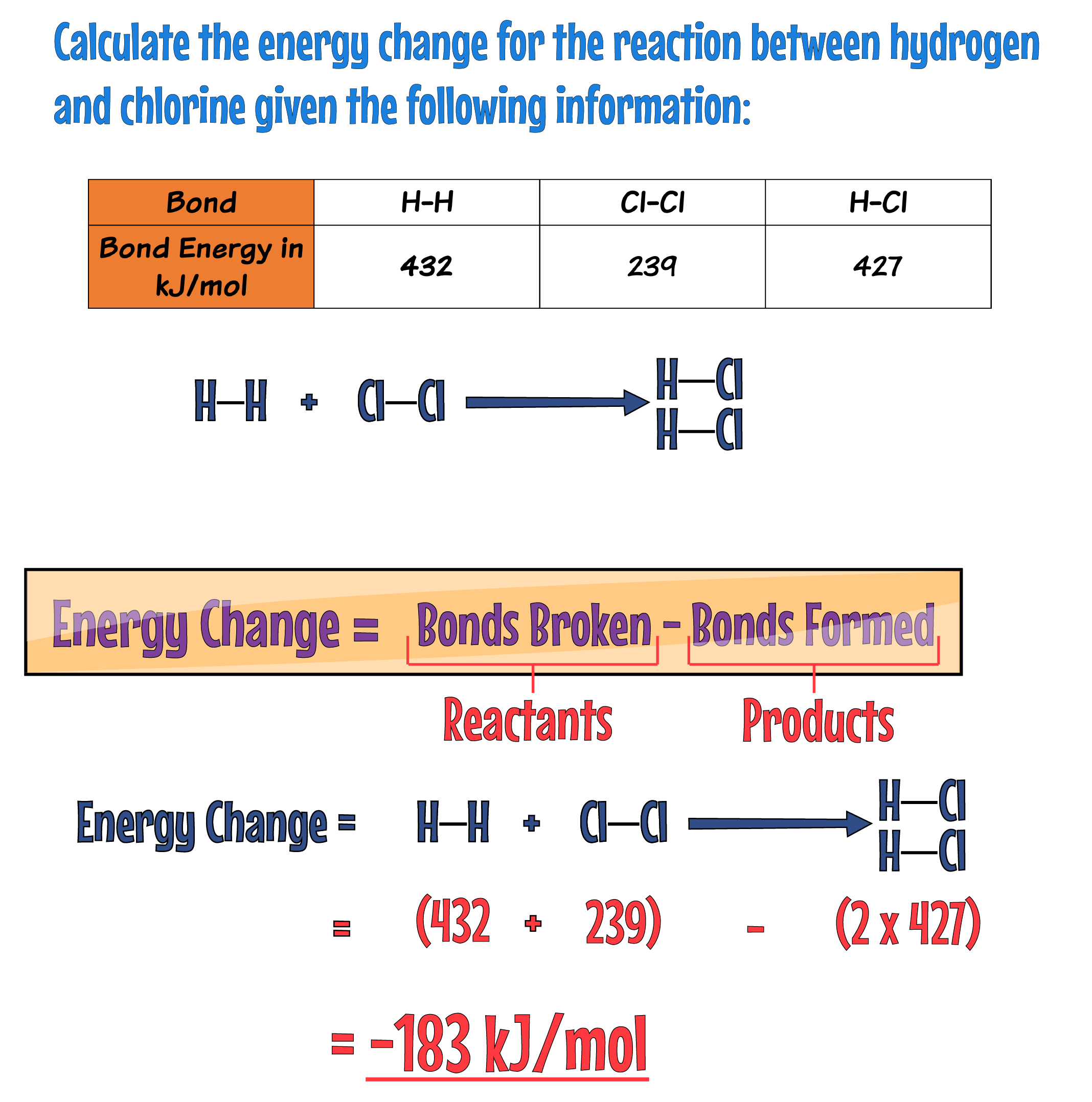
Using these calculations, you can work out the ENERGY CHANGE in a reaction by using BOND ENERGY values.
BOND ENERGIES tell you the amount of energy needed to break a specific bond. These are measured in kJ/mol and are always given to you in exams.
To calculate the ENERGY CHANGE, you need to use the following equation:

Let's try to answer the following question: