HALF EQUATIONS
To write ELECTROLYSIS HALF EQUATIONS, you can follow these steps:
Step 1:
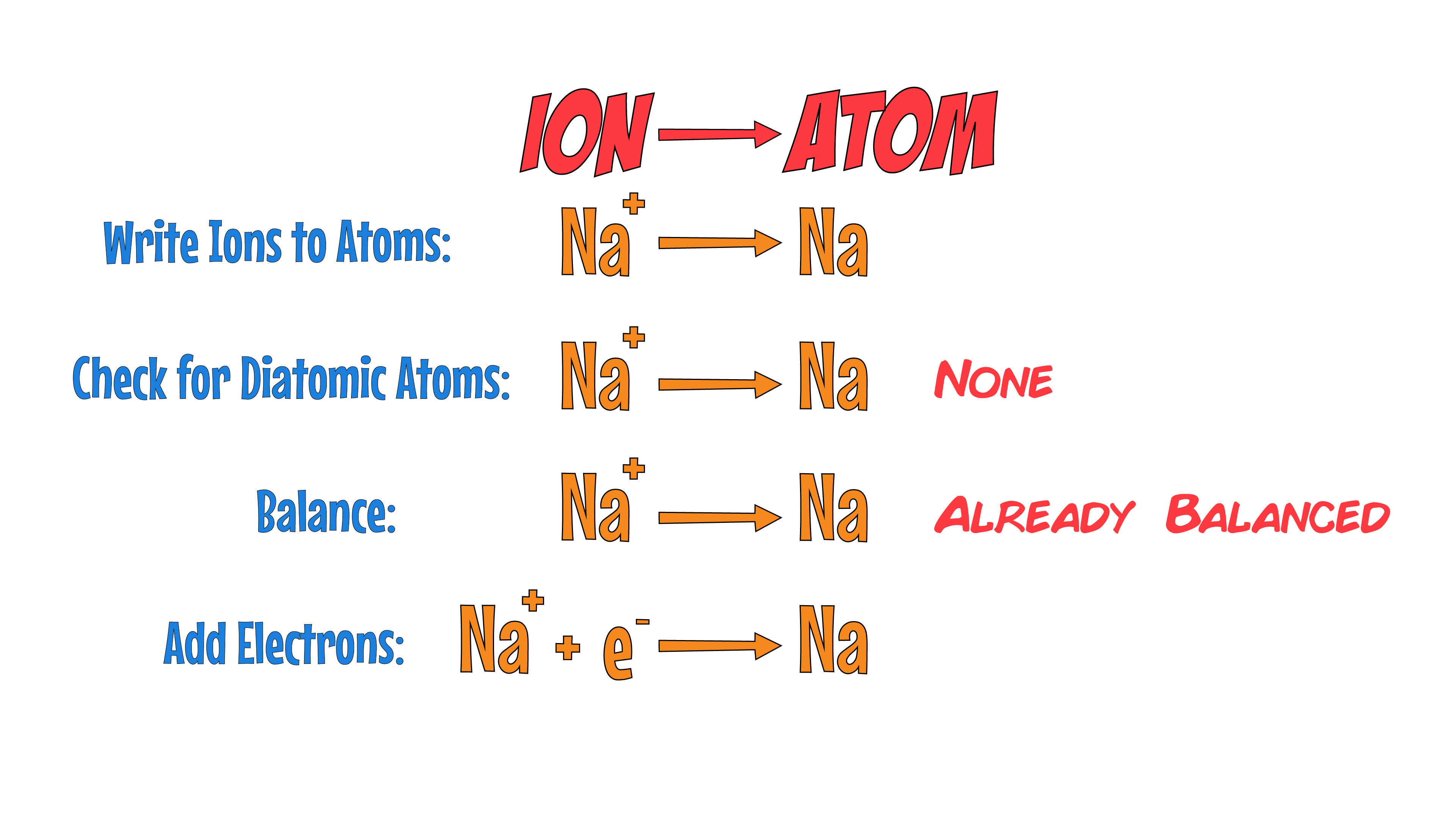
Write the ION of the element on the LEFT, and the ATOM of the element on the RIGHT.

Step 2:
Check if any of the elements are DIATOMIC (exist as two atoms). Here is a list of ALL the DIATOMIC elements you need to know.

Chlorine is part of the list so it needs to be changed to Cl2.

Step 3:
BALANCE the equation to make sure you have the same numbers on the left and right.

Step 4:
Add ELECTRONS to make the charges in the equation balanced.
- For ANODES, electrons go on the RIGHT.
- For CATHODES, electrons go on the LEFT.
In this example, each chlorine atom LOSES an electron so there are TWO electrons on the right. This gives the final ANODE half equation as:

We can do the same for the CATHODE to find the half equation for Sodium.