
Strong and Weak Acids
HOW ACIDS WORK
ACIDS are solutions that release HYDROGEN IONS (H⁺) in water.
They do this because they IONISE when dissolved in water. This means the molecules of the acid BREAK UP into their IONS.
For example:

STRONG vs. WEAK ACIDS
STRONG ACIDS:
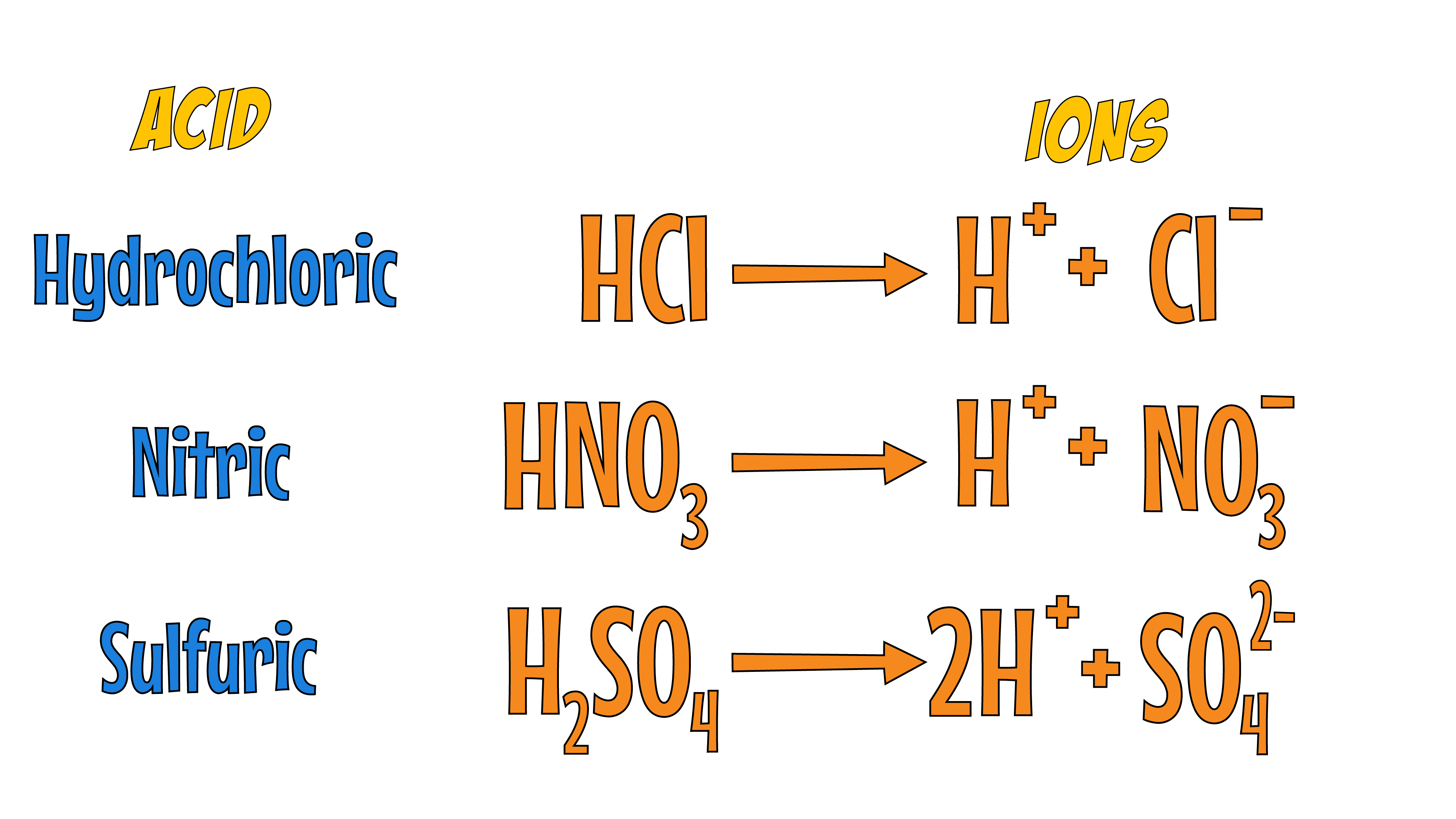
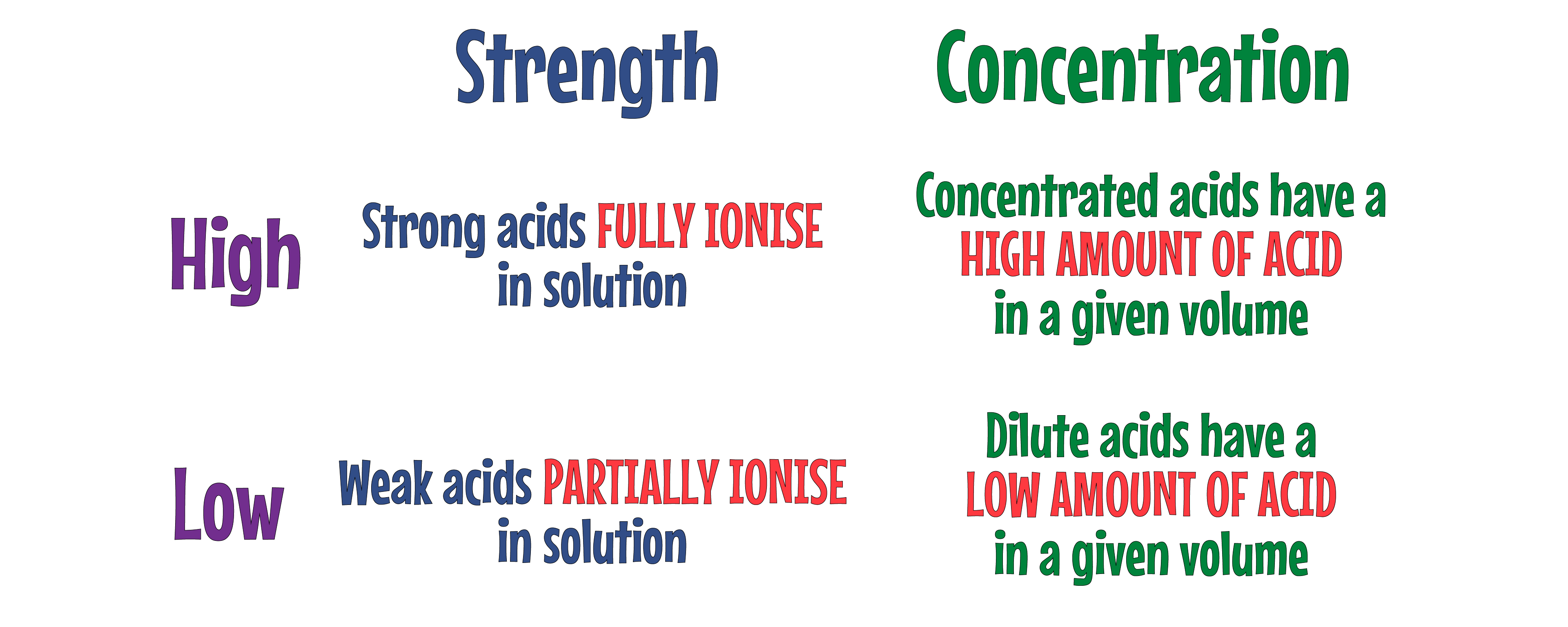
These are acids that FULLY IONISE in water, meaning ALL of the acid molecules break up into IONS.
This means ALL their available H+ ions are released into the solution.
This complete ionisation leads to a HIGHER CONCENTRATION OF H⁺ IONS, which generally results in a LOWER pH.
Here are some common STRONG ACIDS and their ionising equations:
WEAK ACIDS:
These acids PARTIALLY IONISE in water, which means only SOME of the acid molecules break up into their ions.
The incomplete release of H⁺ ions results in a LOWER CONCENTRATION OF H+ IONS, which generally results in a HIGHER pH compared to strong acids of the same concentration.
Examples of WEAK ACIDS include, ETHANOIC ACID, CITRIC ACID and CARBONIC ACID.
RELATIONSHIP BETWEEN pH AND H⁺ ION CONCENTRATION
The MORE H+ IONS there are in a give volume of solution the MORE ACIDIC the solution is.
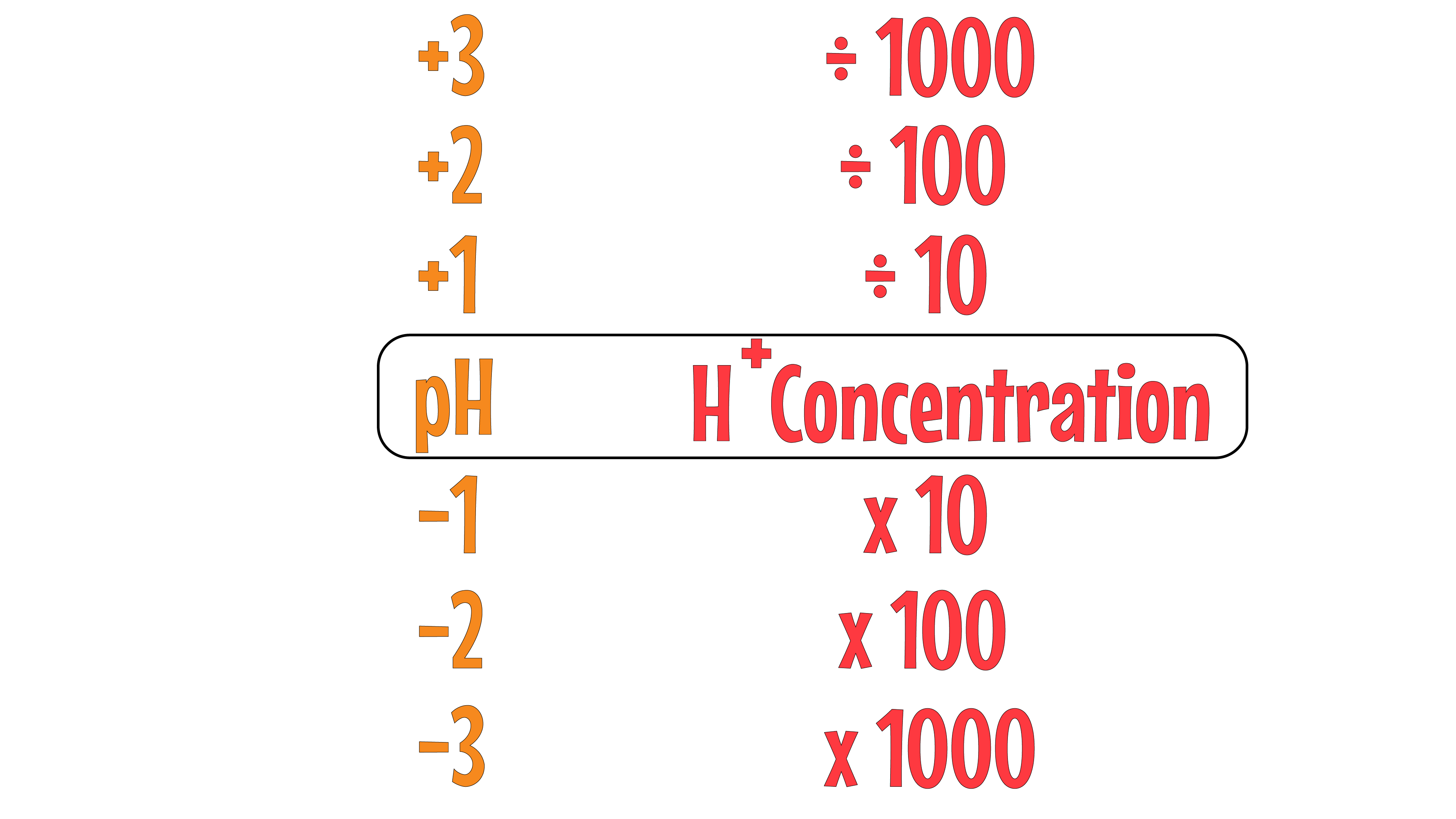
This means the HIGHER the H+ CONCENTRATION of an acid, the LOWER the pH. The relationship between the two is:
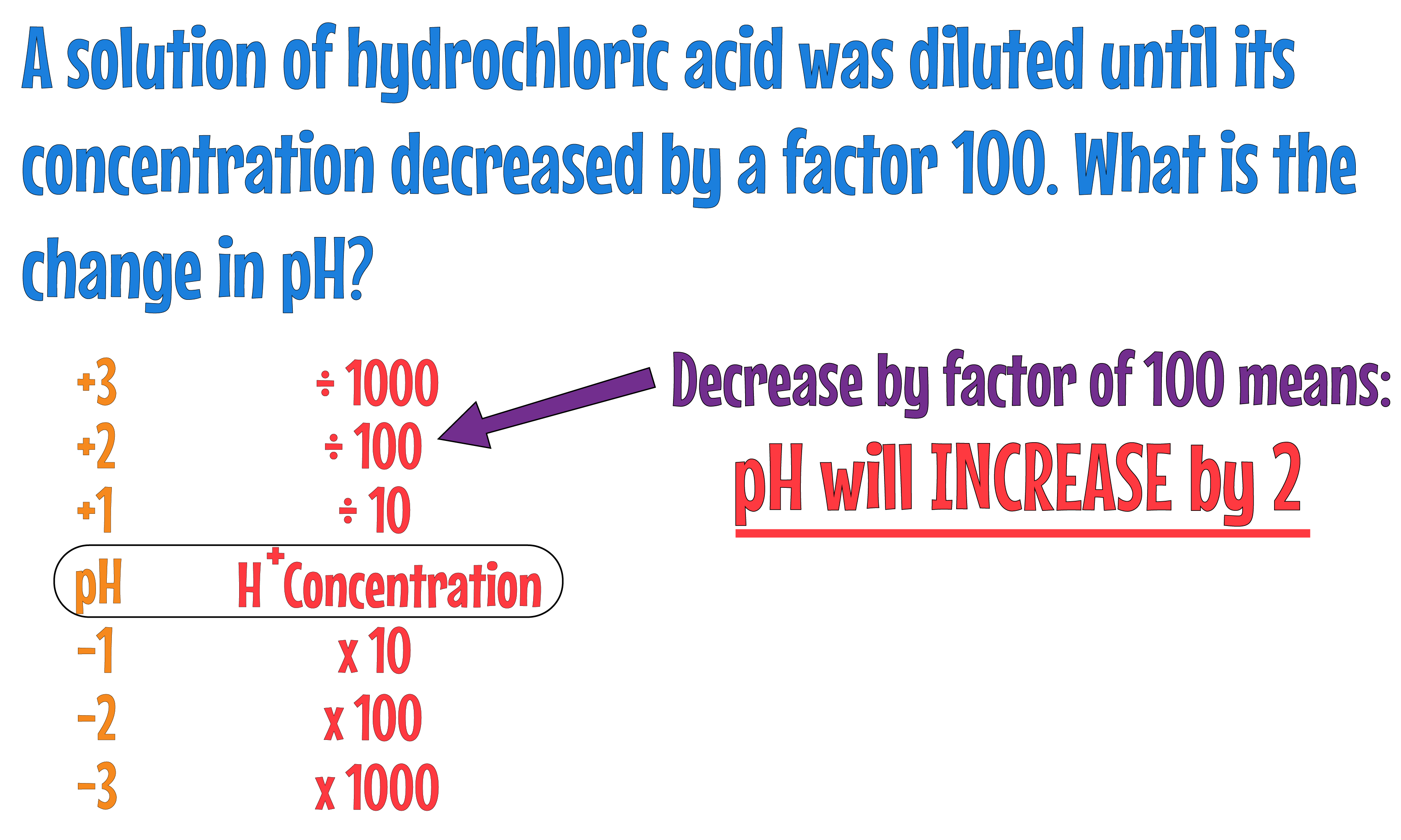
If you INCREASE the H⁺ ION CONCENTRATION by a factor of 10 TIMES, the pH will DECREASE by 1.
You can extend this relationship to bigger changes in pH and H+ concentrations:
Let's try an example using this relationship:
ACID STRENGTH vs CONCENTRATION
Don’t get confused between the strength of an acid and its concentration:
- The CONCENTRATION of an acid tells you the NUMBER OF ACID MOLECULES in a given volume.
- The STRENGTH refers to the acid's degree of ionisation in water (how easily it breaks up into its ions).
Concentration and strength are INDEPENDENT of each other, meaning you can have:
- A STRONG, CONCENTRATED Acid.
- A STRONG, DILUTE Acid.
- A WEAK, CONCENTRATED Acid.
- A WEAK, DILUTE Acid.