Redox Reactions and Half Equations
What is Redox?
- REDOX stands for reduction-oxidation. It is when reduction AND oxidation occur in the same reaction.
- These reactions are all about the transfer of ELECTRONS between substances.
- OXIDATION is the process where a substance LOSES ELECTRONS. This often involves the addition of oxygen.
- REDUCTION is the process where a substance GAINS ELECTRONS, typically losing oxygen.
Remember: OIL RIG – "Oxidation Is Loss, Reduction Is Gain."

This helps you remember what happens to electrons during redox reactions.
Displacement Reactions:
DISPLACEMENT REACTIONS are examples of REDOX REACTIONS.
These occur when a MORE REACTIVE METAL replaces a LESS REACTIVE METAL in a compound.
For instance, when Zinc is placed in a Copper Sulfate solution:
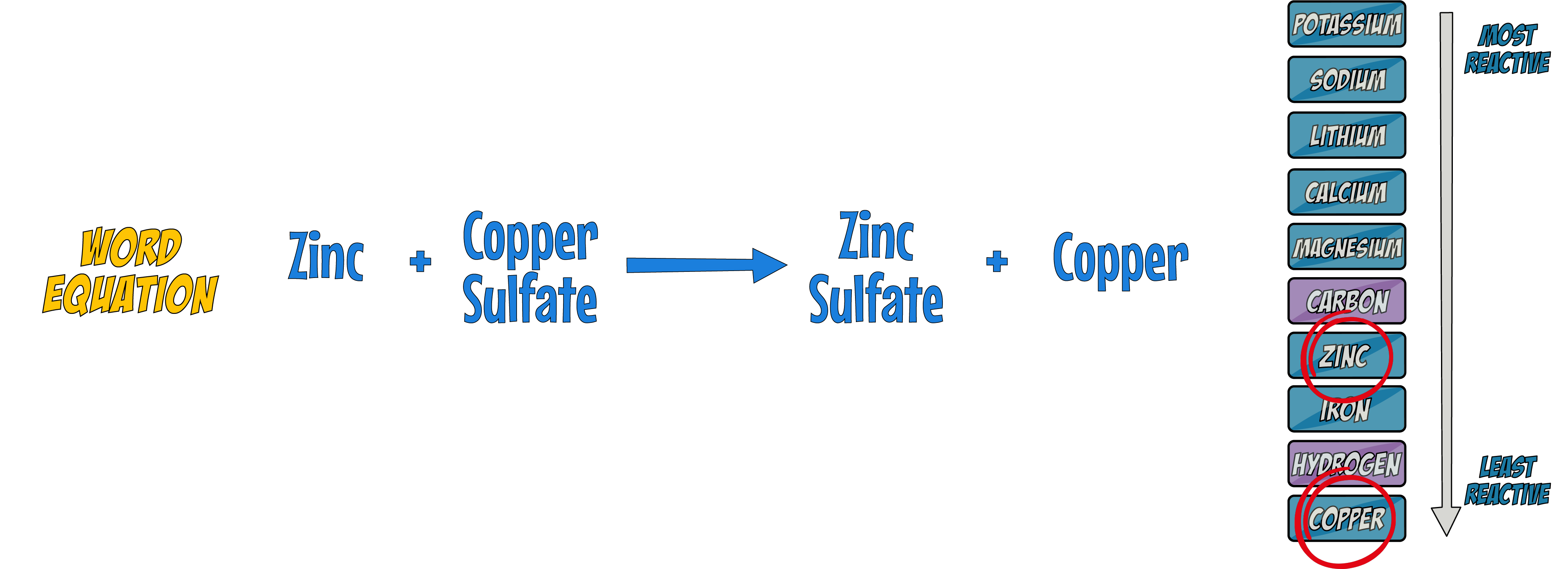
Zinc is HIGHER in the reactivity series so it REPLACES copper to form ZINC SULFATE.
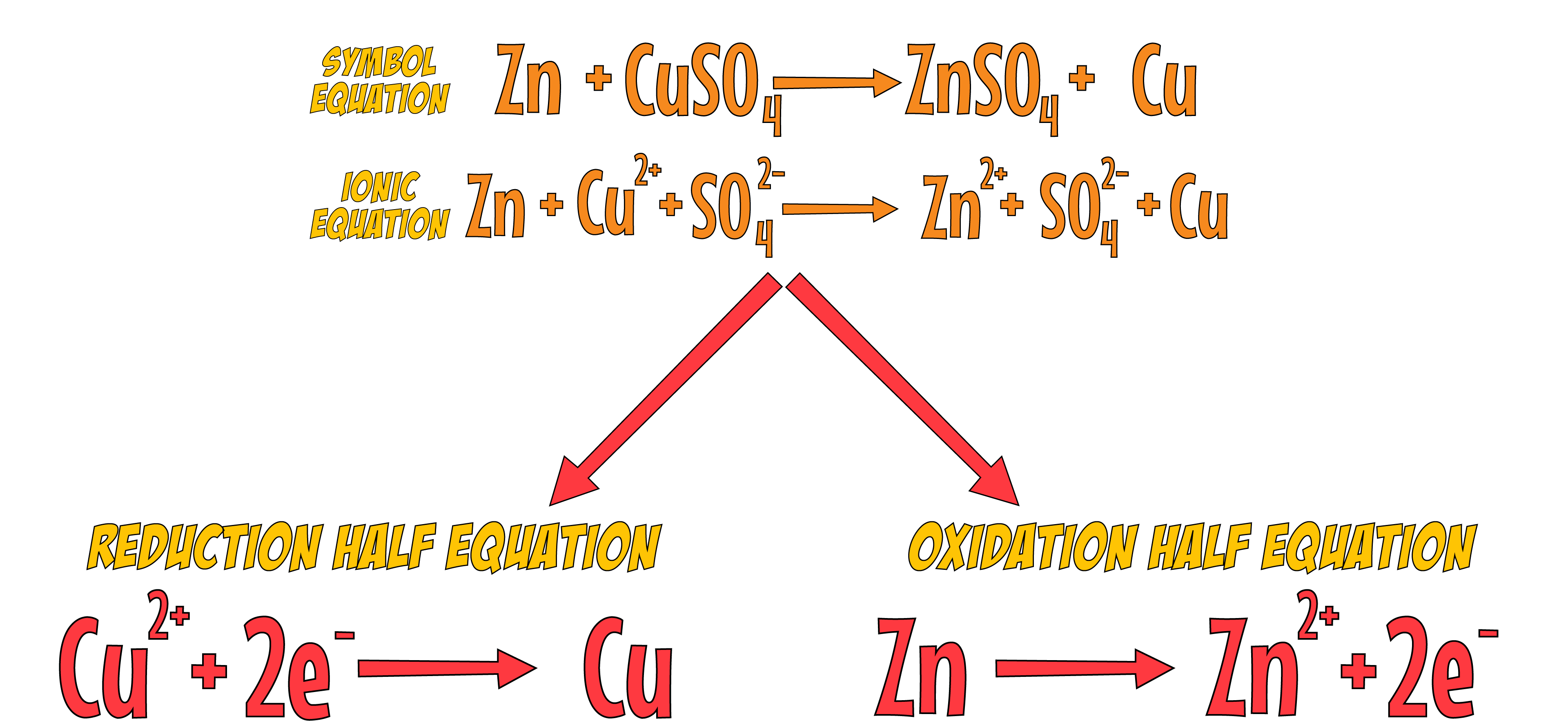
To show that this is a redox reaction, let's look at the SYMBOL EQUATION.

We can now break up the symbol equation to form the IONIC EQUATION, which shows all of the ions involved in the reaction.

If we look at just the element ZINC in this equation we can see that Zn turns into Zn2+.
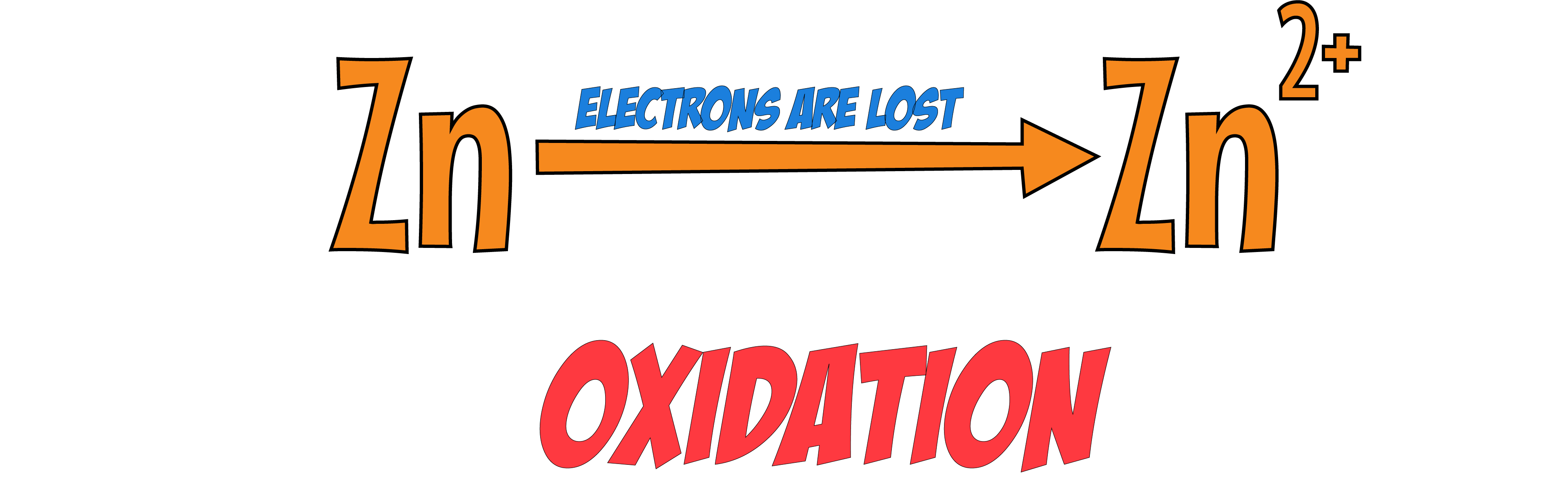
To get a charge of +2 the Zinc must have LOST TWO ELECTRONS. Using OIL RIG, this tells us that Zinc has been OXIDISED.
Now let's look at the element COPPER:
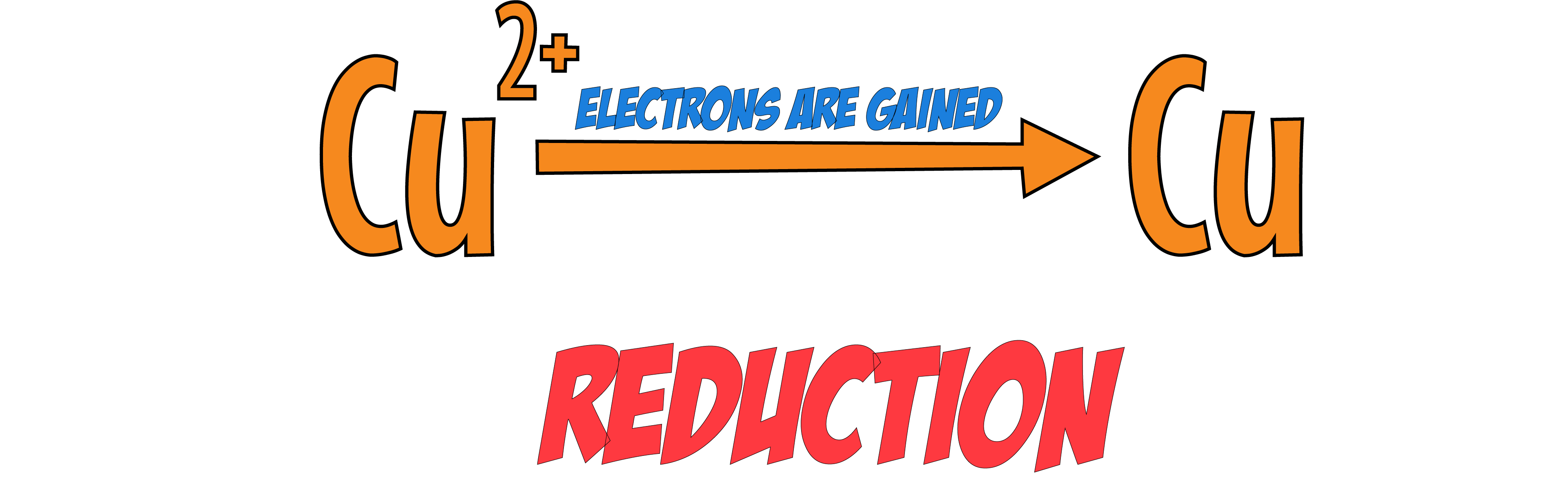
To go from Cu2+ to Cu, Cu2+ has GAINED two electrons. So we can say Copper has been REDUCED.
WRITING HALF EQUATIONS
Half Equations show the ELECTRON TRANSFERS within an ionic equation. Electrons in half equations are represented as an e-.
You can think of them as HALF of an ionic equation and there are always TWO:
1. The REDUCTION half equation
This shows the element that GAINS electrons. Electrons in this type are written on the REACTANTS side (left hand side).
2.The OXIDATION half equation
This shows the element that LOSES electrons. Electrons in this type are written on the PRODUCTS side (right hand side).
Let's see how the half equation looks for Zinc reacting with Copper Sulfate: