
Key Properties of Ionic Compounds
1. HIGH MELTING AND BOILING POINTS:
- There are STRONG ELECTROSTATIC FORCES of attraction between the OPPOSITELY CHARGED ions which require a LARGE amount of ENERGY to overcome.
2. ELECTRICAL CONDUCTIVITY when MOLTEN or AQUEOUS:
- MOLTEN means MELTED to liquid.
- AQUEOUS means DISSOLVED in water to make a SOLUTION.
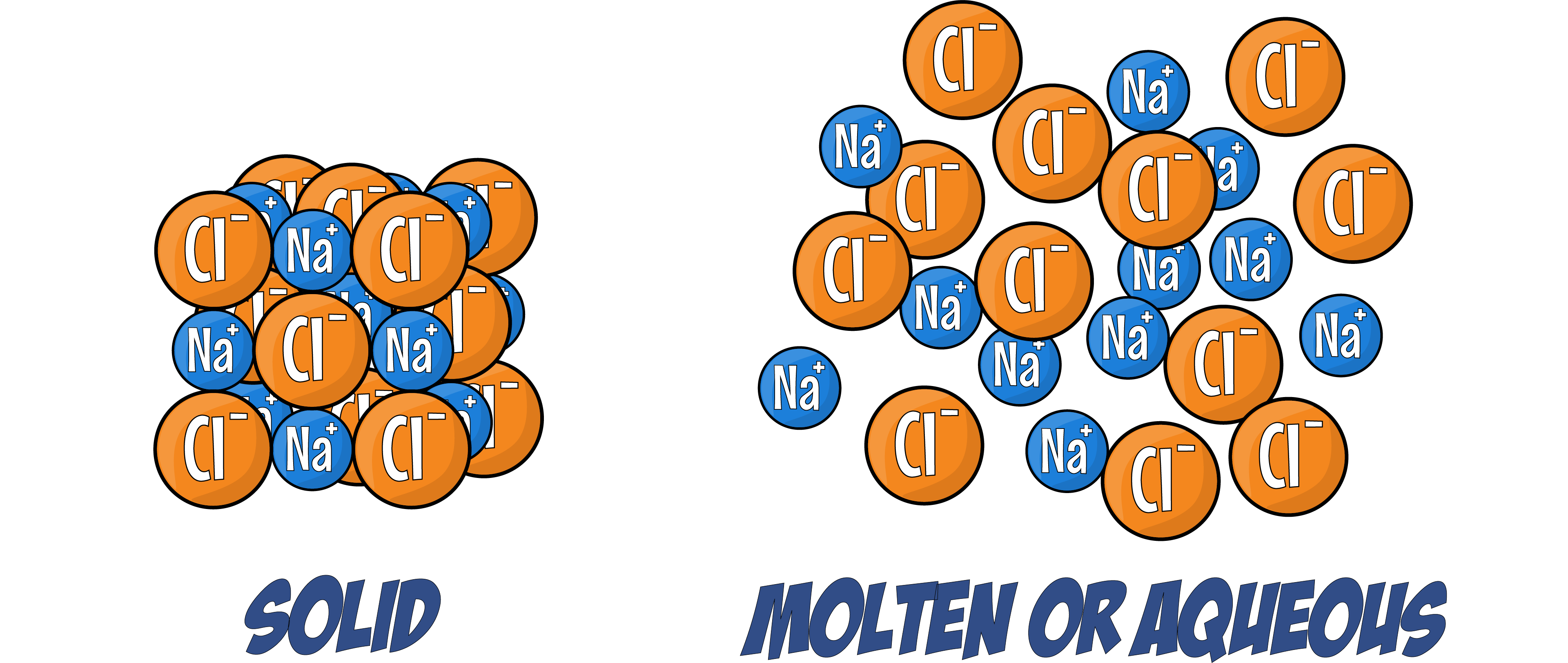
- When ionic compounds are MOLTEN or AQUEOUS, the IONS are FREE TO MOVE, meaning they can CARRY A CHARGE and conduct electricity.
3. ELECTRICAL CONDUCTIVITY when SOLID:
- IONS in the solid are FIXED meaning the IONS are NOT free to move, so they CAN’T carry a charge and conduct electricity.
4. SOLUBILITY:
- Many ionic compounds CAN DISSOLVE in water, allowing the ions to separate and move freely.