
NPK Fertilisers
NPK FERTILISERS are essential for modern agriculture as they provide plants with the THREE critical elements needed for growth:
- N: NITROGEN
- P: PHOSPHORUS
- K: POTASSIUM
These elements support various plant functions, enhancing growth and productivity.
These fertilisers are FORMULATIONS of various SALTS which include the THREE ELEMENTS in the APPROPRIATE PERCENTAGES.
NITROGEN is crucial for the synthesis of plant proteins, PHOSPHORUS contributes to root development, and POTASSIUM is important for water regulation and overall plant health.
Production of Nitrogen-Containing Compounds
AMMONIA can react with oxygen and water to make NITRIC ACID.
AMMONIA can further react with NITRIC ACID to form AMMONIUM NITRATE, a highly effective nitrogen source for FERTILISERS.
Production of Potassium and Phosphate Compounds
There are THREE types of POTASSIUM and PHOSPHATE compounds that can be MINED to use as FERTILISER:
- POTASSIUM CHLORIDE
- POTASSIUM SULFATE
- PHOSPHATE ROCK
POTASSIUM CHLORIDE and POTASSIUM SULFATE can be DIRECTLY used as a fertiliser.
PHOSPHATE ROCK must be chemically converted into usable forms by reacting with ACIDS:
- Reaction with NITRIC ACID produces PHOSPHORIC ACID and CALCIUM NITRATE.
- Reaction with SULFURIC ACID leads to CALCIUM SULFATE and CALCIUM PHOSPHATE.
- Reaction with PHOSPHORIC ACID can produce TRIPLE SUPERPHOSPHATE, a highly concentrated form of phosphorus for agricultural use.
Industrial vs. Laboratory Production
Ammonium nitrate is required to make FERTILISER and it can either be made in the LAB or INDUSTRIALLY. Both of these methods have advantages and disadvantages:
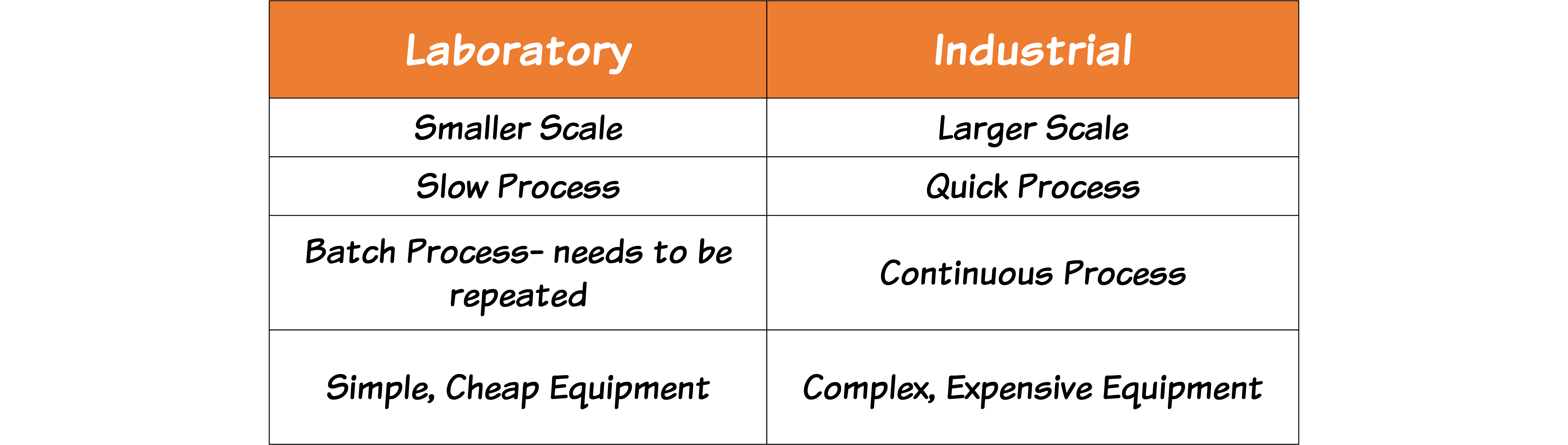
In the lab, making ammonium nitrate is done on a small scale, takes longer as each batch has to be made separately. However it uses simple & cheap tools.
In factories, it's made in large amounts, much faster, and keeps going without stopping (continuously). But they use more complicated and expensive machines to do it.