
The Haber Process
The HABER PROCESS is an industrial method used for producing AMMONIA (NH3), which is important for making nitrogen-based FERTILISERS.
It involves a reaction between NITROGEN (N2) and HYDROGEN (H2) gases:
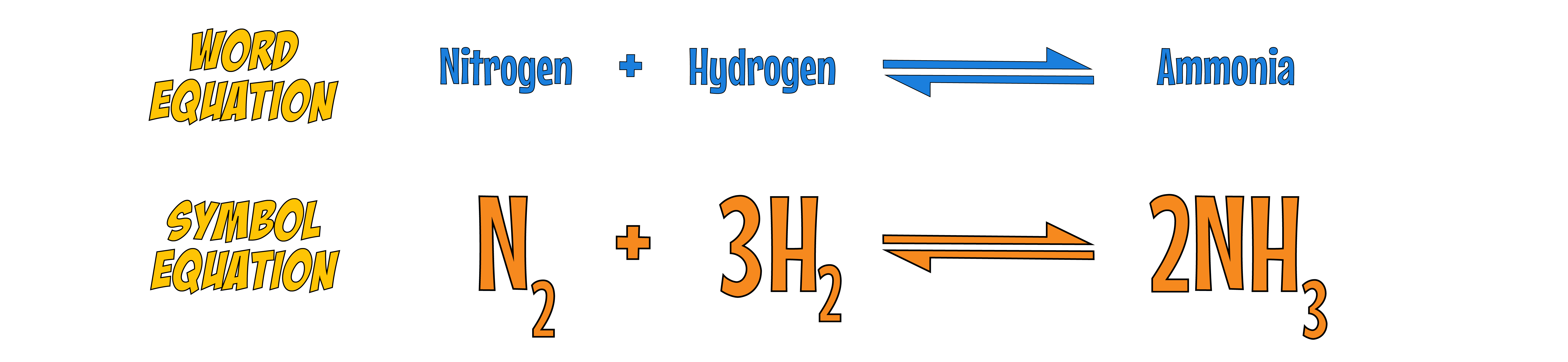
- The NITROGEN comes from the AIR, which is approximately 78% nitrogen.
- The HYDROGEN comes from NATURAL GAS.
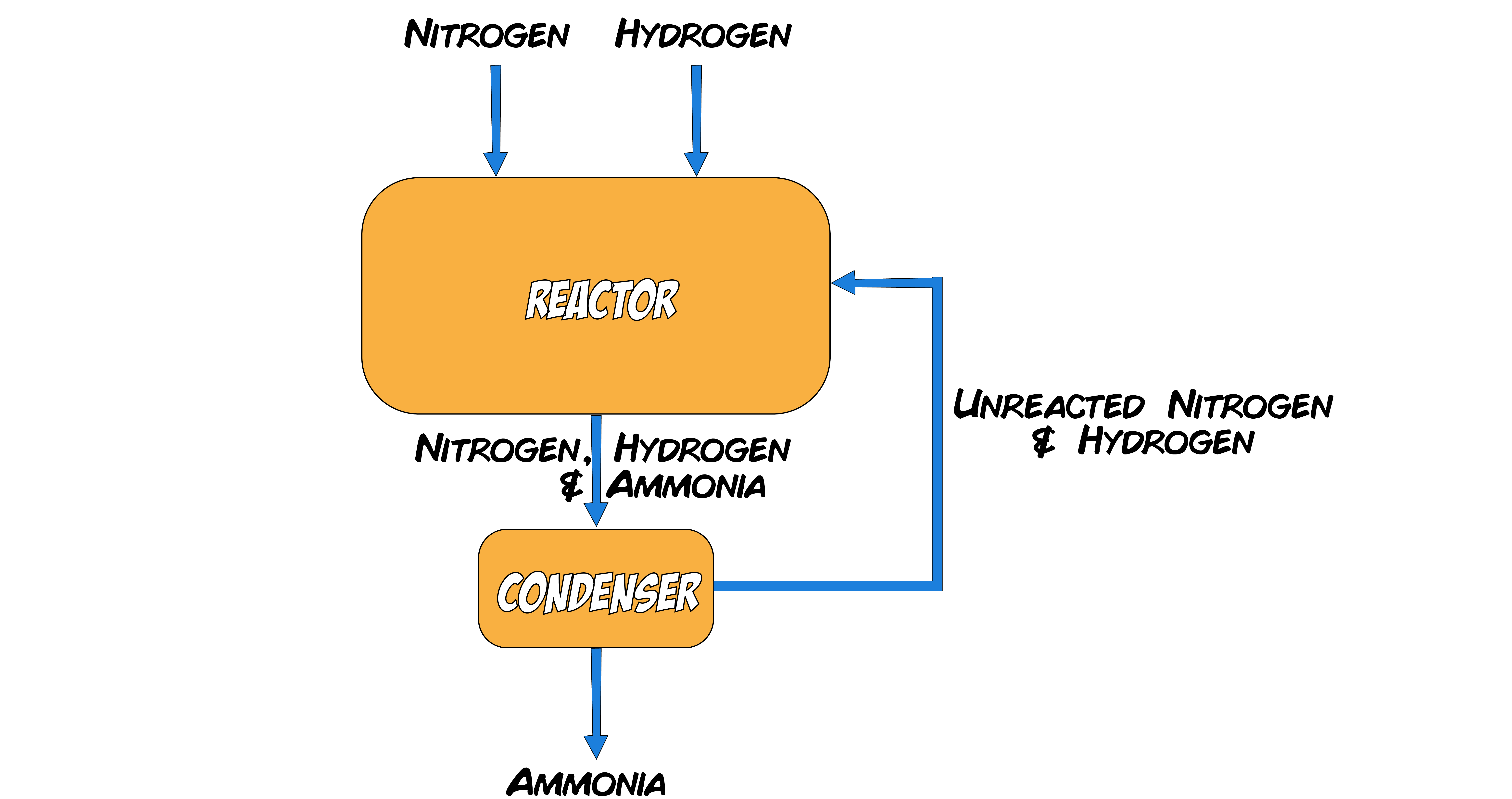
The gases are purified and enter the REACTOR where they are passed over an IRON CATALYST and react to form the AMMONIA GAS.
The AMMONIA GAS product and the UNREACTED NITROGEN and HYDROGEN all pass into a CONDENSER.
The condenser LOWERS the TEMPERATURE of the mixture of the THREE gases to a temperature where ONLY the AMMONIA CONDENSES to a LIQUID. This is to make it easier to SEPARATE.
The LIQUID AMMONIA is easily collected as a product, whereas the unreacted NITROGEN and HYDROGEN are RECYCLED back to the REACTOR so they are NOT wasted.
Conditions
The Haber process is a REVERSIBLE REACTION, meaning the reaction can proceed in both forward (forming ammonia) and backward (reforming nitrogen and hydrogen) direction.
The FORWARD reaction is EXOTHERMIC and the backward reaction is ENDOTHERMIC.

When the reaction occurs in the reactor, a DYNAMIC EQUILIBRIUM is set up where the rate of the FORWARD reaction is equal to the rate of the BACKWARD reaction.
To maximise the YIELD of ammonia, the equilibium reaction needs to be SHIFTED TO THE LEFT.
Temperature
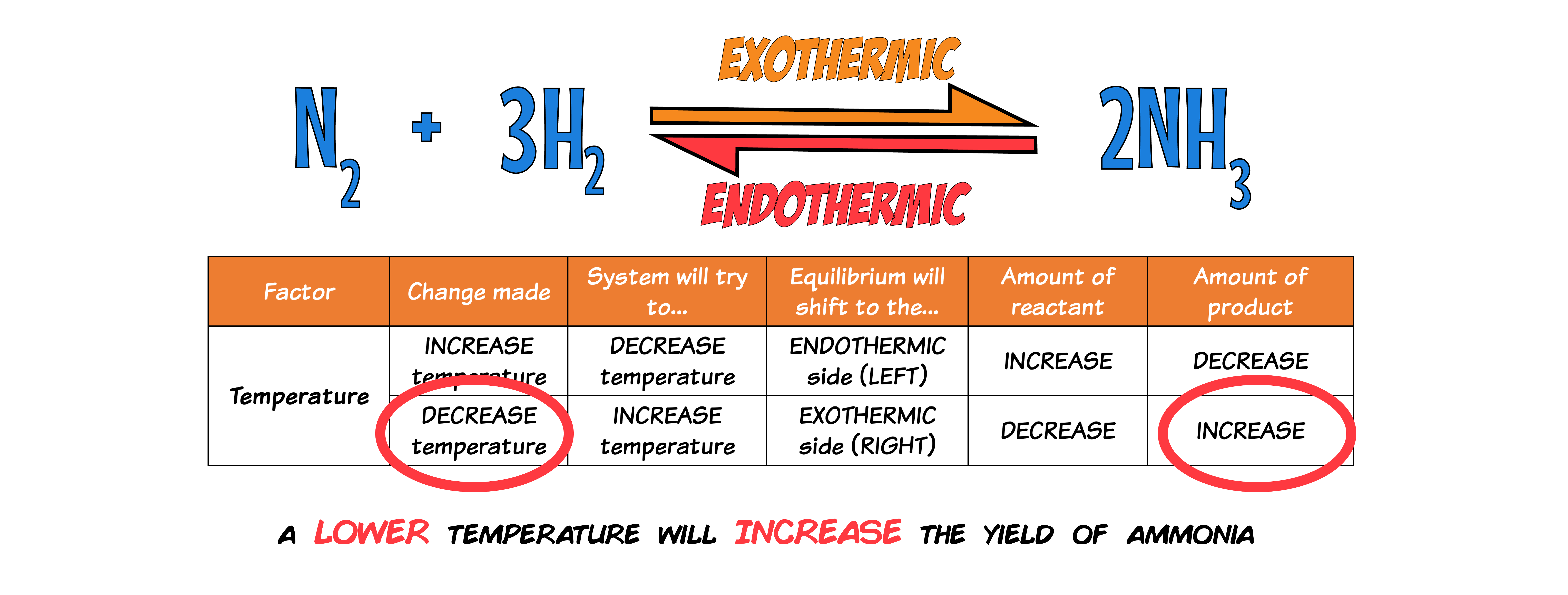
If a LOW temperature is used, the equilibrium will try to COUNTERACT the change by INCREASING temperature, so it will SHIFT to the EXOTHERMIC side which is the RIGHT side. This will cause the amount of products to INCREASE.
Pressure
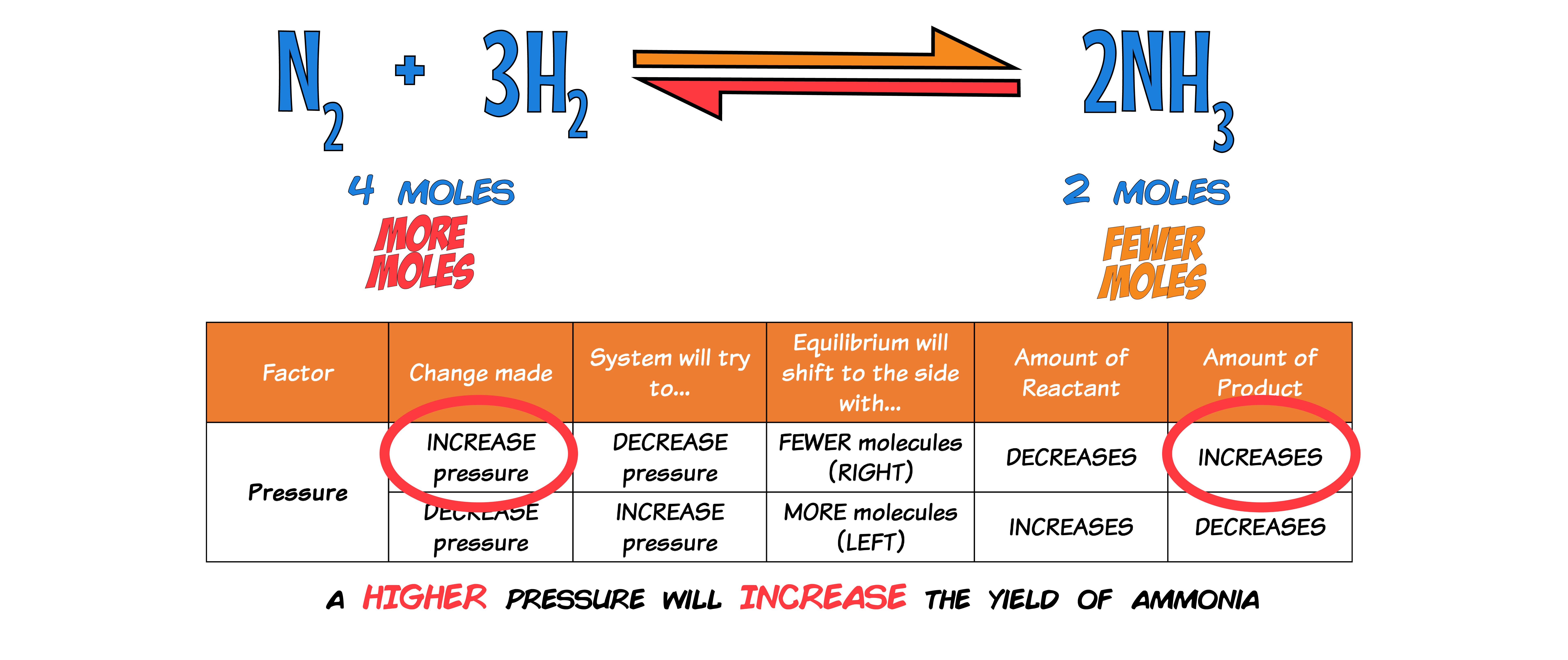
If a HIGH pressure is used, the equilibrium will try to COUNTERACT the change by DECREASING pressure, so it will SHIFT to the side with FEWER MOLES which is the RIGHT side. This will cause the amount of products to INCREASE.
So to MAXIMISE the YIELD, the ideal conditions for the equilibrium is a LOW temperature and a HIGH pressure.
The ACTUAL conditions used by industrial process are:
- A temperature of 450°C.
- A pressure of 200atm.
- An IRON catalyst
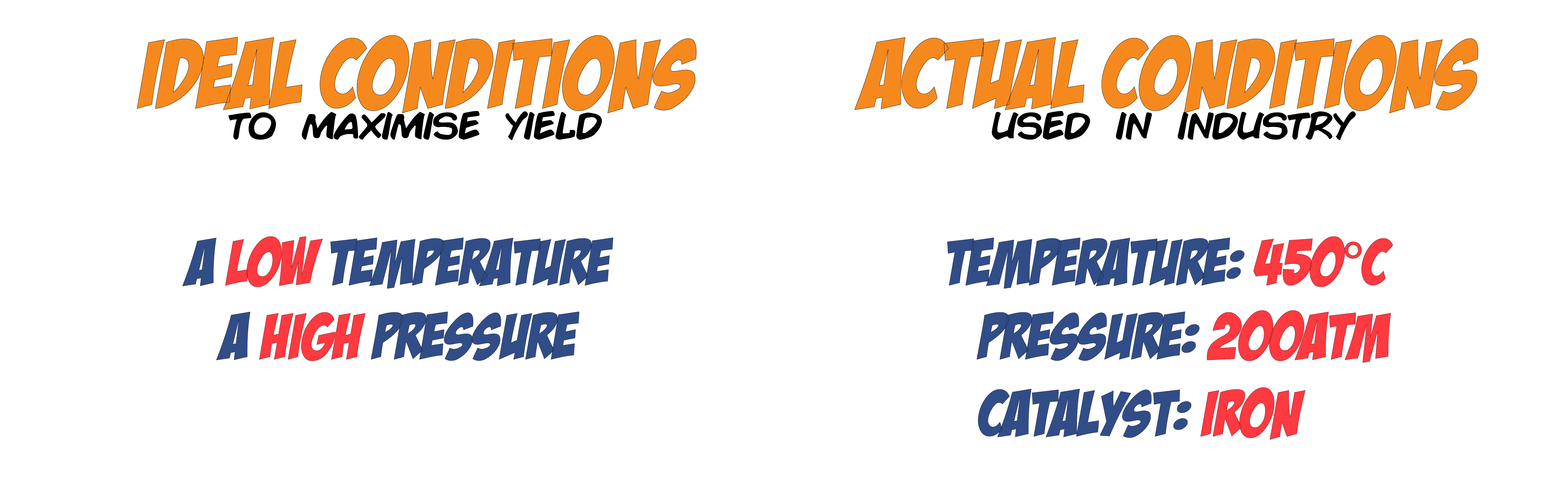
Even though a LOW temperature maximises yield, it would mean the RATE of reaction would be too SLOW.
The temperature of 450°C is a COMPROMISE between YIELD and RATE.
A HIGH pressure would maximise yield, however if it is TOO high, the cost of maintaining the high pressure would be too EXPENSIVE.
The pressure of 200atm is a COMPROMISE between YIELD and COST.
The IRON CATALYST INCREASES the RATE of the reaction by providing an ALTERNATIVE ROUTE with a LOWER ACTIVATION ENERGY.