The periodic table (4.1.2.1) — AQA GCSE Chemistry Revision Notes
Revision notes for AQA GCSE Chemistry specification point 4.1.2.1, The periodic table.
The Layout of the Periodic Table:
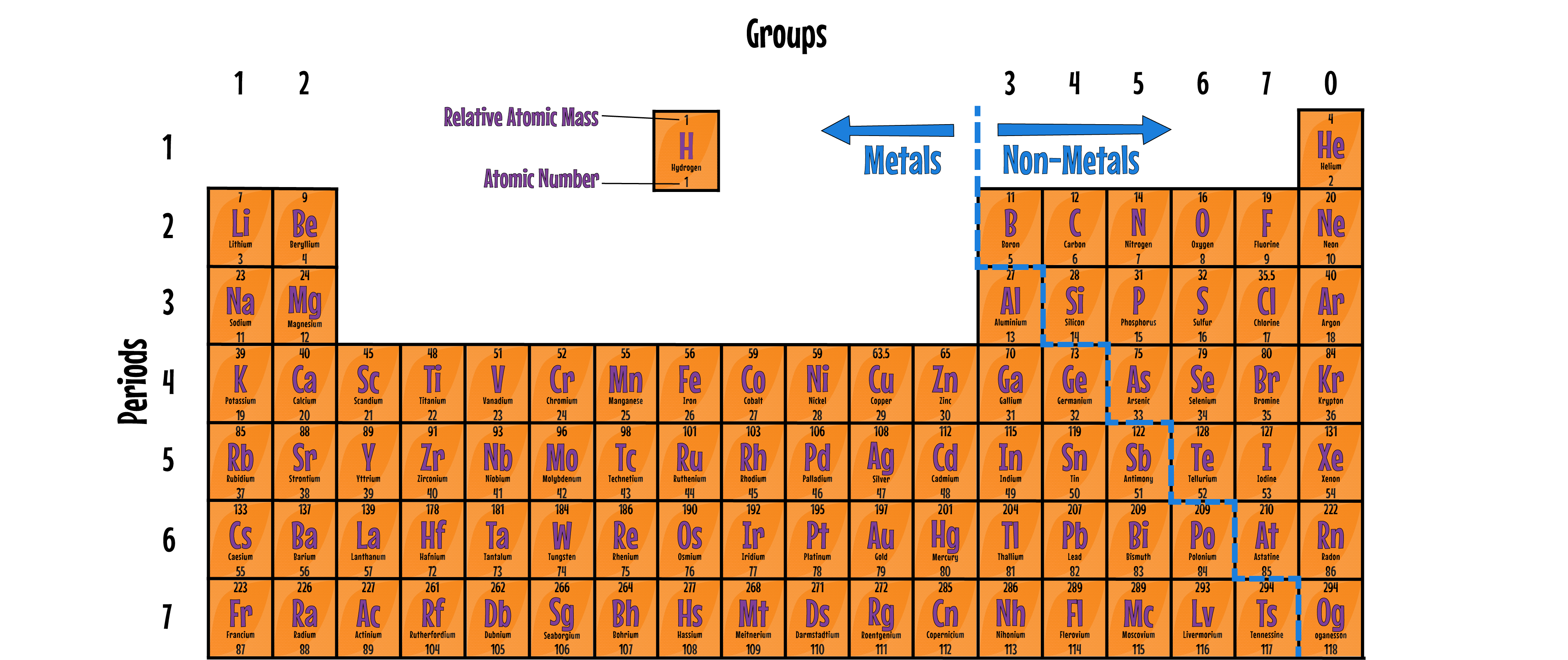
METALS are located to the left and NON-METALS to the right, with a staircase line usually marking the division between them.
The VERTICAL COLUMNS are called GROUPS and the HORIZONTAL ROWS are called PERIODS.
GROUP NUMBER corresponds to the number of ELECTRONS in the outer shell. Elements in the same group have SIMILAR CHEMICAL PROPERTIES because they have the SAME number of ELECTRONS in their OUTER SHELL.
The PERIOD NUMBER represents the NUMBER OF SHELLS an atom has.
Group and Period Trends
Elements in the same group have similar properties and react in SIMILAR ways due to having the same number of electrons in their outer shell.
For example: GROUP 1 elements (alkali metals) have one electron in their outer shell, making them highly reactive.
Reactivity trends can be observed, such as Group 1 elements becoming MORE REACTIVE as you move down the group.
Predicting Element Properties
If you know one element's properties, you can make predictions about others in the same group.
For example, knowing the properties of Lithium (Li) helps predict the behaviour of Sodium (Na) and Potassium (K).