Required Practical: Quadrats and Transects
This practical is used to measure the POPULATION and DISTRIBUTION of species in a habitat.
DISTRIBUTION is how individuals of a species are SPATIALLY ARRANGED within a particular area.
E.g. if you have a large park, some species of plants may be more common near a pond because they survive better there.
There are THREE ways to measure the distribution of organisms:
1. QUADRAT Experiment
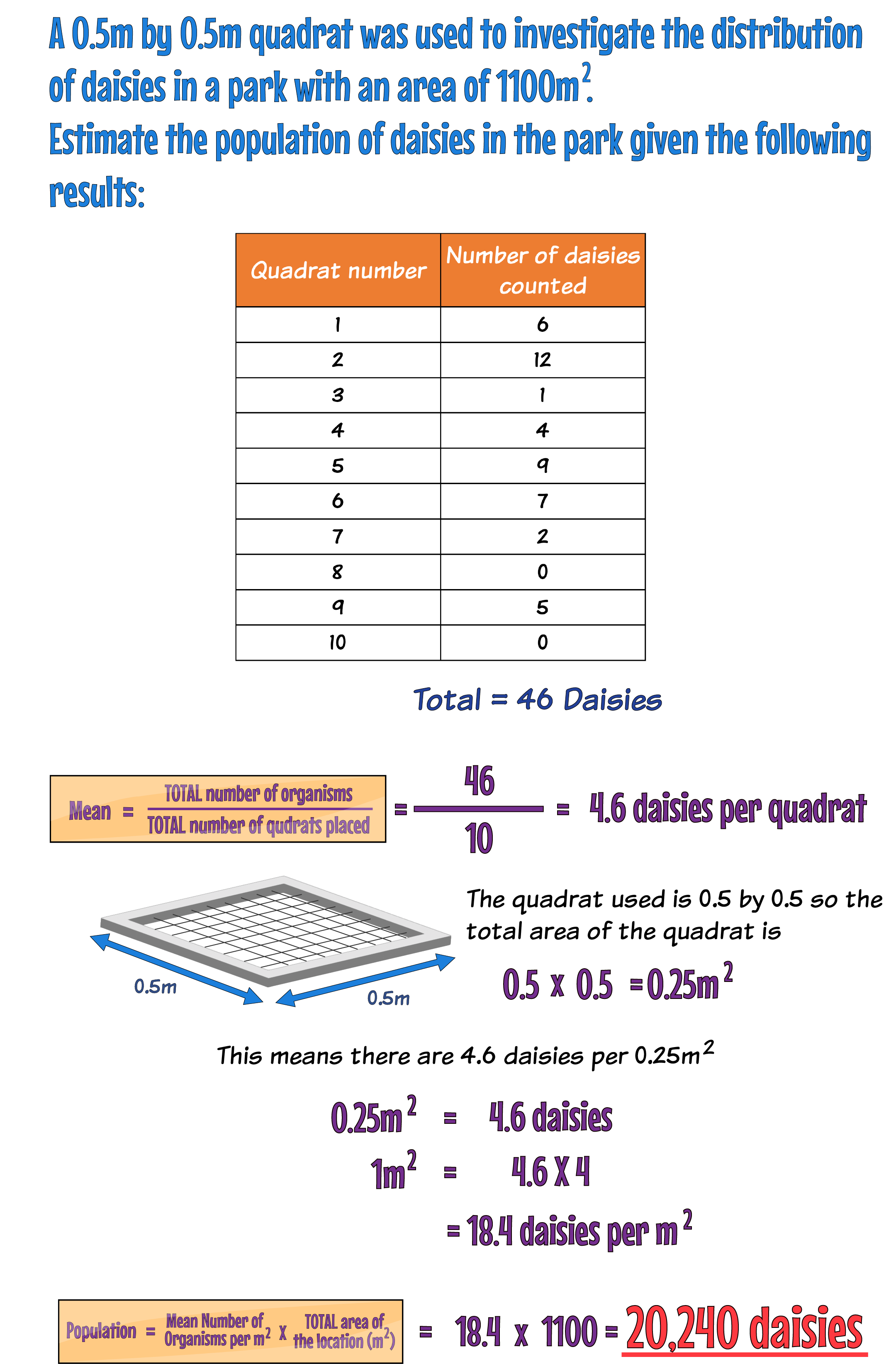
This involves using a QUADRAT to ESTIMATE the POPULATION size of a plant species in a specific area.
A QUADRAT is a SQUARE FRAME that is placed on the ground to measure the ABUNDANCE of certain small organisms in an area.
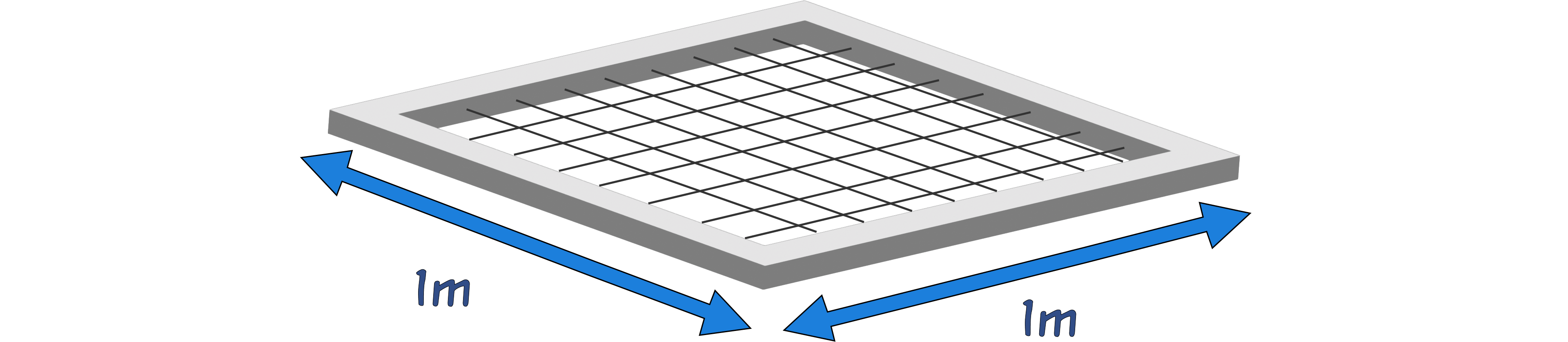
To use the quadrat, you place it on the ground and COUNT the number of organisms within the square.
E.g. if you were investigating the distribution of daisies in a field, you would place the quadrat on the ground and count the number of daisies within the quadrat.

The quadrats need to be placed RANDOMLY within the location to ensure a fair test. To do this in a large area, you need to divide it into a grid with numbers
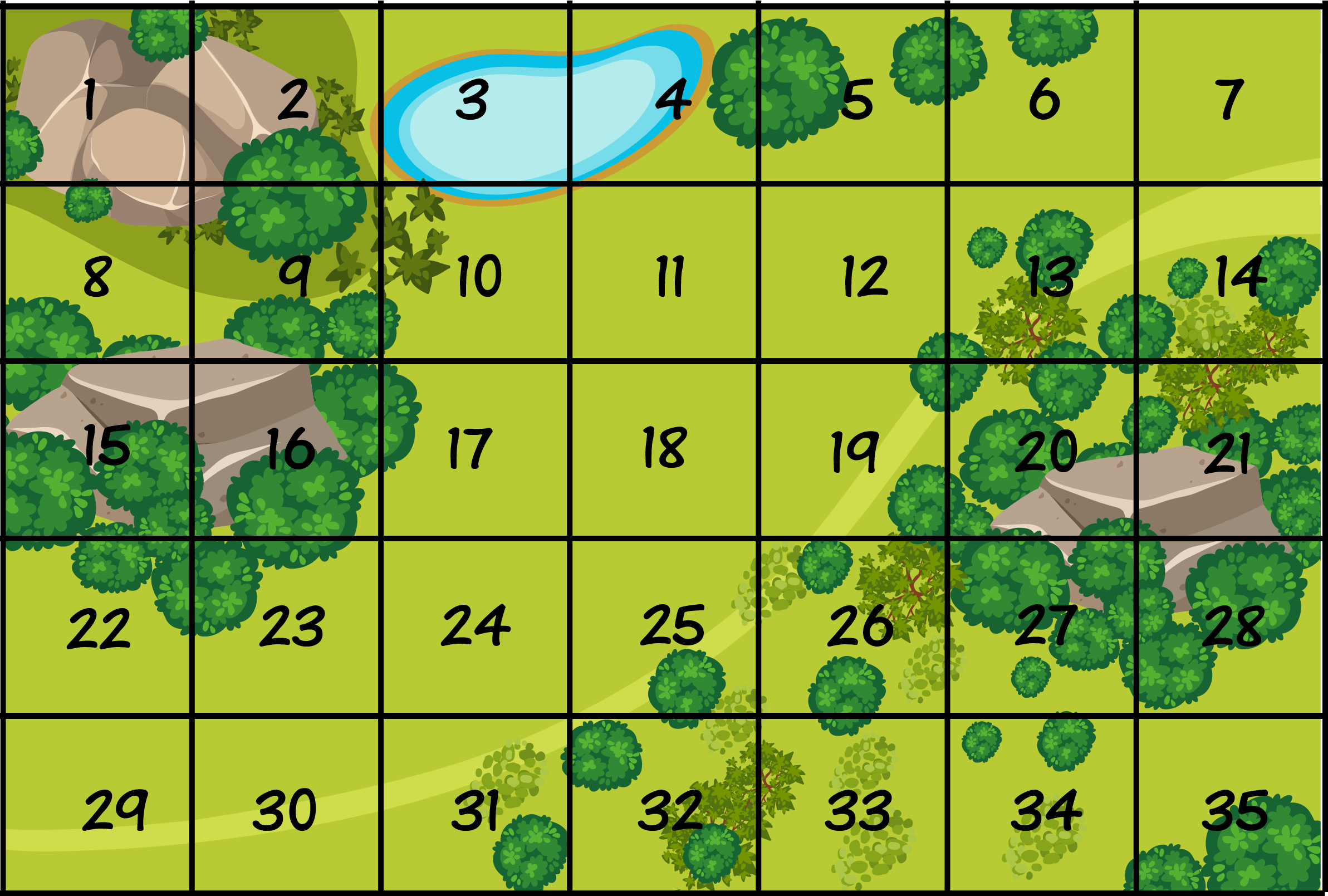
You can use a RANDOM NUMBER GENERATOR to pick a number in the grid to carry out the test.
You then go to the location of the number and throw the quadrat in a random direction.
Here are the steps to carry out an investigation of the distribution of DAISIES in a park:
- Place your quadrat at a RANDOM POINT within the area to be studied by dividing the park into a grid and using a random number generator to pick a location.
- Place the quadrat on the ground at that location.
- COUNT all the daisies within the quadrat.
- Repeat this process several times.
- Calculate the MEAN number of organisms per quadrat.

You can now compare your values with the MEAN from another park to see the differences in distributions in the two locations.
You can also estimate the POPULATION of daisies in the park by first finding the number of daisies per m2 (this is usually just the mean if the quadrat is 1m2).
You can then use the following equation:

The data collected can also be used to calculate the MODE and MEDIAN.


2. Calculating Percentage Cover
Sometimes it’s difficult to measure the number of organisms within a quadrat (e.g. counting blades of grass)
You can instead estimate the PERCENTAGE COVER of the location by using the SMALL SQUARES within the quadrat.
If there are 100 squares in total, the number of squares in the quadrat containing the organism will give you the percentage cover of the organism.
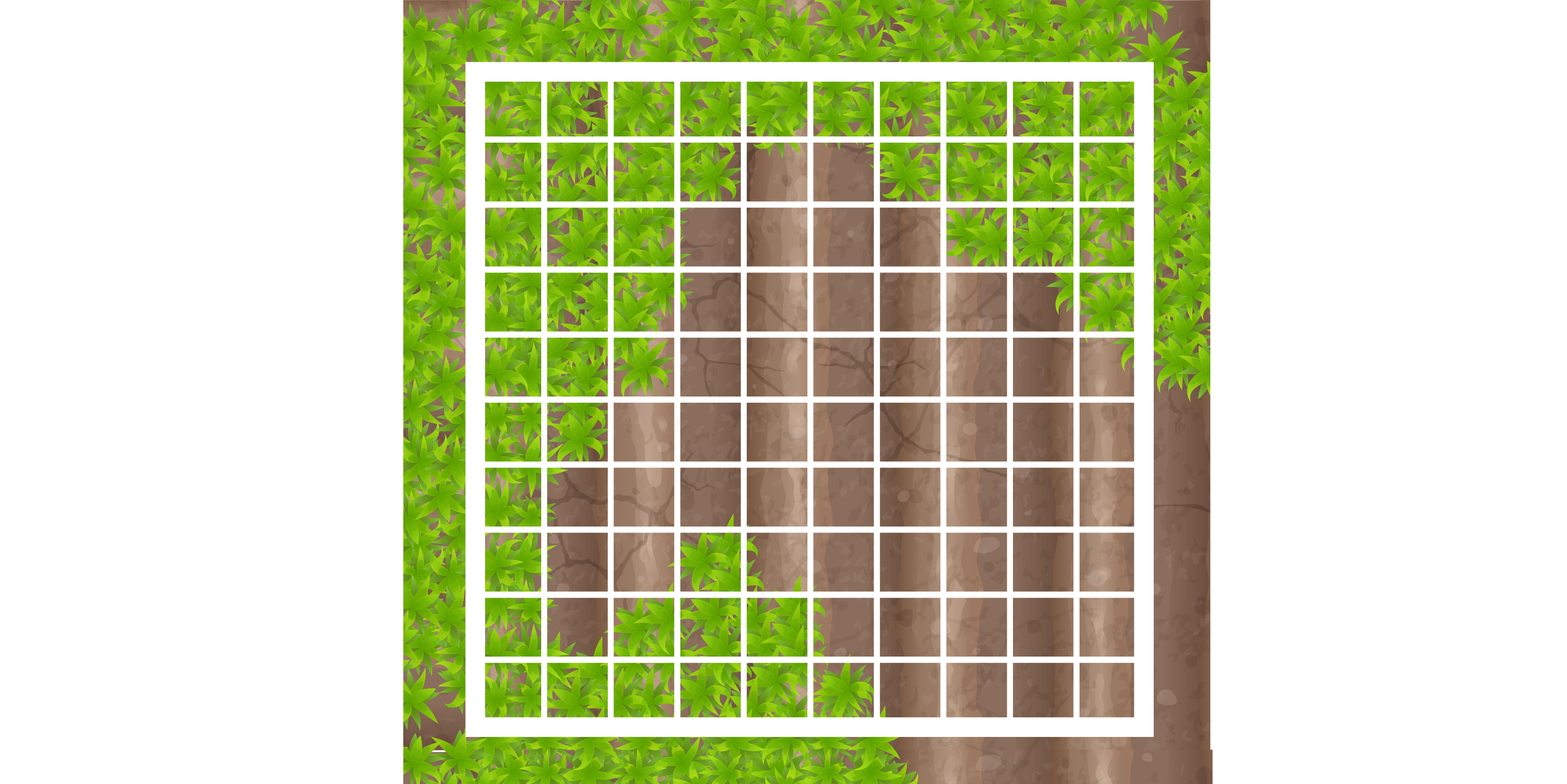
This quadrat roughly has 46 squares with grass in them, therefore the PERCENTAGE cover of this example would be 46%.
3. Transect Experiment
This involves using a TRANSECT LINE and a QUADRAT to investigate the effect of a factor on the number of plants in a survey area
TRANSECTS are LINES used to study organism distribution along it. They are usually made using a TAPE MEASURE.
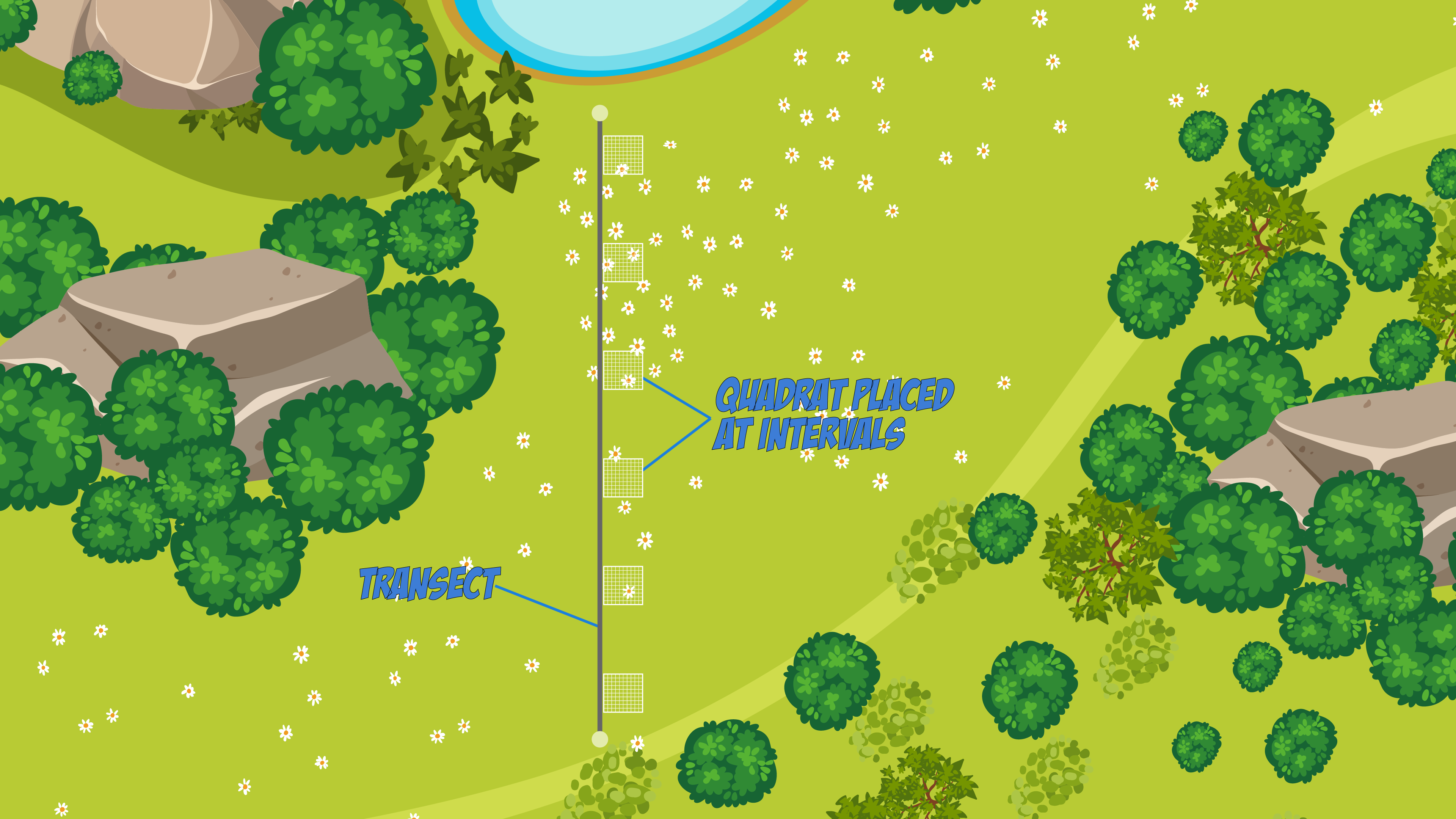
Steps:
- MARK OUT a line in the area of interest with a tape measure.
- COLLECT DATA by counting all the organisms along the line.
- You can use quadrats placed at INTERVALS, such as every 2 metres, alongside the line.
Here's an example calculation: