
Levels of Organisation
Food Chains
Food Chains describe the feeding relationships between species within an ecosystem, starting with producers and moving up to primary, secondary, and sometimes tertiary consumers.
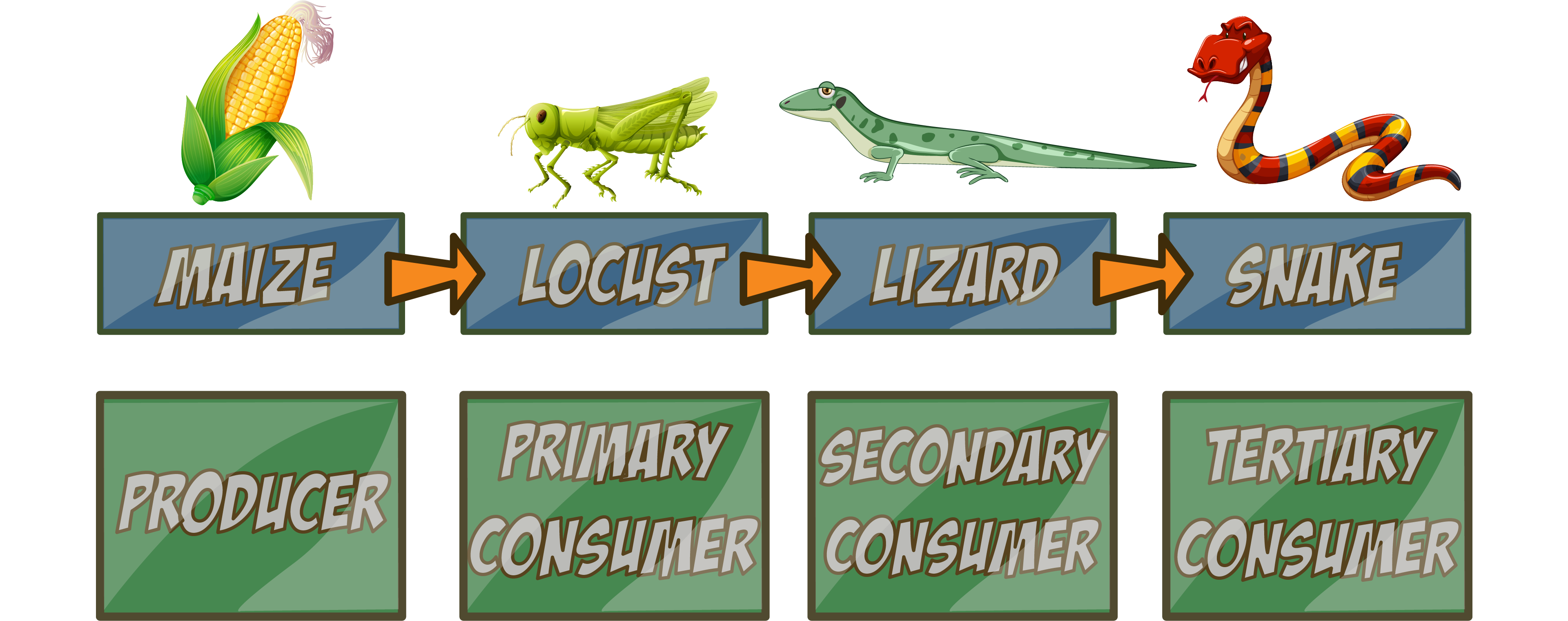
- Producers: plants and algae, are organisms that create their own food through PHOTOSYNTHESIS, using energy from the sun. They form the base of the food chain.
- Primary Consumers: are typically HERBIVORES that feed on producers.
- Secondary Consumers: are often CARNIVORES or OMNIVORES that eat the primary consumers.
- Tertiary Consumers: when present, are usually APEX PREDATORS at the top of the food chain and have no natural predators.
- Biomass refers to the total mass of LIVING MATERIAL at a particular stage of a food chain. It represents the amount of the energy available at that level, and it decreases after every stage. This means the organisms at the TOP of the food chain always receive the LEAST amount of biomass from their food.
Predators and Prey
PREDATORS are consumers that kill and eat OTHER ANIMALS and PREY are the animals that GET EATEN.
The numbers of predators and their prey in an STABLE ecosystem tend to fluctuate in cyclical patterns, known as PREDATOR-PREY CYCLES.
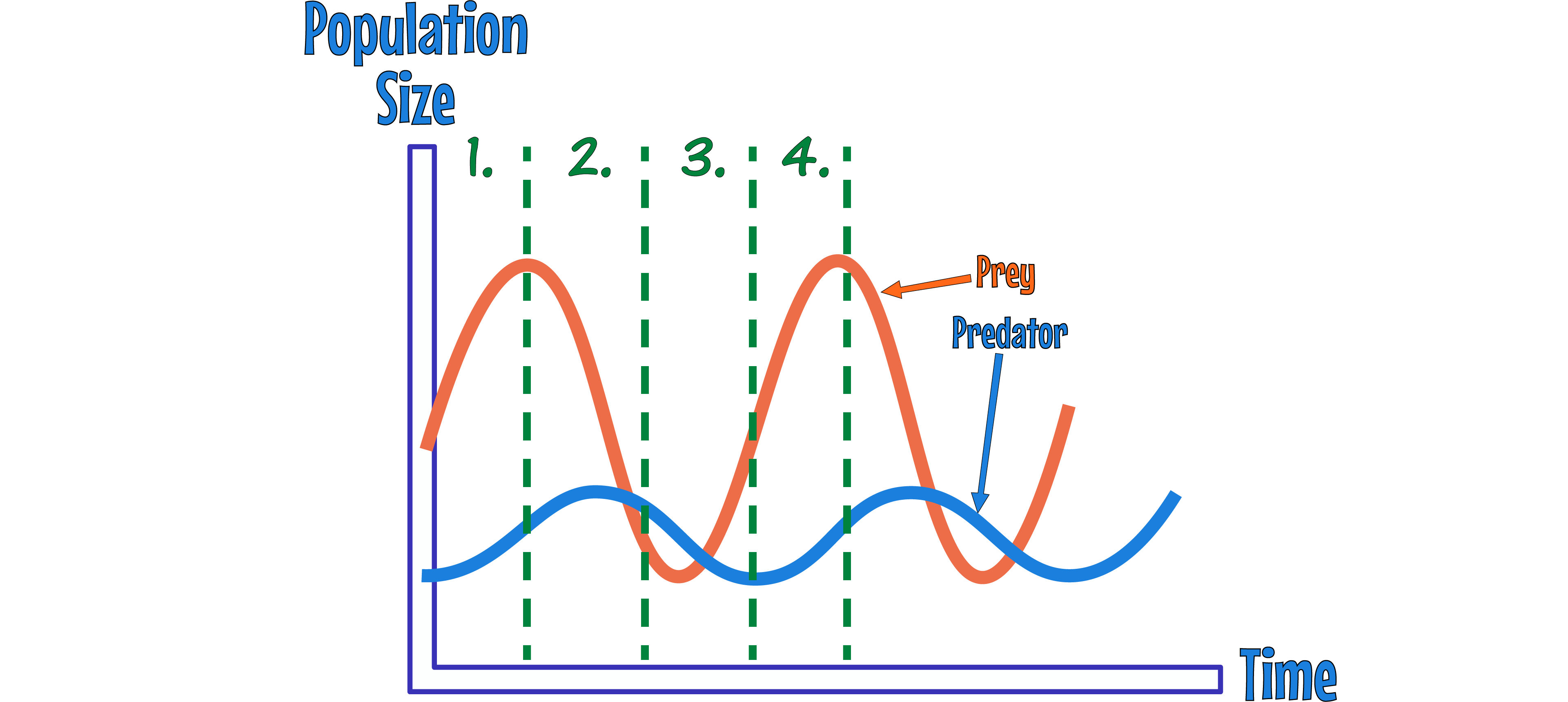
1. An INCREASE in PREY population typically leads to an INCREASE in PREDATORS since MORE FOOD is available.
2. As the PREDATOR population INCREASES, the PREY population begins to DECLINE as the prey get hunted and killed MORE.
3. This is followed by a DECREASE in PREDATORS, as they now have LESS FOOD to eat.
4. Fewer predators results in the population of PREY INCREASING once again and the whole cycle repeats again.
This cycle demonstrates that predators and prey are INTERDEPENDENT and the importance of each species in maintaining ecological stability.
Disruptions to this cycle can be bad for the ecosystem:
- For example, the REMOVAL of a specific PREDATOR can lead to an OVERPOPULATION of their PREY, which may result in plants being overeaten which can damage the habitat for ALL organisms living there.