
Growing Bacteria in the Lab
Bacteria can be grown in a lab in a CULTURE MEDIUM which can either be a NUTRIENT BROTH SOLUTION or as COLONIES on an AGAR gel plate.
The culture medium provides the bacteria the NUTRIENTS they need to grow.
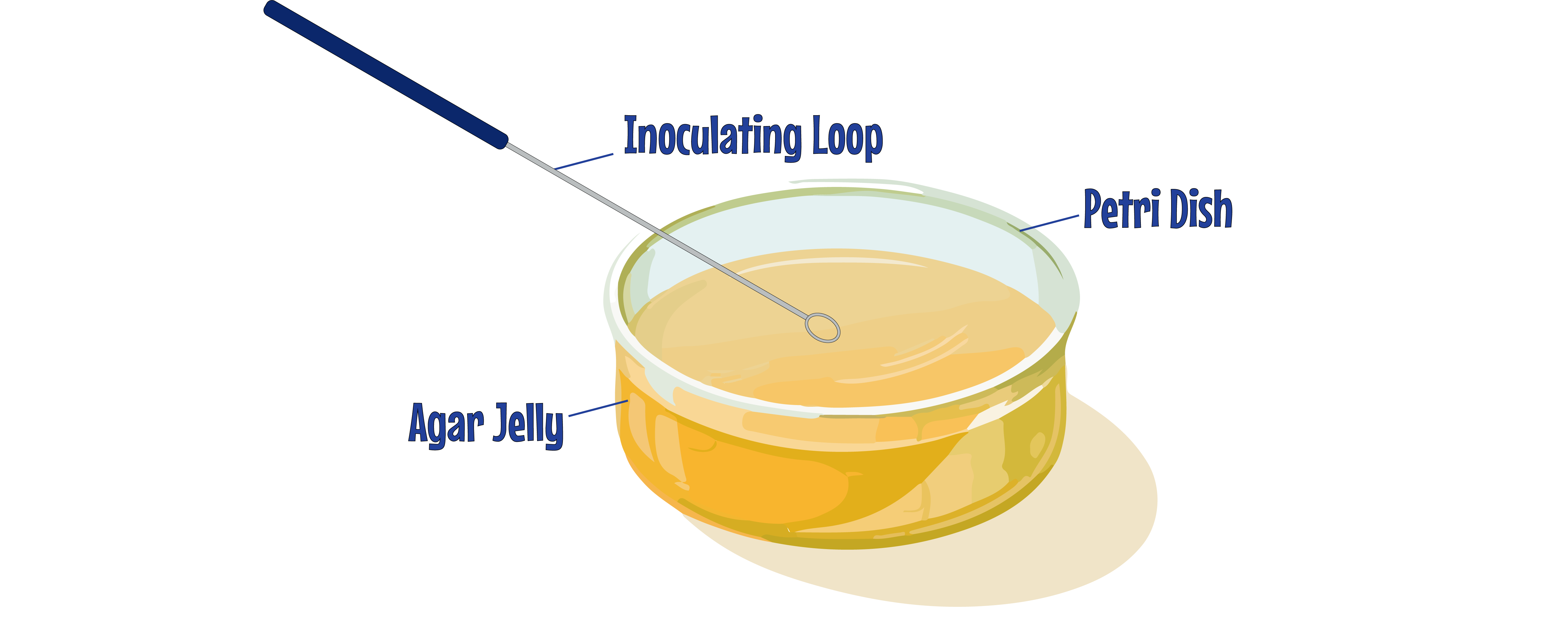
To create the culture, AGAR JELLY is added to a PETRI DISH.
An INOCULATING LOOP is then used to transfer the bacteria to the agar jelly.
The culture is then kept at 25°C so the bacteria can MULTIPLY.
It is important that the cultures of bacteria grown in the investigation are UNCONTAMINATED, which means there are no other microorganisms present EXCEPT the bacteria being tested on. This prevents the other species competing with the bacteria and affecting results.
To prepare an uncontaminated culture, ASEPTIC TECHNIQUES need to be used. This involves the following:
- Petri dishes and culture media must be STERILISED before use. This is done by heating them to HIGH TEMPERATURES so that unwanted microorganisms are killed.
- Inoculating loops used to transfer microorganisms to the media must be sterilised by passing them through a FLAME to kill off any unwanted microorganisms.
- The lid of the Petri dish should be secured with adhesive TAPE and stored upside down, to stop microorganisms from the air entering.
- In school labs, cultures should generally be incubated at 25°C. If they are heated to higher temperatures, HARMFUL PATHOGENS are more likely to grow.
Investigating Antibiotics and Antiseptics
Antibiotics and antiseptics are chemicals that KILL BACTERIA.
You can investigate how effective they are in the lab, by using paper discs soaked in antibiotics and exposing them to cultures of bacteria. Here are the steps to follow:
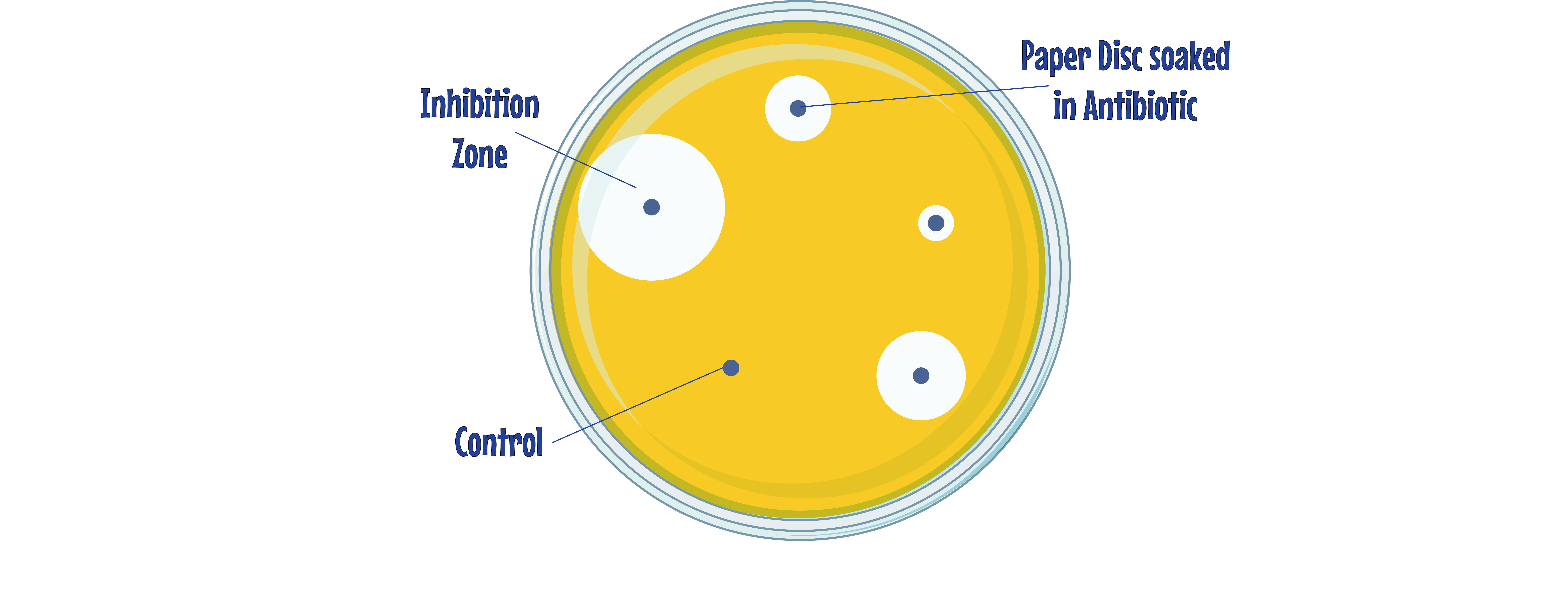
1. PAPER DISCS soaked in different TYPES or CONCENTRATIONS of antibiotics are placed on an AGAR PLATE with an even covering of bacteria.
2. The antibiotic will DIFFUSE into the agar. ANTIBIOTIC-RESISTANT bacteria will continue to grow around the paper discs, while NON-RESISTANT bacteria will die, creating a clear area known as an INHIBITION ZONE.
3. Use a CONTROL disc that has not been soaked in antibiotics but in STERILE WATER to ensure that any effects seen are due to the antibiotic alone.
4. Leave the agar plate to incubate for 48 hours at 25°C.
Calculating the Sizes of Inhibition Zones:
The LARGER the inhibition zone, the MORE EFFECTIVE the antibiotics are.
To calculate the size of the inhibition zone, you can assume they are CIRCLES and find their AREA.
Measure the DIAMETER of the inhibition zone using a RULER.
Calculate the area using the formula AREA = πr², where r is the radius of the inhibition zone (half of the diameter).

