
Required Practical: Decay
This experiment investigates the effect of TEMPERATURE on the rate of DECAY of fresh milk.
When milk is left out, BACTERIA digest the FATS in it to release FATTY ACIDS. This causes the pH of the milk to DECREASE as it becomes more ACIDIC.
The faster the pH DECREASES, the faster the RATE of DECAY.
Steps:
1. Set up the apparatus as below with the milk at room temperature (20°C)
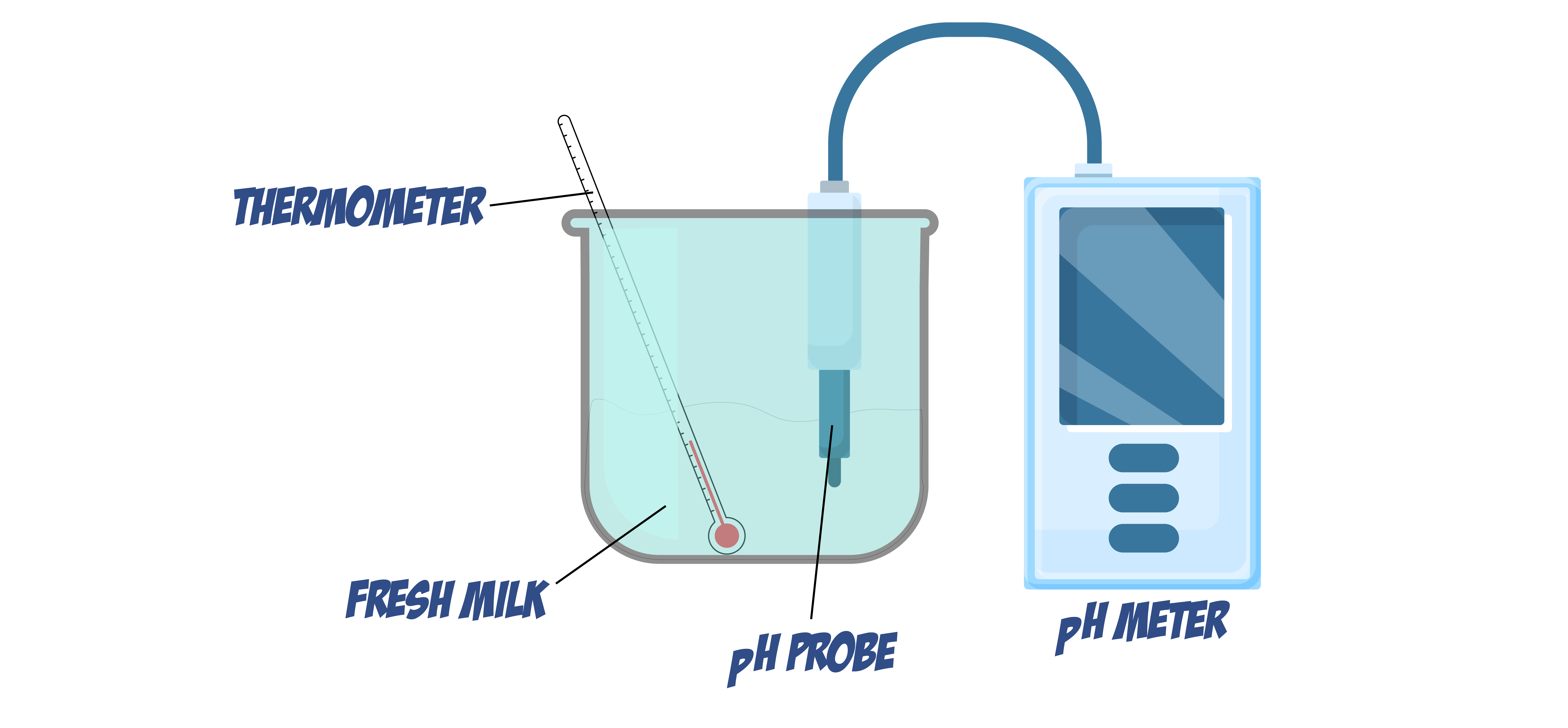
2. Record the pH EACH DAY for 7 DAYS.
3. Repeat this for several different temperatures, by using a WATER BATH.
4. Plot a graph of pH against Time.
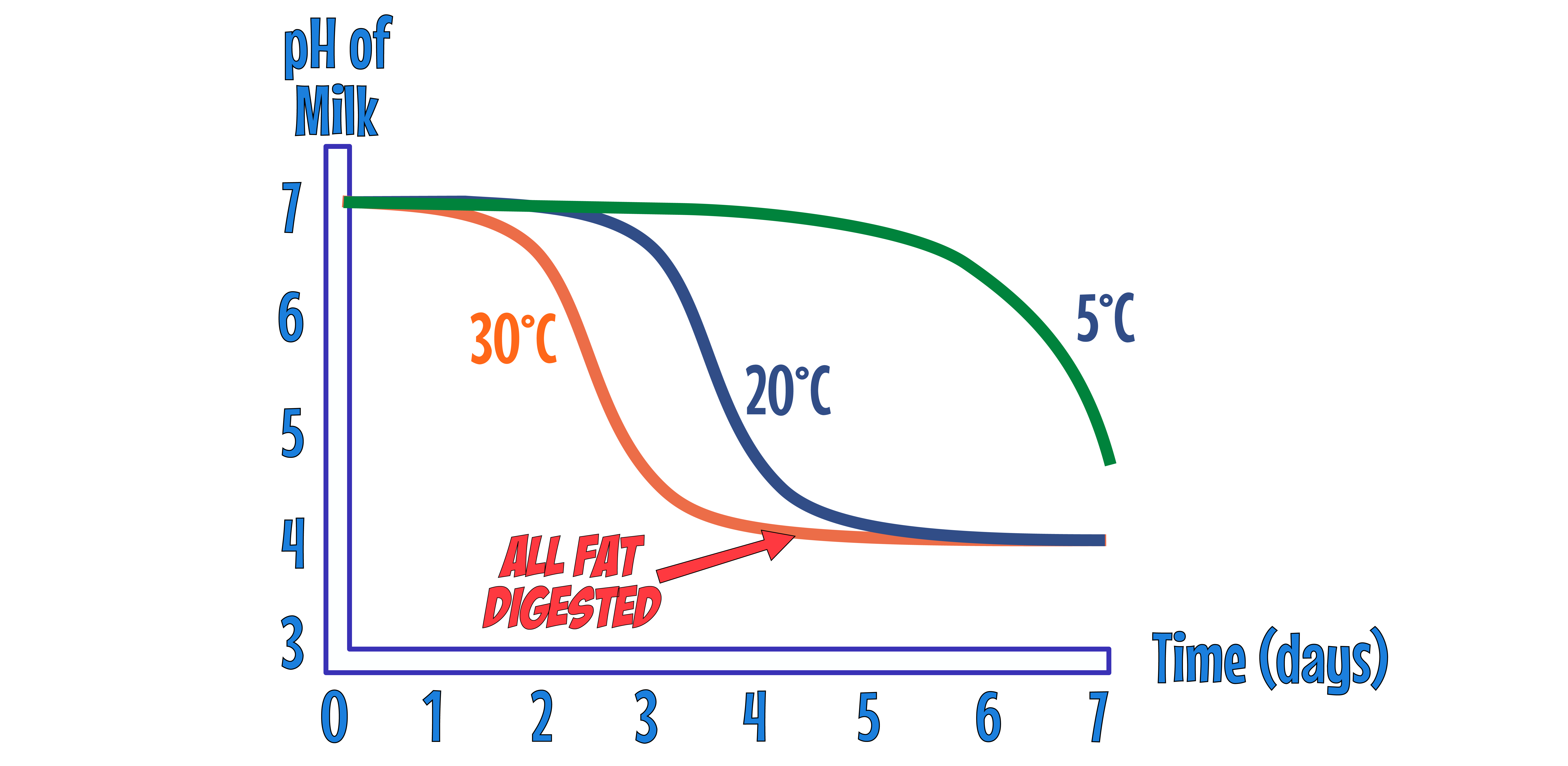
When the pH reaches a MINIMUM value and the graph LEVELS, all of the fat has been digested and no more FATTY ACIDS are being produced.
The STEEPER the gradient, the FASTER the rate of decay.
The temperature at 30°C levels off first and has the greatest gradient, which means the RATE OF DECAY is the greatest. This is because it is at the OPTIMUM TEMPERATURE for the enzymes to work FASTER and the bacteria REPRODUCE FASTER.