
Biotechnology
Biotechnology is where LIVING THINGS and BIOLOGICAL PROCESSES are used and manipulated to produce a USEFUL PRODUCT.
Modern biotechnology techniques enable large quantities of microorganisms to be cultured for FOOD.
Here are THREE examples:
1. MYCOPROTEIN
MYCOPROTEIN is a protein source derived from fungi, produced using MODERN BIOTECHNOLOGY techniques.
It is commonly used in HIGH-PROTEIN MEAT SUBSTITUTES suitable for vegetarians.
The production involves culturing the fungus FUSARIUM in AEROBIC CONDITIONS on glucose syrup.
Once grown, the fungal biomass is HARVESTED and PURIFIED to create the final mycoprotein product.
2. HUMAN INSULIN
Through GENETIC ENGINEERING, a useful gene is transferred from one organism to another.
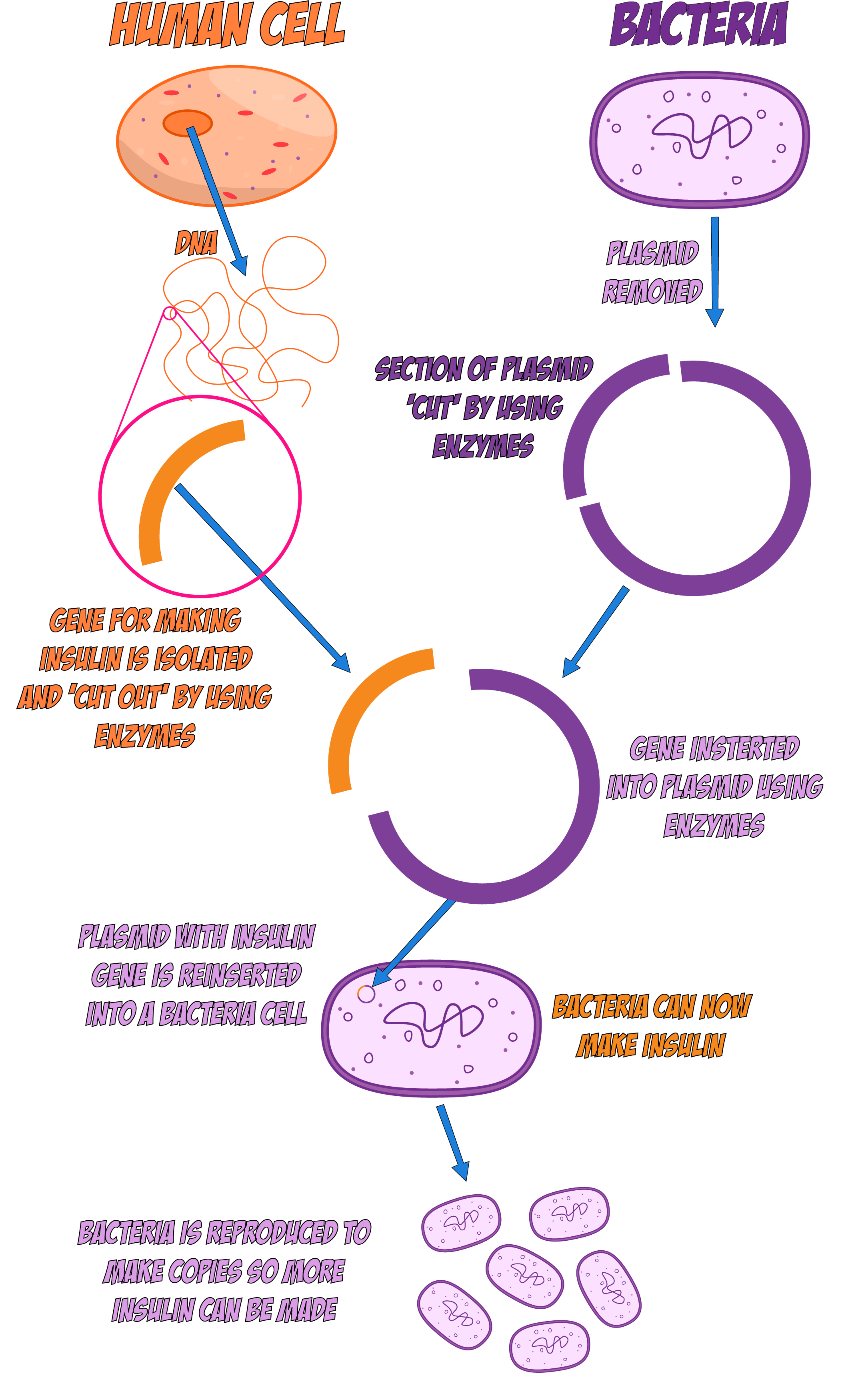
To produce HUMAN INSULIN, scientists use bacteria by inserting a human insulin gene into a bacterial plasmid.
The INSULIN GENE is isolated using an ENZYME, which cuts DNA at specific sequences.
The extracted gene and the plasmid are cut to create sticky ends, then combined using an ENZYME that joins the DNA strands.
The combined DNA is then introduced into the bacteria, which are grown under controlled conditions to mass-produce insulin.
The insulin is then HARVESTED and PURIFIED for medical use in treating DIABETES.
3. GM CROPS
GENETICALLY MODIFIED (GM) CROPS are developed to be RESISTANT TO PESTS and can grow better in DROUGHT CONDITIONS, enhancing food security.
GM crops can be engineered to have improved nutritional profiles, like ‘GOLDEN RICE’ which is modified to help the body make VITAMIN A.