Meiosis
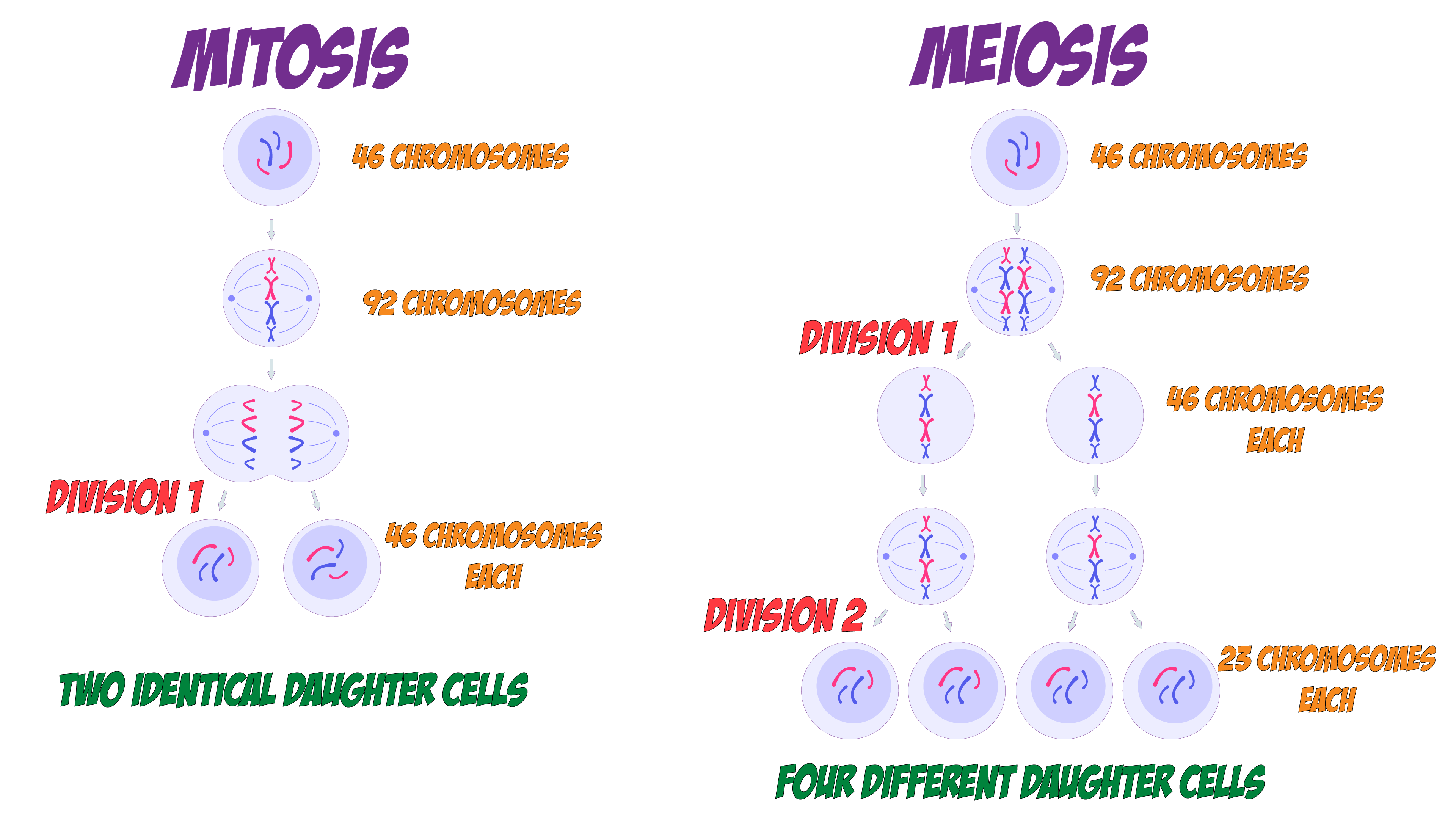
- MEIOSIS is a type of cell division that reduces the chromosome number by HALF
- It is used for the PRODUCTION of GAMETES—sperm in males and eggs in females.
- It consists of TWO CELL DIVISIONS and results in FOUR GENETICALLY DIFFERENT GAMETES.
- Each gamete produced (daughter cells) contain HALF the usual number found in body cells.
STEPS OF MEIOSIS
1. Duplication of Chromosomes:

Each cell prepares for meiosis by duplicating its genetic material to form 92 CHROMOSOMES.
2. First Division:
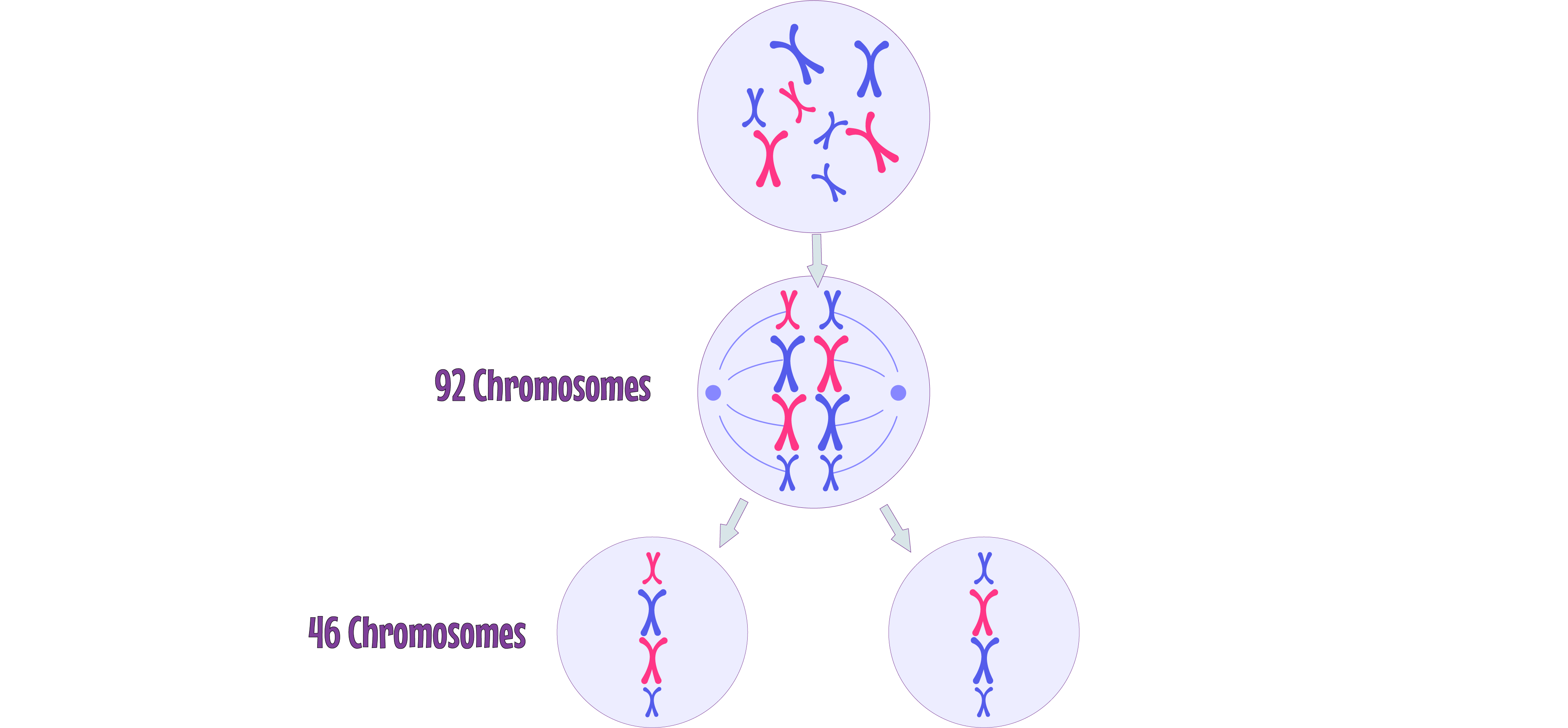
- The 92 chromosomes pair up in the MIDDLE of the cell.
- The paired chromosomes are separated and PULLED APART to opposite poles of the cell by cell fibres.
- The cell SPLITS in two, reducing the chromosome number by HALF to 46.
3. Second Division:
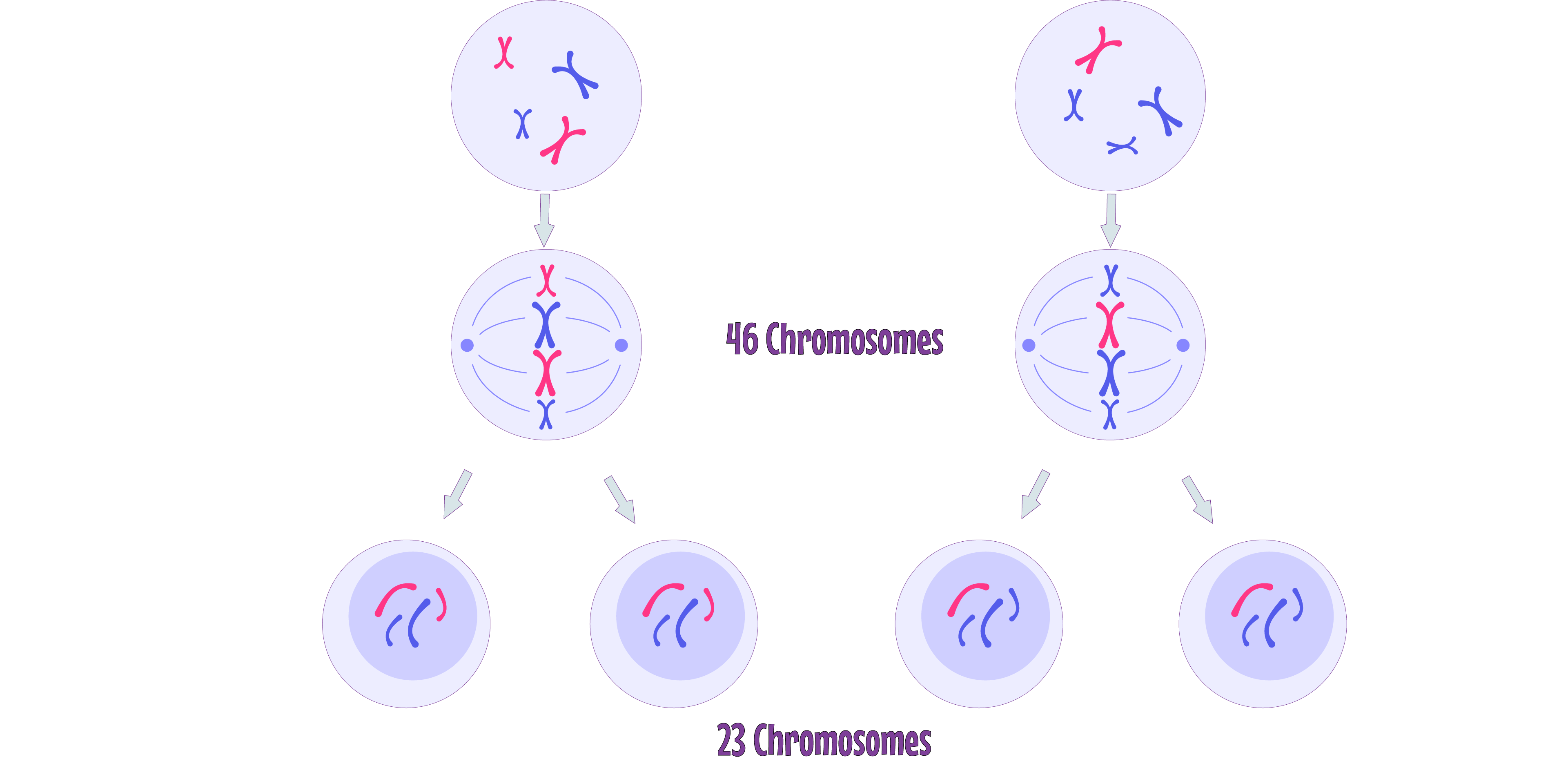
- The chromosomes of each of the new cells then line up in the middle of the cell again.
- Cell fibres pull each half of the X-SHAPED CHROMOSOMES to opposite poles of the cells.
- Both cells SPLIT again to form a total of 4 DAUGHTER CELLS which are GENETICALLY DIFFERENT and contain HALF the number of chromosomes (23).
SIGNIFICANCE OF MEIOSIS IN GENETIC DIVERSITY
- Meiosis creates GENETIC VARIATION in organisms.
- This is because the CHROMSOMES from the mother are father are distributed RANDOMLY before the divisions, which results in all four daughter cell being different to each other.
- This in turn means that the SPERM CELLS and EGG CELLS in a human all have DIFFERENT genetic material, so when the sperm and egg fuse to make an offspring, it will also be genetically different to its parents.
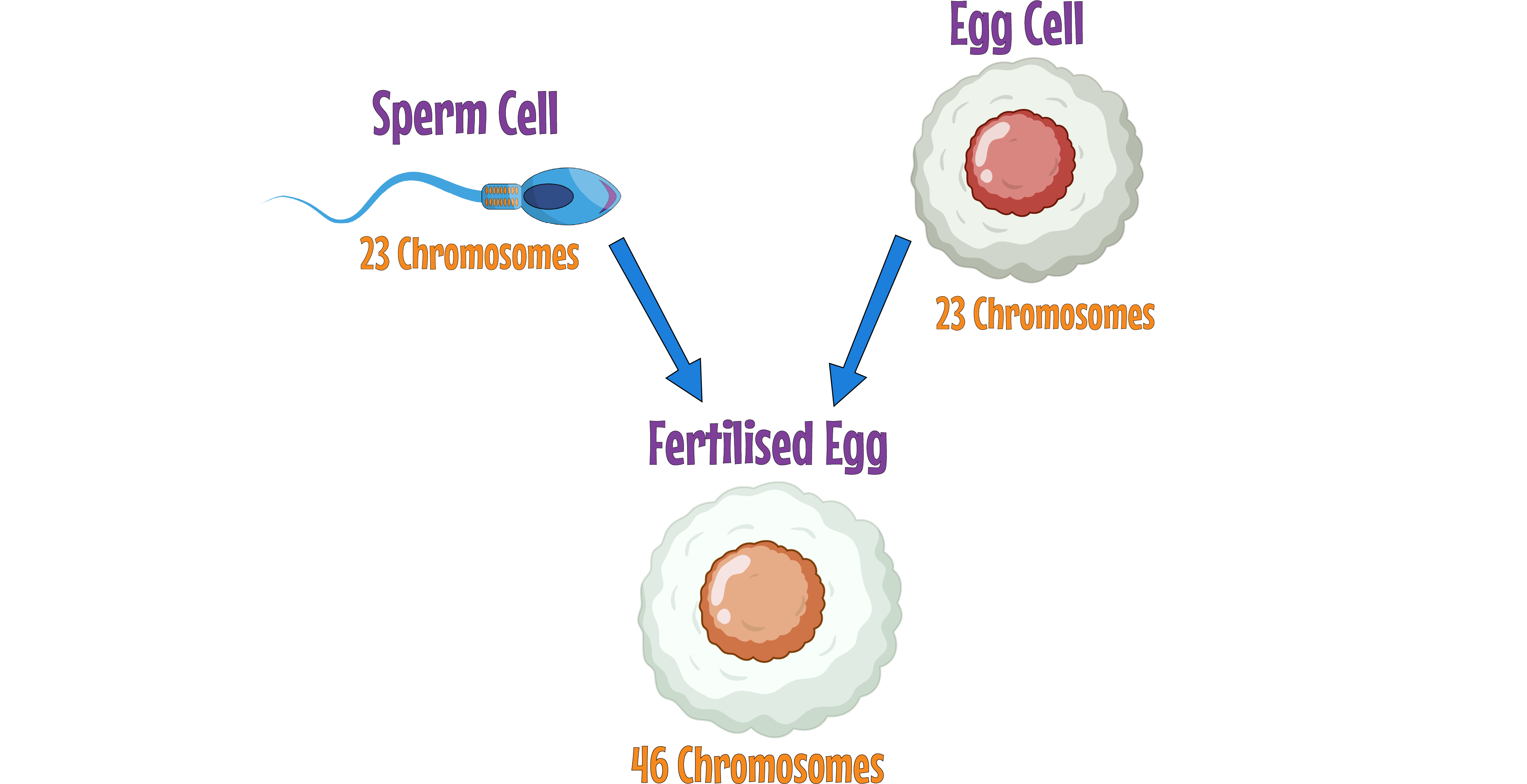
- After FERTILISATION, when two gametes fuse, the NORMAL number of 46 CHROMOSOMES is restored in the resulting fertilised egg.
- After this stage, the new cell then undergoes numerous rounds of MITOSIS to form an EMBRYO.
- These divisions by MITOSIS allow the embryo to grow and cells to DIFFERENTIATE into various specialised cells, forming the complete organism.
Here is a comparison of MITOSIS (division of body cells) and MEISOS (division of gametes):