
Control of Body Temperature
Body temperature has to be kept constant at 37.5°C, as this is the OPTIMUM TEMPERATURE for the ENZYMES in the body to work the best.
Body temperature is MONITORED and CONTROLLED by the THERMOREGULATORY CENTRE in the brain.
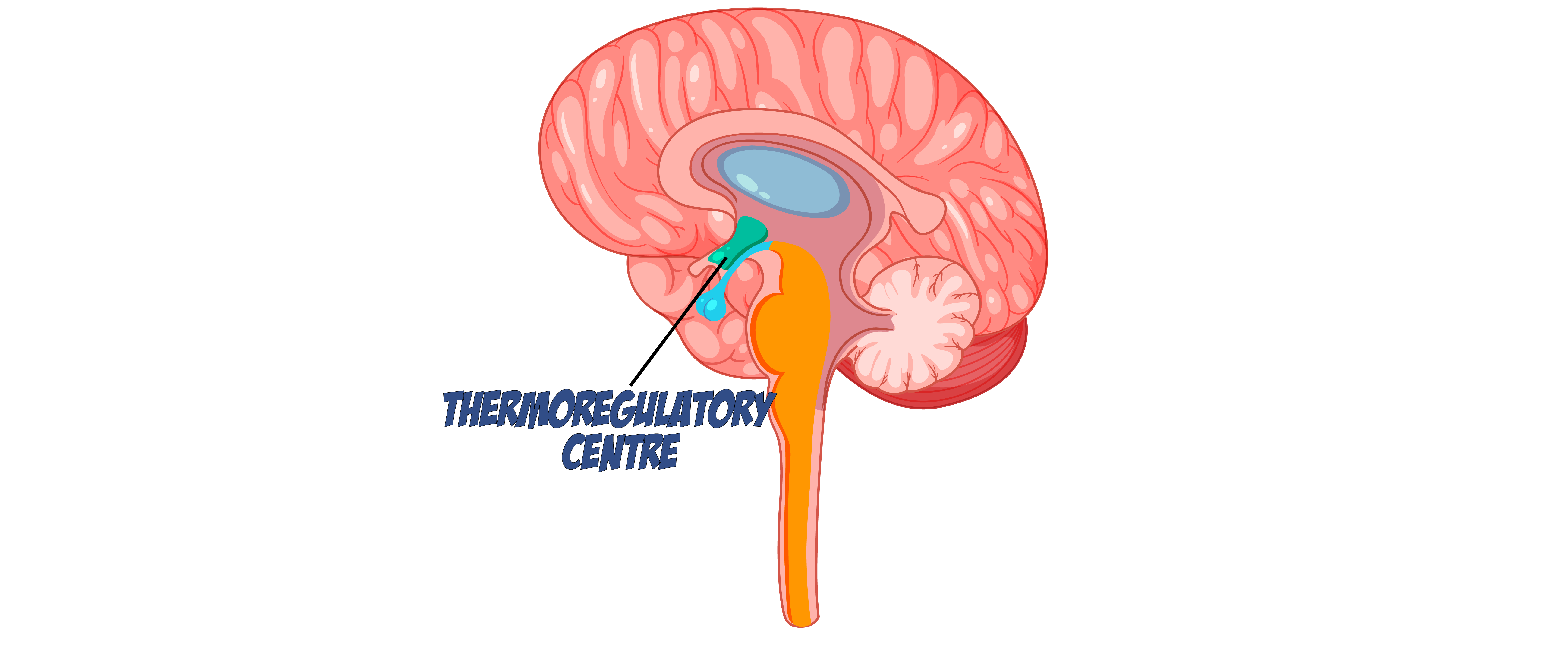
The THERMOREGULATORY CENTRE acts as the body's thermostat by sensing body temperature using TWO methods:
1. It contains RECEPTORS that are sensitive to the temperature of BLOOD flowing through the BRAIN.
2. It RECEIVES nervous IMPULSES from SKIN TEMPERATURE RECEPTORS.
Using the information from the skin and the brain, it can make appropriate responses to adjust the body's heat levels, using a NEGATIVE FEEDBACK MECHANISM.
Temperature Regulation Mechanisms
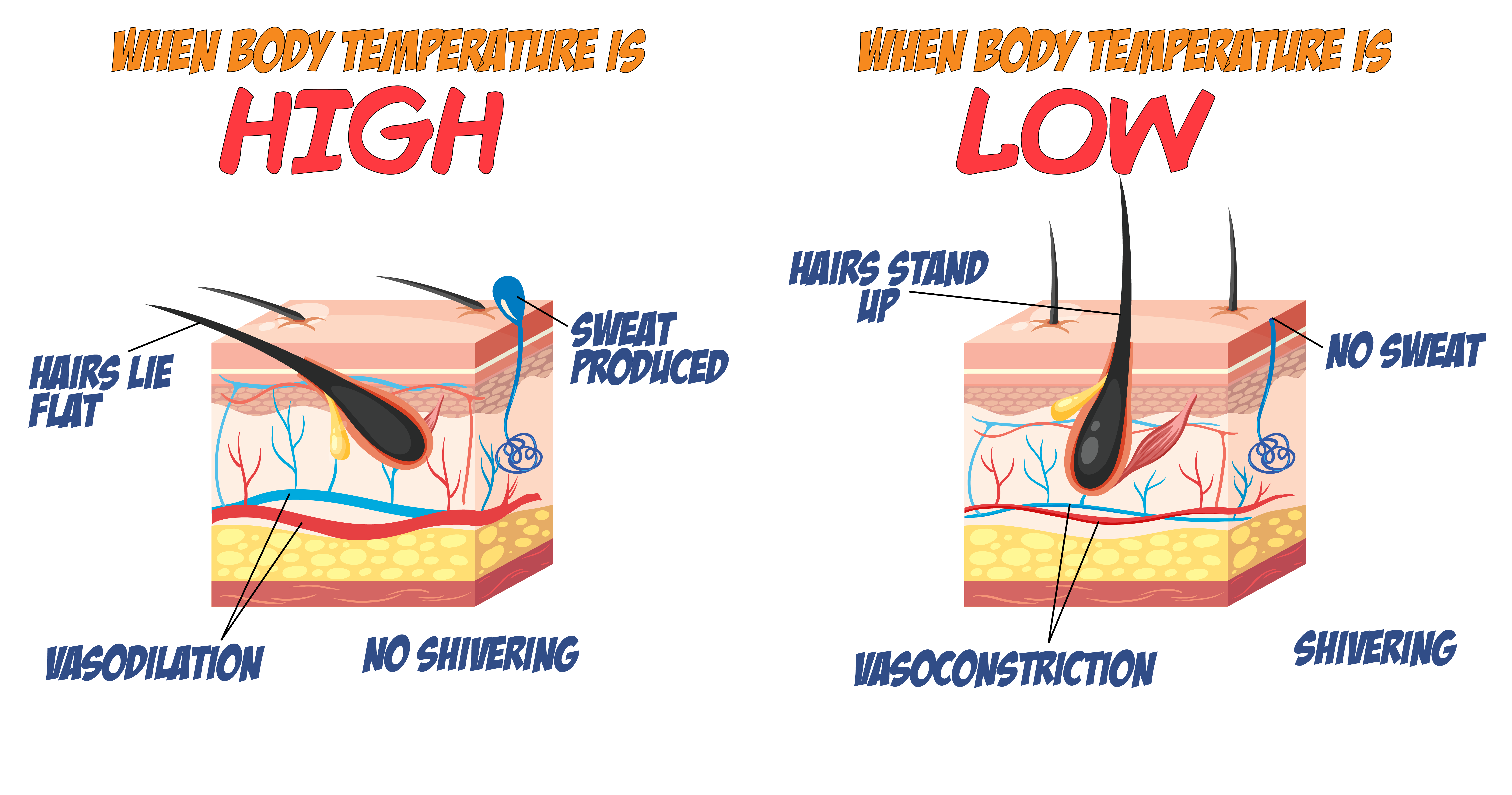
When Body Temperature is HIGH
SWEAT PRODUCED: The SWEAT GLANDS produce sweat which EVAPORATES from the skin and TRANSFERS HEAT ENERGY to the SURROUNDINGS.
VASODILATION: BLOOD VESSELS near the skin surface WIDEN, which increases blood flow near the surface, allowing MORE HEAT ENERGY to be released to the SURROUNDINGS.
When Body Temperature is LOW
VASOCONSTRICTION: Blood vessels near the skin surface get NARROW, reducing blood flow to the skin, which means LESS HEAT ENERGY is released to the surroundings.
SHIVERING: This involuntary action is the rapid CONTRACTION and RELAXATION of SKELETAL muscles. It uses RESPIRATION which TRANSFERS energy to WARM the body.
HAIRS STAND UP: This helps trap an INSULATING LAYER of air which results in LESS HEAT TRANSFER to the surroundings.