
The Eye
Structure and Function of the Eye
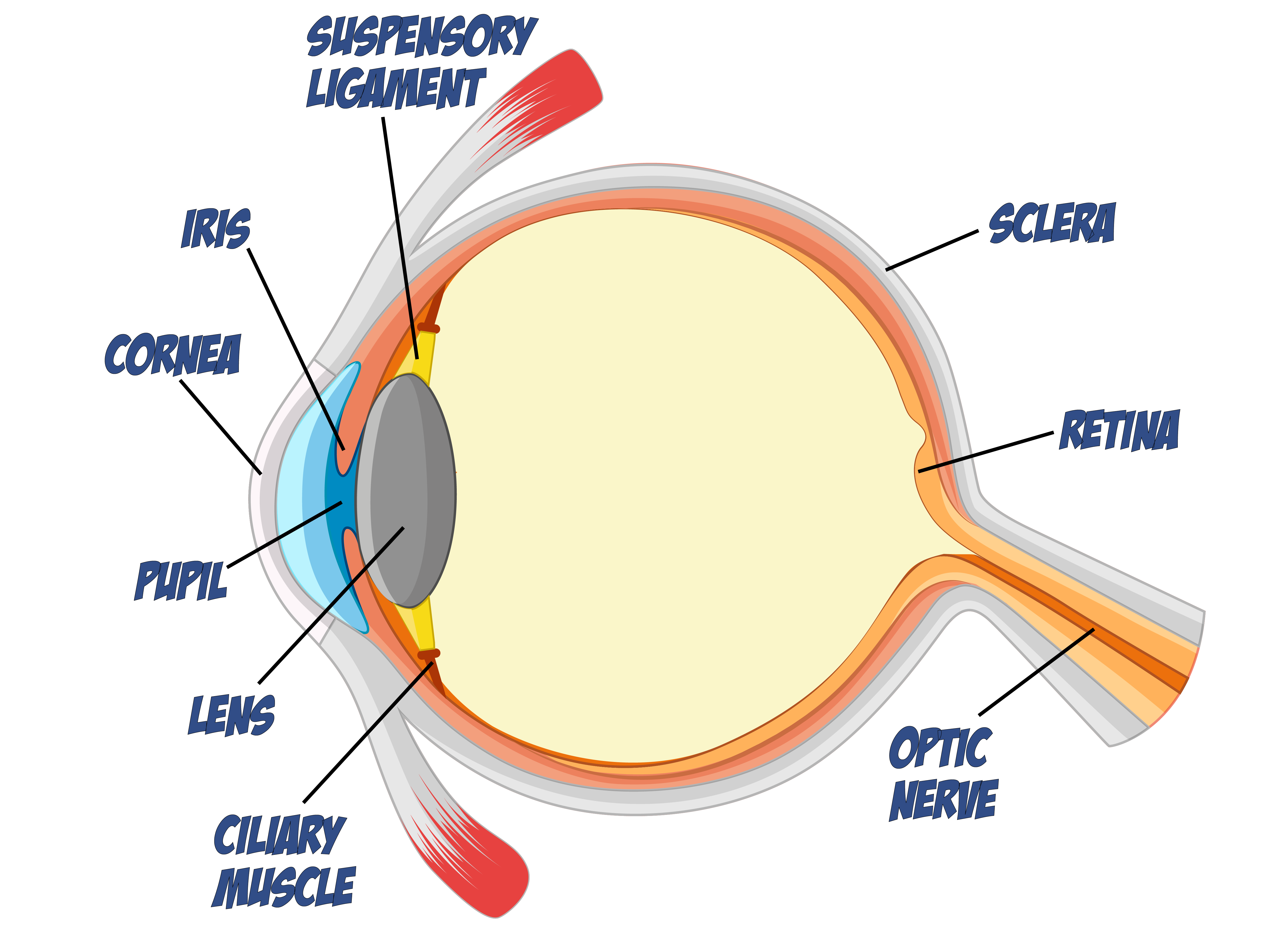
-
CORNEA: The TRANSPARENT front part of the eye that REFRACTS (bends) light into the eye.
-
PUPIL: The opening in the centre of the iris; it controls the amount of light entering by adjusting its size.
-
IRIS: The COLOURED part of the eye, which controls the SIZE of the pupil.
-
LENS: Also REFRACTS light, focusing it onto the RETINA. The shape of the lens changes to focus on near and distant objects.
-
CILIARY MUSCLE and SUSPENSORY LIGAMENTS: These work together to alter the shape of the lens for focusing.
-
RETINA: The light-sensitive layer at the back of the eye, containing cells that respond to light and colour.
-
OPTIC NERVE: Carries information from the retina to the BRAIN in the form of ELECTRICAL IMPULSES.
- SCLERA: The tough supporting wall of the eye.
The Iris Reflex
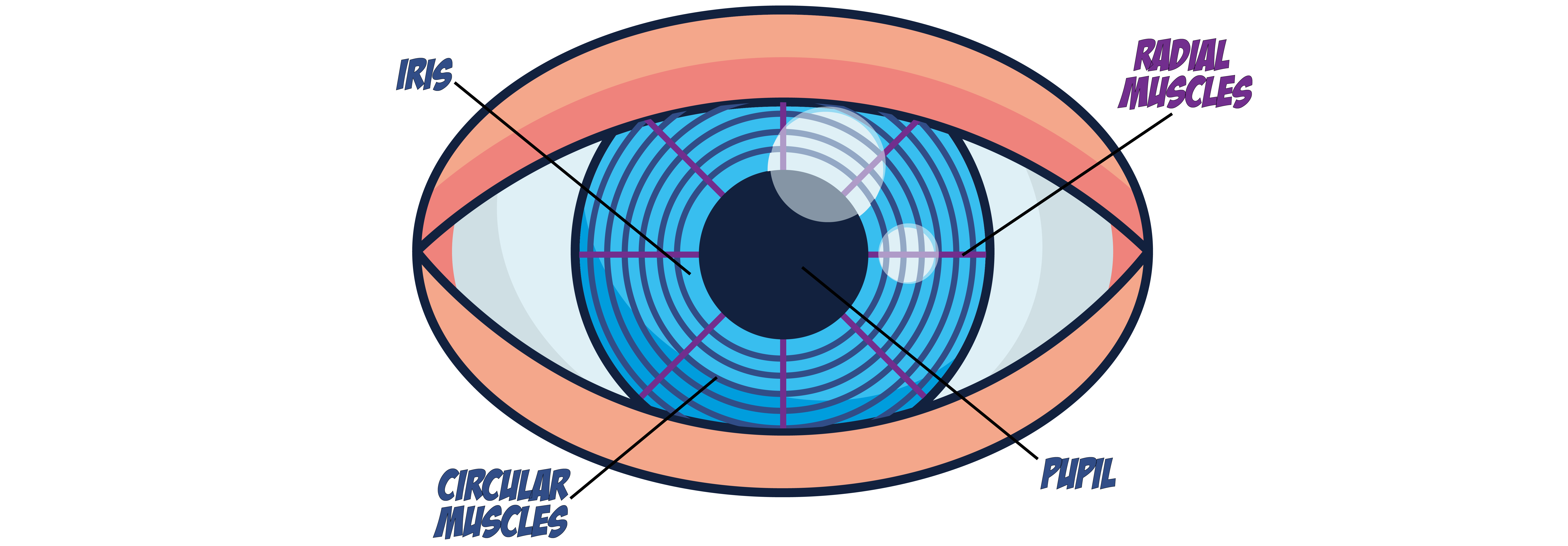
The IRIS can adjust the size of the PUPIL to control the amount light entering the eye.
There are TWO muscles in the IRIS that can change the size of the PUPIL.
1. CIRCULAR MUSCLES
2. RADIAL MUSCLES
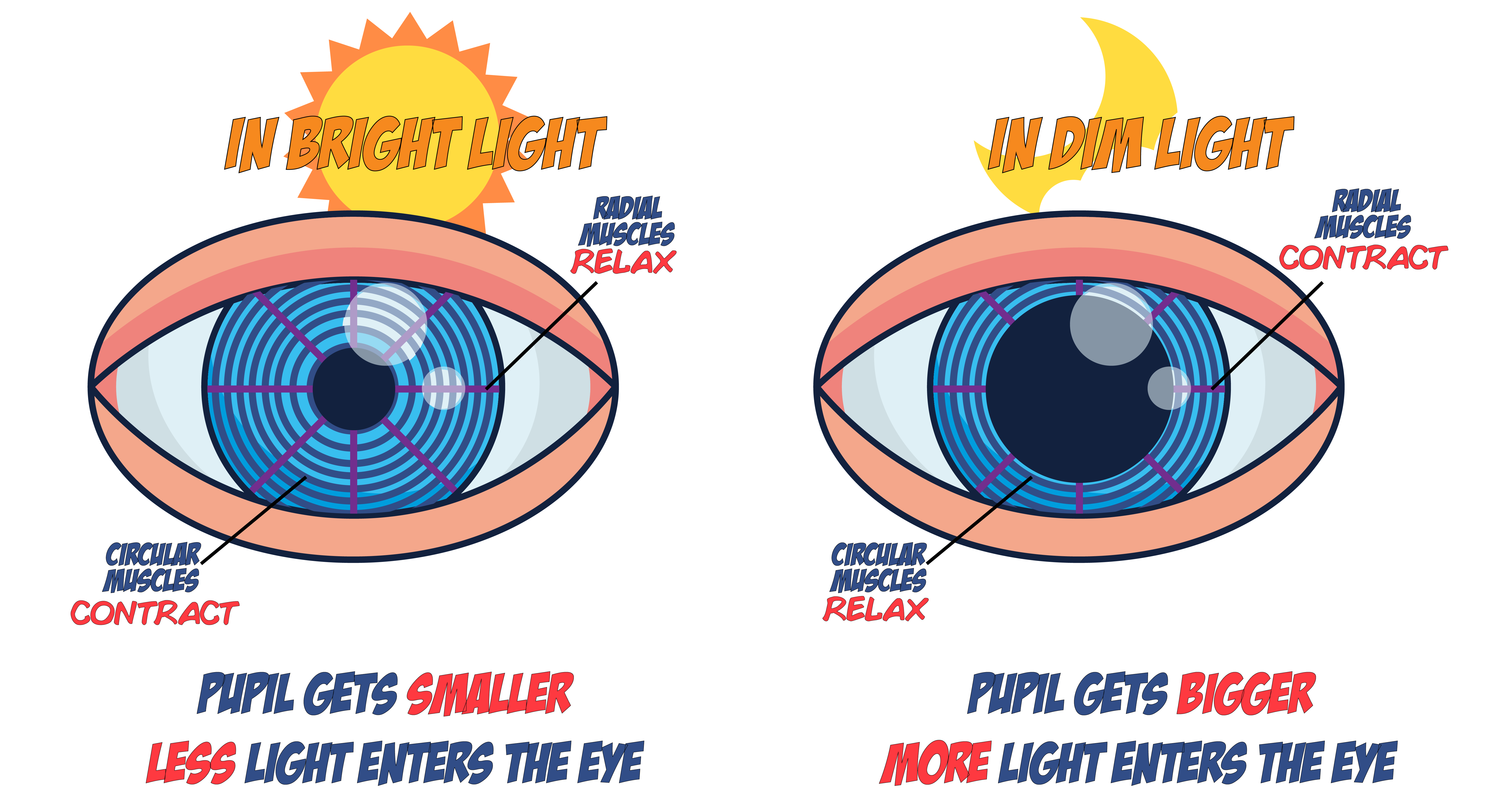
In BRIGHT LIGHT:
TOO MUCH light enters the eye which can DAMAGE the RETINA, so the PUPIL needs to get SMALLER.
CIRCULAR muscles CONTRACT and RADIAL muscles RELAX.
In DIM LIGHT:
NOT ENOUGH light enters the eye, so vision is decreased, so the pupil needs to get BIGGER.
CIRCULAR muscles RELAX and RADIAL muscles CONTRACT.
Accommodation
Accommodation is the process where the eye FOCUSES on NEAR and DISTANT objects.
The CILIARY MUSCLES and SUSPENSORY LIGAMENTS both work together to change the SHAPE of the LENS to help the eye FOCUS.
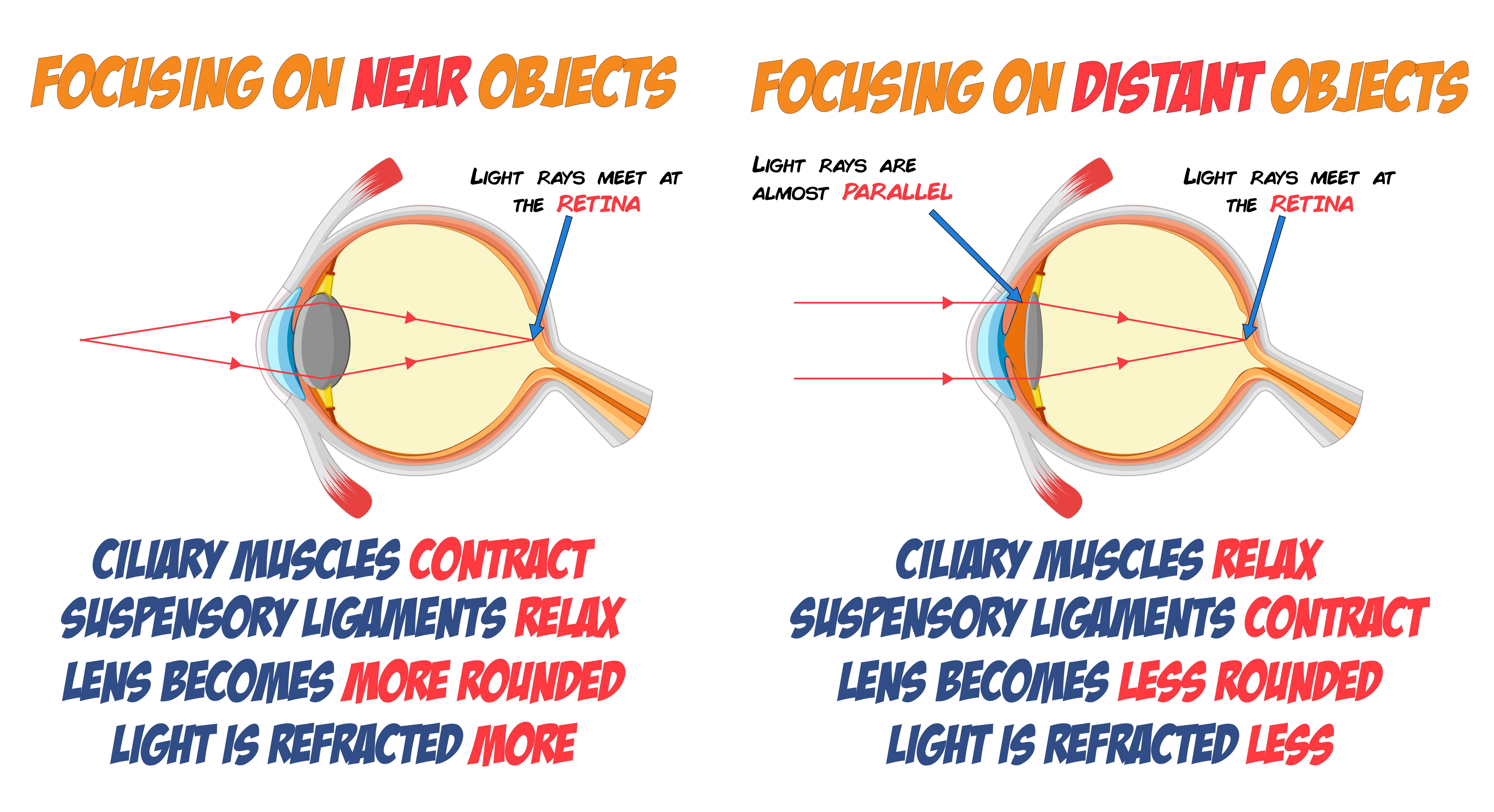
Focusing on Near Objects:
When looking at objects that are close, the CILIARY MUSCLES contract.
This contraction causes the SUSPENSORY LIGAMENTS to relax.
As a result, the LENS becomes more rounded, which increases its ability to refract (bend) light more.
The light rays are bent more sharply and meet at the RETINA, allowing you to see the close object clearly.
Focusing on Distant Objects:
When viewing distant objects, the CILIARY MUSCLES relax.
This relaxation causes the SUSPENSORY LIGAMENTS to contract.
Consequently, the LENS becomes less rounded, decreasing its refractive power.
The light rays entering the eye are almost parallel and need less refraction to focus properly.
These light rays meet at the RETINA, enabling clear vision of the distant object.
Vision Impairments
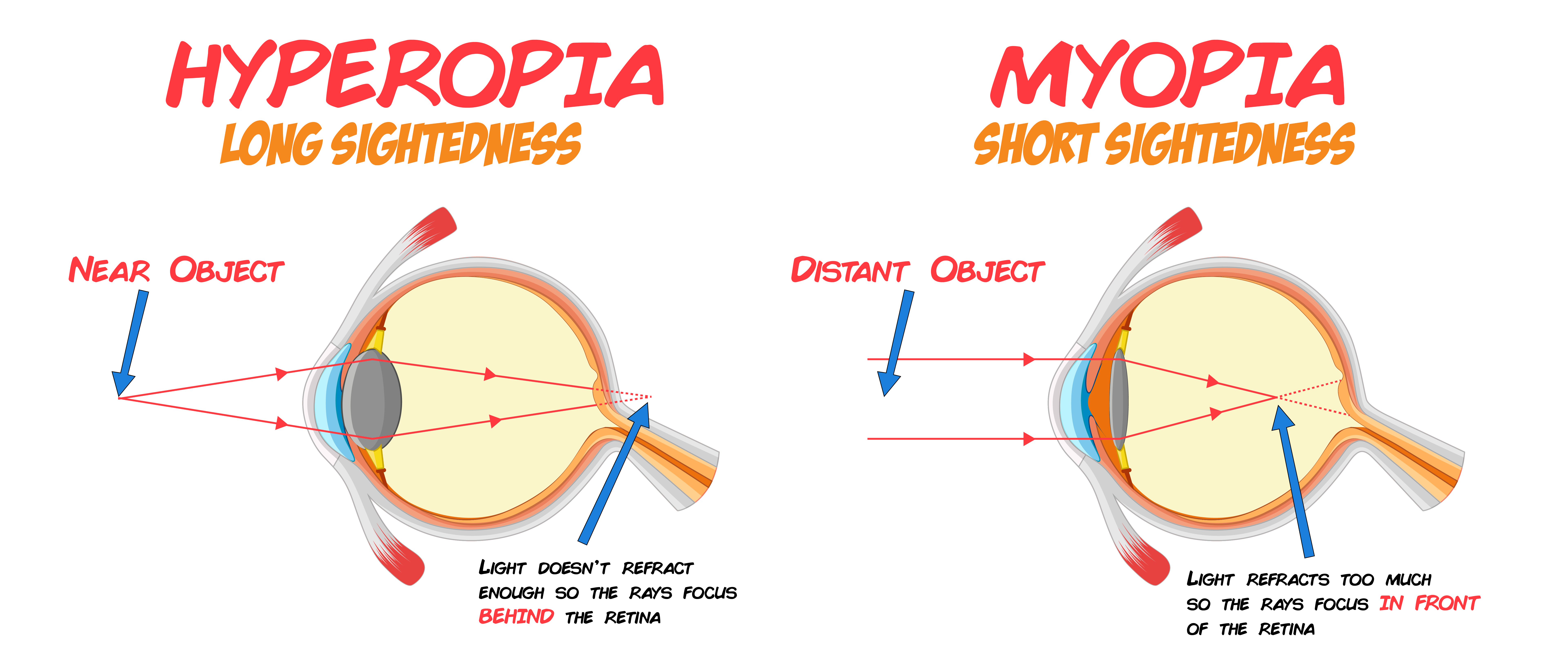
Some people have HYPEROPIA (long sightedness) or MYOPIA (short sightedness) where they struggle to focus:
Hyperopia (Long-Sightedness):
Occurs when the eye CANNOT focus on NEAR objects because the eyeball is TOO SHORT, or the lens is the wrong shape, causing images to be focused BEHIND the RETINA.
Myopia (Short-Sightedness):
Occurs when the eye CANNOT focus on DISTANT objects because the eyeball is TOO LONG, causing images to be focused IN FRONT of the RETINA.
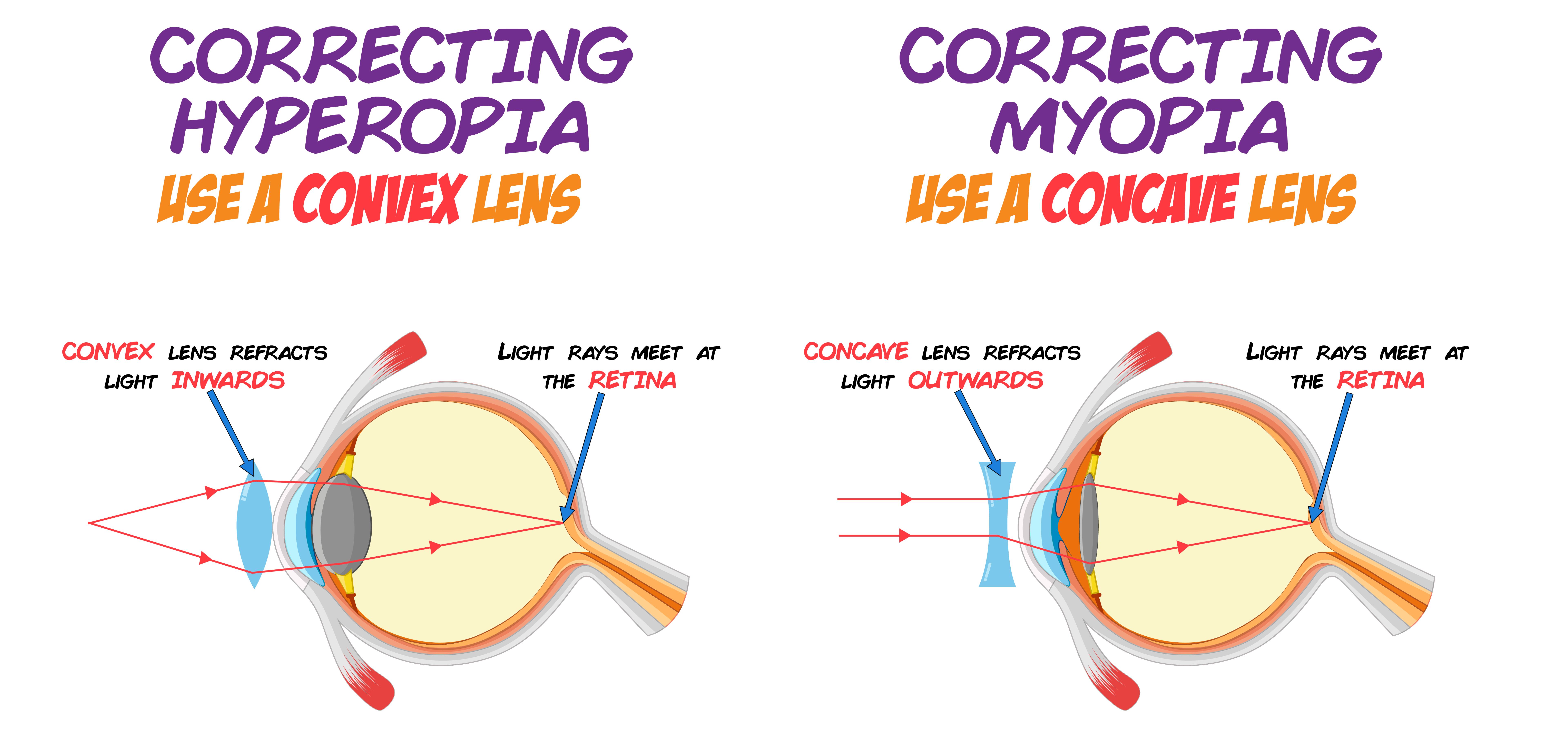
Both Hyperopia AND Myopia can be treated by wearing SPECTACLE LENSES (glasses), which refract the light so that they FOCUS on the RETINA.
There are TWO types of lenses that can be used:
1. CONVEX LENSES: Thinner on the edges but thicker in the middle.
2. CONCAVE LENSES: Thicker on the edges but thinner in the middle.
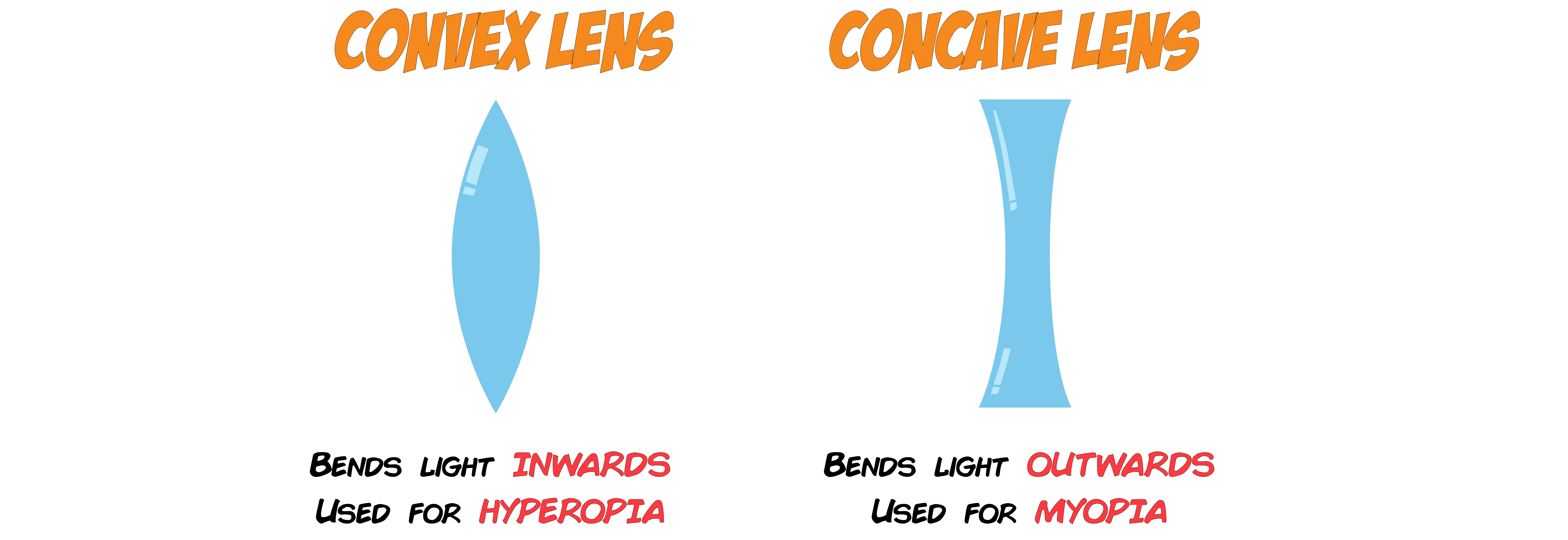
CONVEX lenses can be used to treat HYPEROPIA (long sightedness) by refracting the light INWARDS before it enters the eye.
CONCAVE lenses can be used to treat MYOPIA (short sightedness) by refracting the light OUTWARDS before it enters the eye.
Treatments for Vision Defects
1. CONTACT LENSES:
CONTACT LENSES are thin lenses placed directly on the surface of the eye, designed to correct vision by compensating for focusing errors. They are popular for their convenience, especially for activities like sports, and come in two main types: HARD LENSES and SOFT LENSES. Soft lenses are typically more comfortable but may carry a higher risk of EYE INFECTIONS.
2. LASER EYE SURGERY:
LASER EYE SURGERY involves using a laser to reshape the CORNEA to correct refraction issues. This method is effective for improving conditions like SHORT SIGHTEDNESS and LONG SIGHTEDNESS. It allows precise adjustments to the eye but, like all surgeries, carries risks of complications such as INFECTIONS.
3. REPLACEMENT LENS SURGERY:
In REPLACEMENT LENS SURGERY, the eye's natural lens is replaced with an ARTIFICIAL one. This is often used for treating severe LONG-SIGHTEDNESS more effectively than laser surgery. However, it involves removing the natural lens, which can lead to higher risks of complications, including INFECTION and potential damage to the RETINA.