
The Circulatory System
The circulatory system is an ORGAN SYSTEM that transports many substances including FOOD and OXYGEN around the body, so that they can be received by cells.
It also transports WASTE SUBSTANCES out of cells so that they can be excreted.
The Heart
- The heart is the central PUMP of the circulatory system, maintaining the flow of blood throughout the body.
- It supplies OXYGENATED blood to tissues and organs and returns DEOXYGENATED blood to the lungs for re-oxygenation.
- The walls of the heart are mostly made up of MUSCLE TISSUE which contract to pump the blood.
- The heart contains VALVES which prevent the BACKFLOW of blood.
How the Heart Pumps Blood
- The heart is a muscular organ divided into four chambers: two ATRIA and two VENTRICLES.
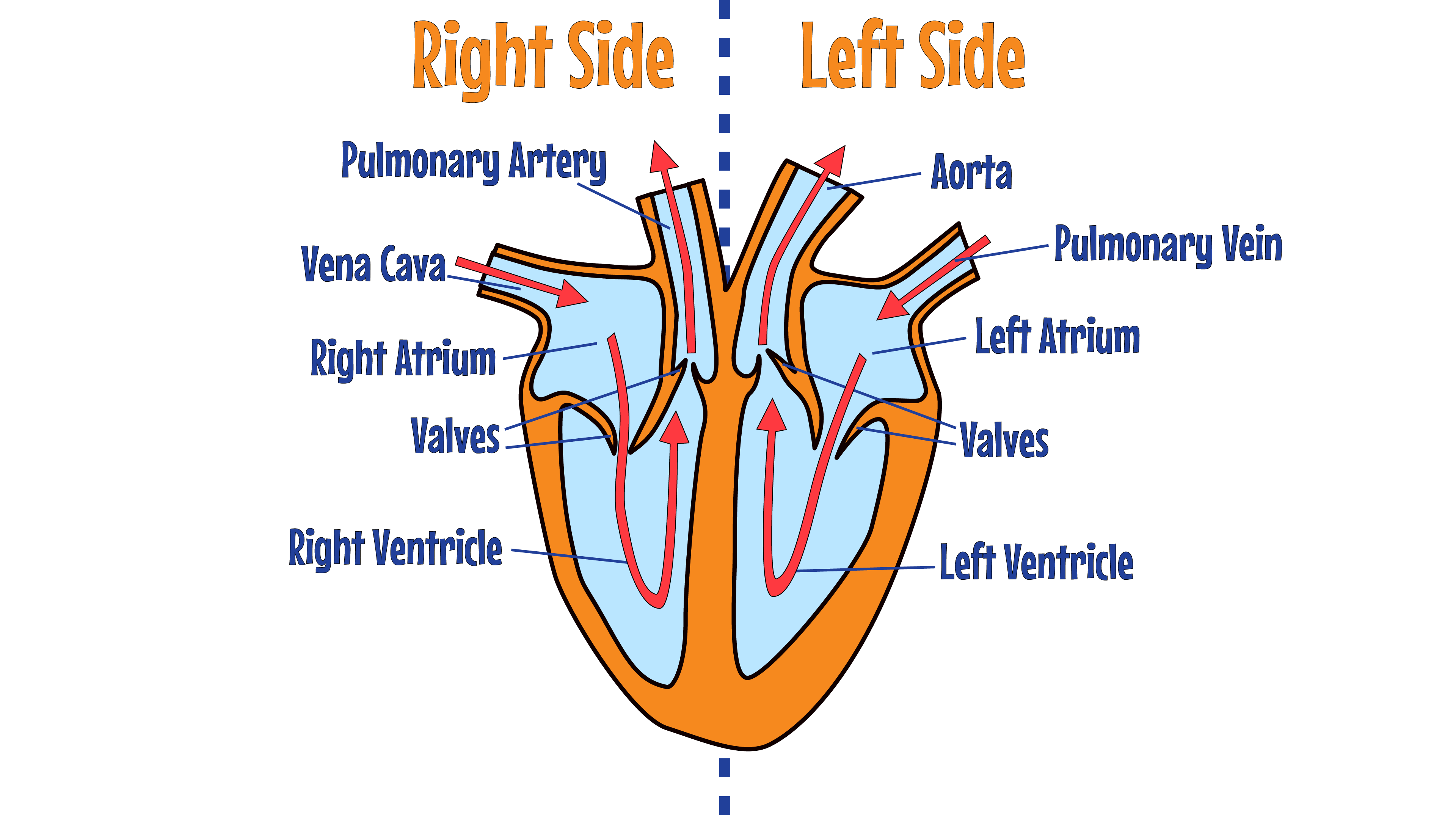
- Blood enters the atria from the VENA CAVA and PULMONARY VEIN.
- The atria contract, pushing blood into the ventricles, which then contract to send blood out of the heart via the PULMONARY ARTERY and AORTA.
- The LEFT side of the heart has THICKER WALLS than the right side. This because the left side needs to pump the blood to the REST OF THE BODY, therefore it needs to be pumped out at a much HIGHER PRESSURE.
The Double Circulatory System
- Humans have a DOUBLE CIRCULATORY SYSTEM consisting of two separate circuits that work together. Both circuits have the HEART at its centre which PUMPS blood.
- One circuit pumps blood to the LUNGS.
- The other circuit pumps blood to the REST OF THE BODY.
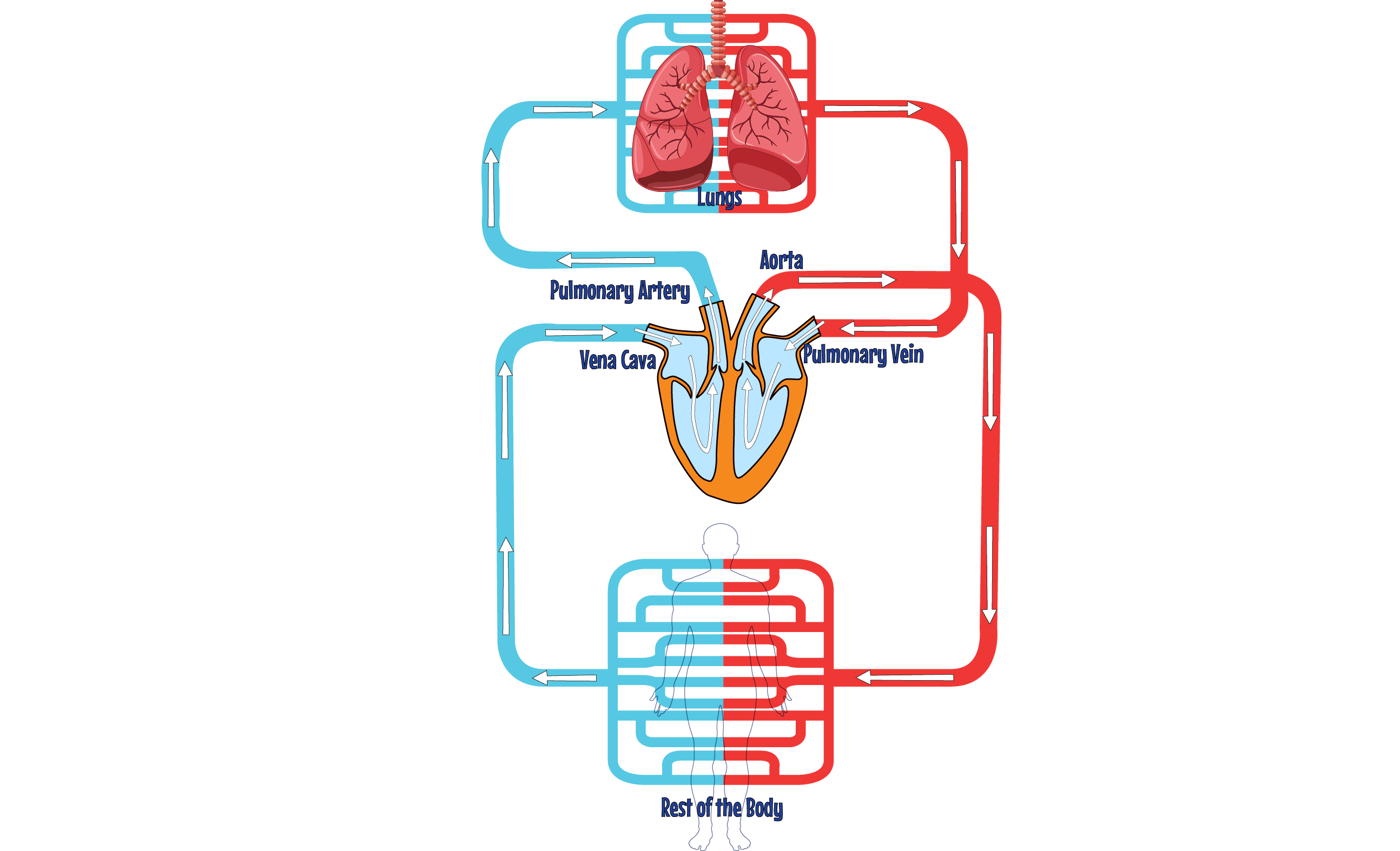
- The RIGHT VENTRICLE pumps deoxygenated blood to the LUNGS for gas exchange where oxygen is collected into the blood.
- The oxygenated blood returns from the lungs to the LEFT VENTRICLE, which then pumps it to the rest of the body.
- After delivering oxygen and collecting waste, blood returns to the heart, completing the cycle.
The Heart's Oxygen Supply
- The heart receives oxygenated blood through its own network of CORONARY ARTERIES, ensuring it has the oxygen it needs to function effectively. This is what causes the heart muscles to contract.
The Heart's Natural Pacemaker
- A group of cells in the RIGHT ATRIUM act as a natural PACEMAKER.
- It regulates the HEARTBEAT by generating ELECTRICAL IMPULSES that cause the heart muscles to contract.
- Some people may have a natural pacemaker that does NOT work properly. They can use an ARTIFICIAL pacemaker, which is a small device that is placed under the skin with a wire that connects it to the heart. The device produces an ELECTRICAL CURRENT that keeps the heart beating.
Types and Functions of Blood Vessels
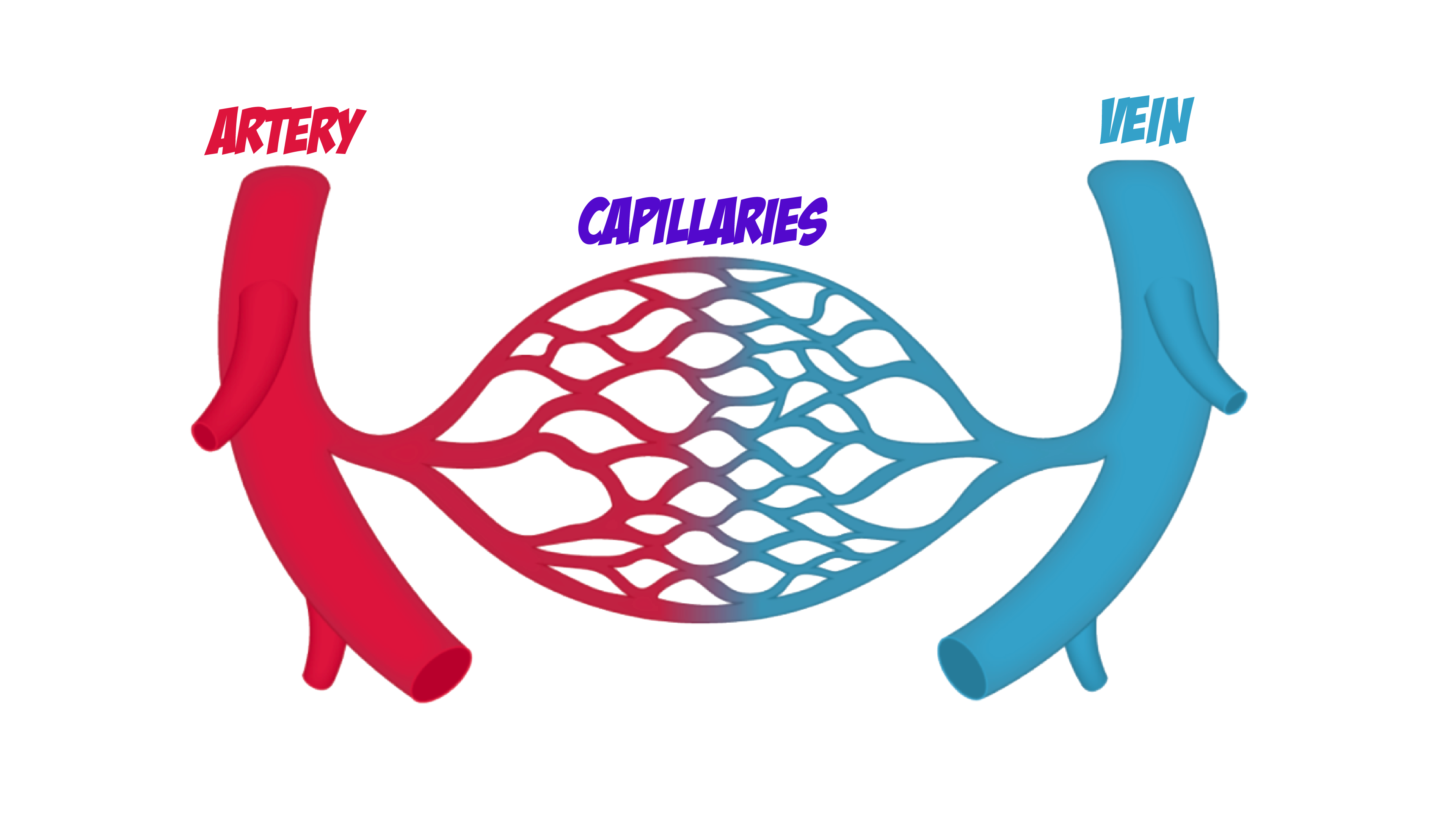
ARTERIES, CAPILLARIES, and VEINS are the three types of blood vessels, each designed for specific functions within the circulatory system.
Arteries:
- Arteries transport blood AWAY from the heart under HIGH PRESSURE.
- Their walls are THICK and muscular, with elastic fibers to withstand and maintain this pressure.
- The LUMEN (the interior passage of a blood vessel) is SMALL in comparison to its walls.

Capillaries:
- Capillaries are tiny blood vessels where the actual EXCHANGE of gases and nutrients occurs.
- They are extremely small, with walls only ONE CELL THICK, facilitating the diffusion of substances.
- Oxygen and nutrients pass from capillaries to body cells, while carbon dioxide and other wastes are collected for removal.

Veins:
- Veins carry deoxygenated blood back TOWARDS the heart.
- They have a LARGER LUMEN than arteries with THINNER WALLS.
- They carry blood at a LOWER PRESSURE.
- They have VALVES to prevent backflow of blood.

Anatomy and Function of the Lungs
The lungs are an important part of the circulatory system, which are involved in the OXYGENATING of the blood
Structure of the Lungs
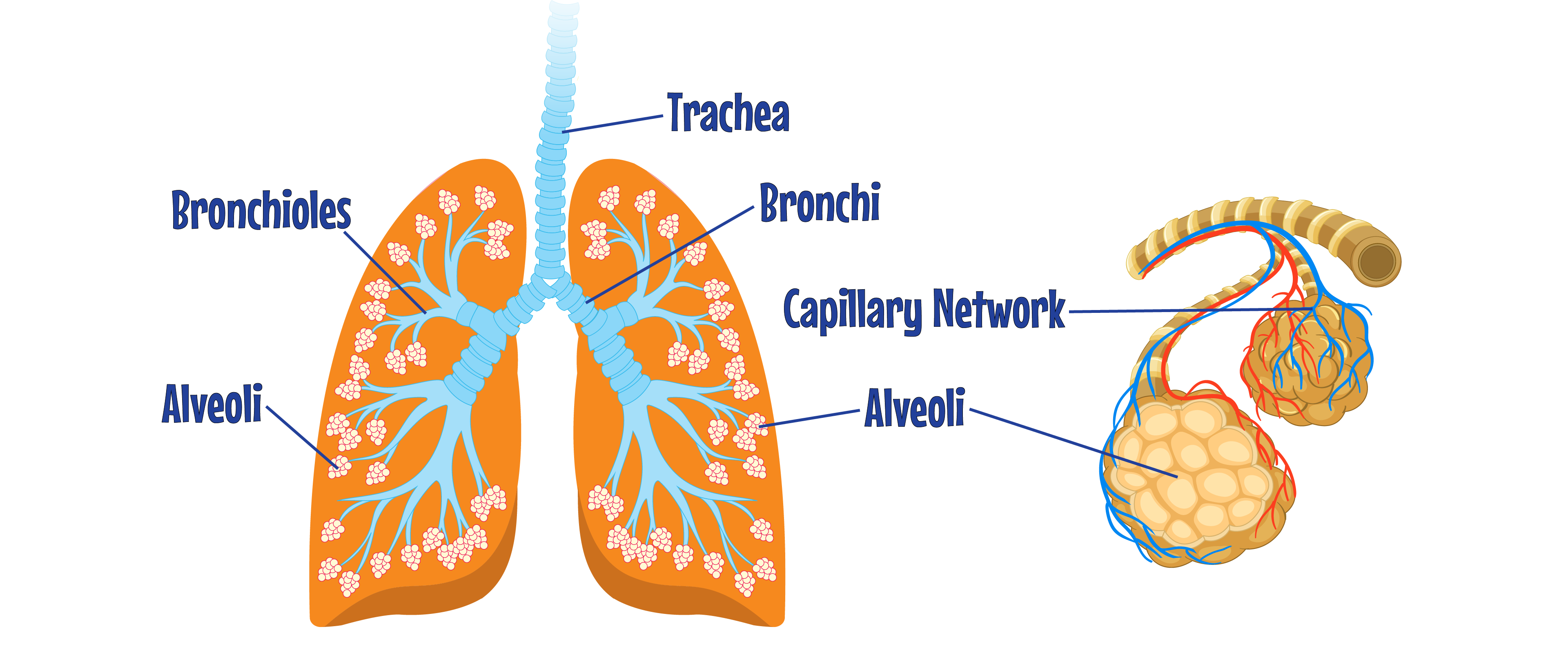
- The LUNGS are located in the THORAX.
- Air enters the lungs through the TRACHEA, which divides into two BRONCHI, one for each lung.
- The BRONCHI branch into smaller tubes called BRONCHIOLES, ending in tiny air sacs known as ALVEOLI where gas exchange occurs.
Gas Exchange Process
- ALVEOLI are the sites of gas exchange, and are surrounded by a CAPILLARY NETWORK.
- Oxygen diffuses from the alveoli into the blood, while carbon dioxide moves from the blood into the alveoli to be exhaled.
- This exchange ensures oxygenation of blood and removal of carbon dioxide, a by-product of respiration.