
Active Transport
ACTIVE TRANSPORT is the net movement of particles from an area of LOW concentration to an area of HIGH concentration using energy from RESPIRATION.
- Active transport involves particles moving AGAINST a concentration gradient (From a low to high concentration)
- Moving AGAINST a concentration gradient does not happen naturally as it is NOT a PASSIVE process like diffusion (moving from a high concentration to a low concentration)
- This means that ENERGY is required for active transport.
Example: Root cells use active transport to take in MINERALS
- Minerals are usually at a higher concentration in root hair cells than in the surrounding soil.
- Since diffusion can't occur against the concentration gradient, root hair cells use ACTIVE TRANSPORT to absorb minerals from the surrounding soil.
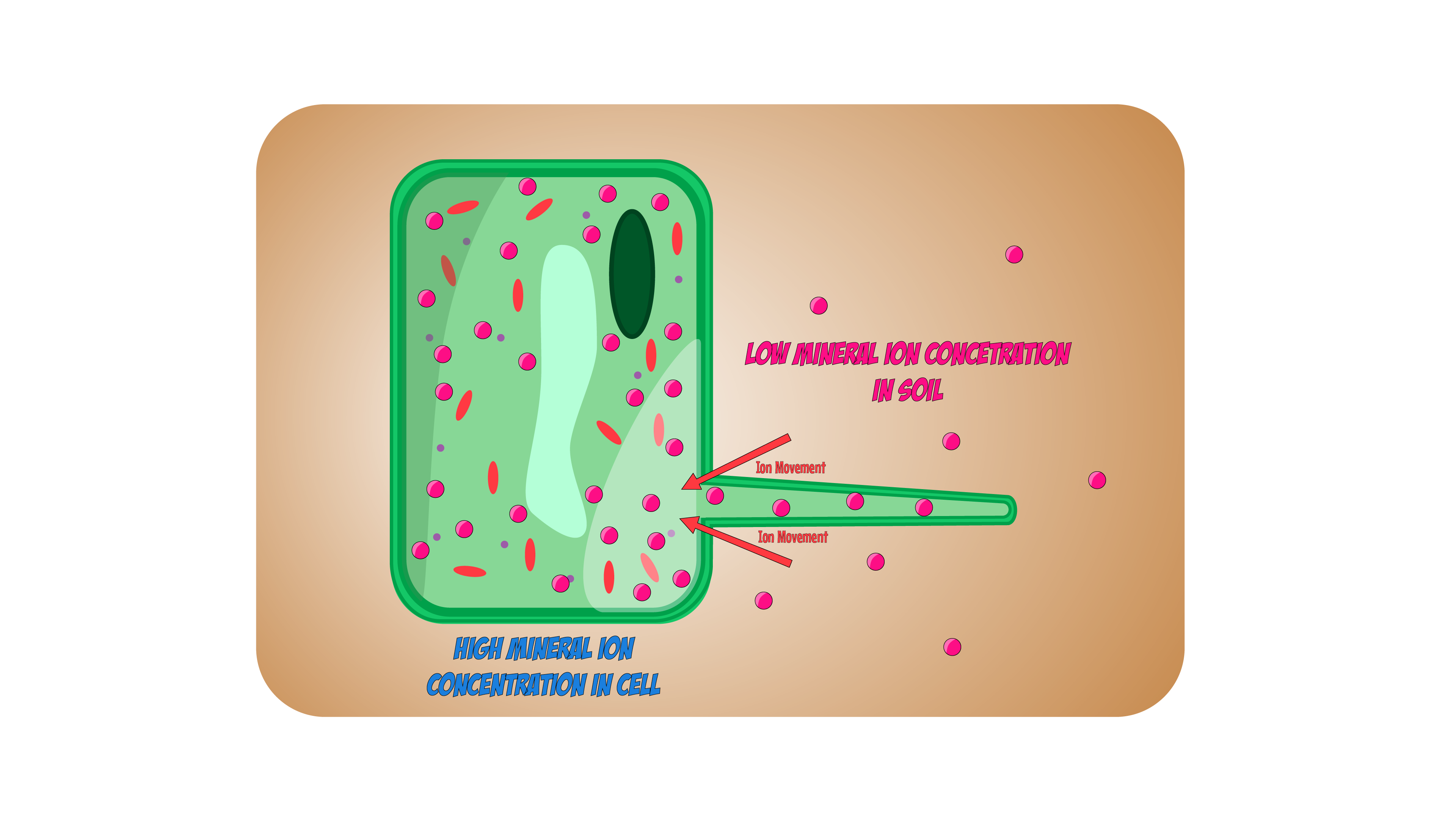
- This process allows plants to absorb essential nutrients from a very dilute solution (low concentration) in the soil.
Example: Humans absorbing GLUCOSE from the gut.
- In the human gut, when there's a lower concentration of nutrients compared to the blood, ACTIVE TRANSPORT allows nutrients, including glucose, to be absorbed into the bloodstream.
- This is essential for providing ENERGY to our cells, even when the concentration gradient is the opposite direction of diffusion.