Osmosis
OSMOSIS is the process where WATER MOLECULES move from an area of HIGH WATER CONCENTRATION to an area of LOW WATER CONCENTRATION across a PARTIALLY PERMEABLE MEMBRANE.
A PARTIALLY PERMEABLE MEMBRANE has tiny holes that allow only small molecules like water to pass through, preventing larger molecules like proteins and sucrose from moving across.
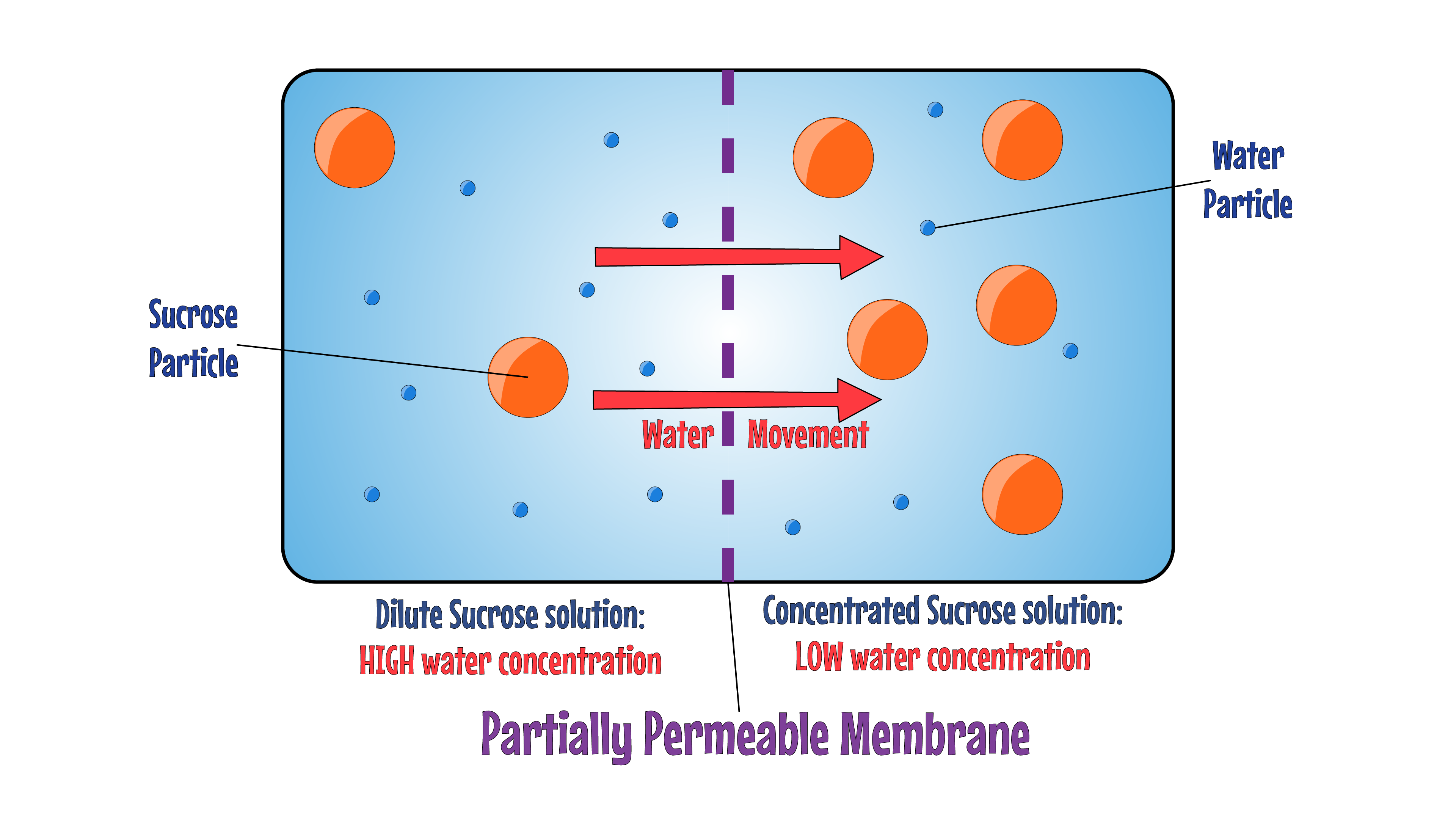
- Water molecules move in both directions across the membrane during osmosis, but there is a NET MOVEMENT (Overall Movement) of water towards the region with fewer water molecules, which happens because water molecules are constantly in random motion.
- The net movement results in the dilution of stronger sugar solutions as the water moves to even out the concentrations on both sides of the membrane.
- Osmosis can be described as a PASSIVE movement of water molecules without requiring energy, simply moving from higher to lower water concentration areas.
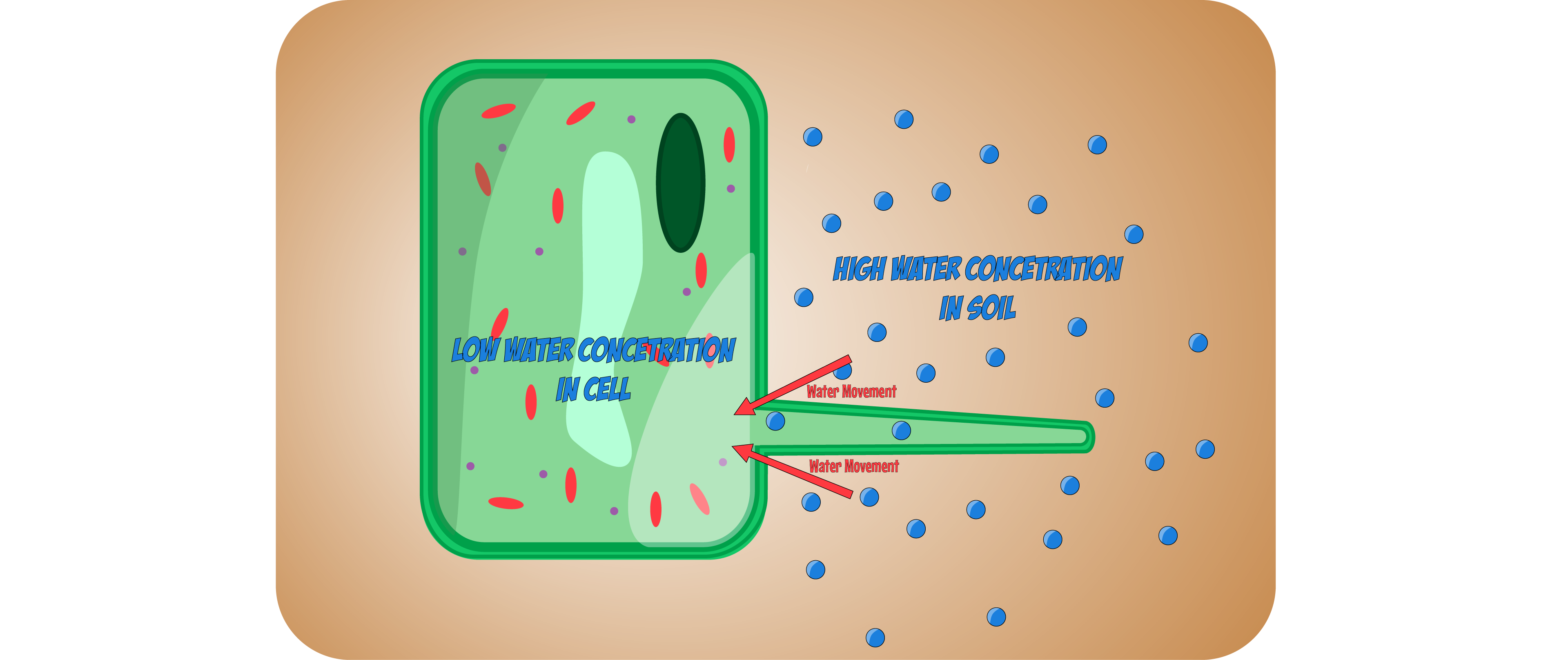
Example: Root hair cells use osmosis to take in WATER from the soil as there is a higher water concentration outside in the soil. This causes water particles to pass into the cell where there is a lower water concentration.