
Required Practical: Waves
This practical involves TWO experiments:
1. Measuring the Speed of Water Ripples
For this experiment, a RIPPLE TANK is used:
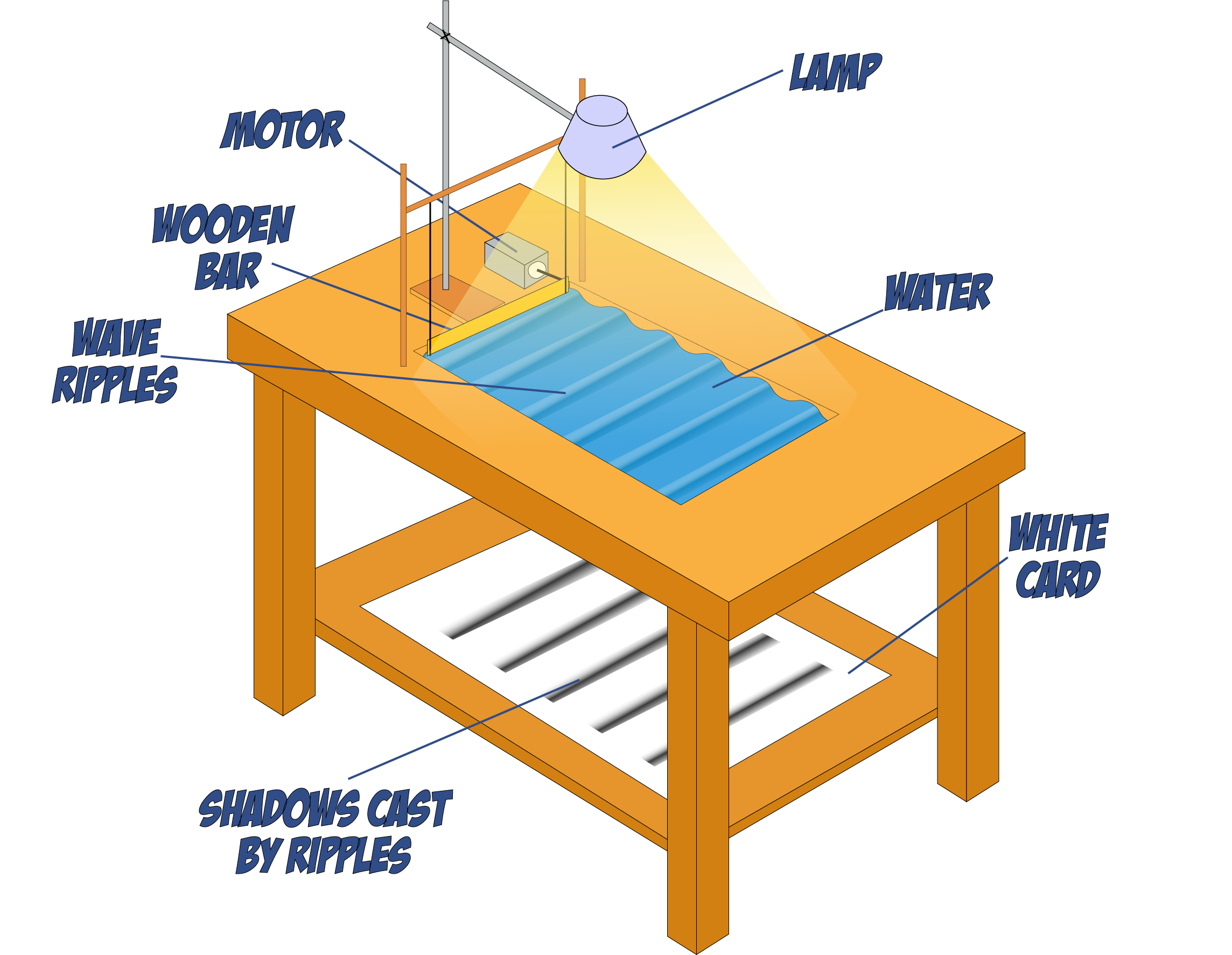
The motor causes the wooden bar to move UP and DOWN, which produces WAVES in the water in the form of RIPPLES.
The light from above SHINES and creates a SHADOW of the waves on the WHITE CARD underneath.
Ripple tanks can be used to find the FREQUENCY, WAVELENGTH and WAVE SPEED of water ripples:
Measuring Frequency:
- Start a STOPCLOCK when the first wave passes a fixed point.
- Count the number of waves that pass this point within a set time frame.
- Divide the set time by the number of waves to find the time for one wave, known as the TIME PERIOD (T).
- The FREQUENCY (f) can be calculated using the equation:

Measuring Wavelength:
- Use a CAMERA to capture an image of the waves to "freeze" them.
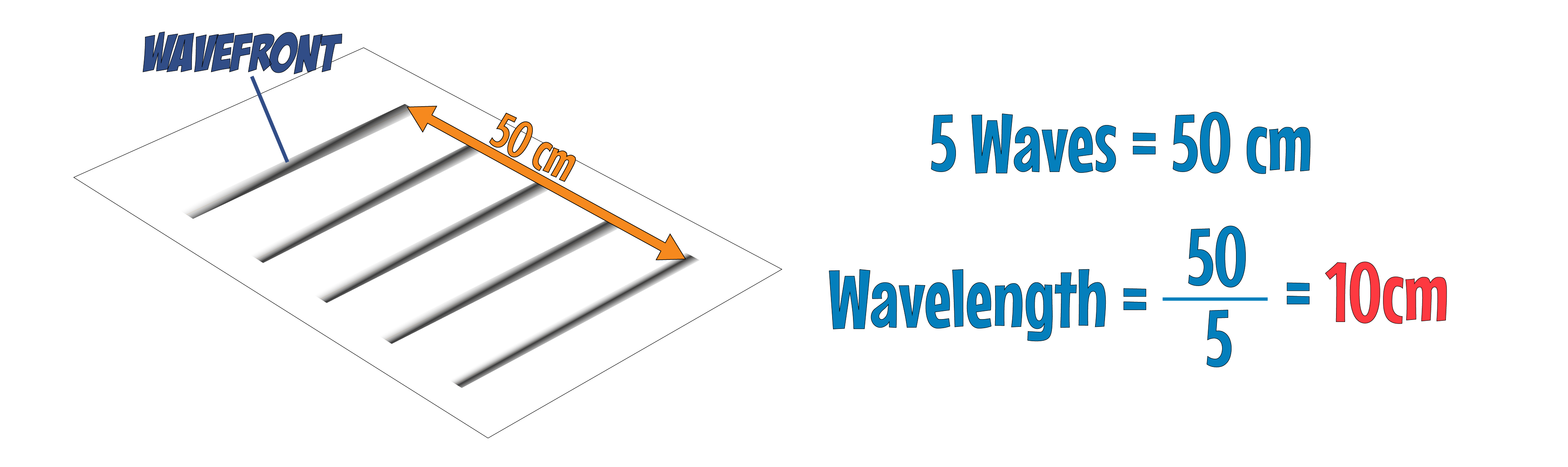
- With a METRE RULER, measure the distance between two wavefronts.
- COUNT how many waves between those wavefronts.
- Divide the total distance by the number of waves to get the WAVELENGTH (λ).
Measuring Speed:
- Determine a mean value for the FREQUENCY and WAVELENGTH.
- TIME how long it takes for one wavefront to travel the distance of the white card.
- Measure the LENGTH of the card.
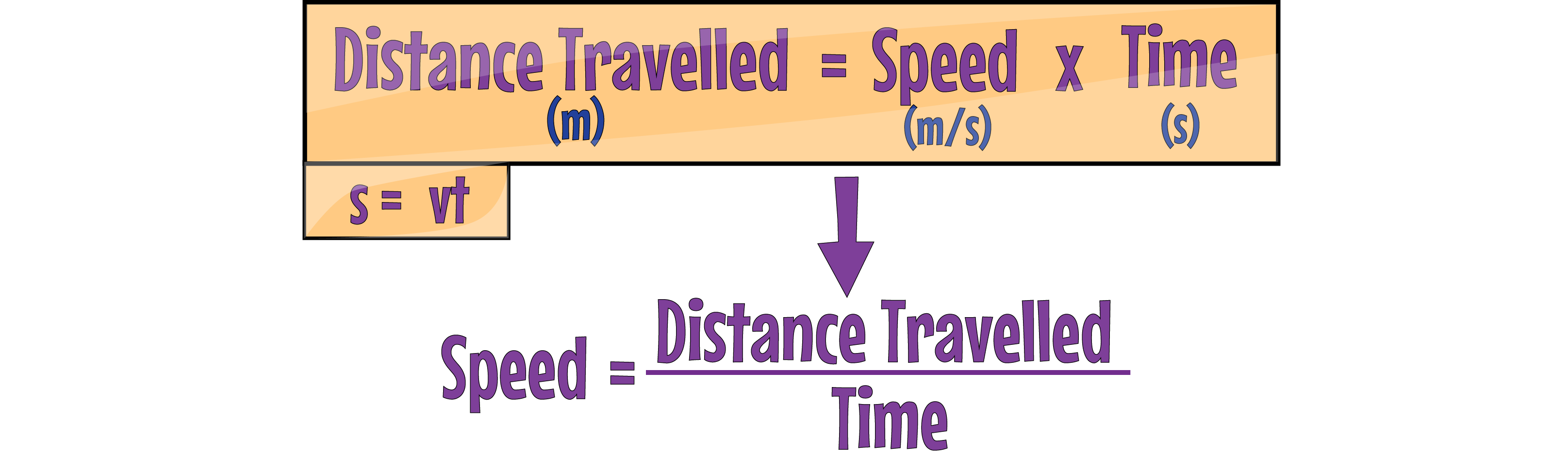
- The SPEED (v) is calculated by dividing the distance by the time taken:
2.Measuring Waves on a String
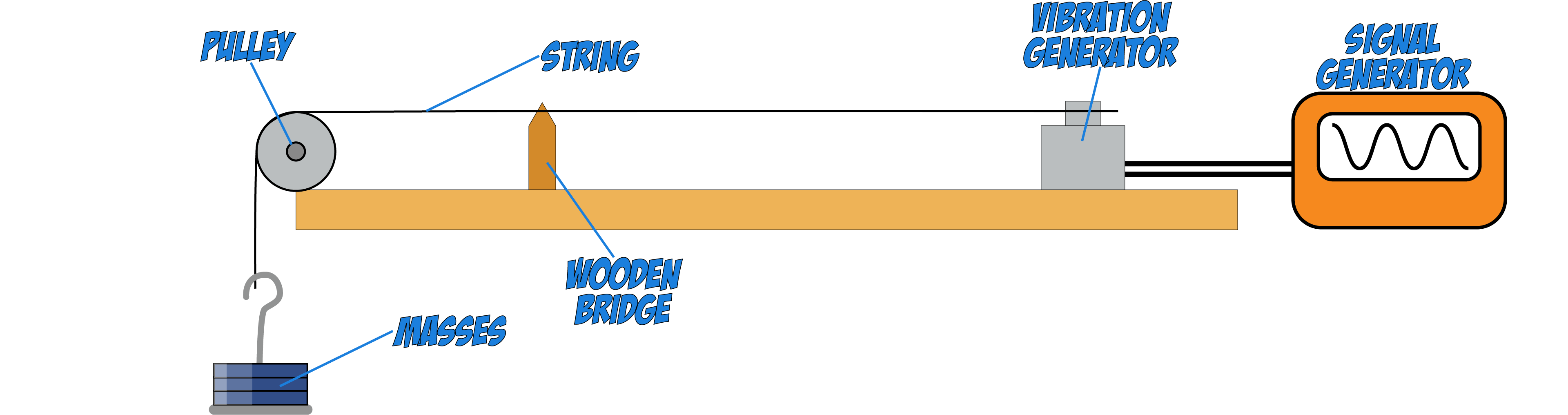
- Set up your equipment with a SIGNAL GENERATOR and VIBRATION GENERATOR. Switch on the signal generator to make the string vibrate.
- Tweak the FREQUENCY of the signal generator to get a clear WAVE PATTERN on the string. The right frequency depends on the string's length and the weight attached.
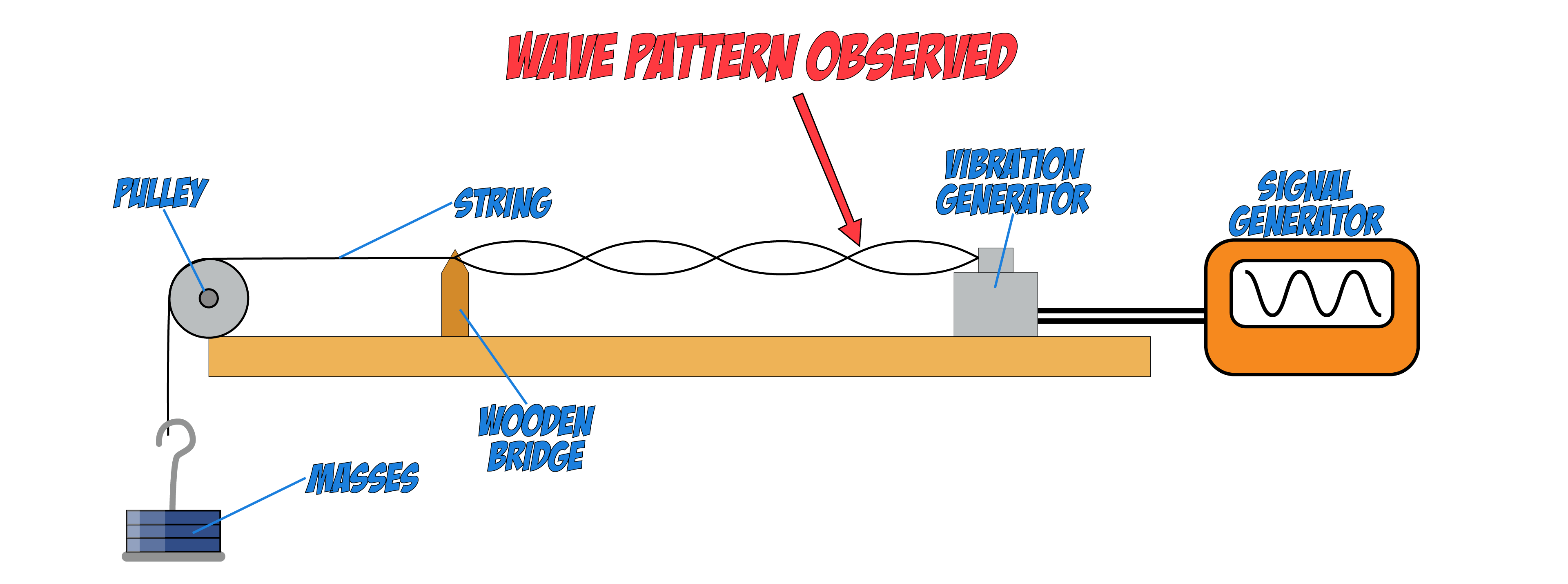
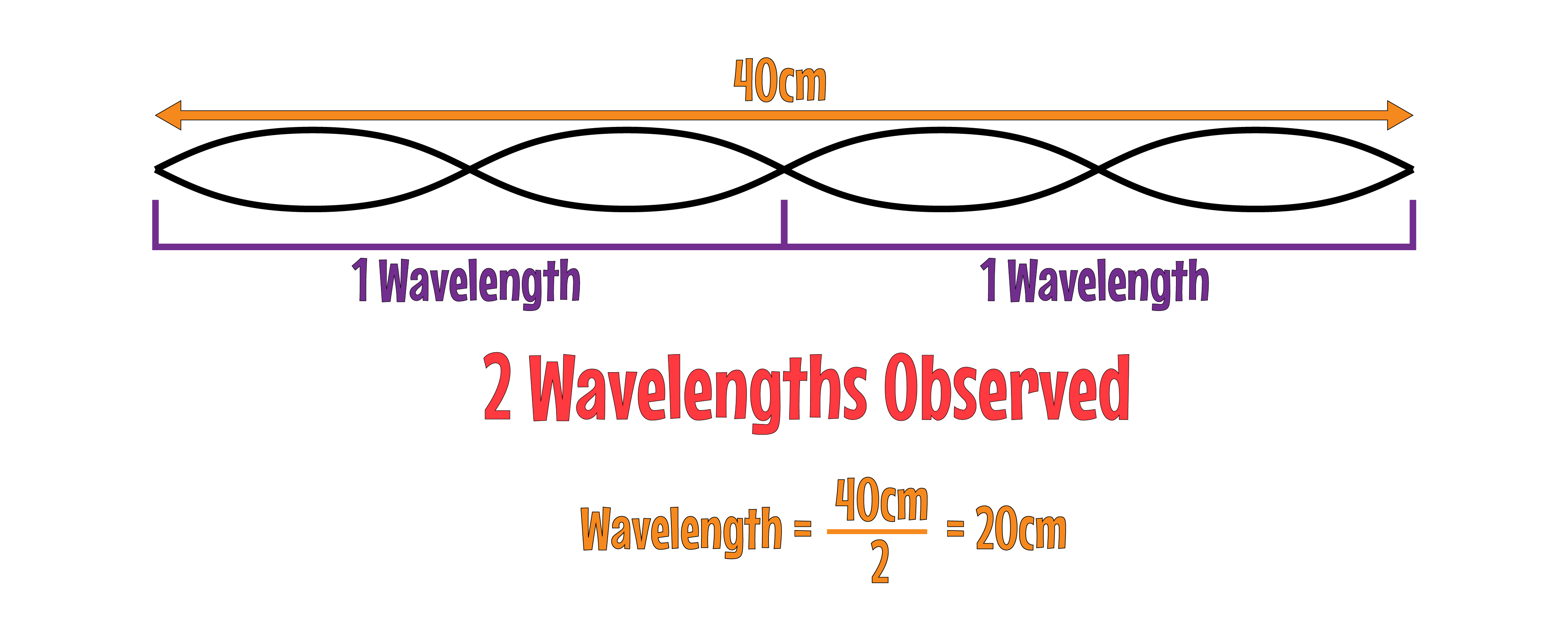
- Measure the WAVELENGTH. It's most accurate to measure multiple wavelengths at once. Then divide the total LENGTH by the NUMBER of wavelengths to find the FULL wavelength.
- The FREQUENCY is simply the setting on the SIGNAL GENERATOR.
- Calculate the SPEED of the wave on the string using the formula:
