Required Practical: Force and Extension
This experiment investigates the relationship between the FORCE and EXTENSION of a spring.
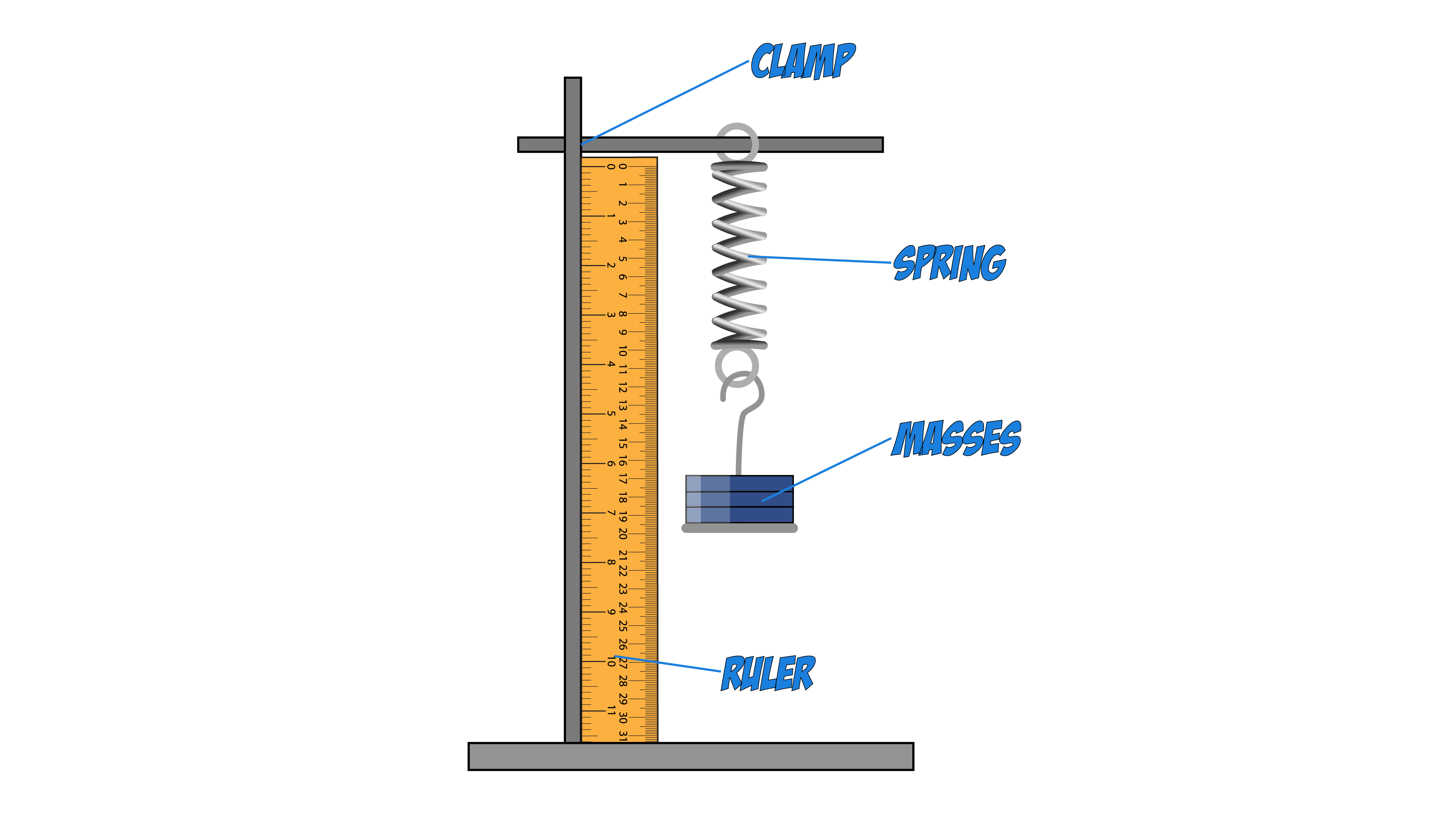
- Setup: Position the spring and attach a RULER beside it for measuring extension.
- Initial Measurement: Record the spring's length without any added mass, which is its ORIGINAL LENGTH.
- Adding Mass: Place a 100 g mass hanger on the spring, which will extend due to the added weight.
- Recording Data: Note the mass in kilograms (convert grams to kilograms by dividing by 1000) and the extended length from the ruler in centimetres (convert to metres by dividing by 100).
- Incremental Increases: Continue to add 100 g increments to the mass hanger, each time recording the new total mass and the extension.
- Repetition for Accuracy: Remove the masses and repeat the process SEVERAL TIMES and find an AVERAGE.
Analysis of Results
- To find the EXTENSION of the spring, subtract the ORIGINAL LENGTH from the FINAL LENGTH for each measurement.
- To find the FORCE from the added MASSES, you can use the equation:

Plotting the Force-Extension Graph
- Plot the calculated values on a FORCE against EXTENSION graph.
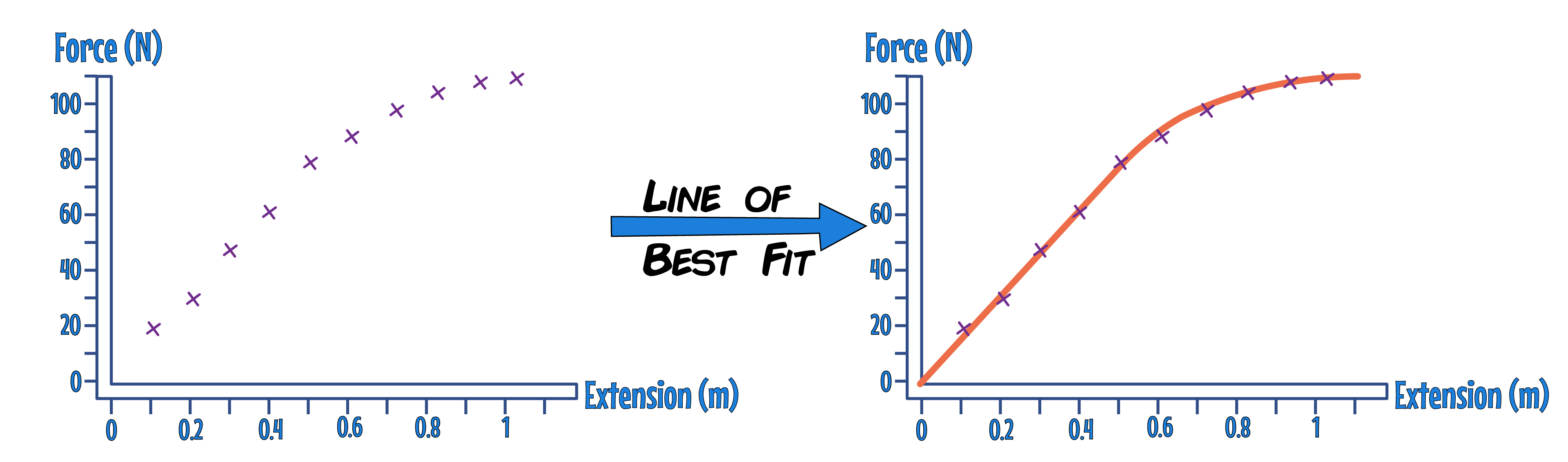
- Draw a LINE OF BEST FIT and note the linear region. If it's a straight line, the force and extension are proportional, and Hooke's law applies.
- If the graph curves, the point at which it begins to curve indicates the LIMIT OF PROPORTIONALITY.
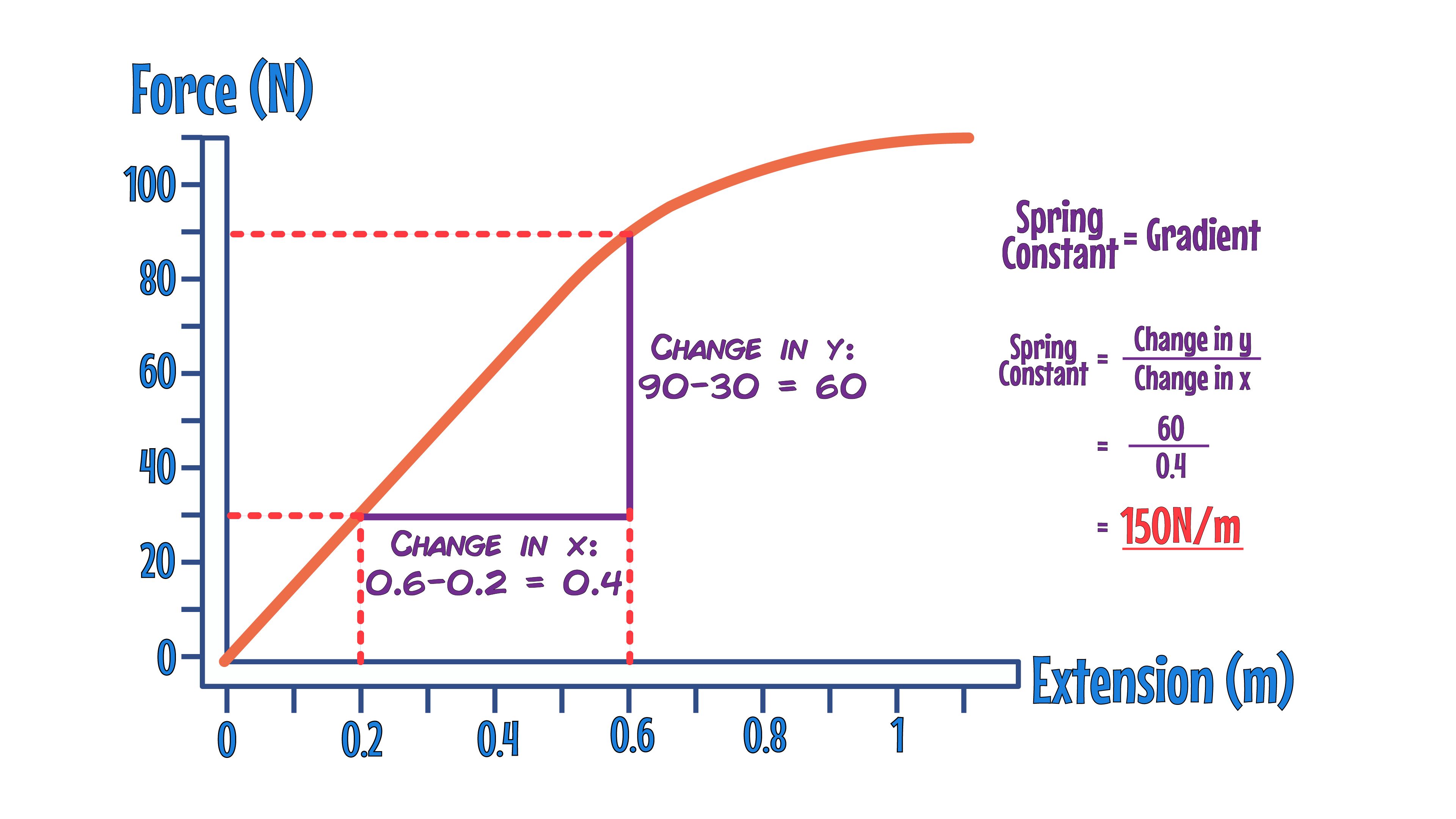
- You can work out the SPRING CONSTANT using the graph, by finding the GRADIENT of the LINEAR section: