Transformers
TRANSFORMERS are used to change the POTENTIAL DIFFERENCE for efficient energy transmission over long distances.
There are TWO types of TRANSFORMERS:
1. STEP-UP TRANSFORMERS
These INCREASE the POTENTIAL DIFFERENCE and DECREASE the CURRENT.
2. STEP-DOWN TRANSFORMERS
These decrease the POTENTIAL DIFFERENCE and INCREASE the CURRENT.
Structure of a Transformer
A transformer consists of a PRIMARY COIL and a SECONDARY COIL wound on an IRON CORE.
IRON is used as it is EASILY MAGNETISED.
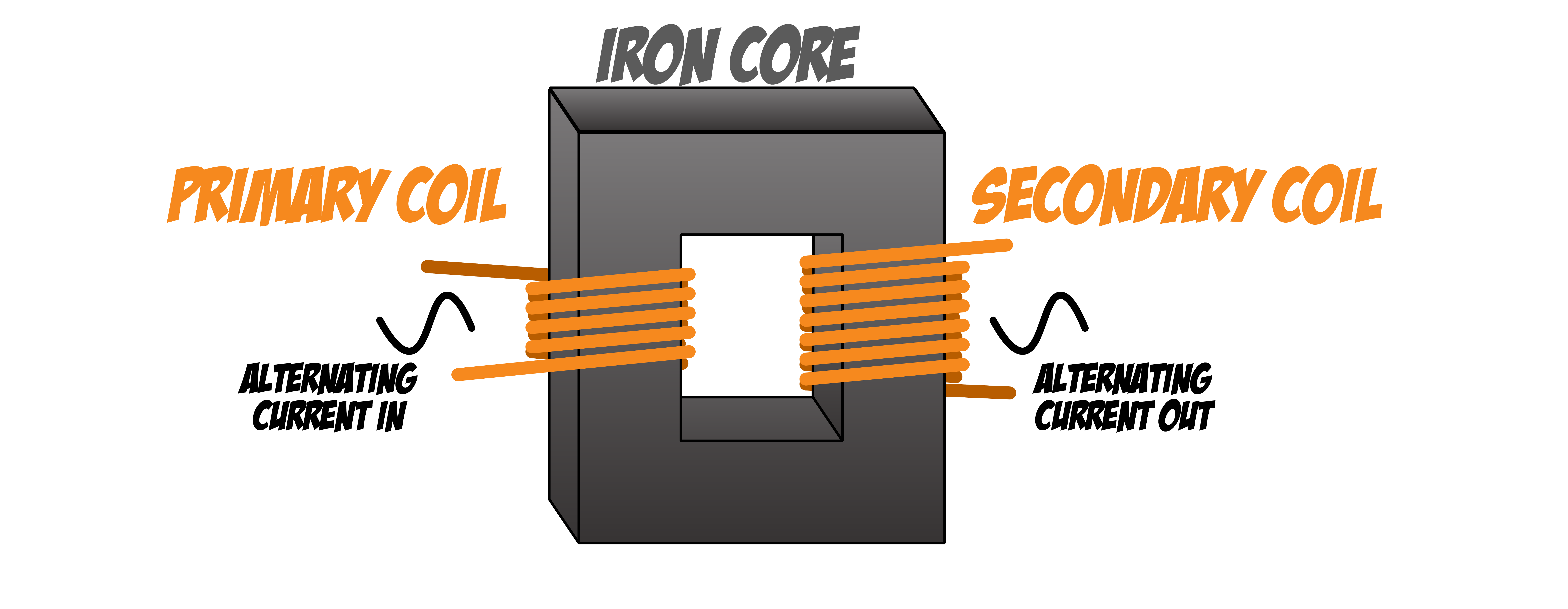
The incoming ALTERNATING current flows through the PRIMARY COIL and creates a CHANGING MAGNETIC FIELD in the IRON CORE.
The SECONDARY COIL also experiences the CHANGING MAGNETIC FIELD in the IRON CORE, which leads to a POTENTIAL DIFFERENCE being INDUCED.
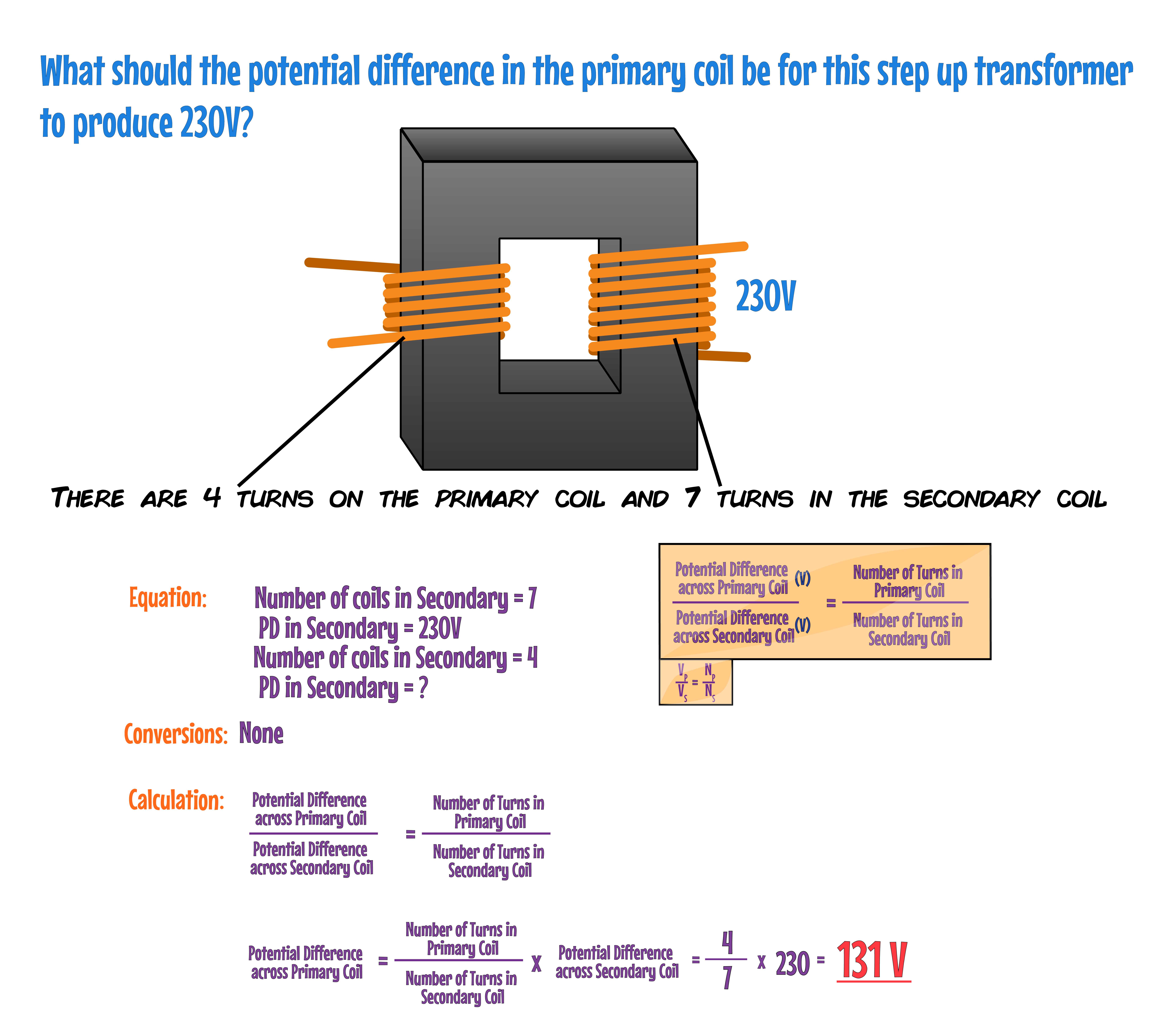
A STEP UP transformer has MORE turns in its SECONDARY coil than its PRIMARY coil.
A STEP DOWN transformer has LESS turns in its SECONDARY coil than its PRIMARY coil.
Transformer Equations
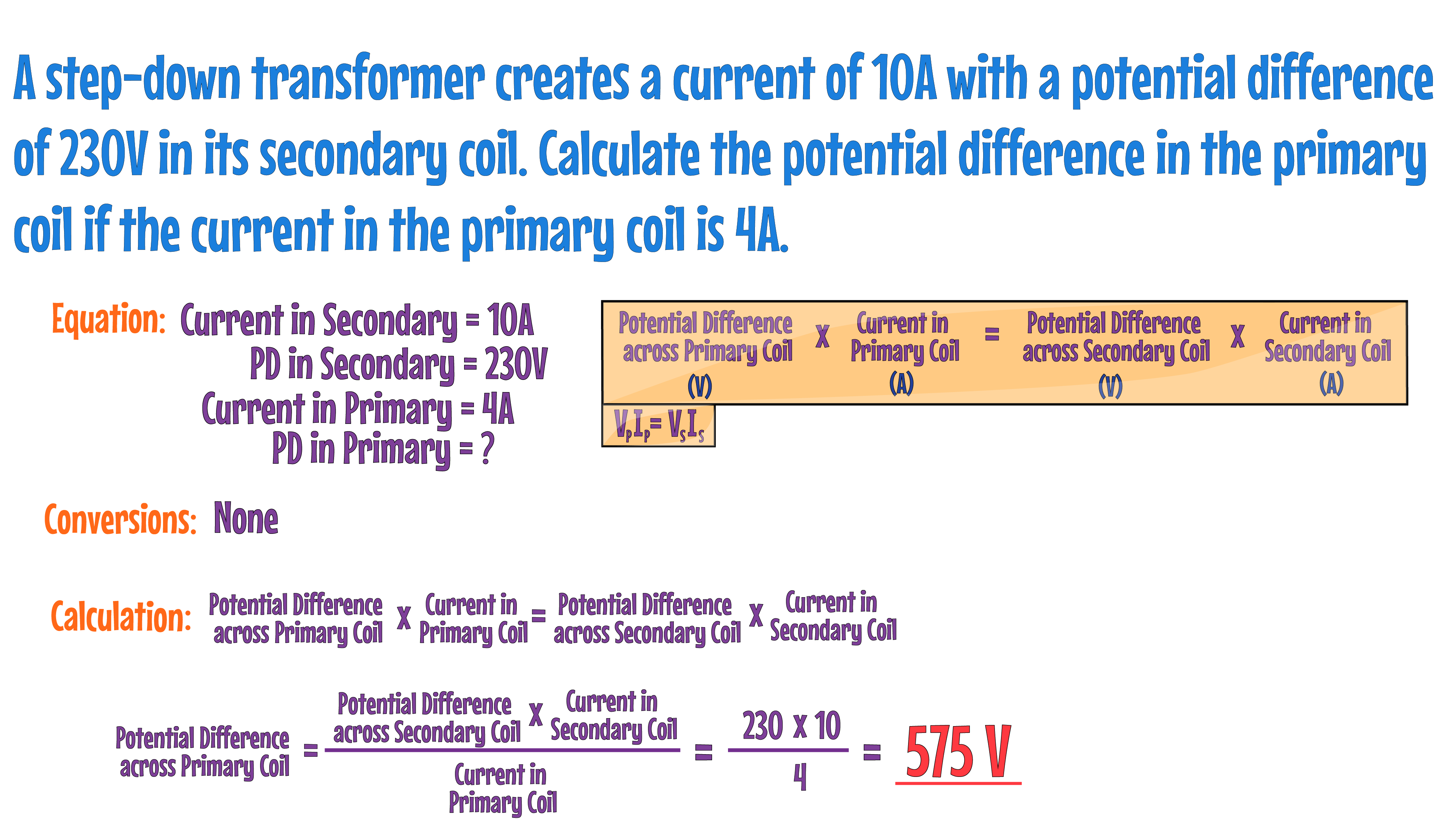
If transformers were 100% EFFICIENT, the POWER transferred by a transformer is almost equal in the primary and secondary coils. By knowing this we can derive the following equation:

- Where:
- VP and IP are the POTENTIAL DIFFERENCE and CURRENT in the PRIMARY coil.
- VS and IS are the POTENTIAL DIFFERENCE and CURRENT in the SECONDARY coil.
Another equation involves POTENTIAL DIFFERENCE and the NUMBER OF TURNS in the coils: