The Generator Effect
The GENERATOR EFFECT is when an electrical CONDUCTOR (such as a wire) INDUCES (creates) a POTENTIAL DIFFERENCE across when it either:
- MOVES relative to a MAGNETIC FIELD or
- Experiences a CHANGE IN MAGNETIC FIELD.
If the conductor is part of a COMPLETE CIRCUIT, it ALSO induces a CURRENT in the conductor.
You can think of the GENERATOR EFFECT as the OPPOSITE of the MOTOR EFFECT.
Examples of the generator effect are:
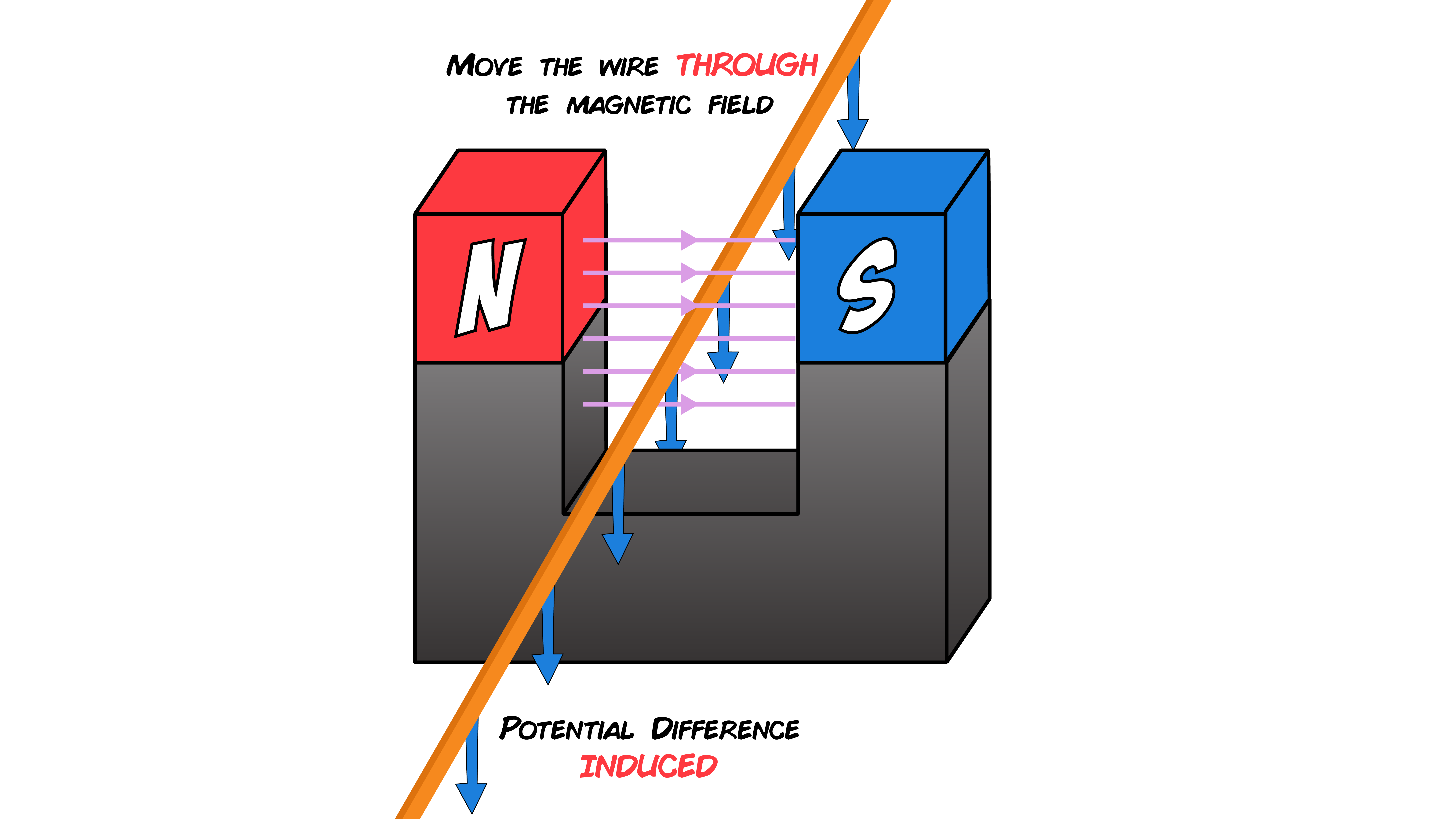
Moving a wire THROUGH a magnetic field:
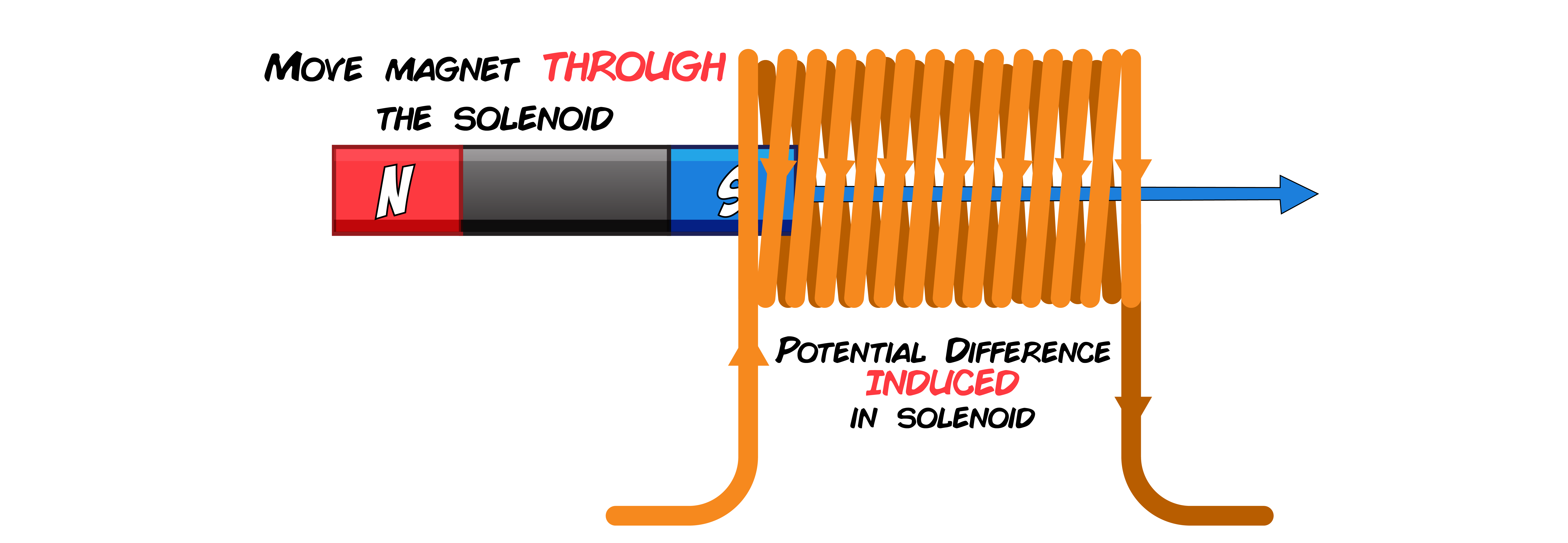
Moving MAGNETS through a SOLENOID so that the wire experiences a CHANGE in magnetic field:
If the generator effect occurs in a COMPLETE CIRCUIT and a CURRENT is induced, the CURRENT created OPPOSES the original change that created it.
eg. If you move a wire DOWNWARDS through a magnetic field to induce a POTENTIAL DIFFERENCE and CURRENT, the wire would experience a force UPWARDS to OPPOSE the downwards motion.
The POTENTIAL DIFFERENCE induced can be increased by:
- INCREASING the SPEED of the motion of the magnet or conductor.
- INCREASING the STRENGTH of the MAGNET.
- INCREASING the NUMBER OF TURNS in the SOLENOID.
The DIRECTION of the current induced can REVERSED by:
- MOVING the wire or conductor in the OPPOSITE DIRECTION.
- SWITCHING the orientation of the POLES on the magnet.