Magnetism
MAGNETIC FORCE is a NON-CONTACT FORCE that can act at a distance, and is caused by magnetic fields.
- A magnet has TWO poles, NORTH and SOUTH, where the magnetic forces are STRONGEST.
- When two magnets are close, they exert magnetic forces on each other:
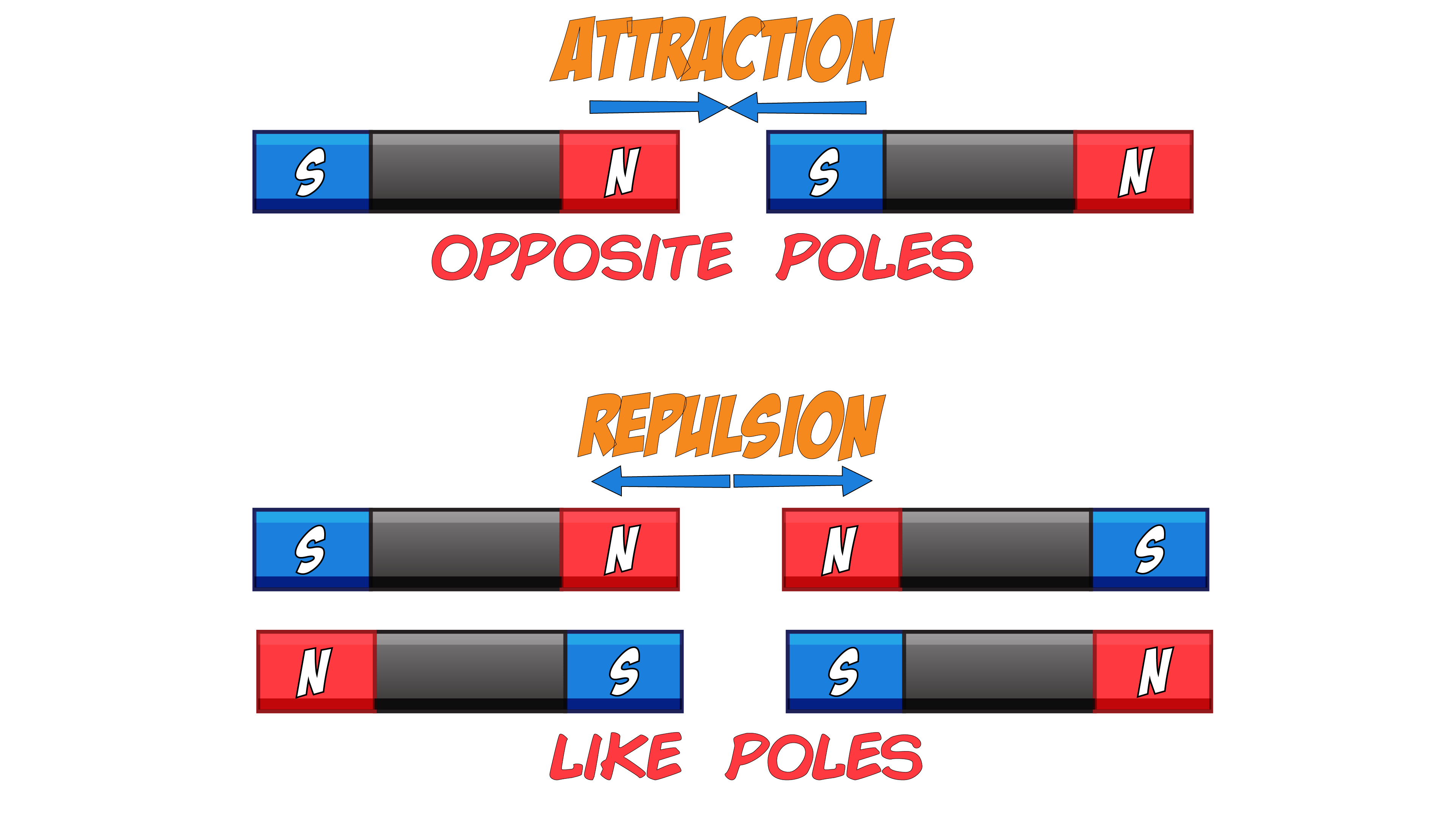
- LIKE POLES (North to North or South to South) repel each other.
- UNLIKE POLES (North to South) attract each other.
Permanent and Induced Magnets
There are FOUR types of MAGNETIC MATERIALS:
1. IRON
2. STEEL
3. NICKEL
4. COBALT
There are TWO types of magnets:
1. PERMANENT MAGNETS: These are objects that produce their own magnetic field.
2. INDUCED MAGNETS: These are magnetic materials that become magnetised in the presence of a magnetic field but typically lose most of their magnetism when the field is removed.
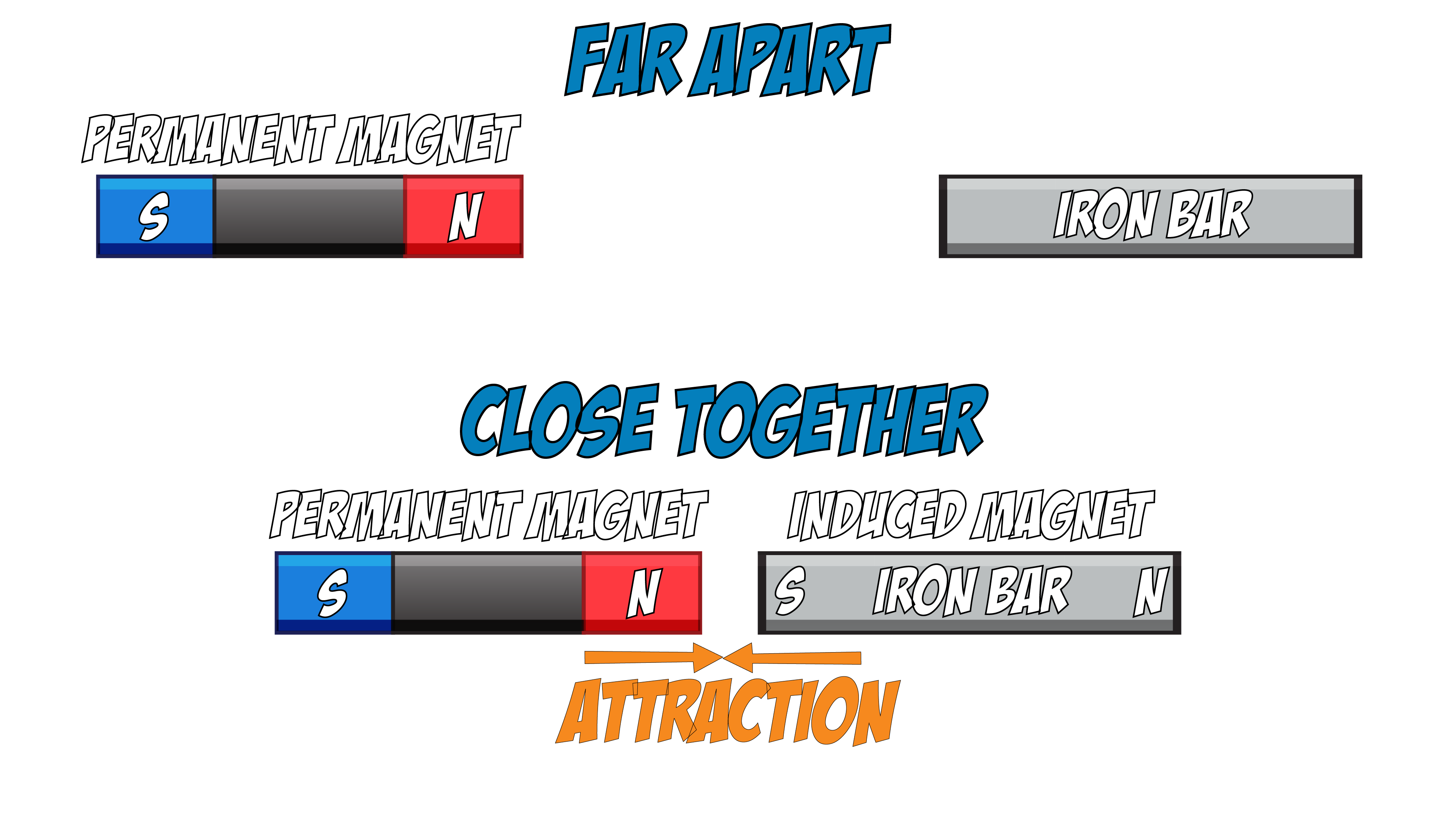
When you bring a MAGNETIC MATERIAL within the magnetic field of a PERMANENT magnet, it will TEMPORARILY produce its OWN magnetic field and turn into an INDUCED MAGNET.
The INDUCED MAGNET will always produce poles that cause ATTRACTION.
E.g. If you bring a SOUTH POLE close to it, the side closest to the South pole will turn into a NORTH POLE to cause ATTRACTION, and vice versa.
If you remove the material from the field, it will lose its magnetism.