Reflection and Refraction
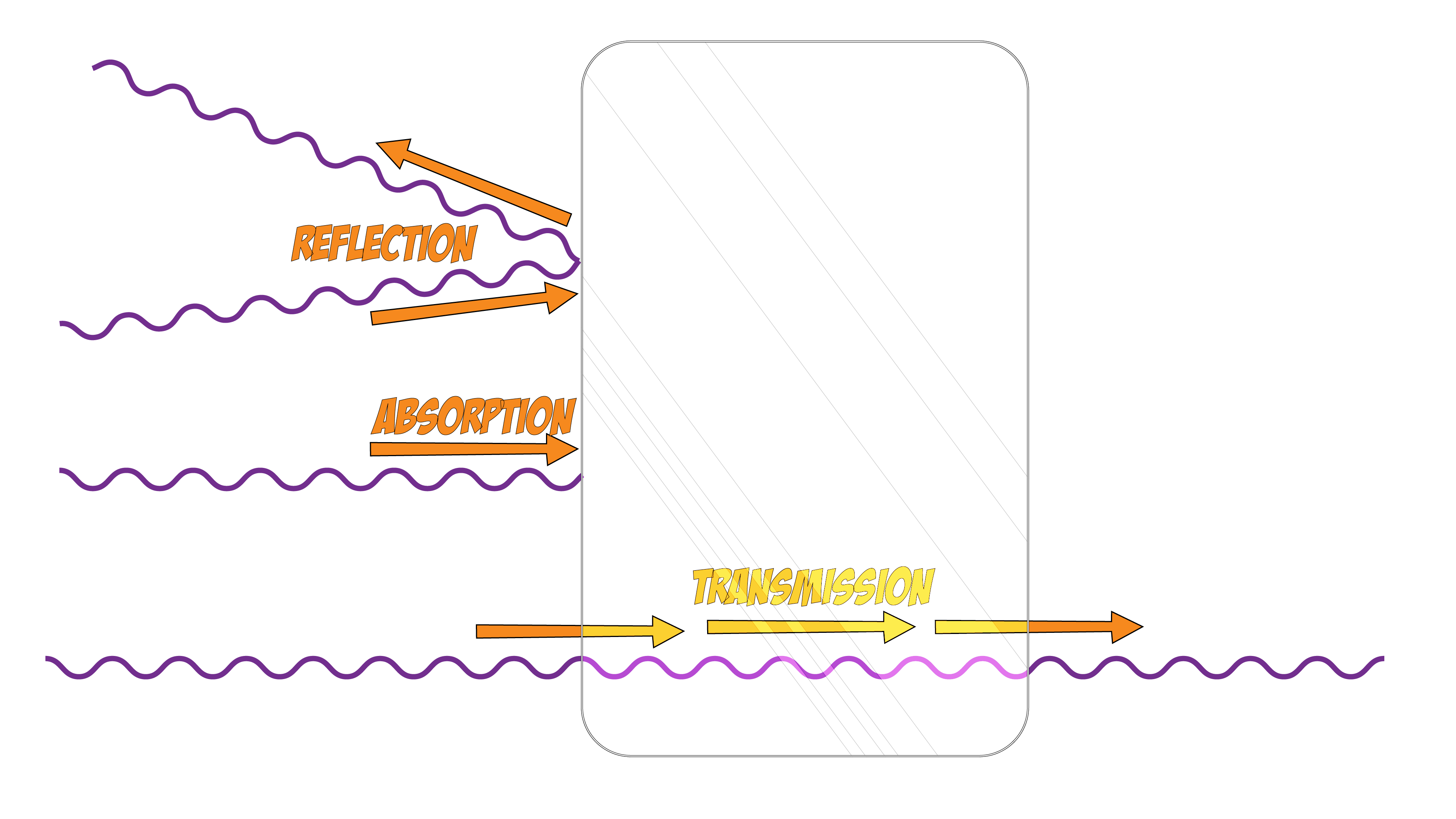
When a WAVE encounters a boundary between two materials, it can do one of three things:
1. ABSORPTION:
Here, the wave TRANSFERS its ENERGY to the second material. Often, this turns into THERMAL ENERGY, causing the material to heat up.
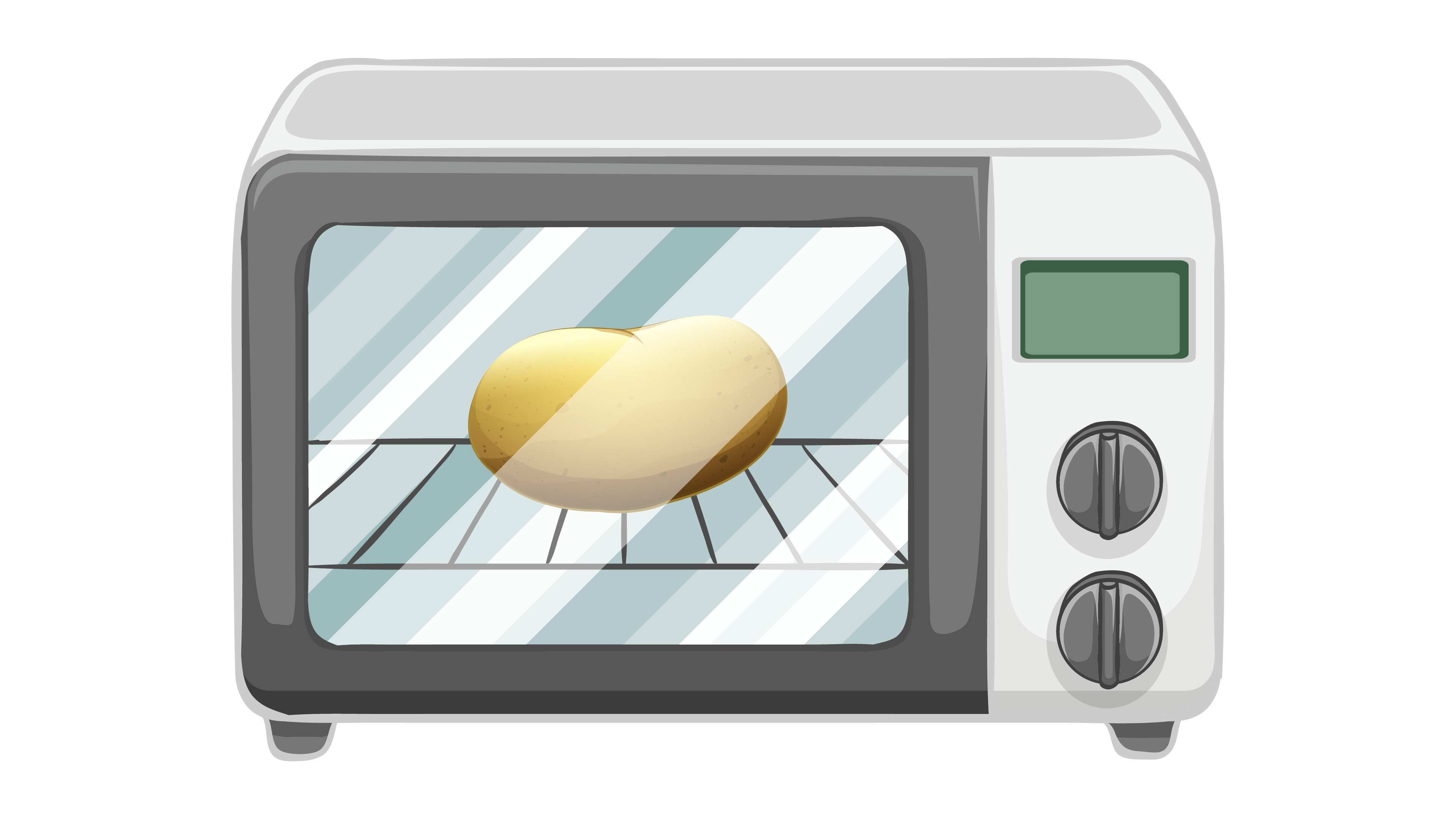
For example in a MICROWAVE OVEN the MICROWAVES get ABSORBED by the water molecules in the potato, causing them to VIBRATE and heat up. This THEMAL ENERGY conducts through the rest of the potato, causing its temperature to INCREASE.
2. REFLECTION:

Reflection occurs when the wave BOUNCES BACK at the boundary of the two media.
The SHINIER an object, the BETTER it reflects visible light.
This allows us to SEE objects. The visible light waves given off by a light source REFLECT off other objects, and enter our eyes.
Ray diagrams include a VIRTUAL line known as the NORMAL which is PERPENDICULAR to the surface of reflection.
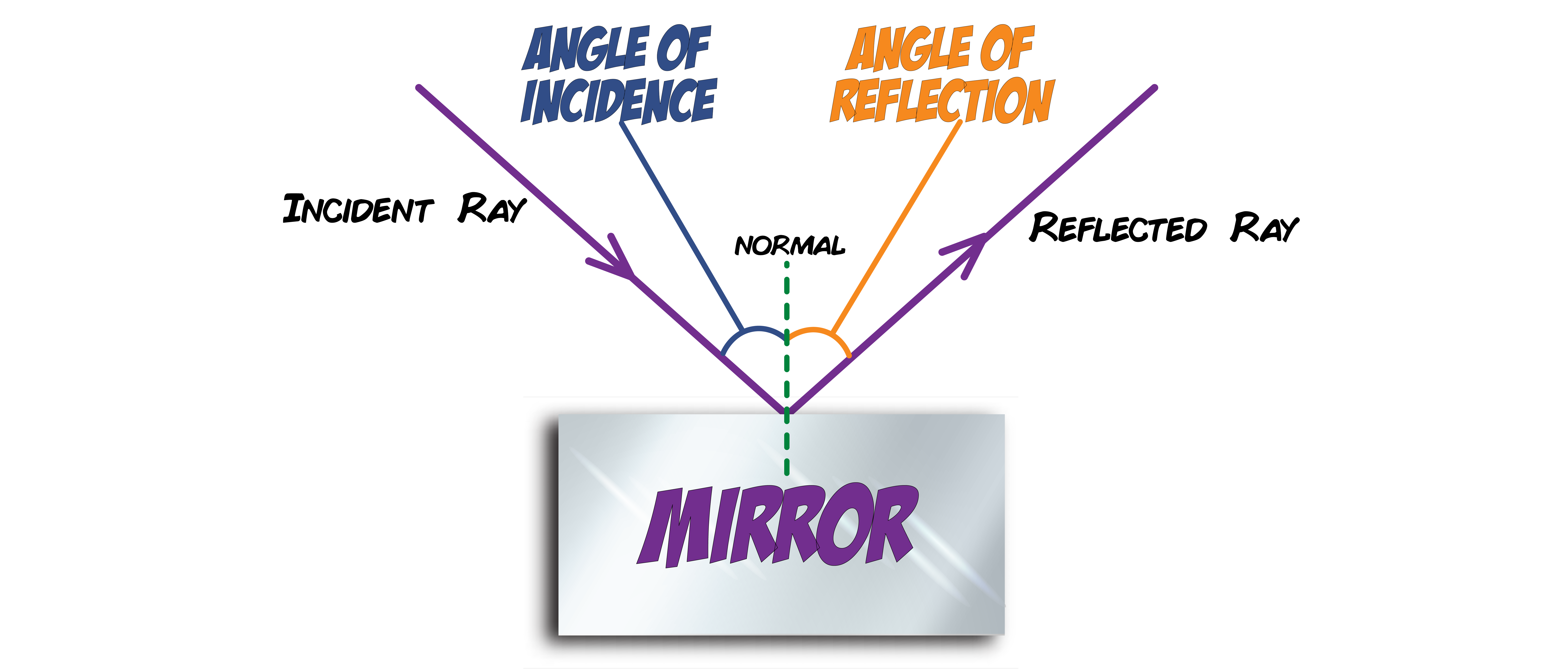
The ANGLE OF INCIDENCE is the angle between the SURFACE and the INCIDENT RAY.
The ANGLE OF REFLECTION is the angle between the SURFACE and the REFLECTED RAY.

Whenever reflection occurs on a surface, the ANGLE OF INCIDENCE is EQUAL to the ANGLE OF REFLECTION.
3. TRANSMISSION:
The wave continues to TRAVEL THROUGH the new material. This can lead to another process known as REFRACTION.
Refraction
REFRACTION happens when a wave crosses into a new medium, causing it to change SPEED and sometimes DIRECTION.
When the wave travels from a LESS DENSE medium to a MORE DENSE medium, the SPEED and the WAVELENGTH of the wave DECREASE but the FREQUENCY of the wave STAYS THE SAME.
When the wave travels from a MORE DENSE medium to a LESS DENSE medium, the SPEED and the WAVELENGTH of the wave INCREASE but again the FREQUENCY of the wave STAYS THE SAME.
We can show this using LIGHT waves travelling through AIR (less dense) and GLASS (more dense).
E.g. Light entering perpendicularly
When the light enters the glass PERPENDICULARLY, it does NOT bend - it just passes STRAIGHT THROUGH.
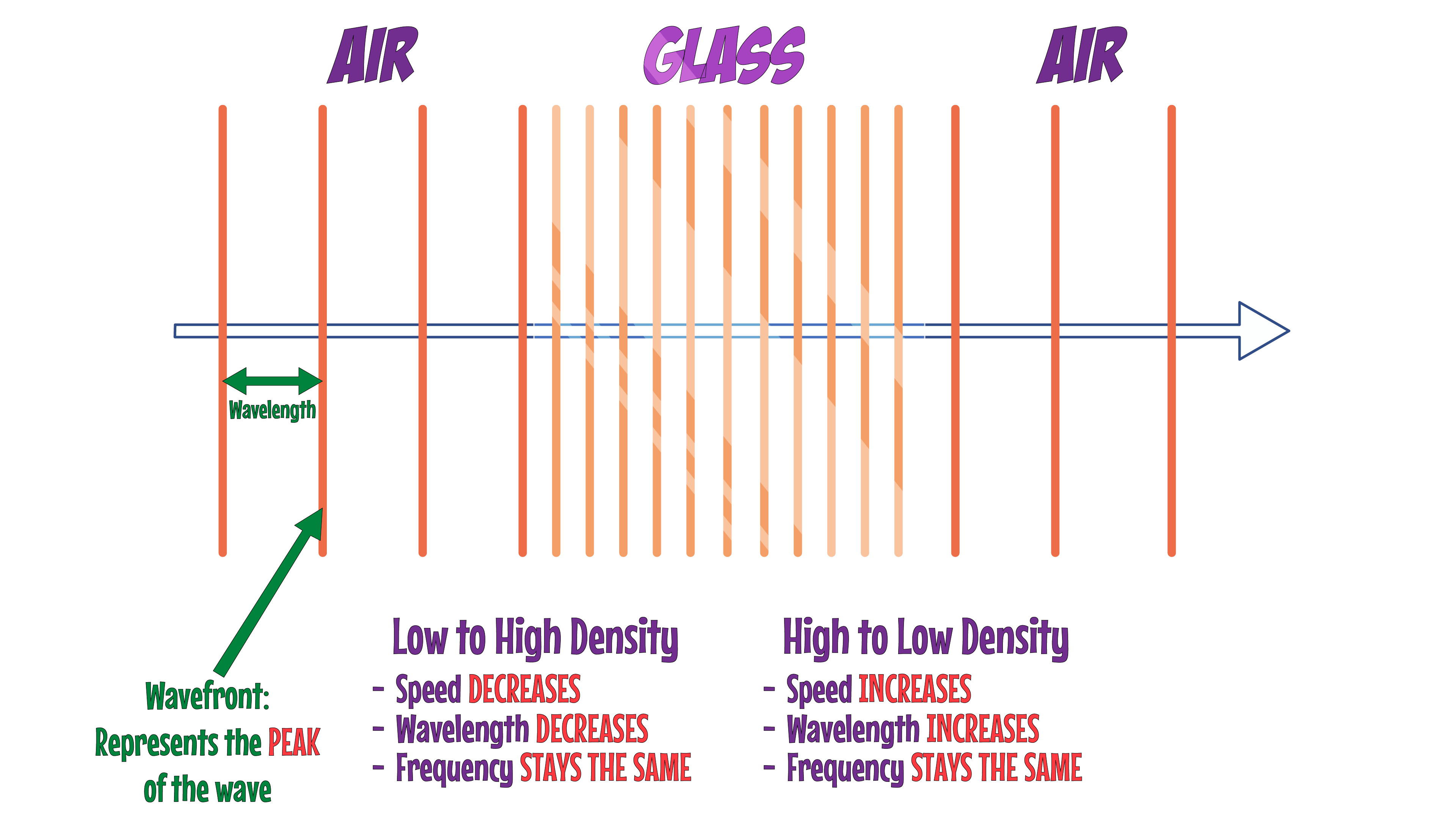
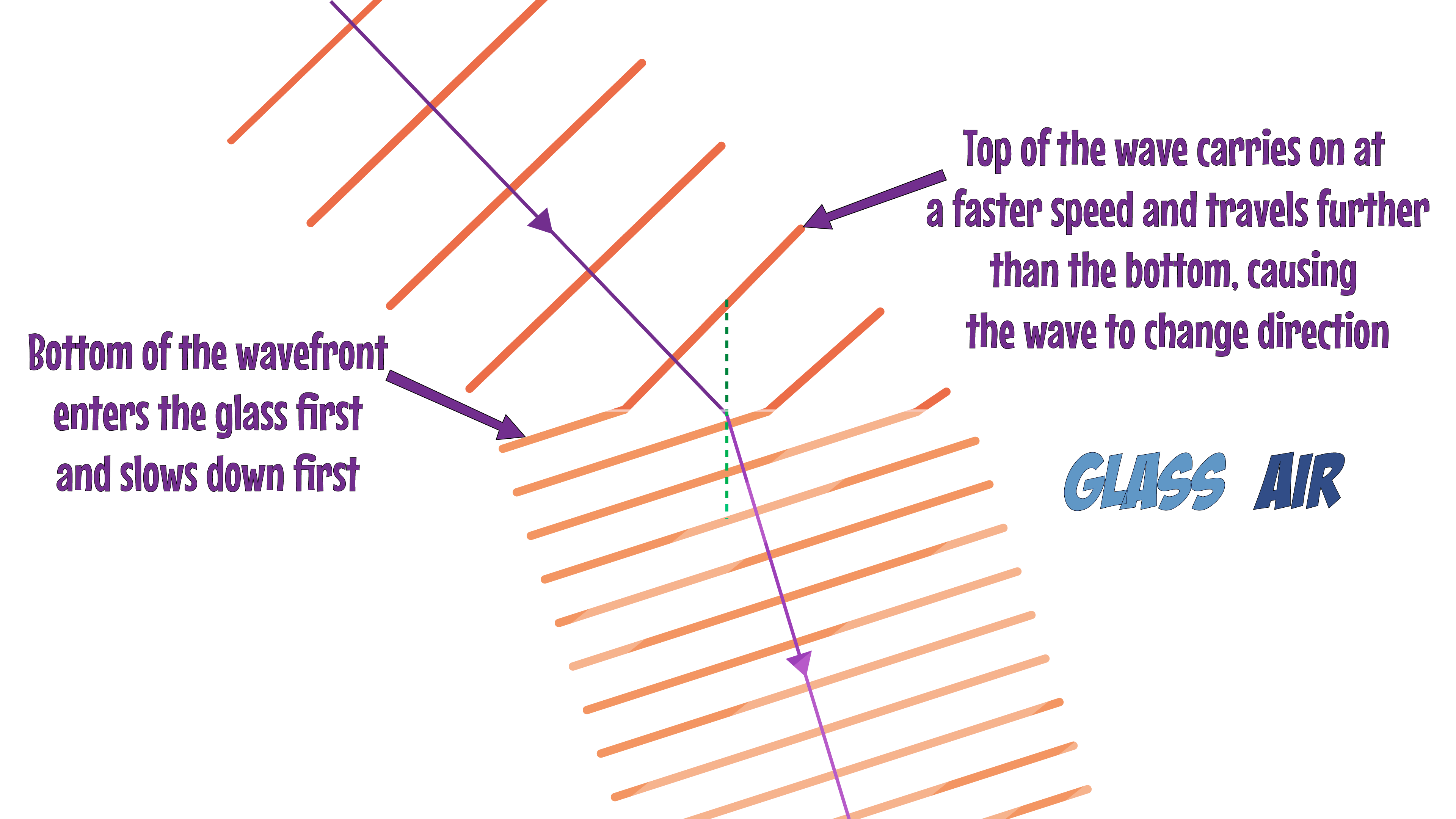
This is known as a WAVEFRONT DIAGRAM. In these diagrams, each LINE represents the PEAK of a wave.
The DISTANCE between each line is the WAVELENGTH of the wave.
E.g. Light entering at an angle
If the waves enters the new medium AT AN ANGLE, the DIRECTION of the wave will CHANGE.
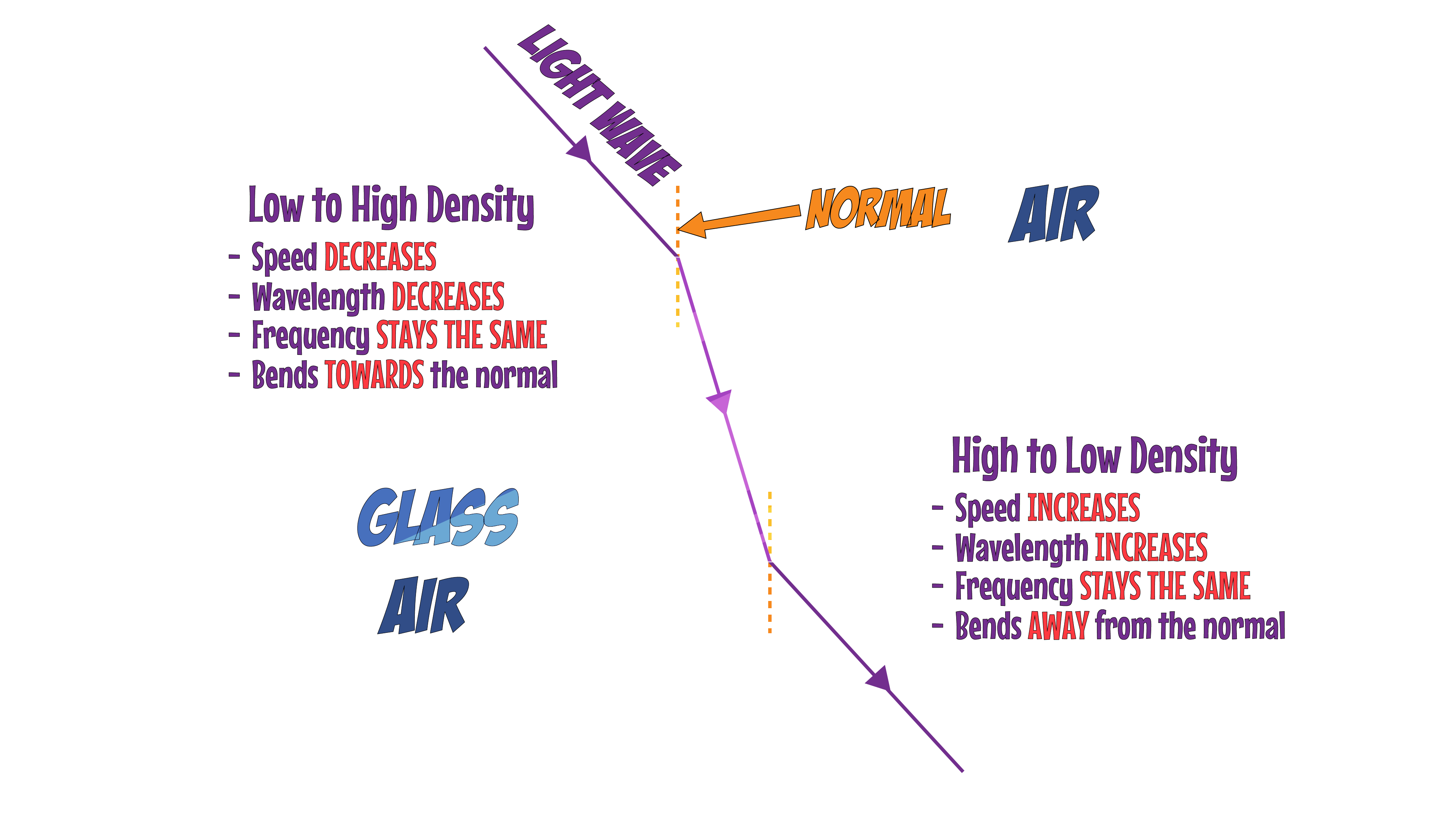
When the wave travels from a LESS DENSE medium to a MORE DENSE medium, the WAVE bends TOWARDS the NORMAL (a line perpendicular to the surface).
When the wave travels from a MORE DENSE medium to a LESS DENSE medium, the WAVE bends AWAY from the NORMAL.
This can be explained using WAVEFRONTS: