
Changes in Momentum
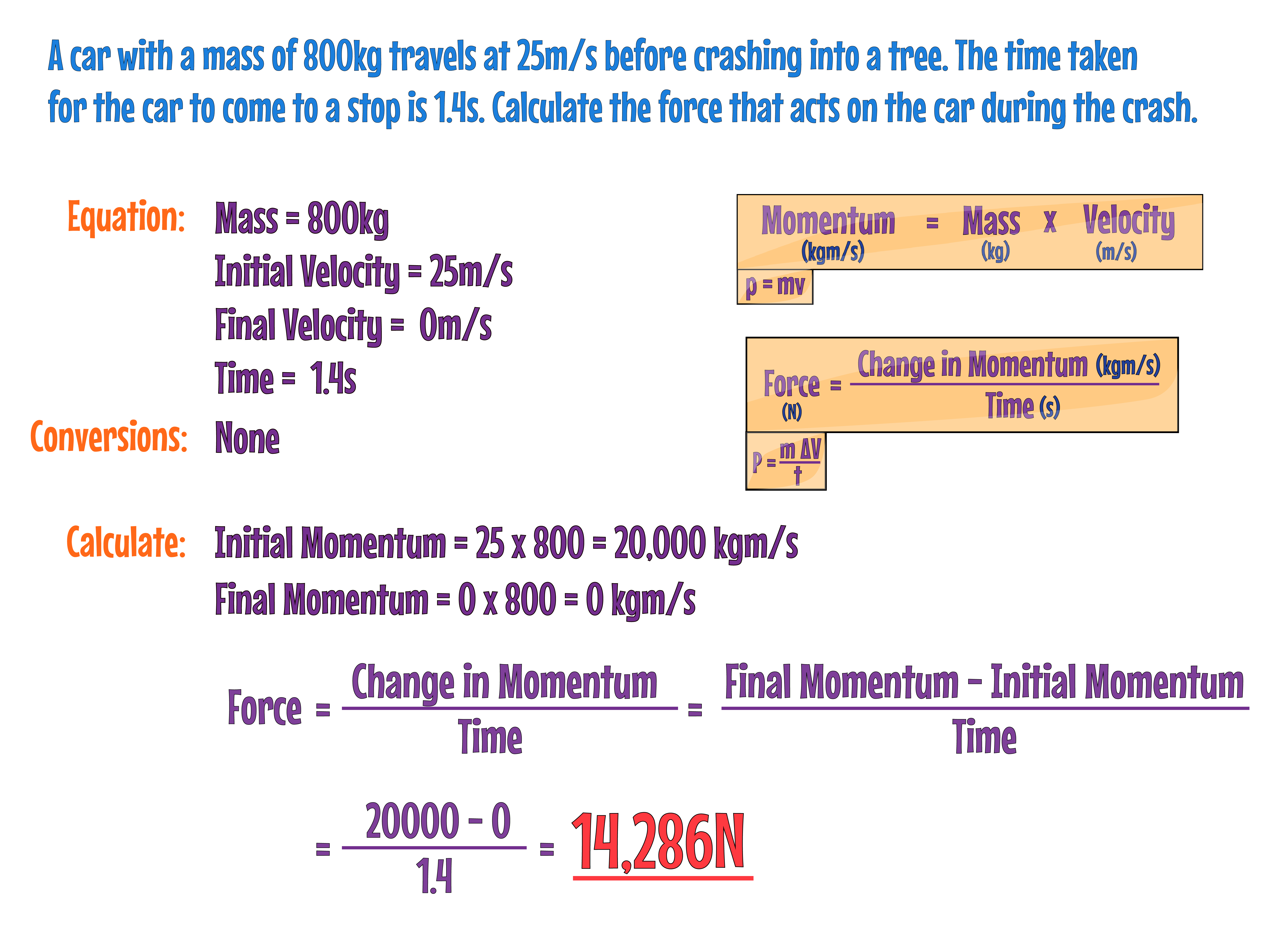
When a FORCE acts on an object that's MOVING or able to move, a CHANGE IN MOMENTUM occurs. This is shown by the equation:

Where force is measured in Newtons (N), change in momentum is measured in kgm/s and time is measured in seconds (s).
Safety Features
Many SAFETY FEATURES are designed with the concept of MOMENTUM in mind.
Examples include:
- Airbags
- Seat belts
- Crash mats
- Cycle helmets
- Cushioned playground surfaces
These safety features help in REDUCING THE FORCE during an impact by INCREASING THE TIME over which the change in velocity (and hence the change in momentum) occurs.
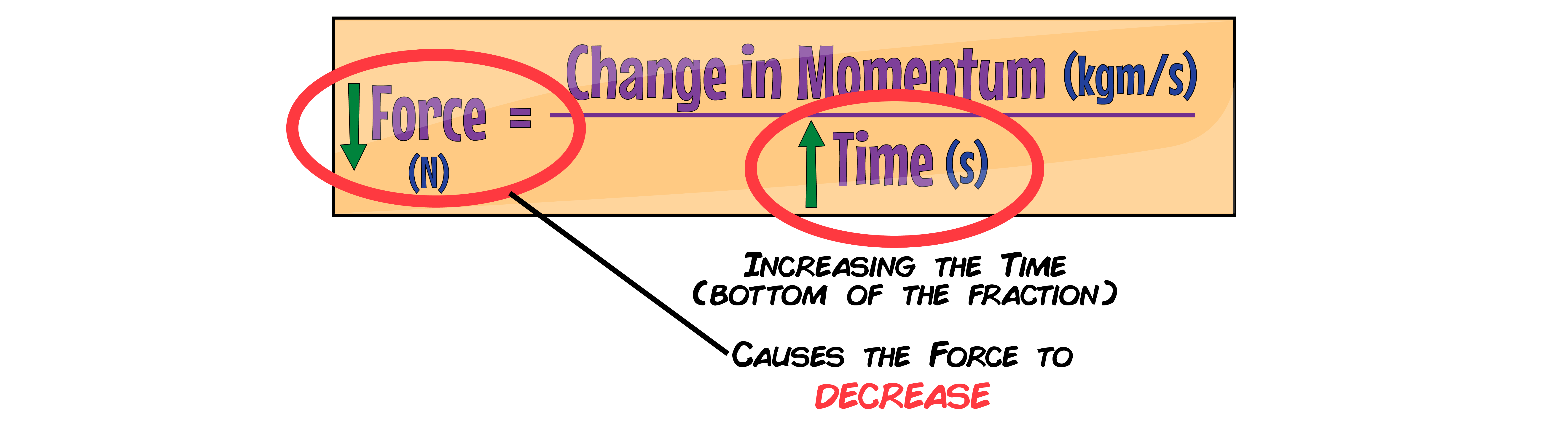
The equation shows that INCREASING THE TIME (which is at the bottom of the fraction) causes the FORCE to DECREASE if the change in momentum stays the same.
Or in other words, the RATE OF CHANGE IN MOMENTUM DECREASES.
This means that INCREASING the TIME of impact of a moving person will DECREASE the force on them, meaning they are LESS LIKELY to be INJURED.
Examples
SEAT BELTS: Stretch slightly which increases the TIME for a person to come to a stop, which DECREASES the RATE OF CHANGE IN MOMENTUM. This means the FORCE on the person DECREASES, making them less likely to be injured.
CYCLE HELMETS: Have a crushable layer of FOAM which changes shape on impact. This INCREASES the time for the head to come to a stop which DECREASES the RATE OF CHANGE IN MOMENTUM. This DECREASES the the FORCE on the head of the person, which reduces the impact on the brain.