
Moments
A force or a system of forces may cause an object to ROTATE in specific situations.
The TURNING EFFECT of a force is called the MOMENT of the force.
You can find the MOMENT acting on an object about a PIVOT (a fixed point that the object can rotate around) by using the following equation:
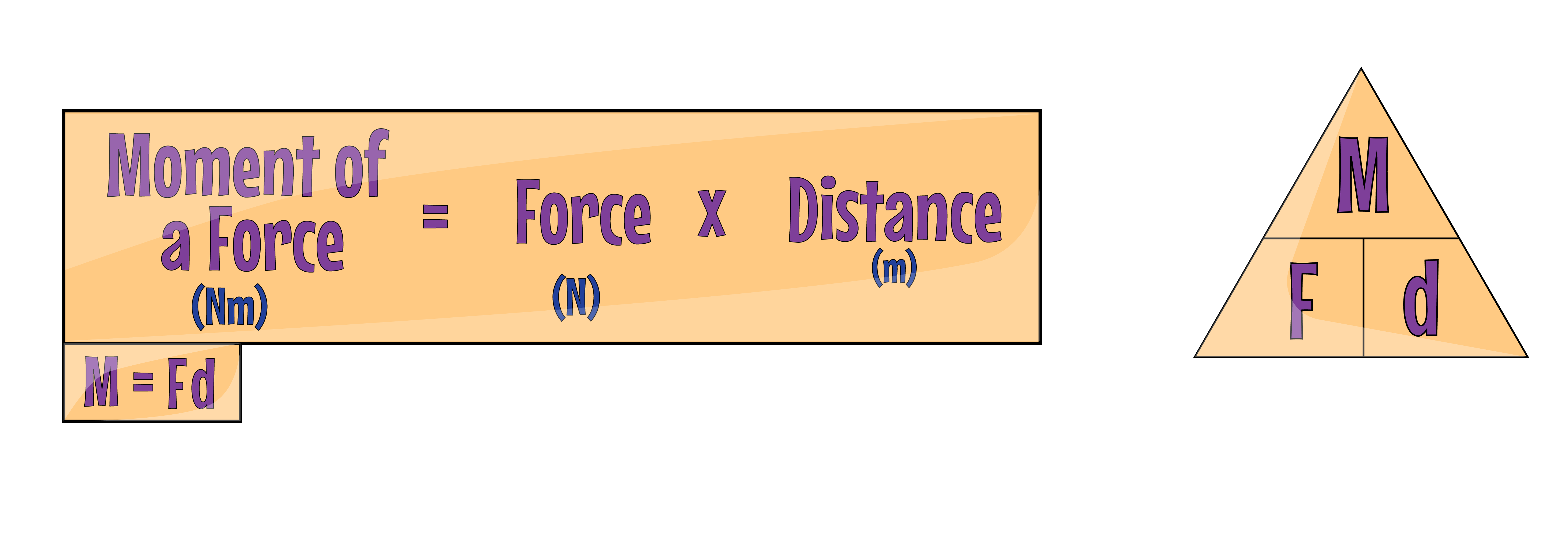
where:
- Moment is measured in Newton-Metres (Nm)
- Force is measured in Netwons (N)
- Distance from the pivot to the line of action of the force, is measured in metres (m)
Moment is a VECTOR, which means it has magnitude AND DIRECTION.
When stating the direction of a moment, it is described as being a CLOCKWISE moment or an ANTICLOCKWISE moment.
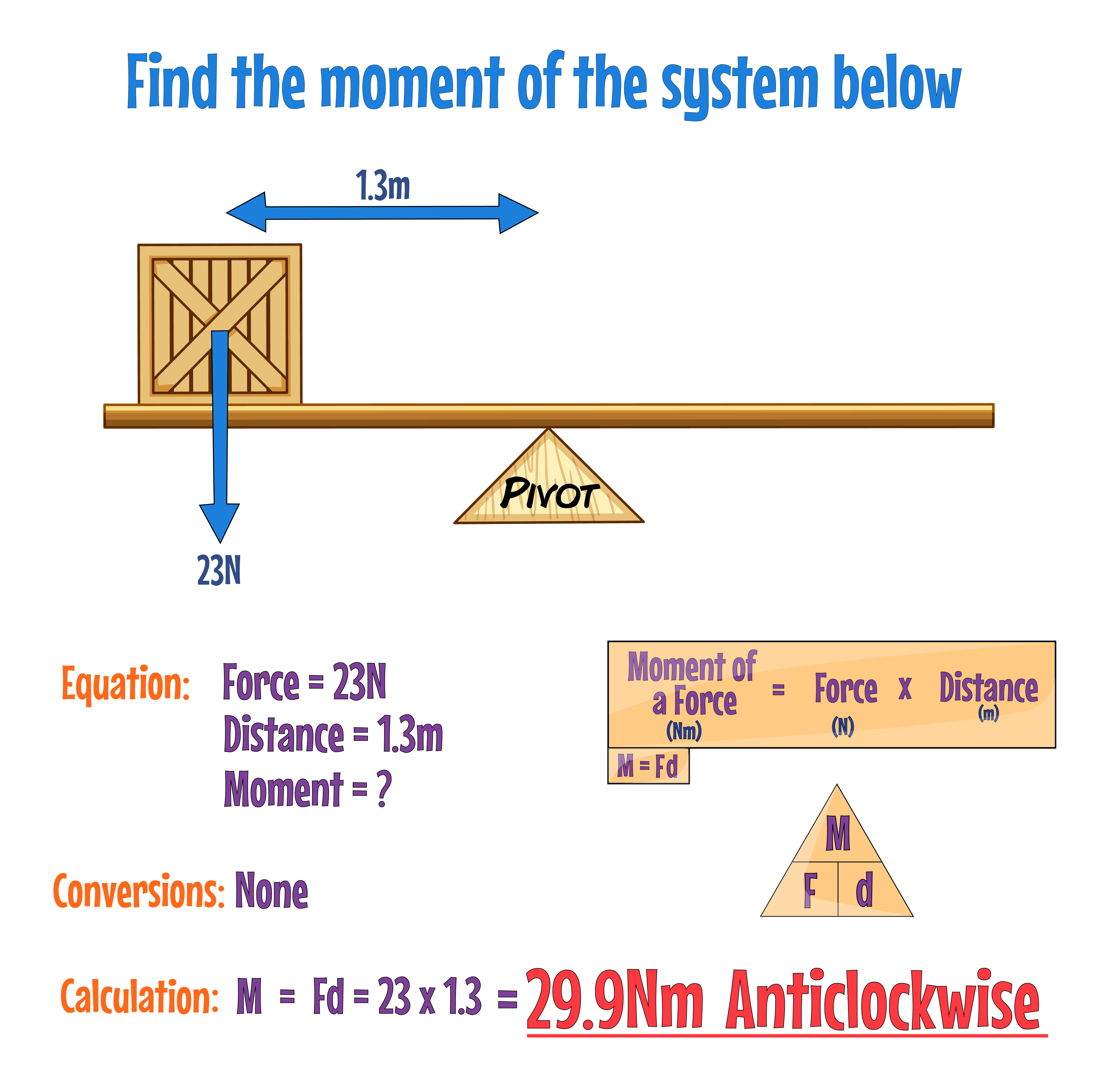
The box in the above example would cause the see-saw to ROTATE in an ANTICLOCKWISE direction.
The Principle of Moments
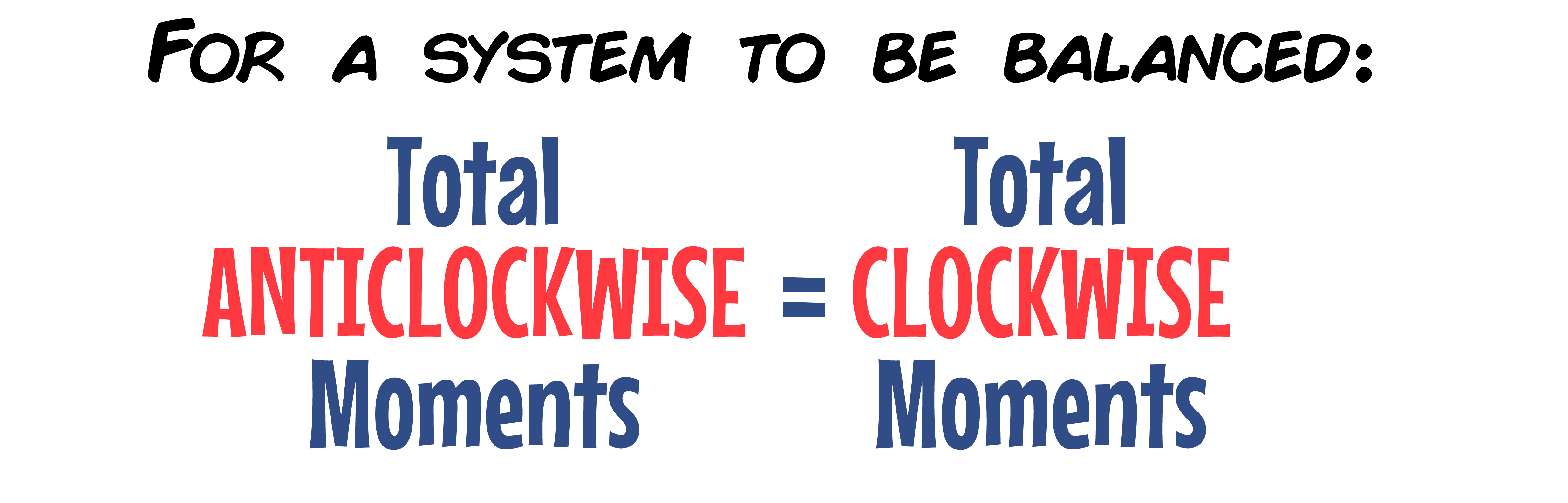
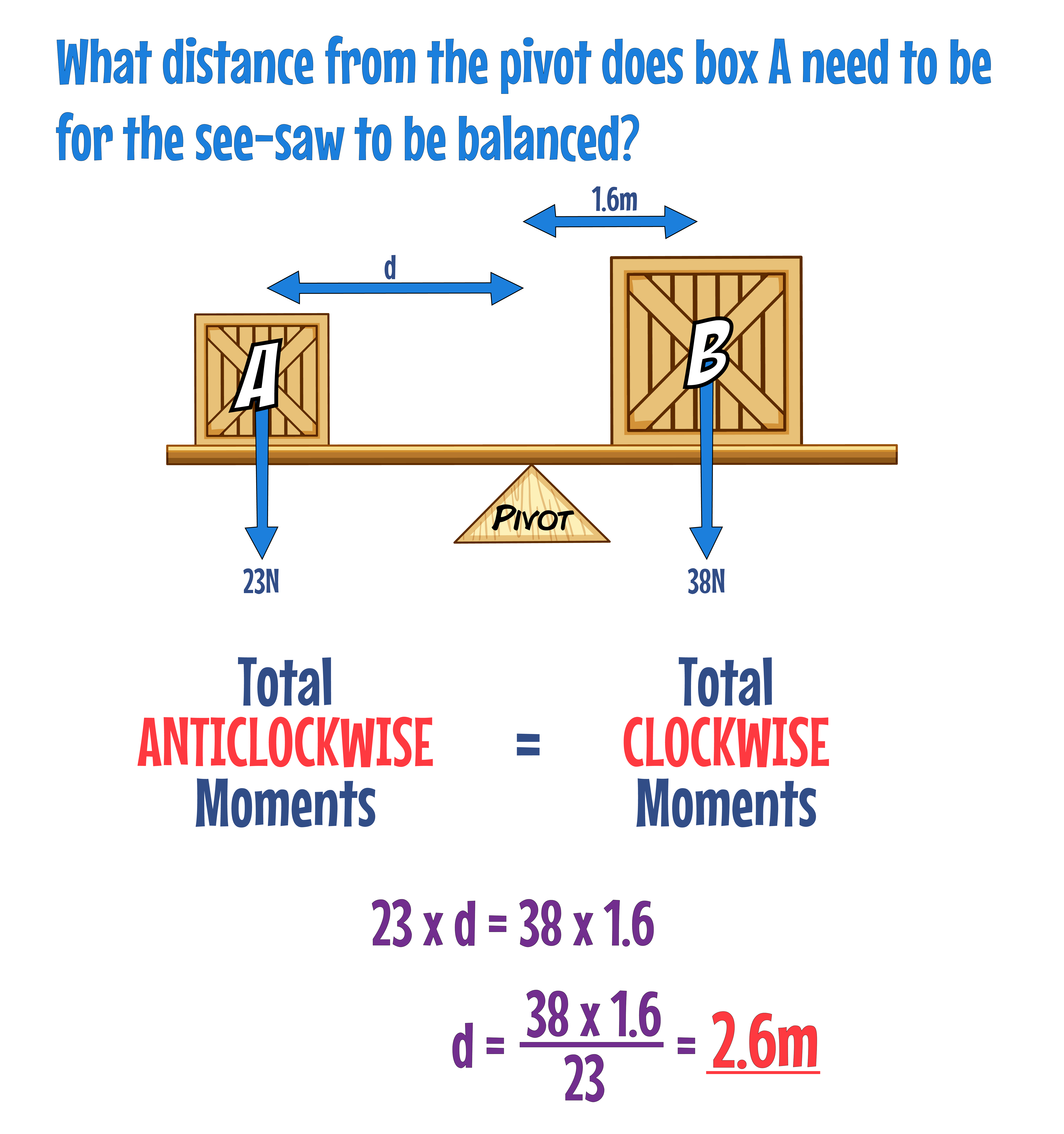
For a system to be BALANCED (in equilibrium) the TOTAL CLOCKWISE MOMENT about a pivot must be equal to the TOTAL ANTICLOCKWISE MOMENT.
Levers
LEVERS increase the distance from the pivot at which the force is applied, allowing the object to be turned MORE EASILY.
This is because a GREATER DISTANCE means the SAME MOMENT can be achieved with LESS FORCE.
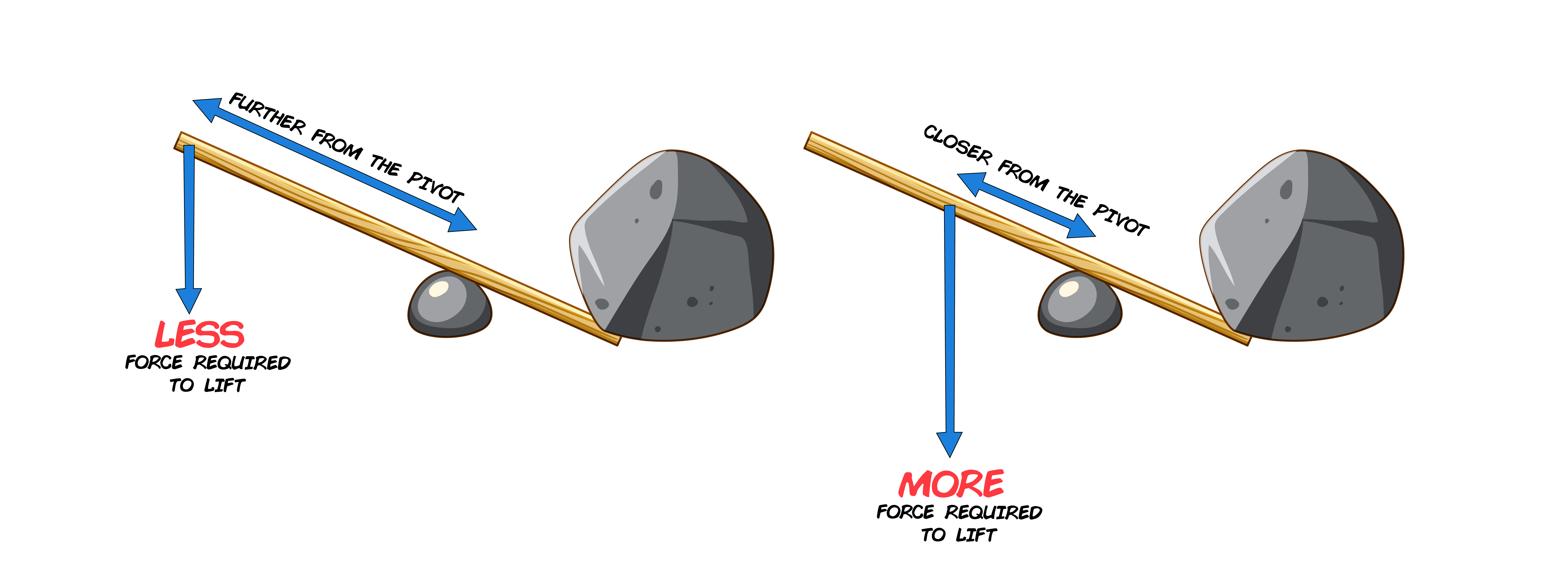
In the above example, LESS force is required to lift the rock if the force is applied FURTHER from the pivot.
This is because to create the SAME MOMENT to lift the rock, a LOWER force is needed as the DISTANCE from the pivot is greater.
Gears
GEARS are circular discs with teeth that interlock and TRANSMIT ROTATIONAL EFFECTS of a force from one gear to another.
Different sized gears can be used to change the MOMENT of the force.
A forces transmitted by a LARGER gear will cause a BIGGER moment as the distance from the AXLE (pivot) is greater.
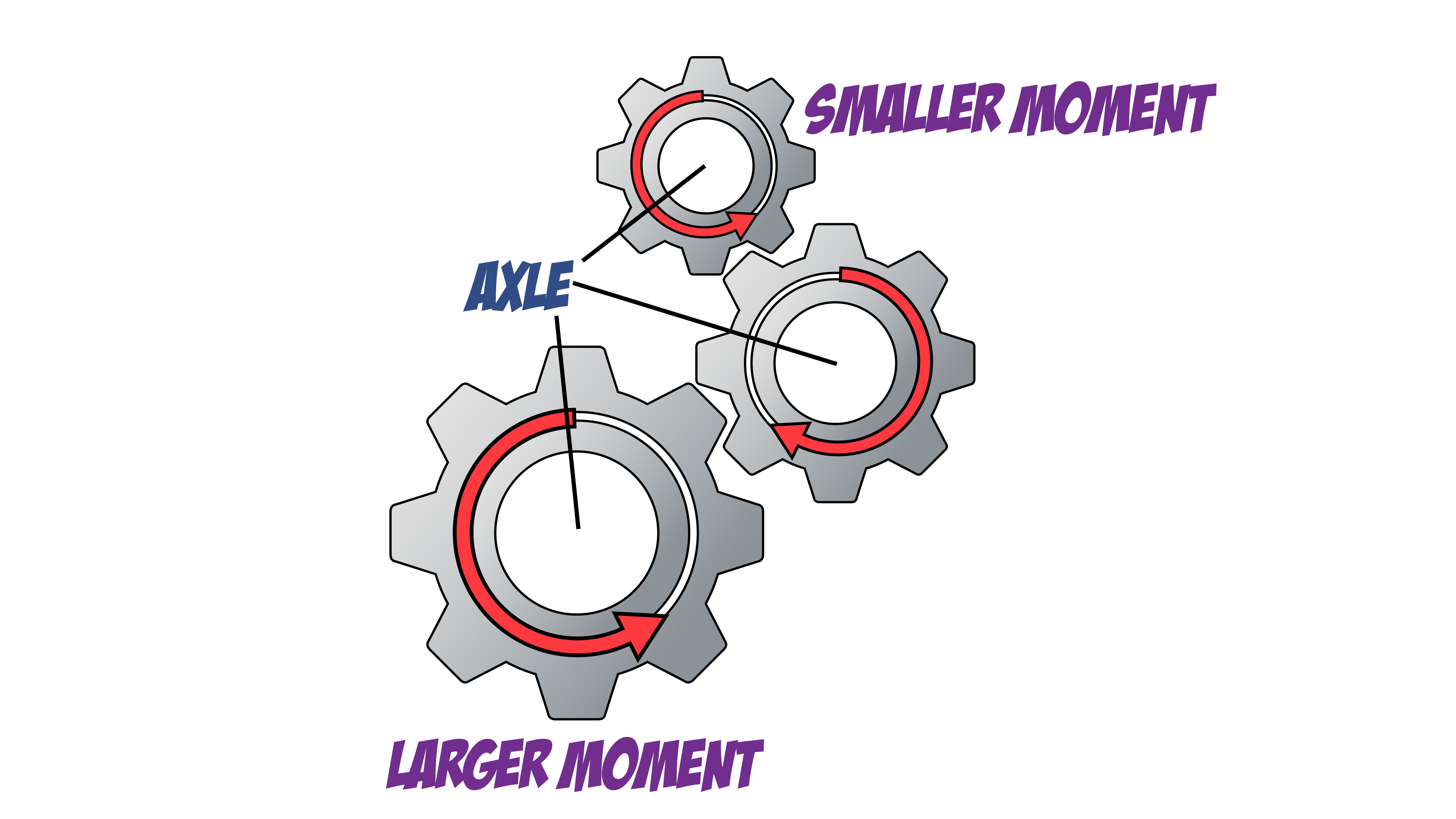
LARGER gears rotate SLOWER than smaller gears.
Neighbouring gears always turn in OPPOSITE DIRECTIONS.