Forces and Elasticity
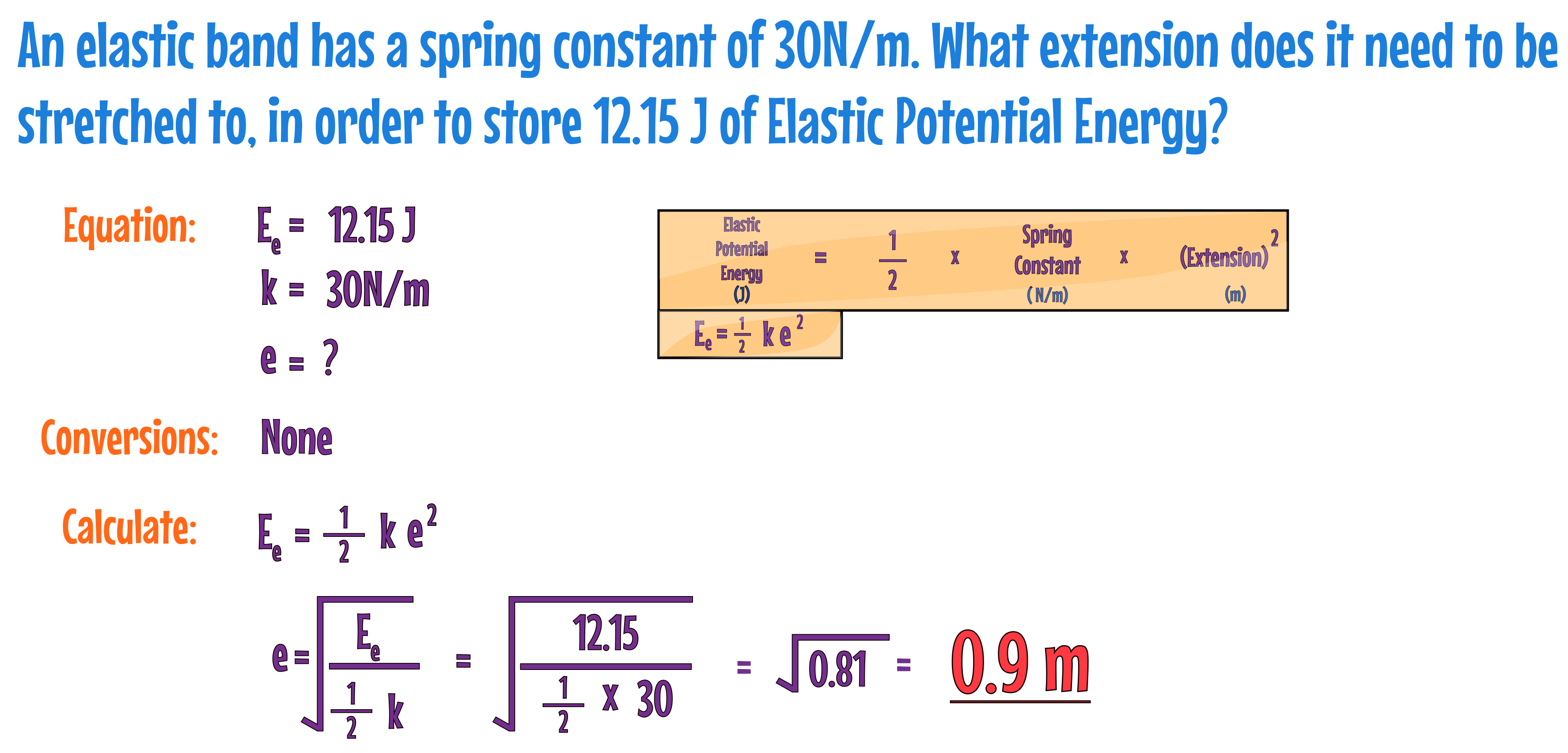
- When we apply more than one FORCE to a stationary object, it can cause DEFORMATION.
- Deformation is when the object CHANGES SHAPE.
- The DIRECTION the forces act in, and the POSITION they act from, determine the way the object will deform:
Elastic and Inelastic Deformation
There are TWO types of deformation:
1. ELASTIC deformation
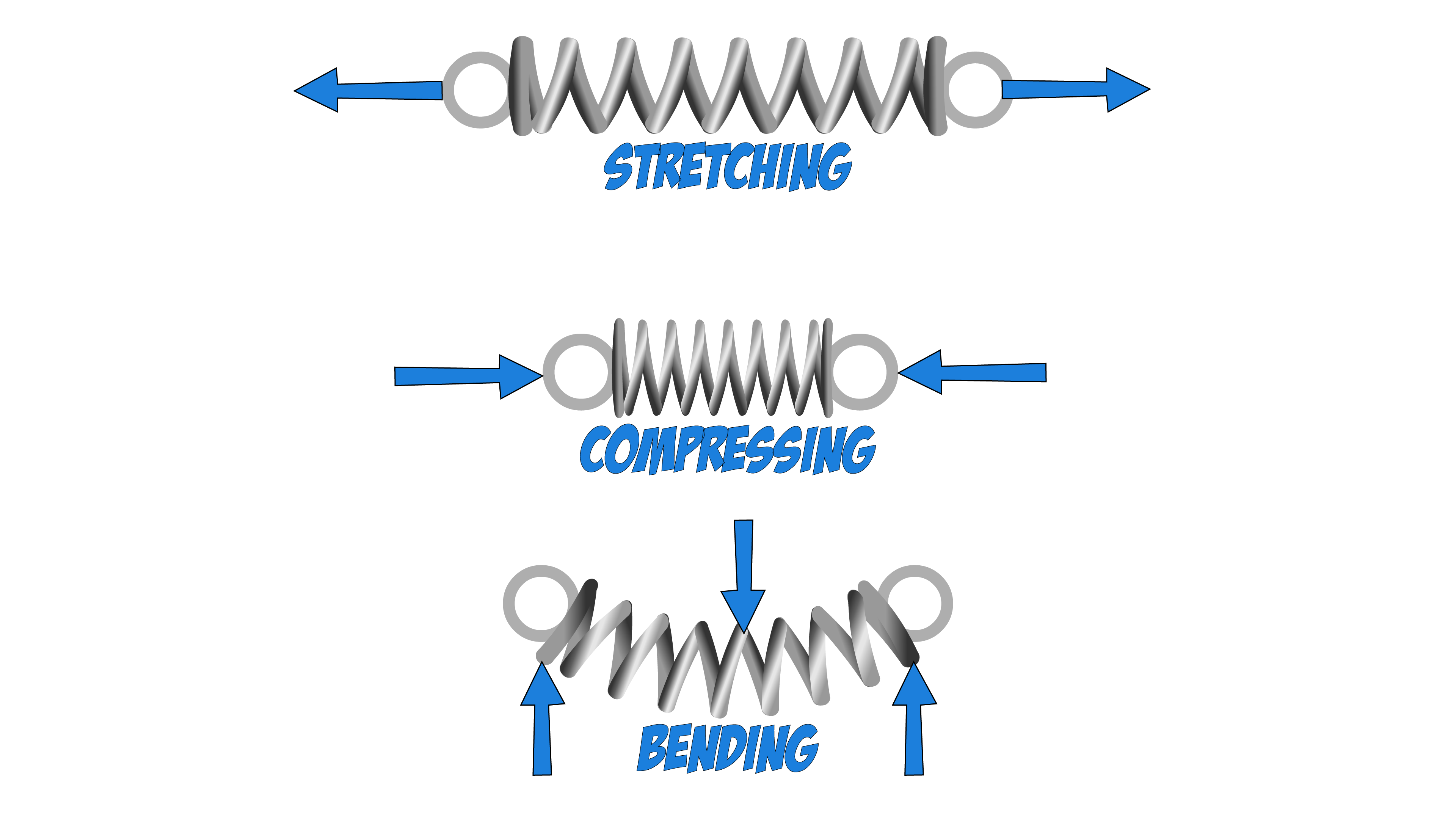
This is when the object RETURNS TO ITS ORIGINAL SHAPE AND LENGTH after the forces have been removed.
2. INELASTIC deformation
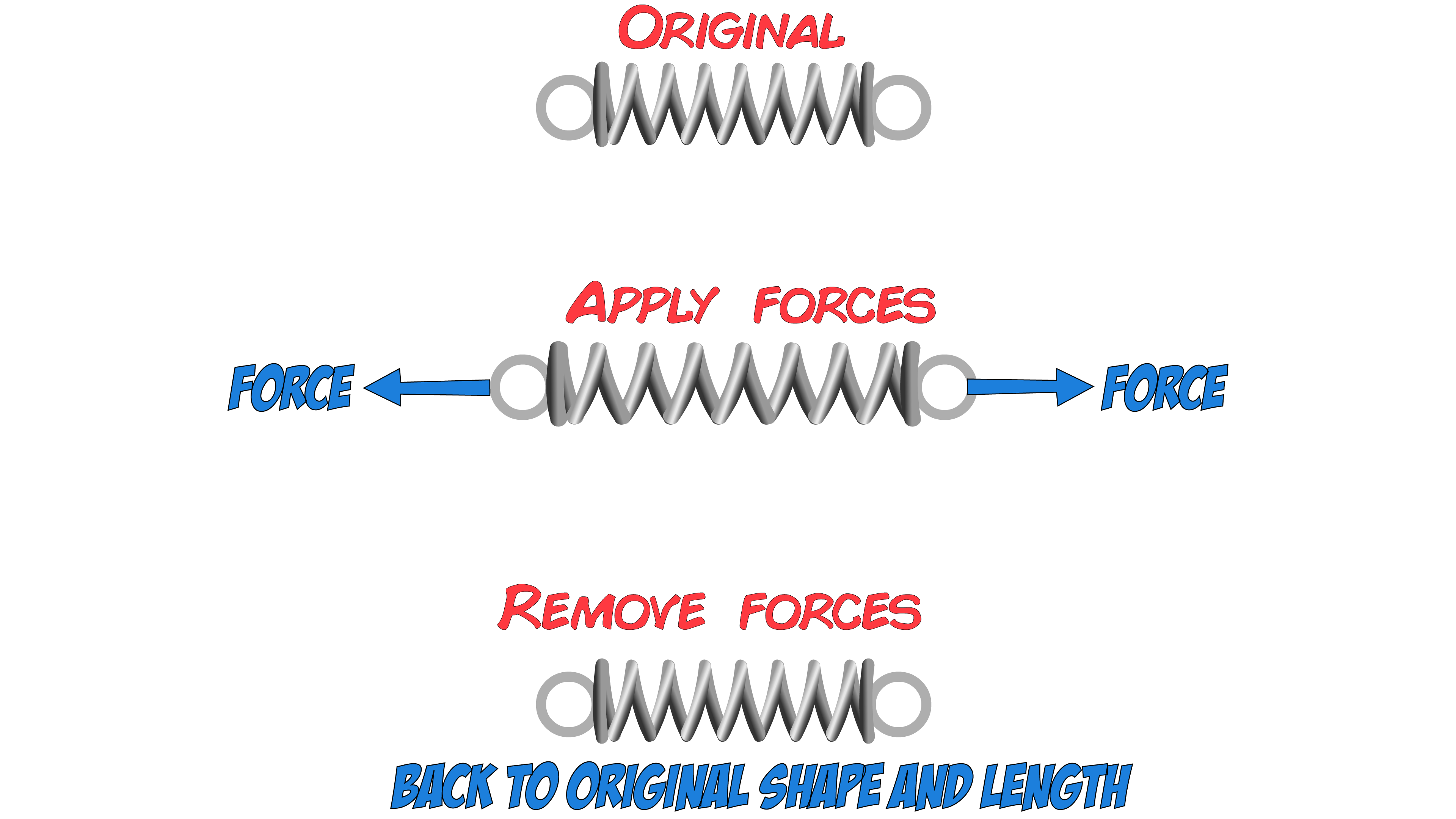
This is when the object DOESN’T return to its original shape and length after the forces have been removed.
Hooke's Law
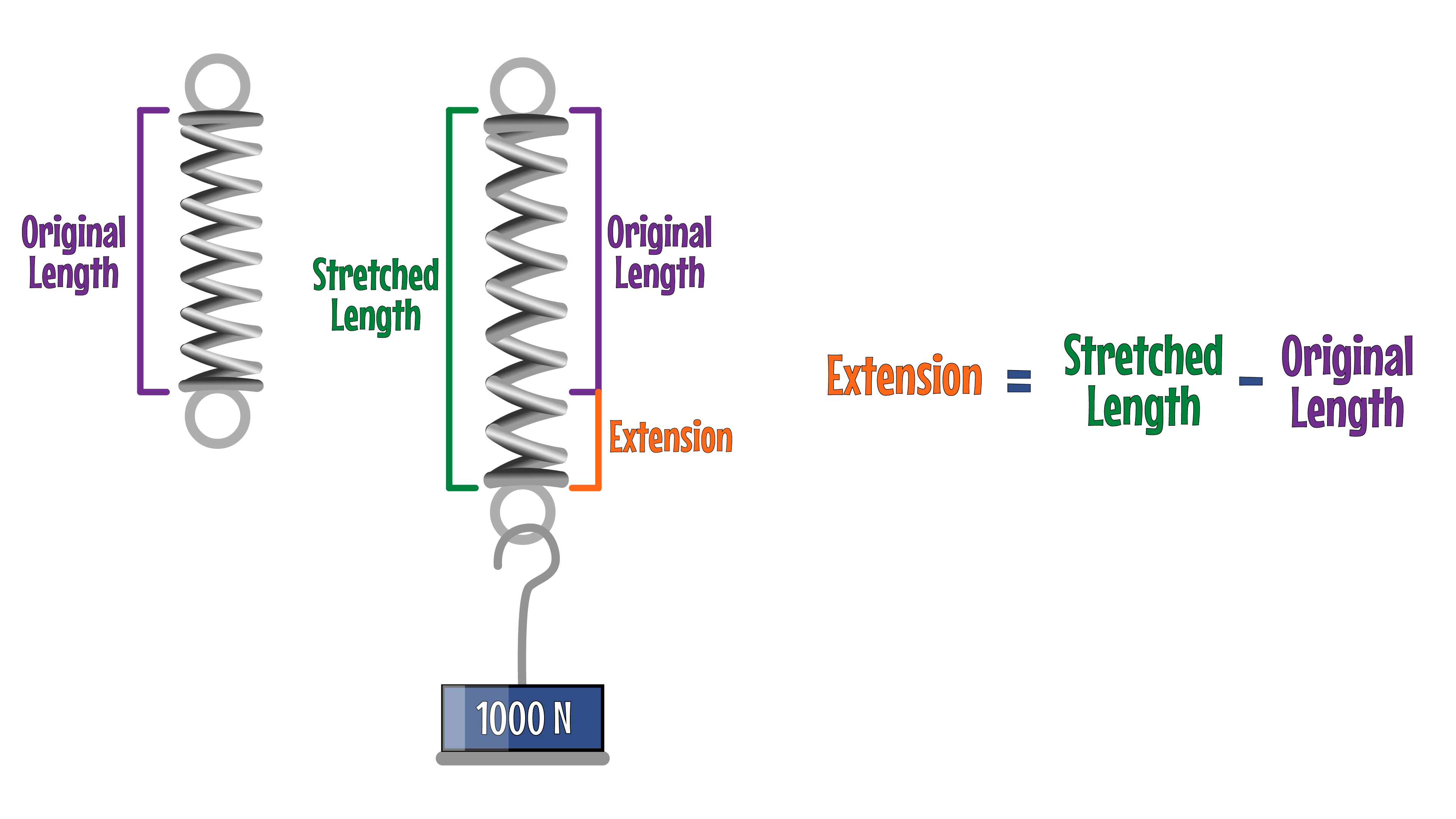
Consider adding a force of 1000N on a spring causing it to be stretched.
The EXTENSION is the DIFFERENCE between the length of STRETCHED SPRING and the ORIGINAL LENGTH of the unstretched spring:
If ANOTHER 1000N was added, the EXTENSION would DOUBLE.
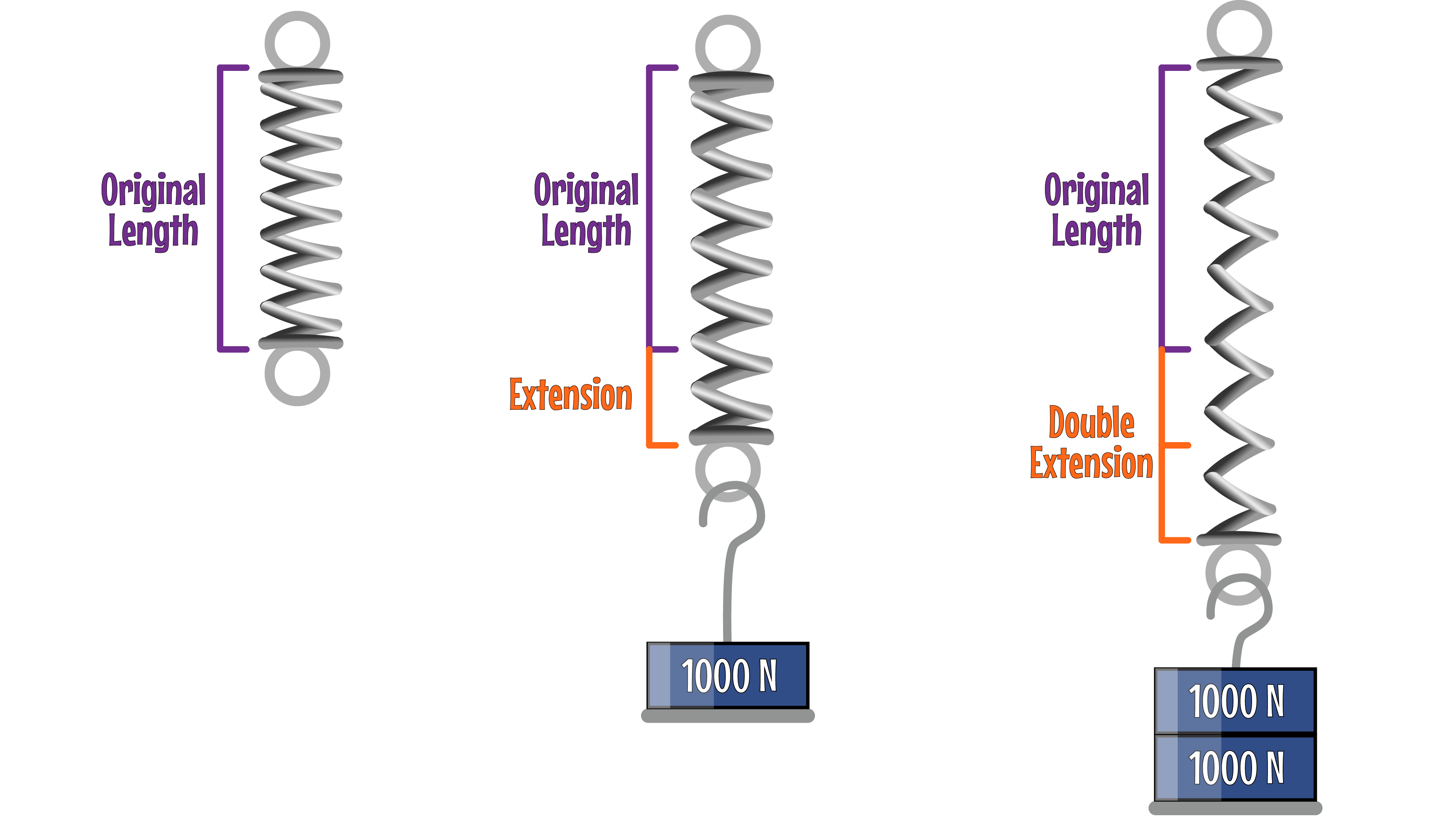
This can be explained by Hooke’s Law which states that:
The extension of an elastic object like a spring is DIRECTLY PROPORTIONAL to the force applied, given the LIMIT OF PROPORTIONALITY is not exceeded.
Hookes Law can be represented with the following equation:
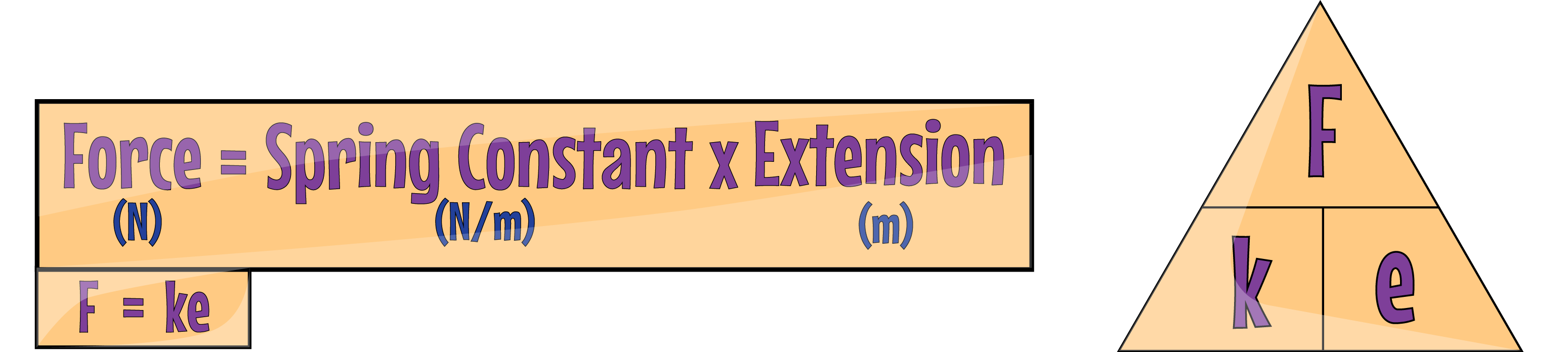
Where:
- F is the force applied in Newtons (N).
- k is the spring constant in Newtons per meter (N/m). The GREATER the spring constant, the STIFFER the spring, and the more DIFFICULT it is to stretch.
- e is the extension (or compression) in Metres (m).
Graph for Hooke’s Law
The relationship between the force applied and extension can be shown on a FORCE-EXTENSION graph:
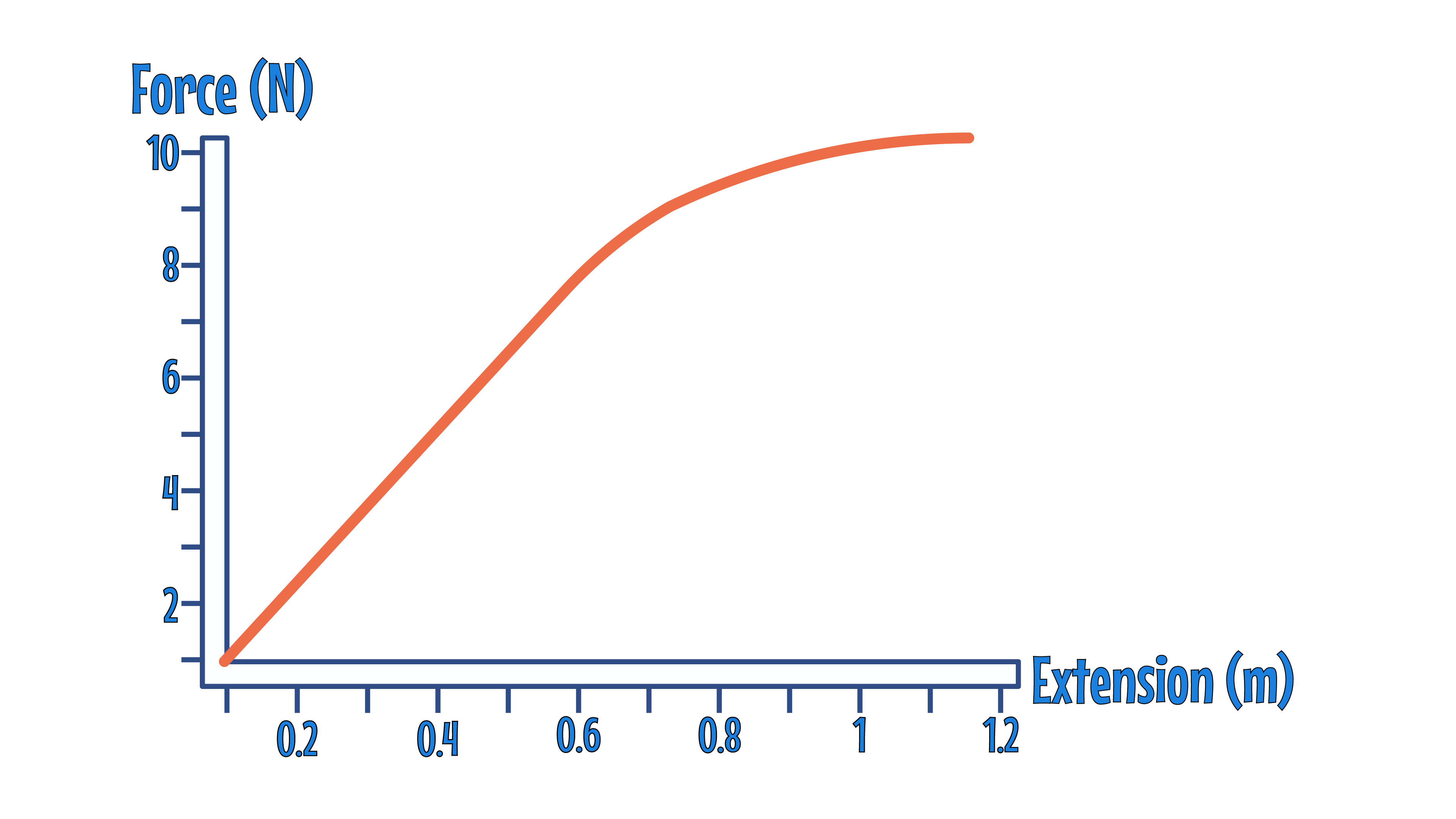
This graph shows a LINEAR relationship until an extension of around 0.7m. This shows force and extension is DIRECTLY PROPORTIONAL until the object is stretched to 0.7m.
LIMIT OF PROPORTIONALITY
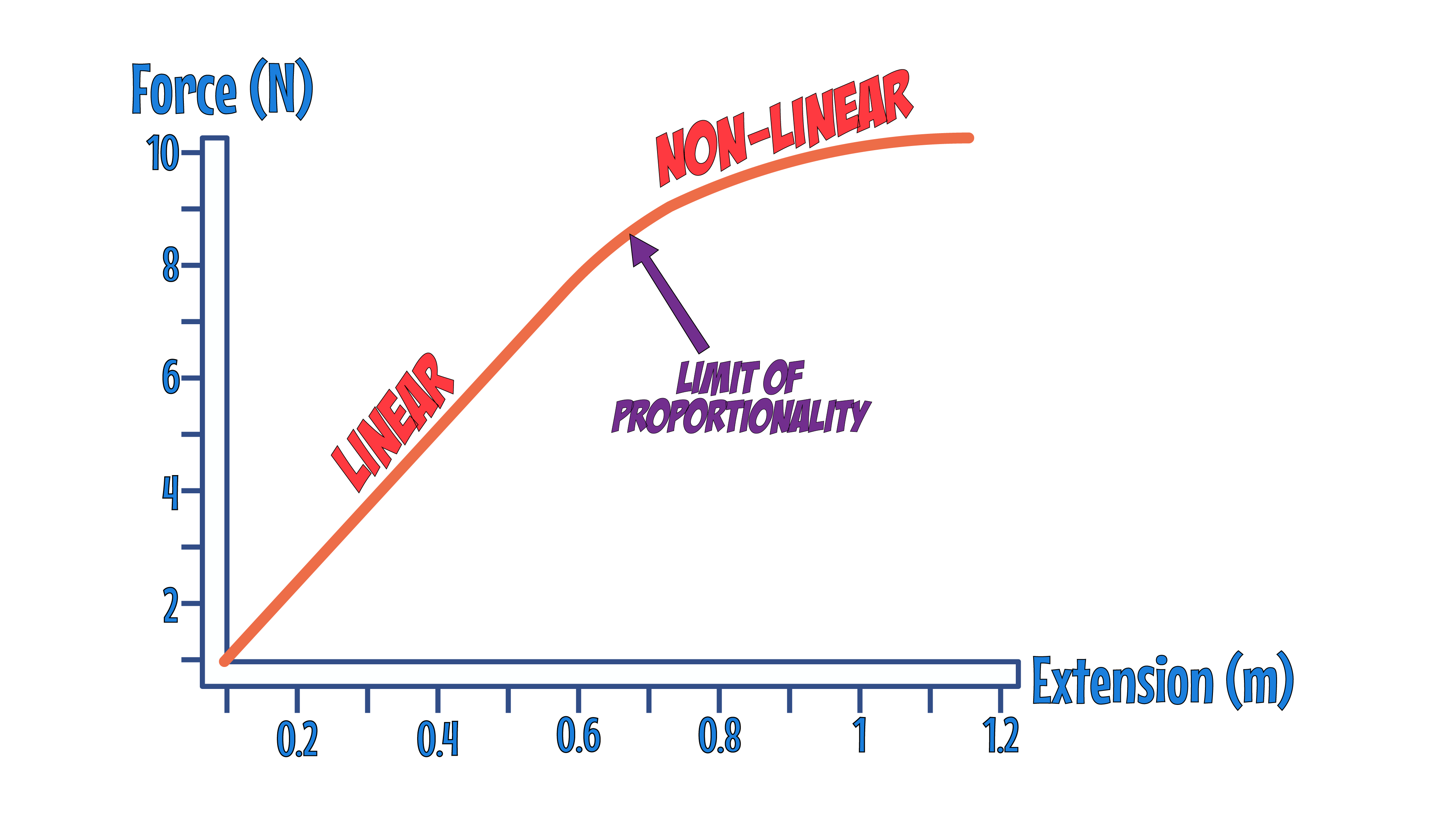
The point at which the graph becomes NON-LINEAR (0.7m) is known as the LIMIT OF PROPORTIONALITY, and if the object is stretched to more than this extension, the force is NO LONGER proportional to the extension.
ELASTIC LIMIT
Eventually, if you add enough force to a spring, it will deform INELASTICALLY and will NOT return to its original shape and length. The point at which this happens is known as the ELASTIC LIMIT.
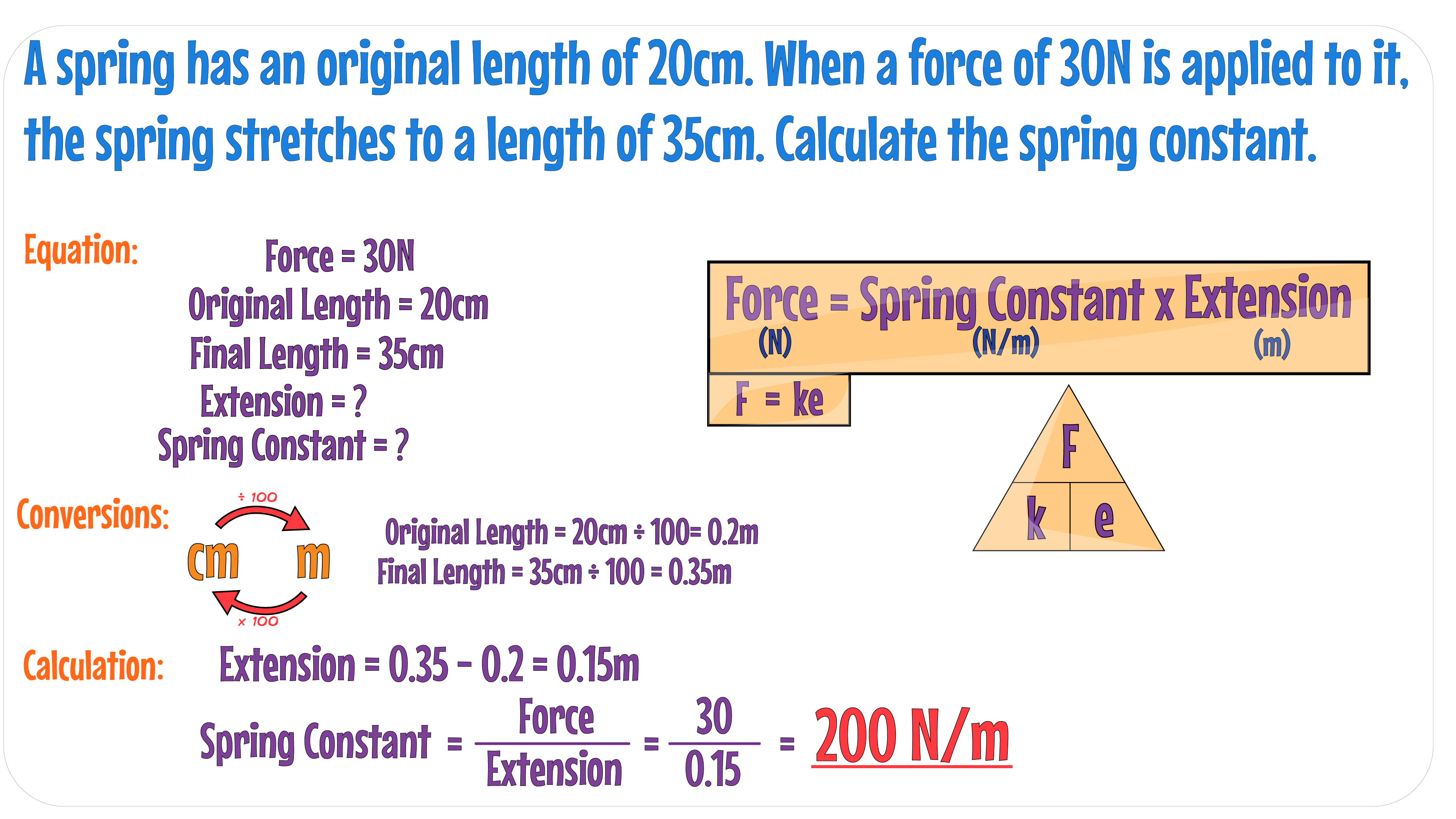
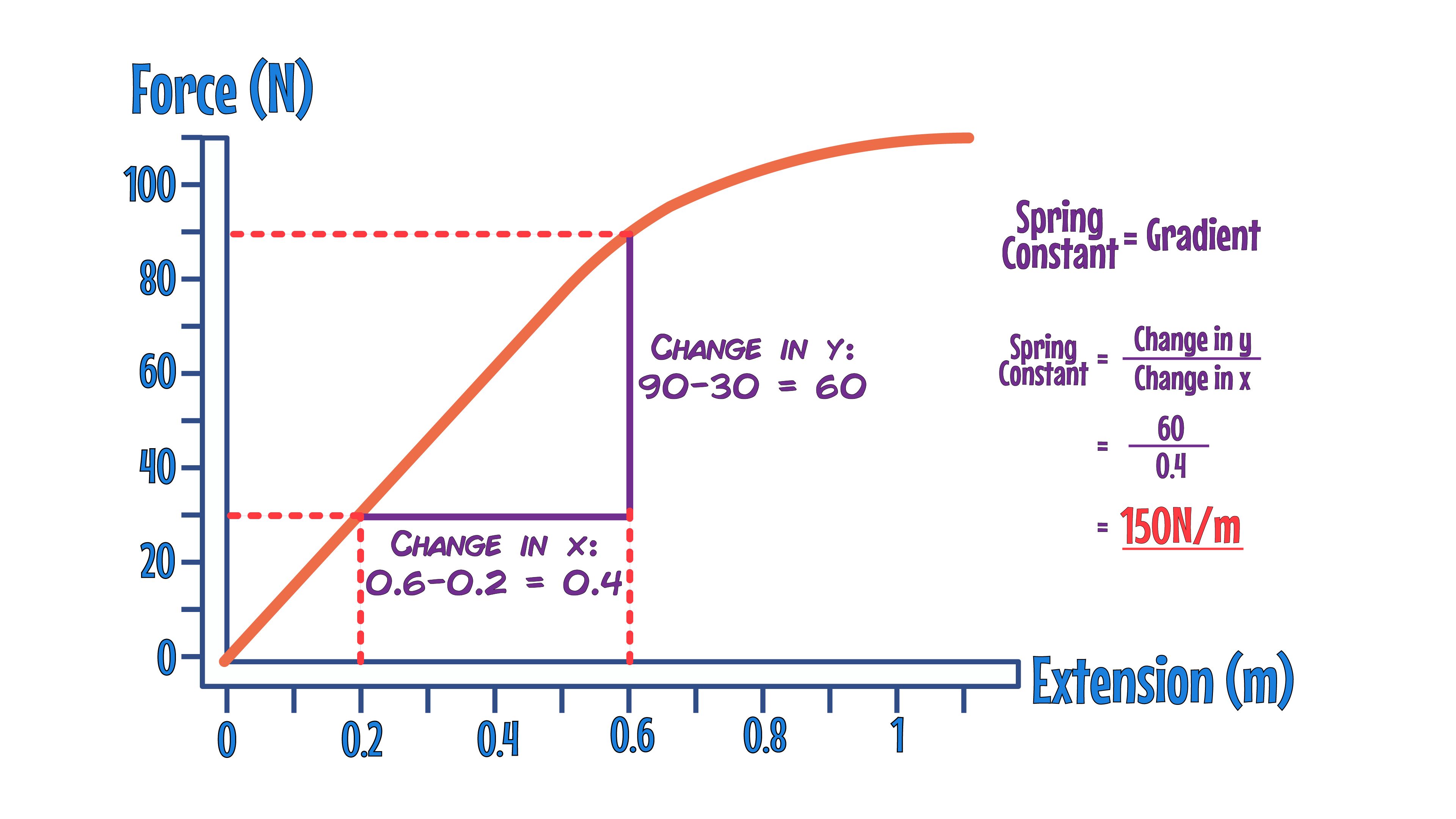
You can work out the SPRING CONSTANT using the graph, by finding the GRADIENT of the LINEAR section:
ELASTIC POTENTIAL ENERGY
The WORK DONE in stretching (or compressing) an elastic object is stored as ELASTIC POTENTIAL ENERGY within the object.
During ELASTIC DEFORMATION: The WORK DONE is EQUAL to the ELASTIC POTENTIAL ENERGY stored in the object
During INELASTIC DEFORMATION: Some of the WORK DONE is DISSIPATED as heat, meaning the object does NOT return to its original shape and size.
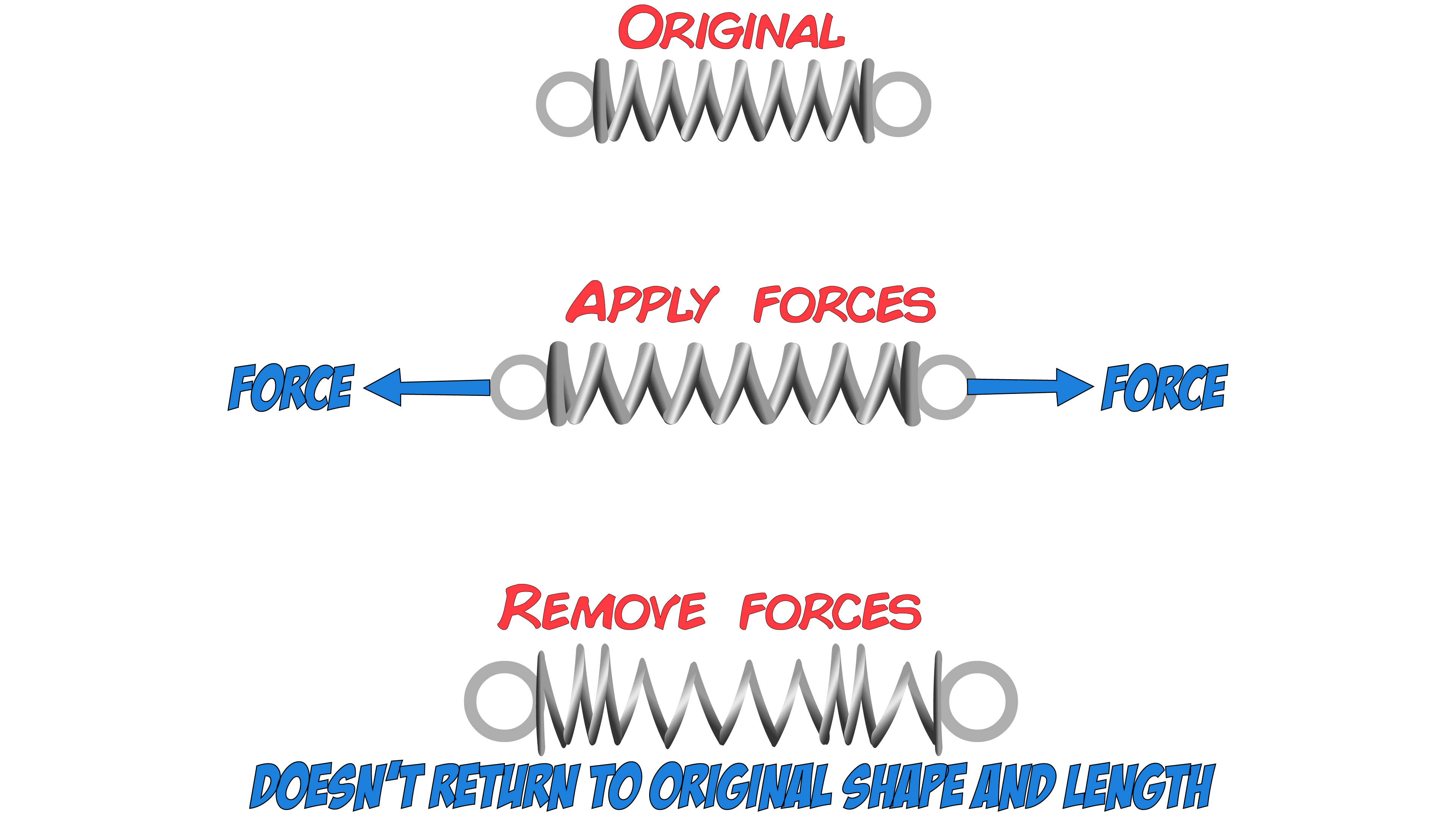
- The elastic potential energy stored during ELASTIC DEFORMATION can be calculated using the equation:

- Elastic Potential Energy is measured in Joules (J).
- Spring Constant (k) is measured in Newtons per Metre (N/m).
- Extension (e) is measured in Metres (m).