
LATENT HEAT
- The energy required for a substance to change its state is known as LATENT HEAT.
- When a change of state occurs in a substance, the energy supplied changes the INTERNAL ENERGY (energy stored) in the substance but NOT the TEMPERATURE.
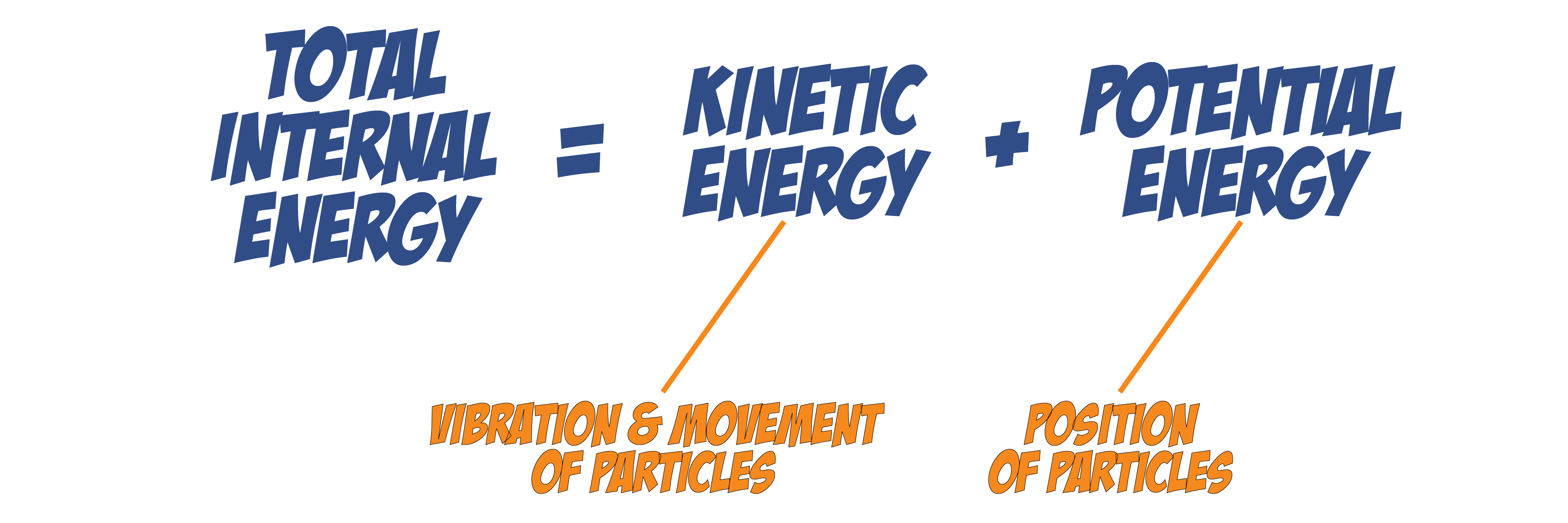
- This is because the energy is used to break the FORCES of attraction between molecules (which raises the potential energy of the substance), rather than raising the temperature of the substance (which increases the molecules' kinetic energy).
SPECIFIC LATENT HEAT
The SPECIFIC LATENT HEAT of a substance is the amount of energy required to change the state of 1kg of the substance with no change in temperature.
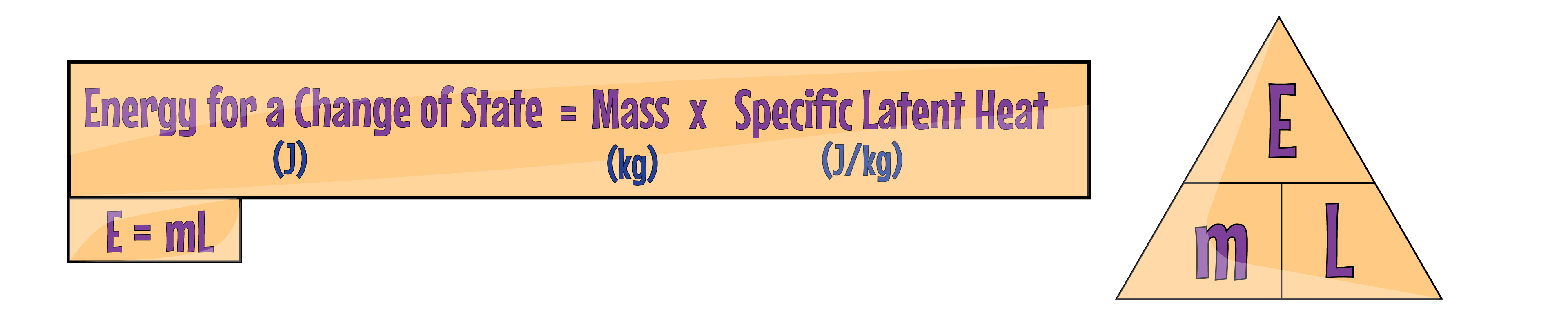
By knowing the SPECIFIC LATENT HEAT of a substance, the energy change involved in a change of state can be calculated using the equation:
Where:
- E = energy in Joules (J).
- m = mass in Kilograms (kg).
- L = specific latent heat in Joules per kilogram (J/kg).
When using this equation, there are TWO types of specific latent heat that can be used:
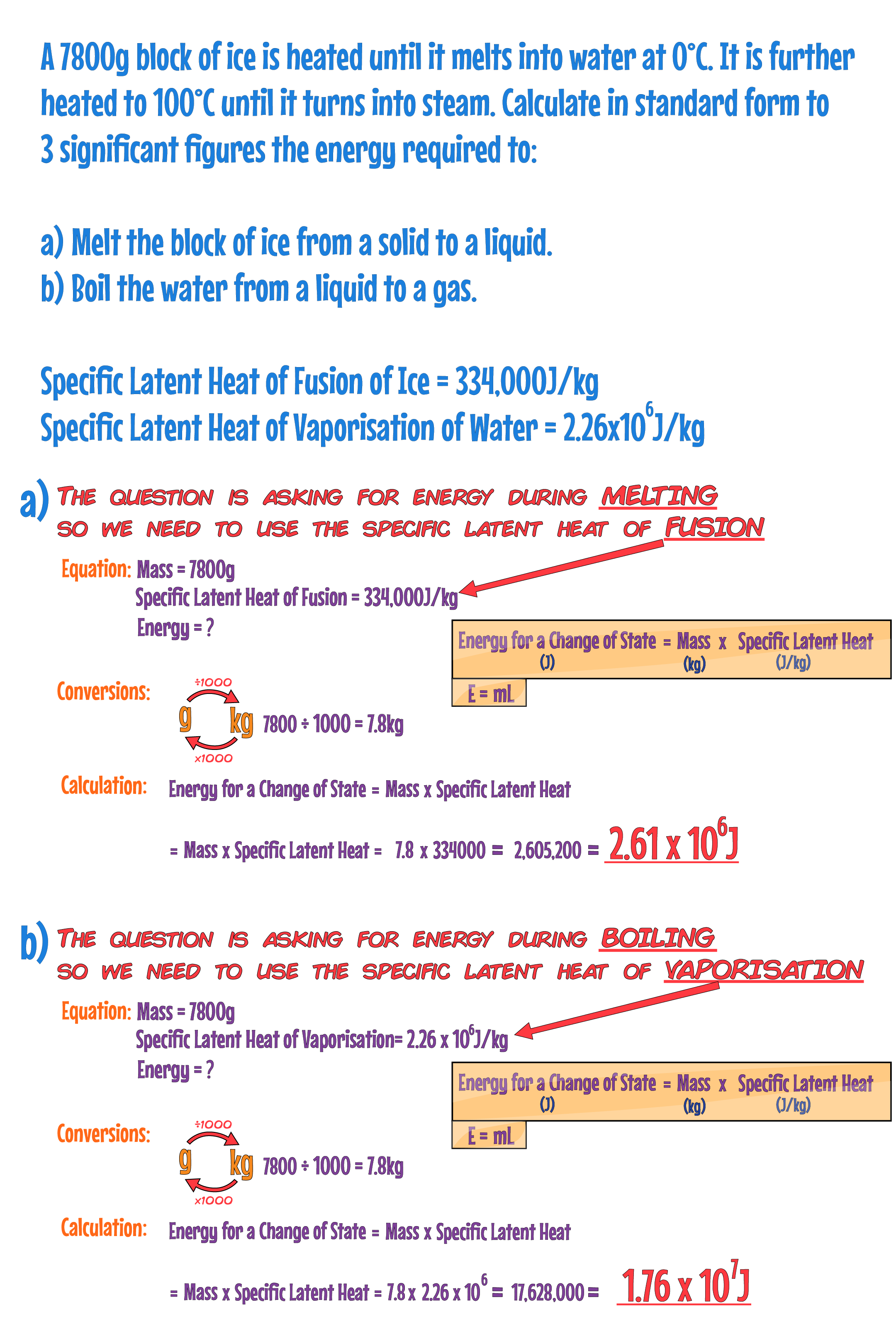
1. Specific Latent Heat of FUSION
This is used when the state changes from SOLID to LIQUID (melting).
2. Specific Latent Heat of VAPORISATION
This is used when the state changes from LIQUID to GAS (boiling).
Make sure to use the correct type of SPECIFIC LATENT HEAT in your calculations:
Specific Heat Capacity vs. Specific Latent Heat
Specific heat capacity and specific latent heat are similar to each other but they have some differences:
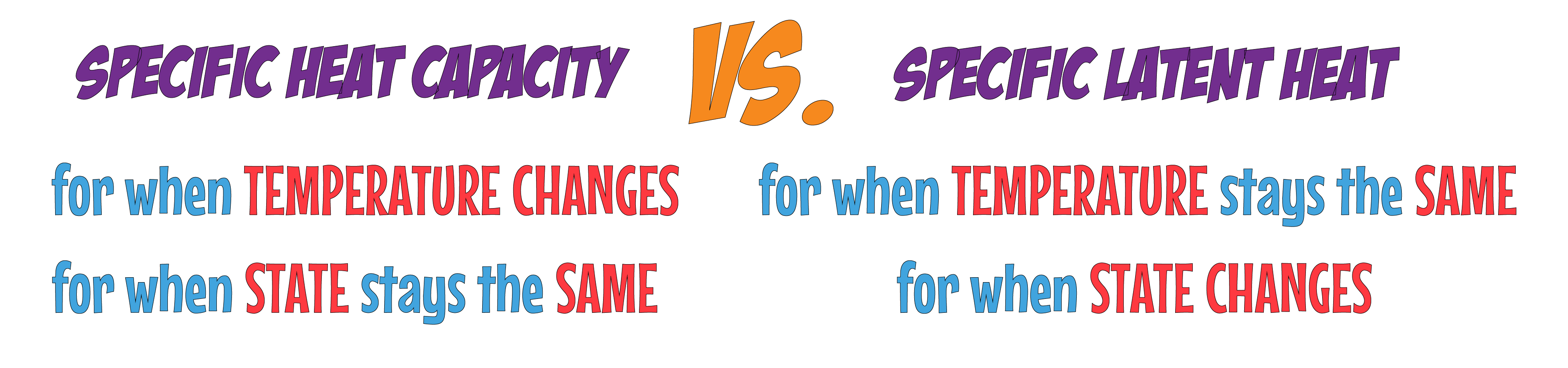
- SPECIFIC HEAT CAPACITY is the amount of heat energy required to raise the temperature of 1 kilogram of a substance by 1 degree Celsius without changing its state.
- For example, heating water from 5 °C to 20 °C, the water remains liquid throughout the heating process.
- SPECIFIC LATENT HEAT refers to the amount of heat energy needed to change the state of 1 kilogram of a substance WITHOUT changing its temperature. This energy is used for breaking or forming forces (bonds) during a state change, such as water boiling to become steam or ice melting to become water. During this change, the temperature of the substance does NOT increase.