
Internal Energy
INTERNAL ENERGY is the total energy that particles in a system have from their MOVEMENT and POSITION. It's made up of:
- KINETIC ENERGY STORES: Due to the VIBRATION or MOVEMENT of particles.
- POTENTIAL ENERGY STORES: Due to the POSITION of particles within the system.
UNDERSTANDING INTERNAL ENERGY
- Particles are always moving (vibrating or rotating) and this movement contributes to the system's KINETIC ENERGY.
- Particles also have POTENTIAL ENERGY because of the forces between them. Their position within the field of these forces determines their potential energy.
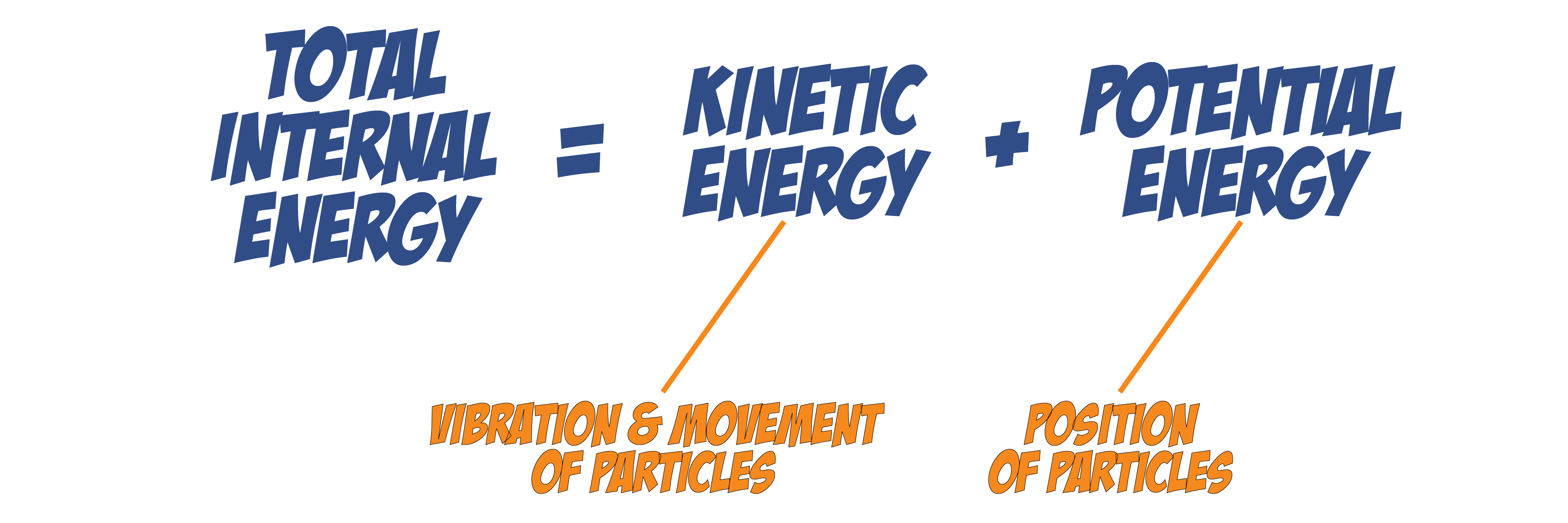
The sum of KINETIC and POTENTIAL ENERGY in all particles is the TOTAL INTERNAL ENERGY of the system.
CHANGES IN INTERNAL ENERGY
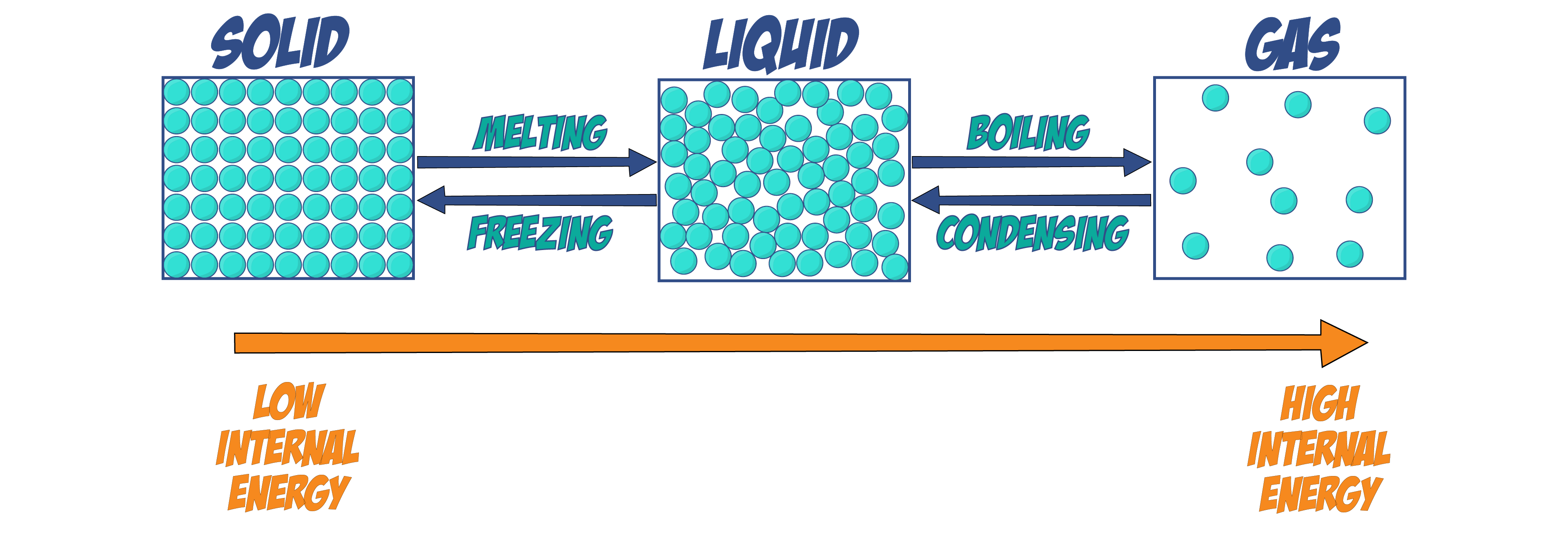
- HEATING a system will INCREASE its internal energy.
- This is because it transfers energy to the particles, increasing their KINETIC ENERGY, which often results in a CHANGE IN TEMPERATURE.
- If the system's temperature changes, it can also lead to a CHANGE IN STATE—from solid to liquid or liquid to gas.
- The extent of temperature change from a given energy input depends on the substance’s MASS and SPECIFIC HEAT CAPACITY. (See previous notes)