Series and Parallel Circuits
There are two ways of joining components in circuits, in SERIES and in PARALLEL. Here are the differences between the two:
COMPONENT CONNECTION
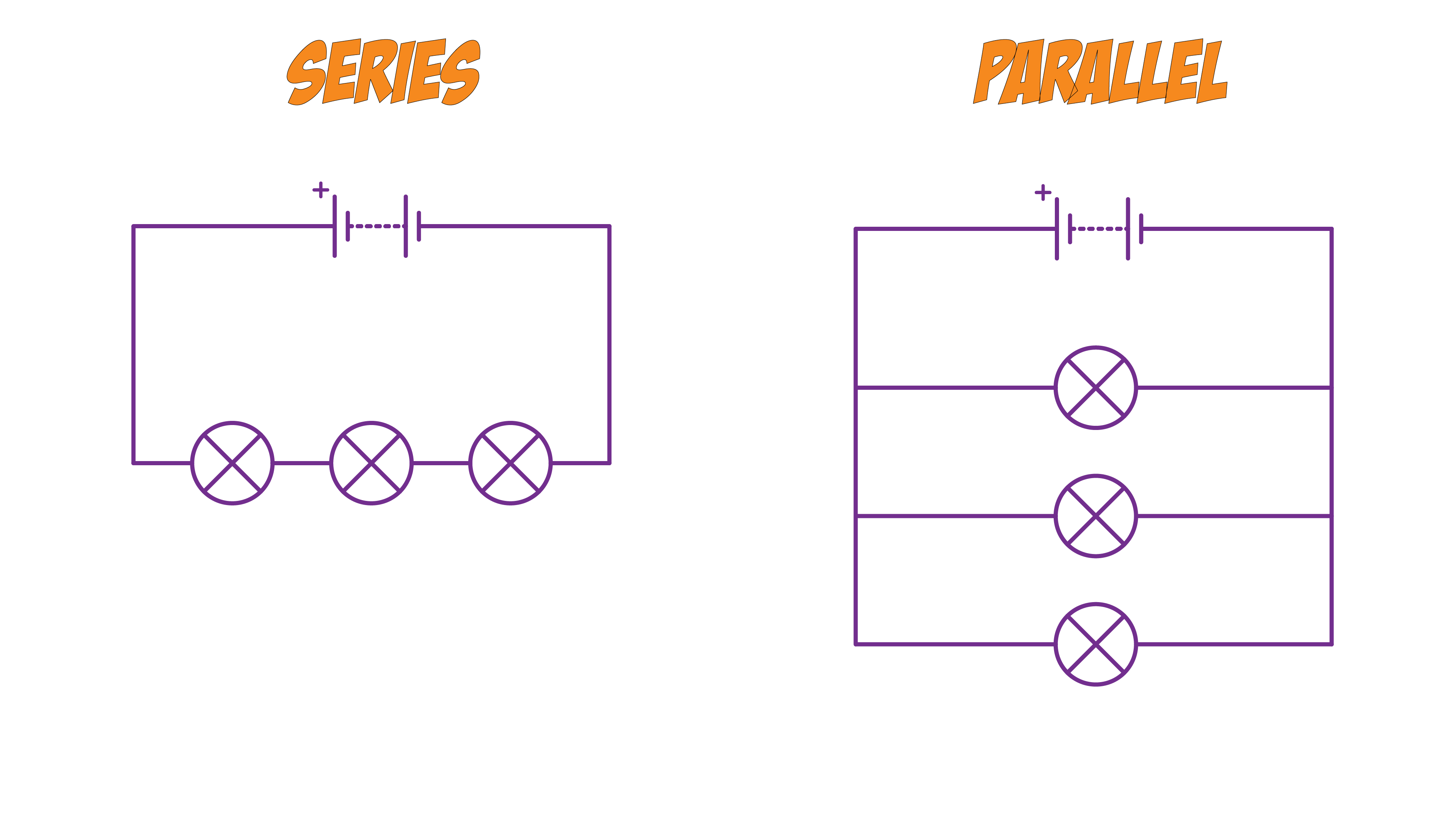
SERIES Circuits: Components are connected in ONE LOOP.
PARALLEL Circuits: Components are connected in MULTIPLE LOOPS.
CURRENT
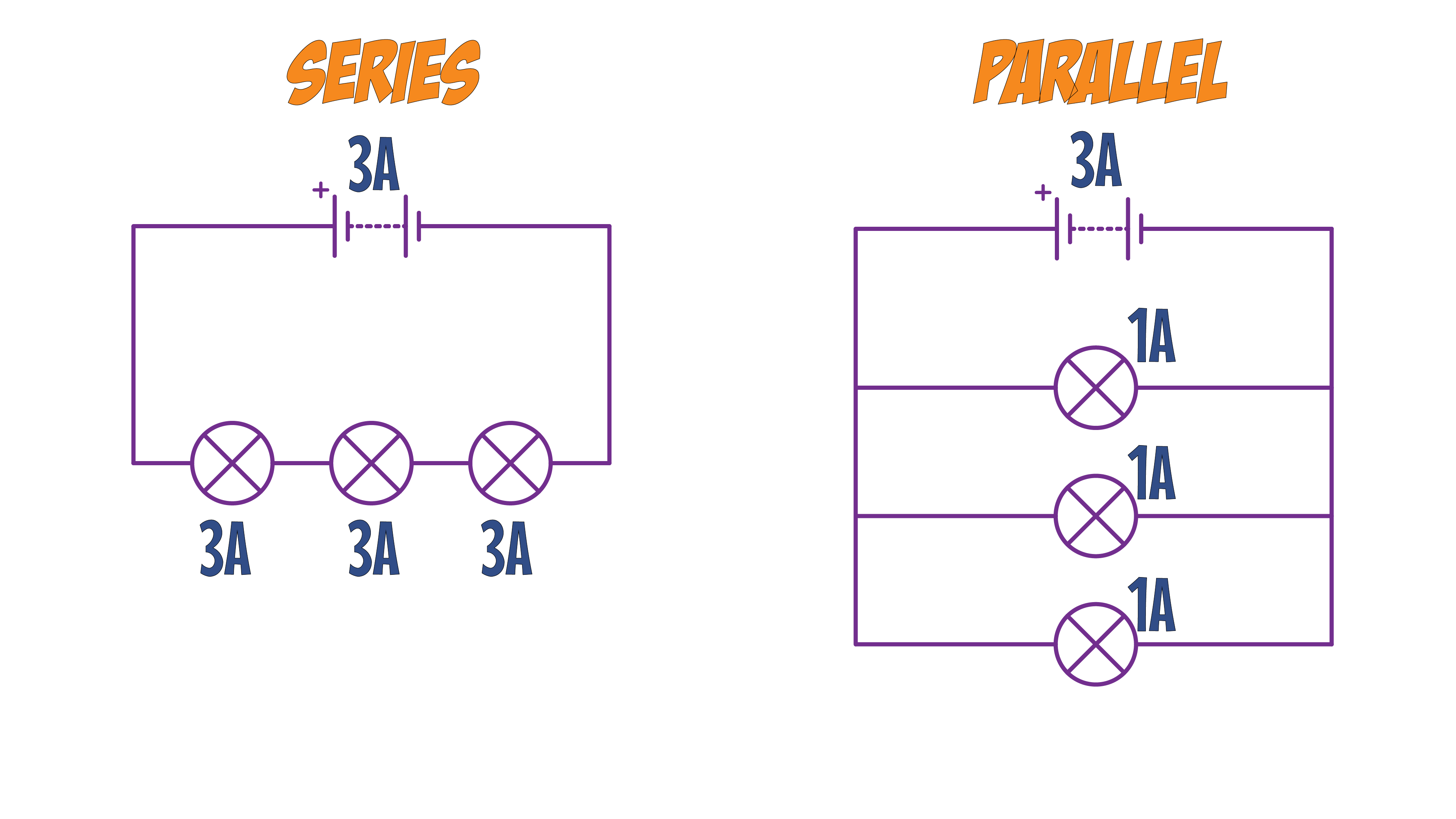
SERIES Circuits: The CURRENT is the SAME through each component.
PARALLEL Circuits: The CURRENT through the whole circuit is the SUM of the currents through the separate components.
POTENTIAL DIFFERENCE
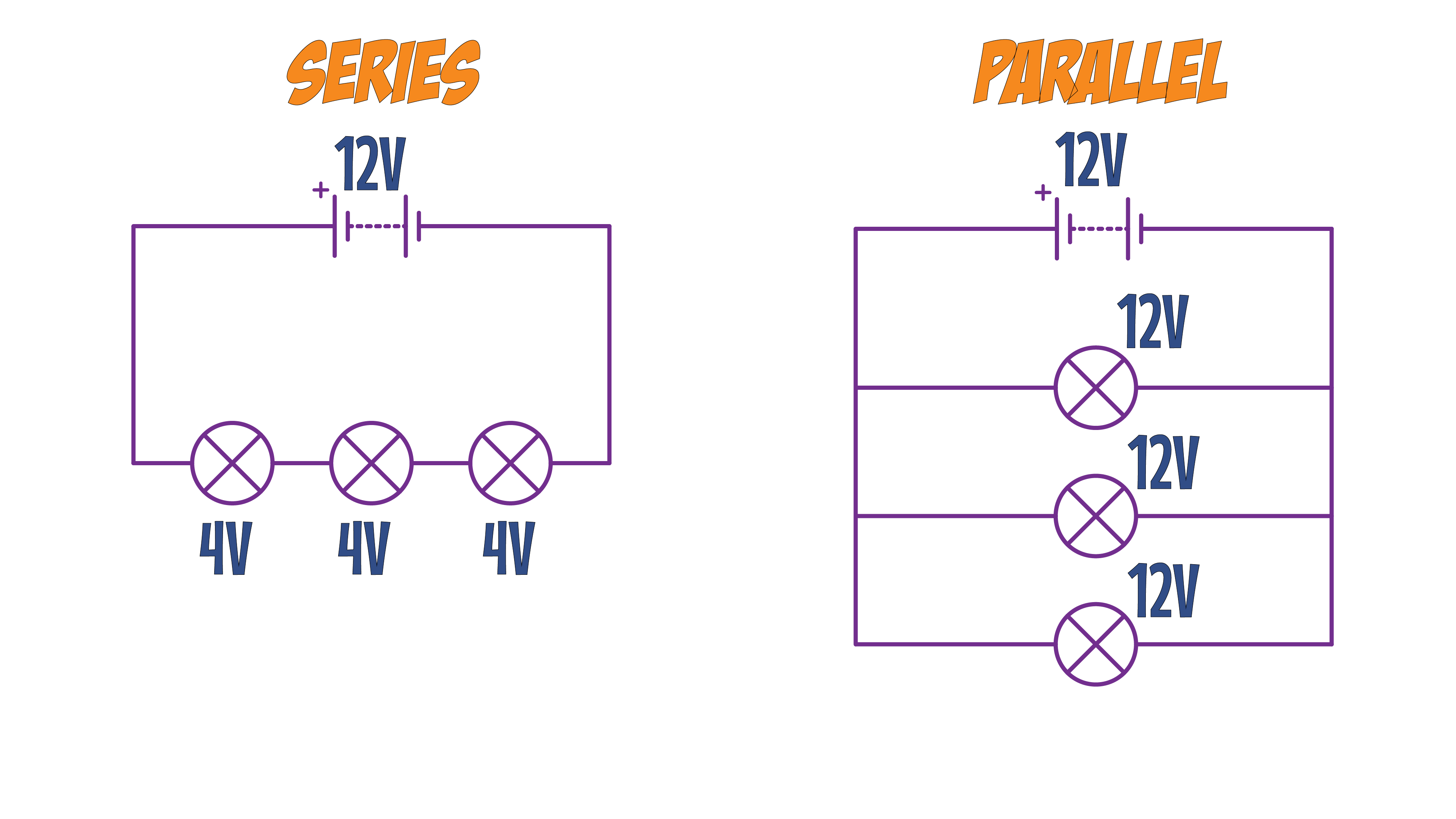
SERIES Circuits: The POTENTIAL DIFFERENCE supplied by the battery is SHARED between the components.
PARALLEL Circuits: The POTENTIAL DIFFERENCE across each component is the SAME.
RESISTANCE
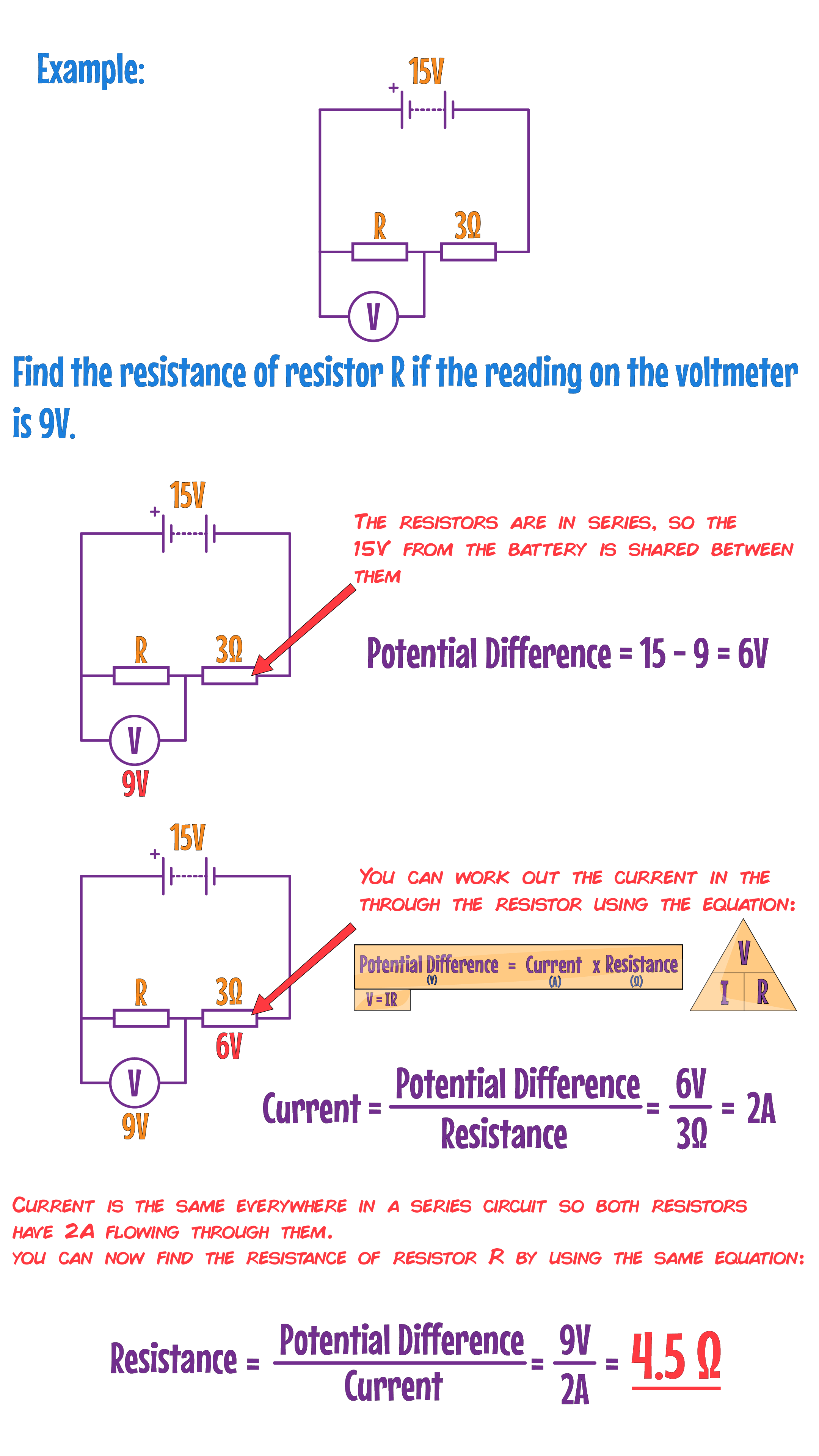
SERIES Circuits: The TOTAL RESISTANCE is calculated by ADDING the resistance of each component. The formula is:

Increasing the number of resistors IN SERIES increases the overall resistance, as the current now has MORE resistors to pass through.
PARALLEL Circuits: The TOTAL RESISTANCE of resistors in parallel is LESS THAN the SMALLEST individual resistor.
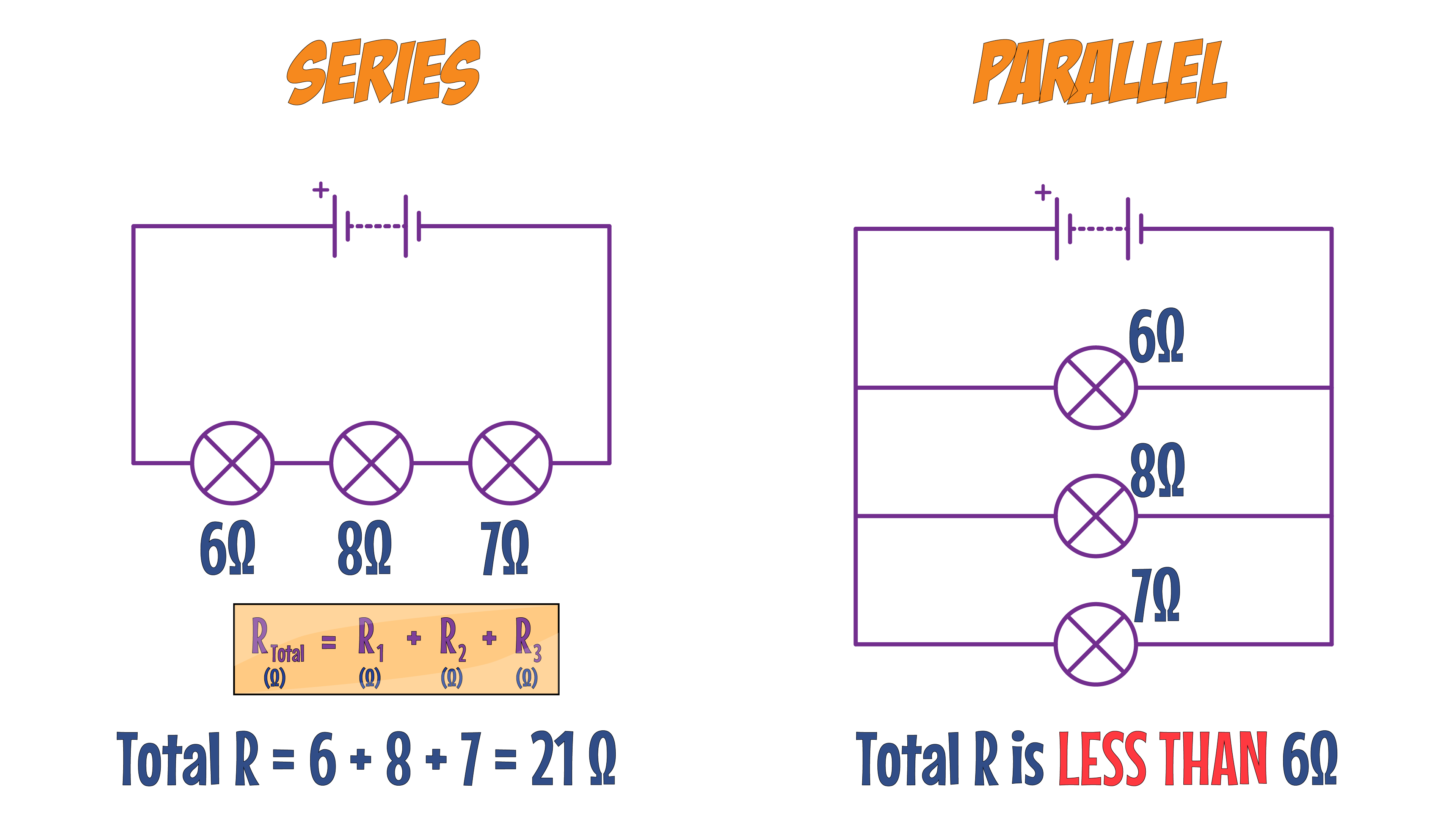
This happens because each resistor added in parallel creates an EXTRA PATH along which the current can flow.
This means there is a LARGER TOTAL CURRENT that can flow through the circuit.
This means there is a LOWER TOTAL RESISTANCE in the circuit.