
Required Practical: Analysis and Purification of Water
There are TWO experiments in this practical:
1. Finding the Amount of Dissolved Solid in a Water Sample
If a water sample has dissolved solid in it, you can EVAPORATE the water out, leaving behind just the solids.
Method:
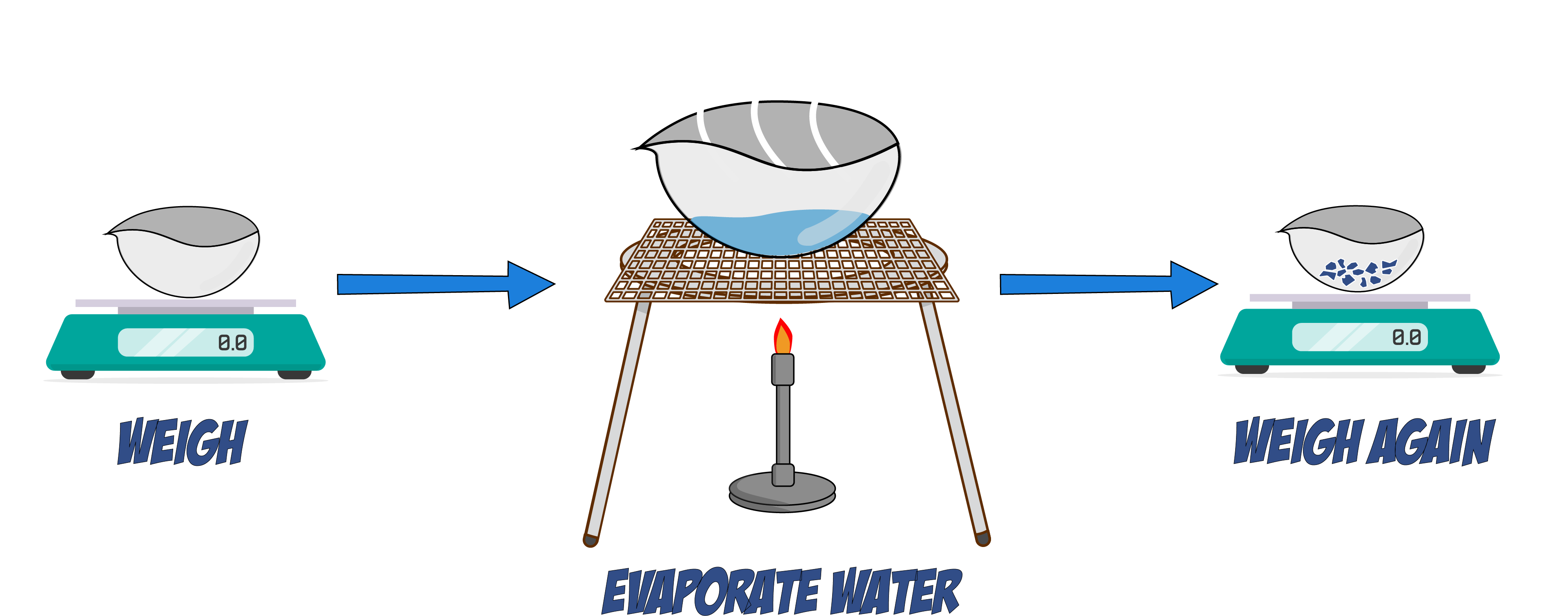
1. Record the MASS of a dry evaporating basin using a MASS BALANCE.
2. Pour a known volume of the water sample into the EVAPORATING BASIN.
3. Heat the evaporating basin until its mass stays constant (all the water has evaporated).
4. Record the mass of the evaporating basin and contents.

Now you can SUBTRACT the mass at the end from the mass at the start to get the MASS of the DISSOLVED SOLIDS.
2. Purifying Water
To get a PURE sample of water you can use the DISTILLATION method.
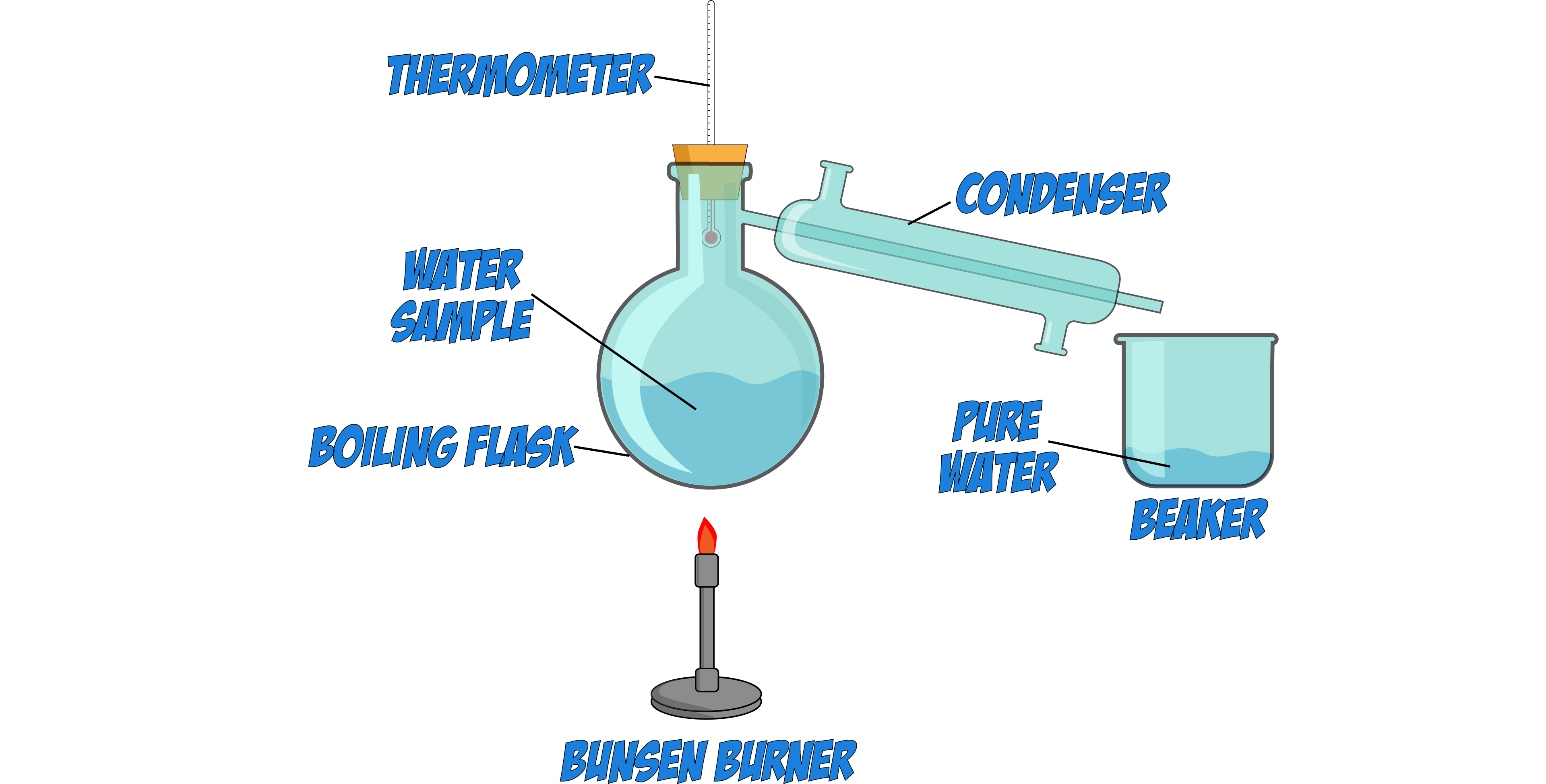
Method:
1. Add the water sample to the boiling flask.
2. HEAT the water using the Bunsen burner until boiling occurs.
3. The water vapour will pass through the condenser and CONDENSE.
4. The DISTILLED water will collect in the beaker.
Results:
You can ANALYSE the water you have collected by:
- Checking the pH by using a pH METER. It should have a pH close to 7.
- Checking the PURITY by checking the BOILING POINT. It should be 100°C.