
Flame Emission Spectroscopy
FLAME EMISSION SPECTROSCOPY is an INSTRUMENTAL METHOD used to IDENTIFY different METAL IONS in solution by analysing the colours they emit when heated.
When a sample is placed in a flame during this process, they release COLOURED LIGHT.
The light emitted is passed through a SPECTROSCOPE, which can detect different WAVELENGTHS of light, resulting in a FLAME EMISSION SPECTRUM (Line Spectrum).

The LINE SPECTRUM has a black background with COLOURED LINES on it.
Different elements and ions produce LINES at different POSITIONS in the spectrum.
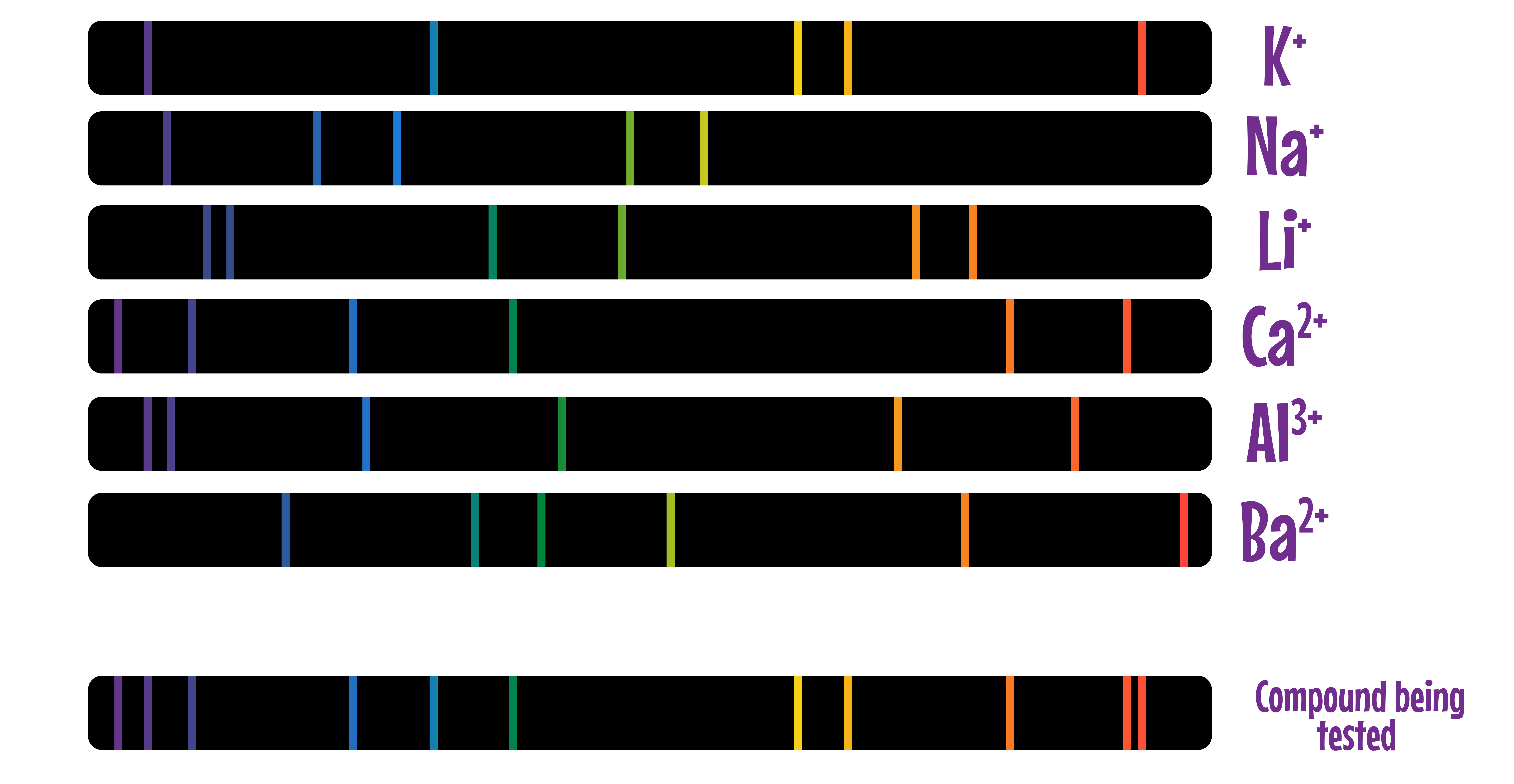
Unlike FLAME TESTS, FLAME EMISSION SPECTROSCOPY can work for MIXTURES of ions.
By comparing the observed spectrum for a compound against REFERENCE SPECTRA of particular elements, chemists can identify what elements are present in a compound based on the locations of the lines.
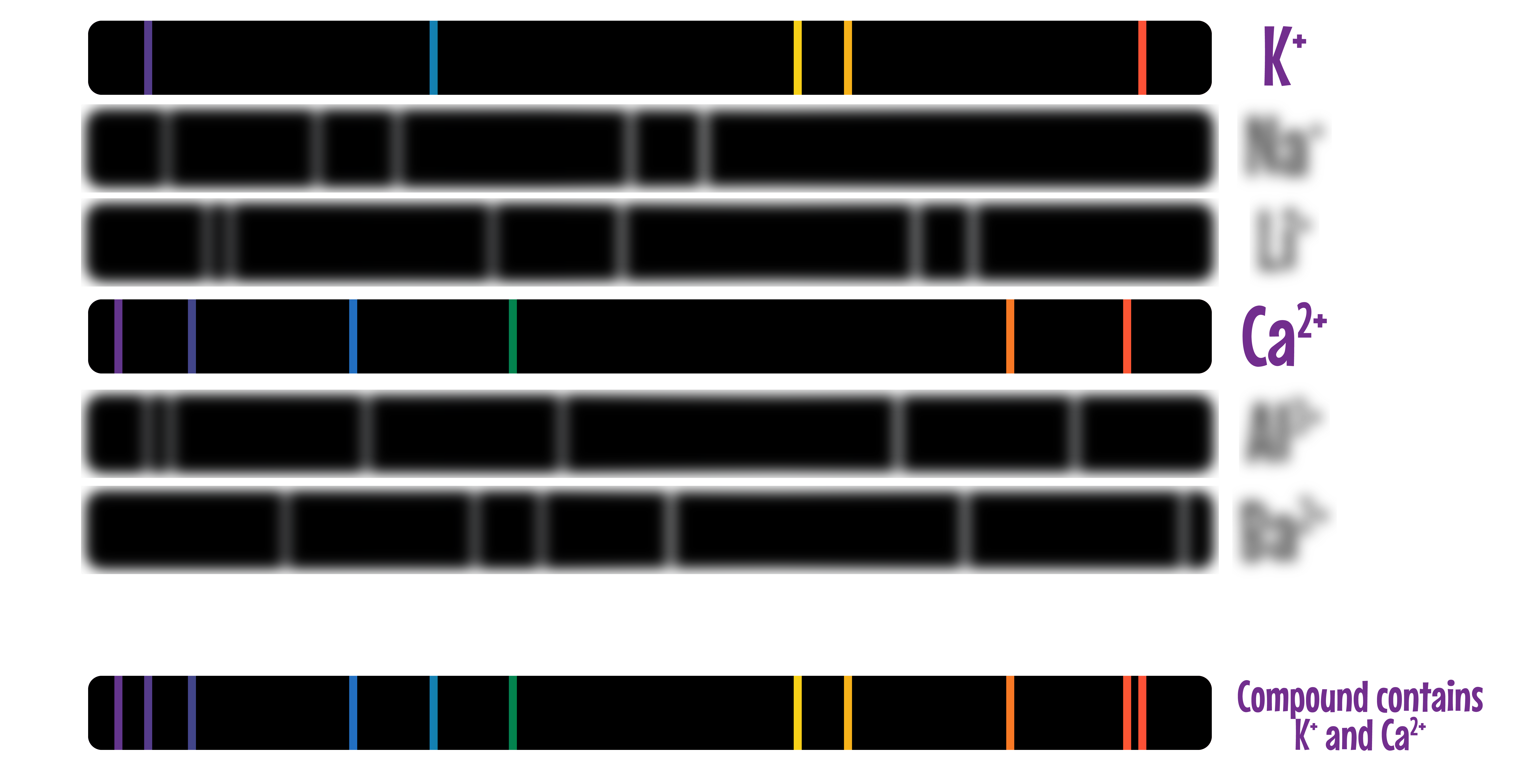
In the above example, the LOCATION of the lines in the compound's spectrum are a combination of the lines from the REFERENCE SPECTRA of K+ AND Ca2+. This means the compound contains BOTH of these metal ions.