
Chromatography
CHROMATOGRAPHY is a technique used to SEPARATE and IDENTIFY components in a mixture.
It involves TWO phases:
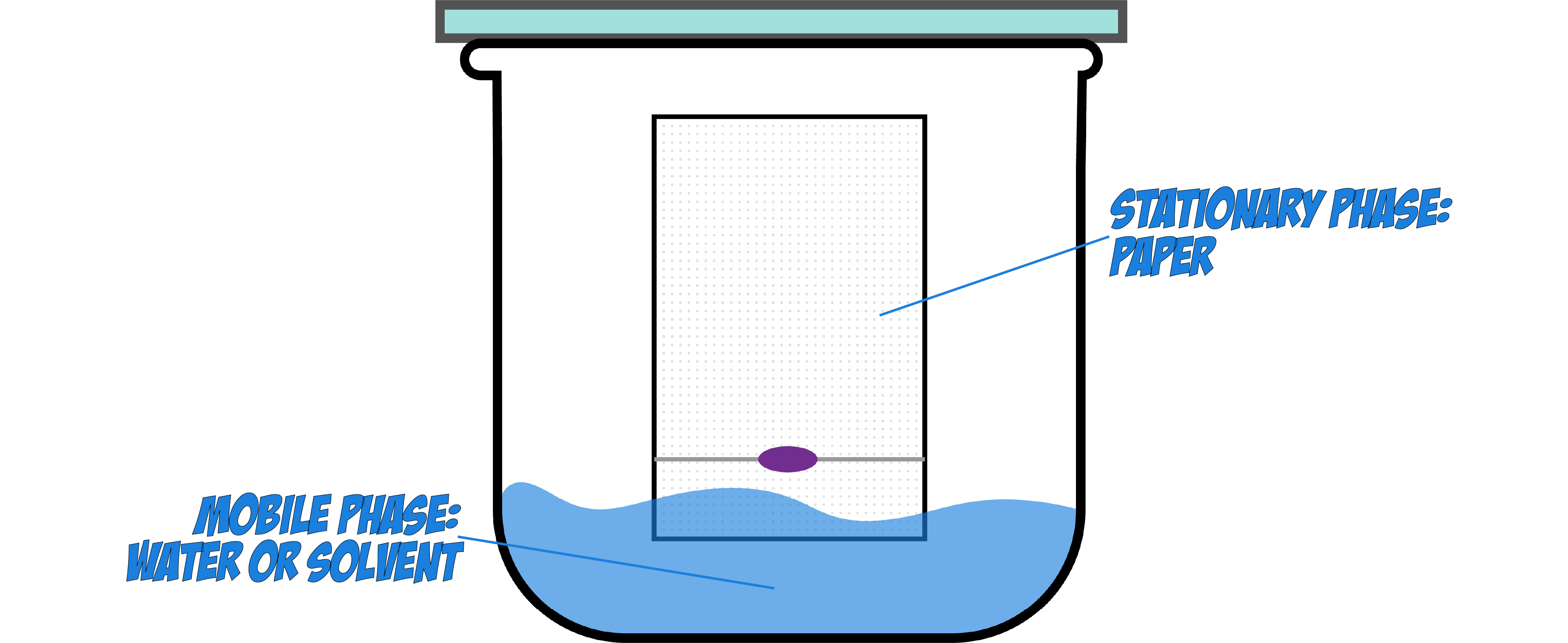
1. MOBILE PHASE:
The phase where the MOLECULES MOVE. This is usually a LIQUID or a GAS.
E.g. In PAPER chromatography, this would be the WATER or SOLVENT used.
2. STATIONARY PHASE:
The phase where the molecules DON'T move, often a SOLID or THICK LIQUID.
E.g. In PAPER chromatography, this would be the PAPER.
How Chromatography Works
- During the process, the solvent moves up and carries the components in the mixture with it.
- The distance a component moves up depends on the DISTRIBUTION between the MOBILE and STATIONARY phases.
- This is affected by TWO things:
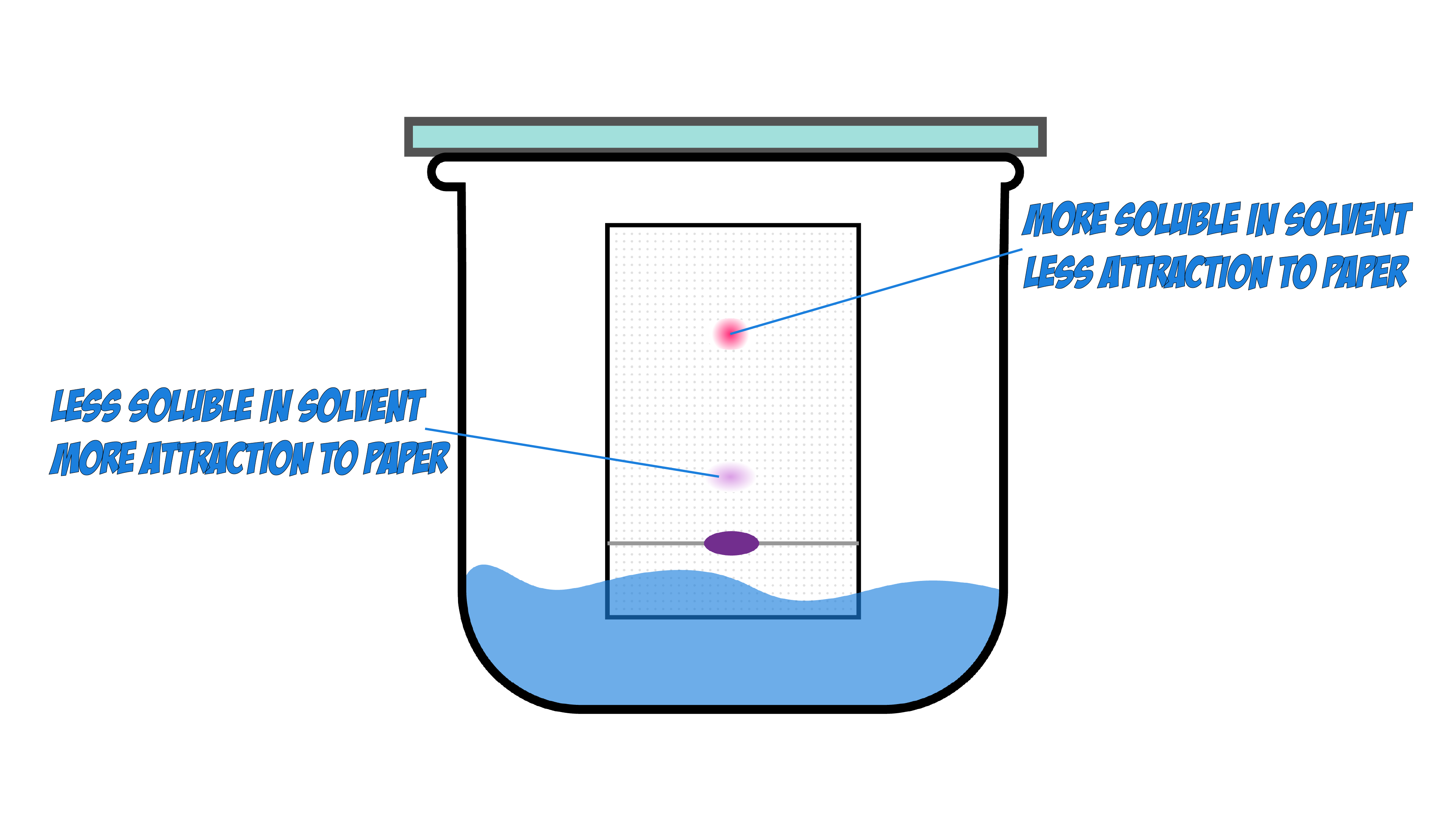
1. Solubility in the Mobile Phase
The MORE SOLUBLE a component is in the solvent, the MORE TIME it would spend in the MOBILE PHASE, which means it will travel FURTHER UP.
2. Attraction in the Stationary Phase
The MORE ATTRACTED a component is to the paper, the MORE TIME it would spend in the STATIONARY PHASE, which means it will NOT travel as far up.
Once the chromatography is done, the CHROMATOGRAM will show the different components in the mixture.
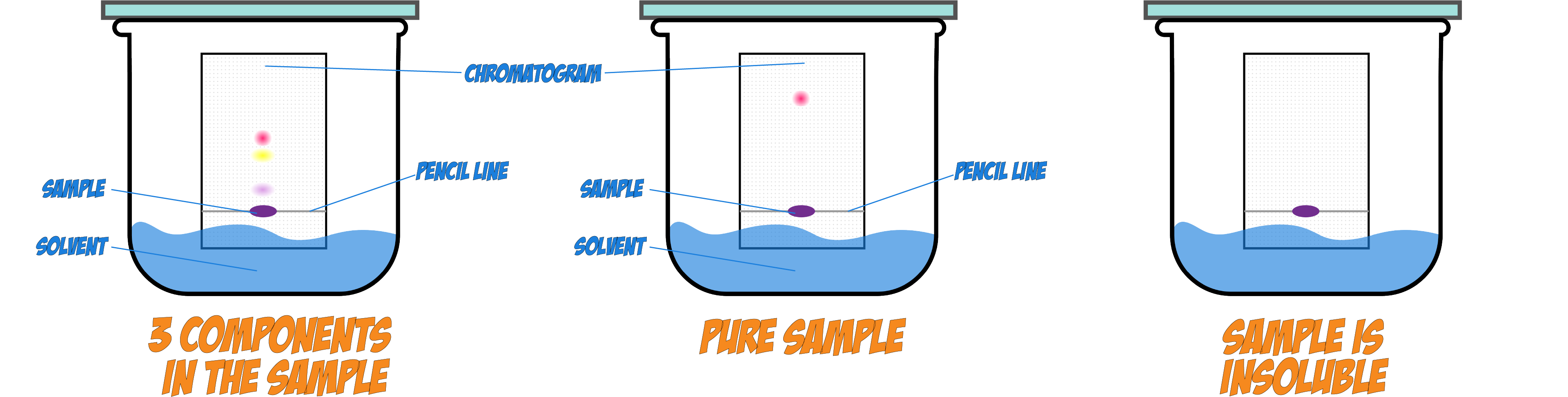
The number of SPOTS observed tells you the number of COMPONENTS in the mixture.
If there is only ONE SPOT on the chromatogram, the original sample is a PURE SUBSTANCE.
If the sample does NOT MOVE, it is INSOLUBLE in the solvent.
Rf Values
These values are used to IDENTIFY the COMPONENTS within a mixture.
They can be calculated using the following equation:

Heres an example:
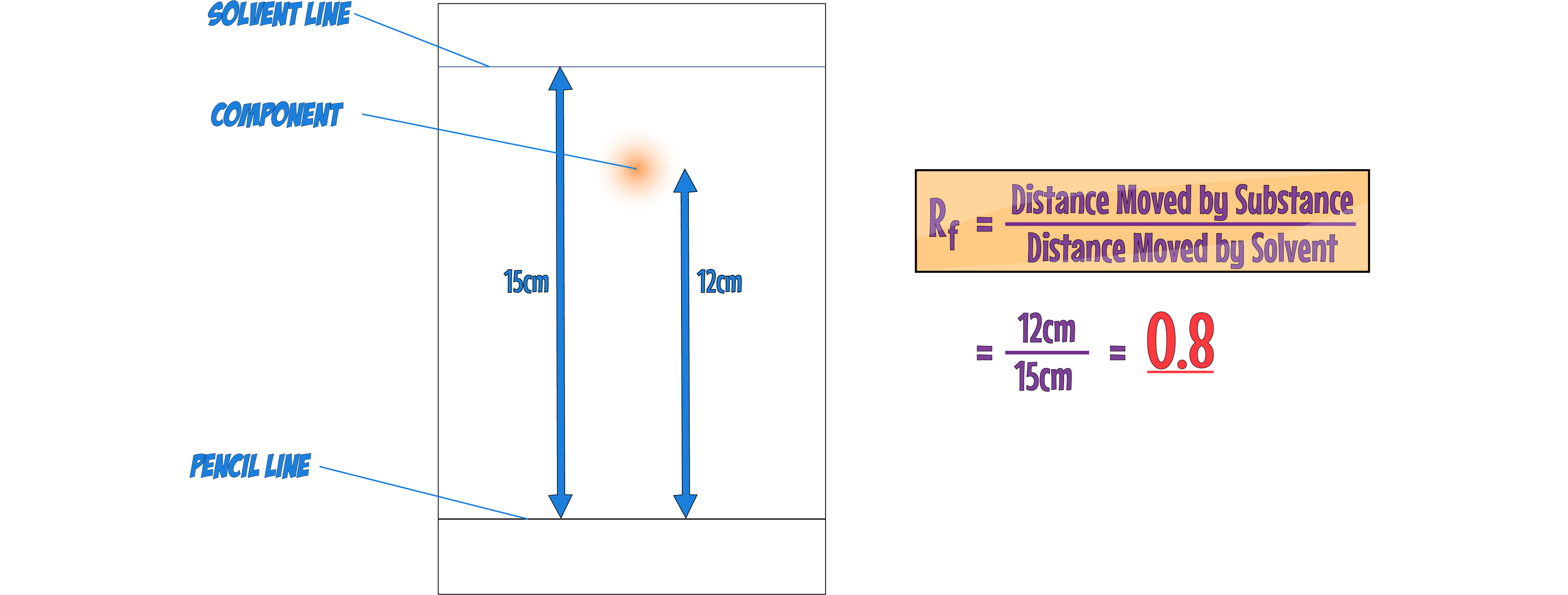
After you have the Rf value, you can compare it to data from REFERENCE MATERIALS to identify the component.
Chromatogram Analysis
Let's look at a chromatogram on an ink and 3 different dyes:
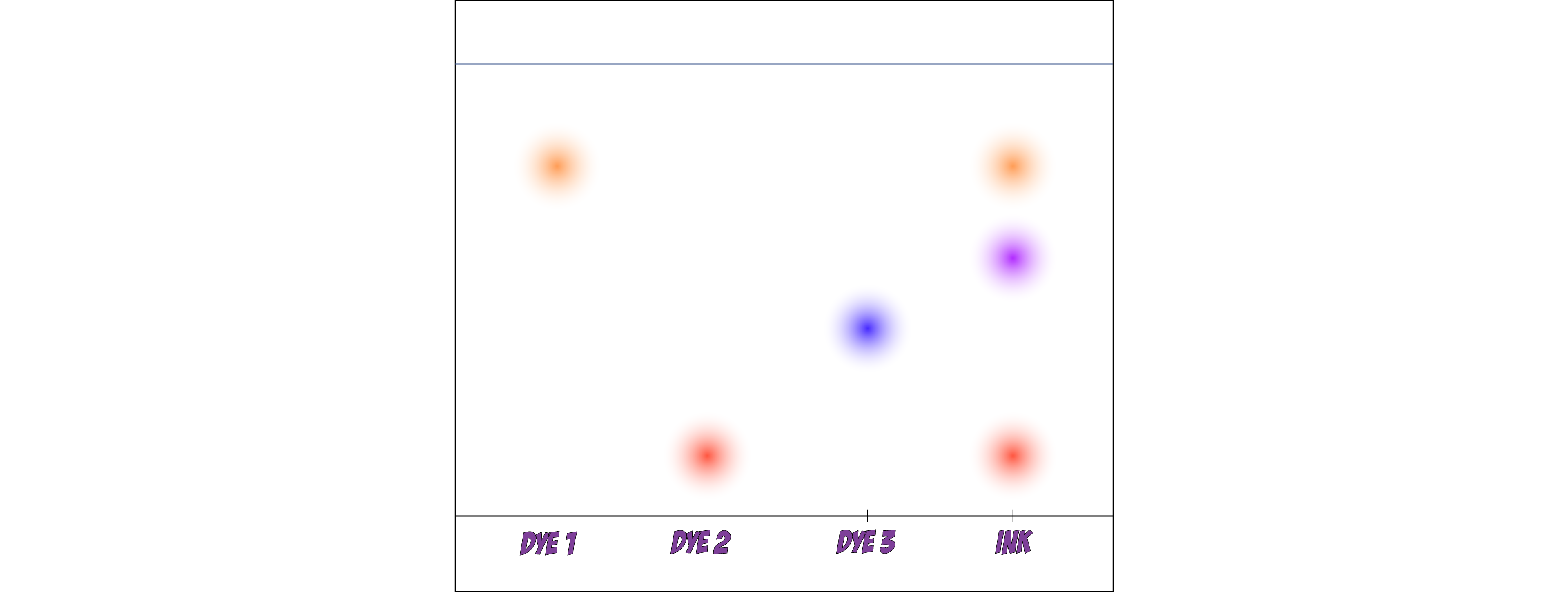
You can see that the ink has 3 DYES, two of which are known and one that is unknown.
You can tell by matching the heights of the components and assuming the ones at the SAME HEIGHTS have the same Rf values, so are the SAME SUBSTANCES.
Therefore, the ink contains DYE 1 and DYE 2 but does NOT contain DYE 3, as it is at a completely different height to the others.