
Addition Polymers
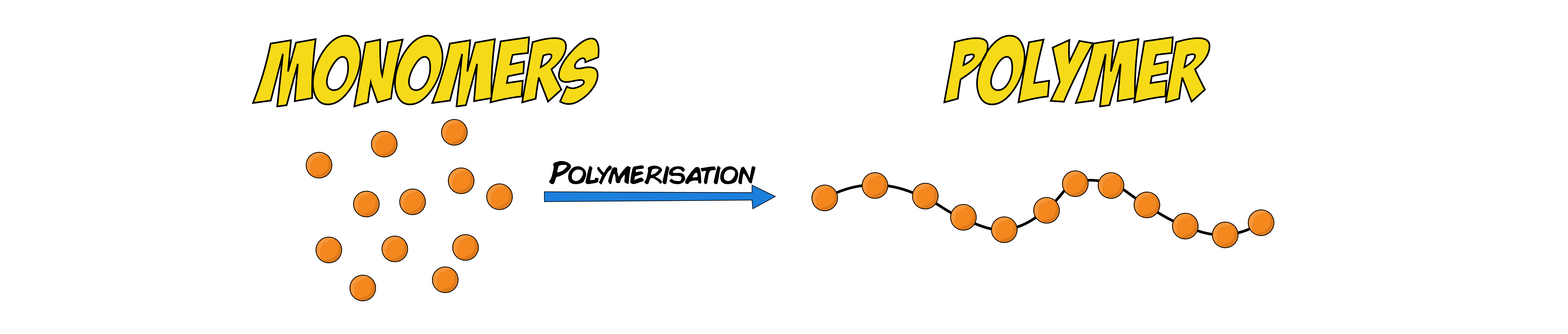
POLYMERS are large molecules formed from many smaller units known as MONOMERS.
The MONOMERS are linked together in a CHAIN through a process called POLYMERISATION.
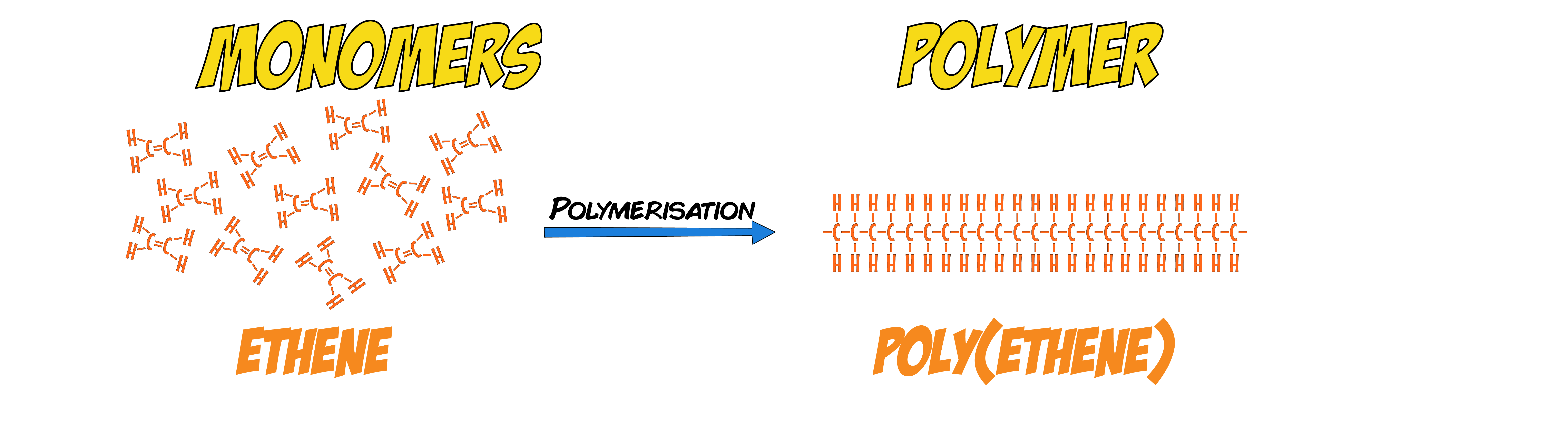
In ADDITION polymers, these MONOMERS are ALKENES, which have a double covalent bond (C=C) as their FUNCTIONAL GROUP.
During polymerisation, these double bonds OPEN UP allowing the monomers to connect into long chains without losing any atoms – forming a polymer with the same type and number of atoms as the original monomers.
The name of the polymer, is just the name of the ORIGINAL MONOMER with "POLY" at the beginning.
Polymerisation Equations
To write an equation showing polymerisation follow these steps:
1. Draw the ALKENE MONOMER on the reactant side and add a 'n' in front to show there are MANY MOLECULES.

2. Identify and draw the ALKENE CARBONS, and replace the DOUBLE BOND with a SINGLE BOND adding extra single bonds to each carbon. Carbon atoms should always have FOUR bonds attached to them.

3. Attach the remaining groups as they were arranged around the double bond in the original monomer.

4. Enclose the structure in brackets and indicate the repeat with ‘n’ to show it repeats many times. This is known as the REPEATING UNIT.

More examples: