Reactions of Acids
METAL OXIDES and METAL HYDROXIDES are classified as BASES, which are typically substances that can NEUTRALISE ACIDS.
ALKALIS are BASES that are SOLUBLE in water (metal hydroxides).
These compounds react with ACIDS to form a SALT and WATER, in a process known as NEUTRALISATION.
The type of SALT formed depends on the acid used in the reaction:
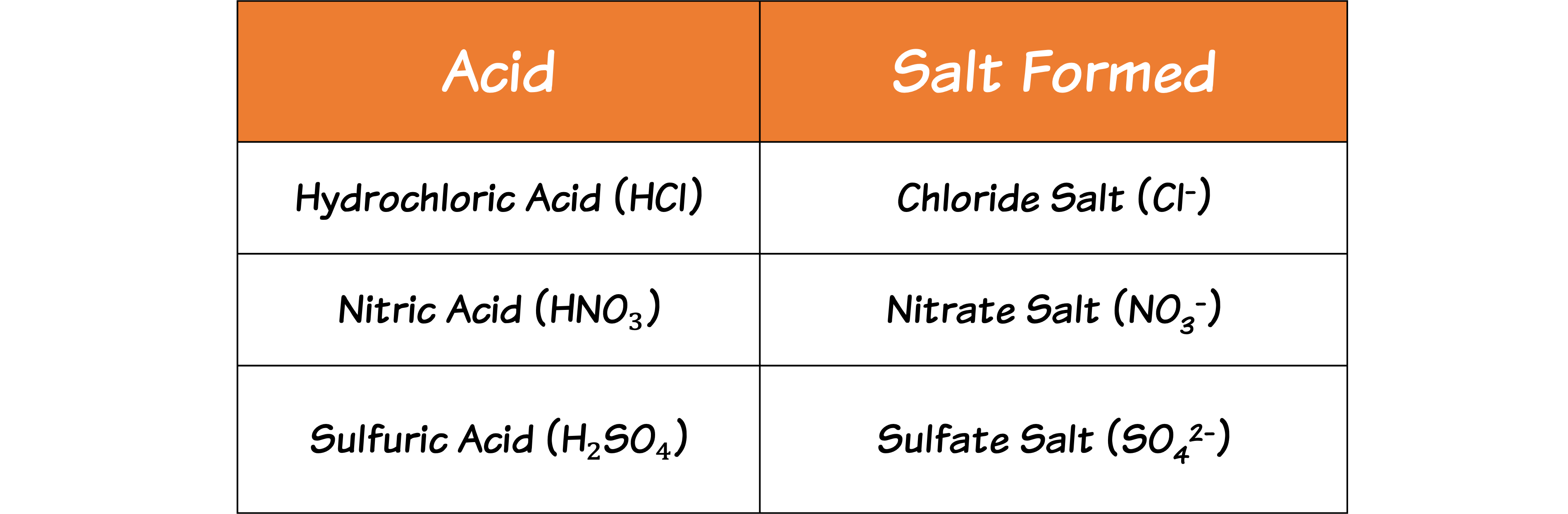
By knowing these, you can predict many equations for neutralisation reactions.
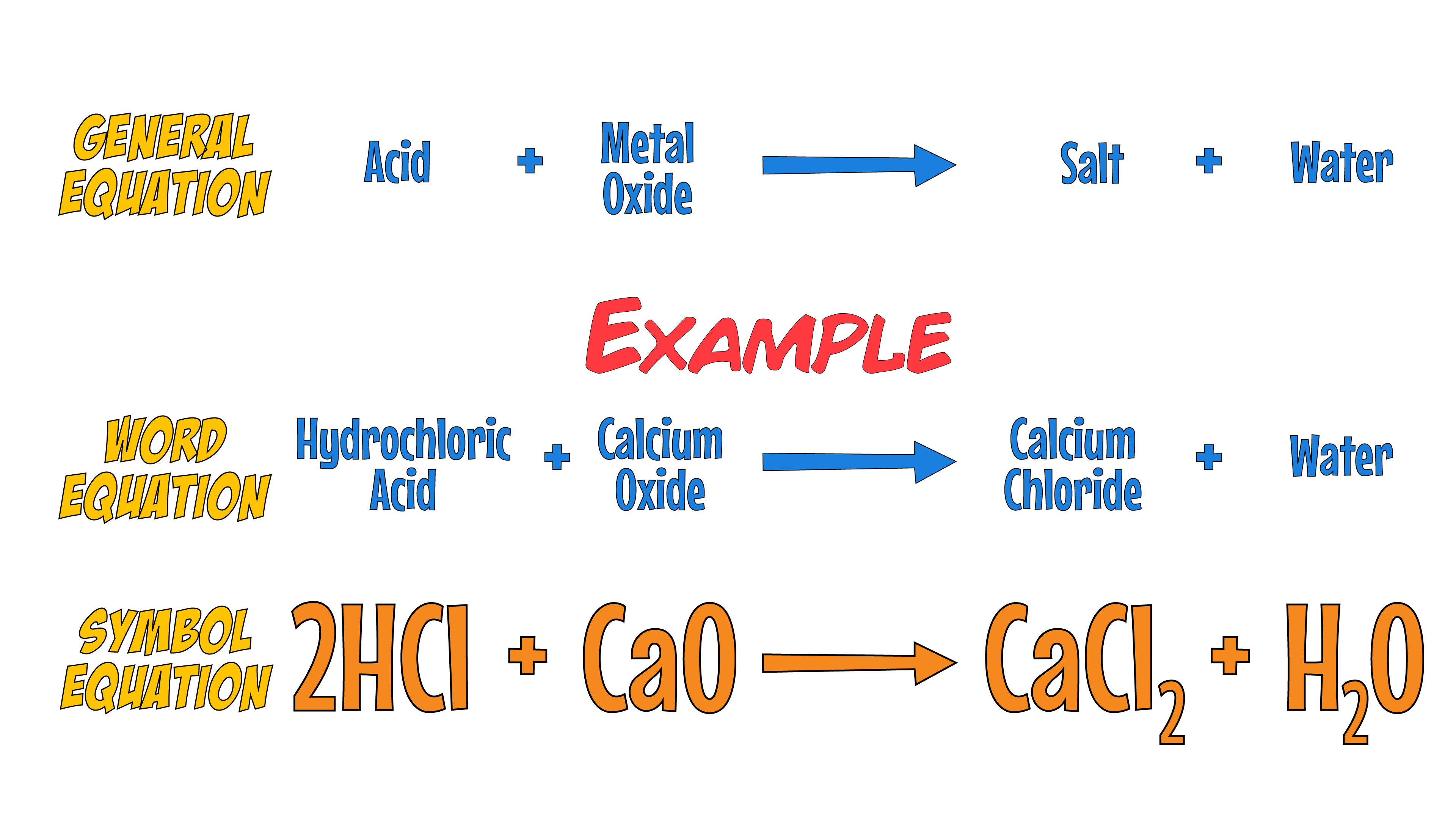
- When an acid reacts with a METAL OXIDE, the general equation is:
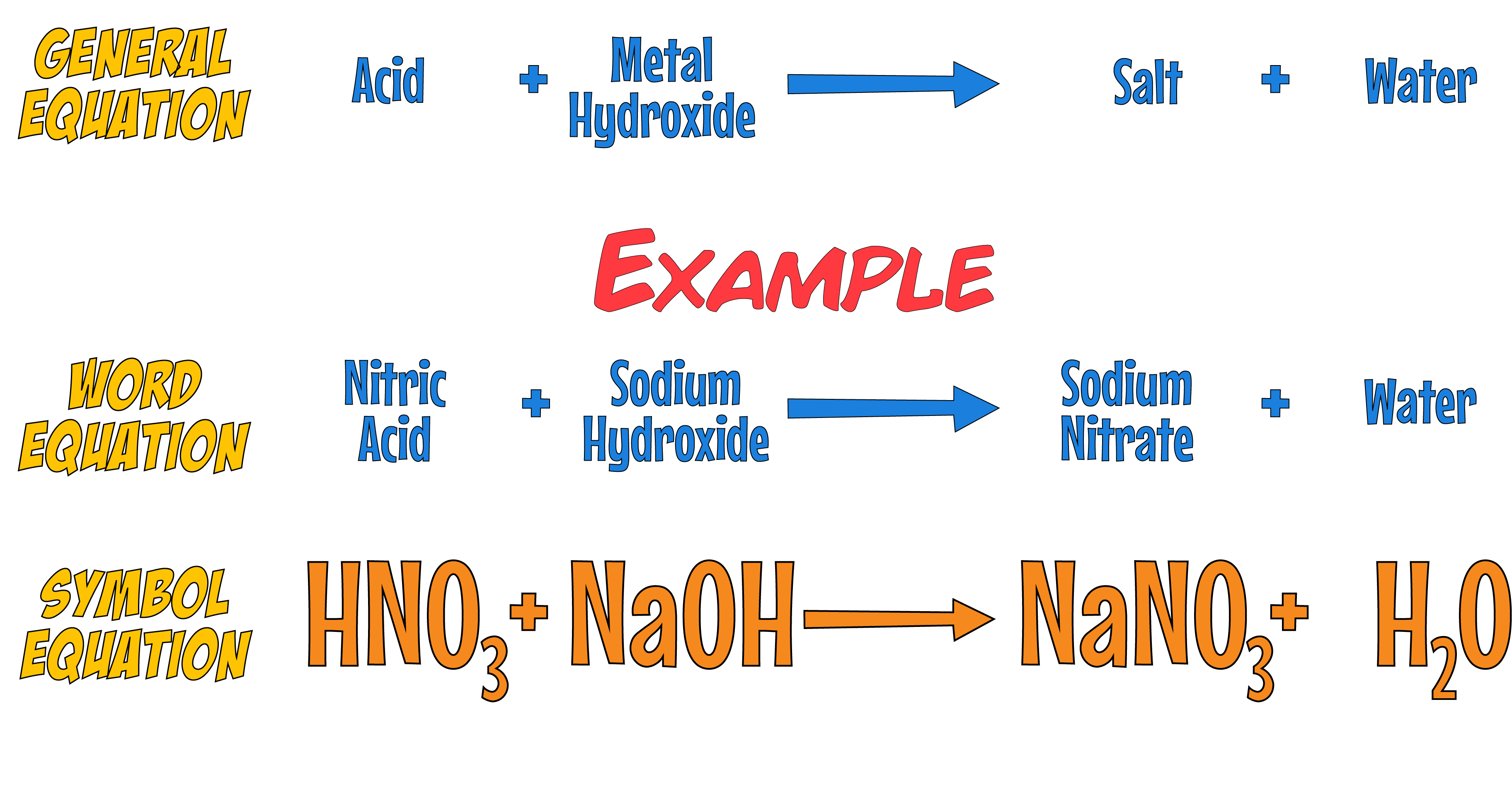
- Similarly, an acid's reaction with a METAL HYDROXIDE can be represented as:
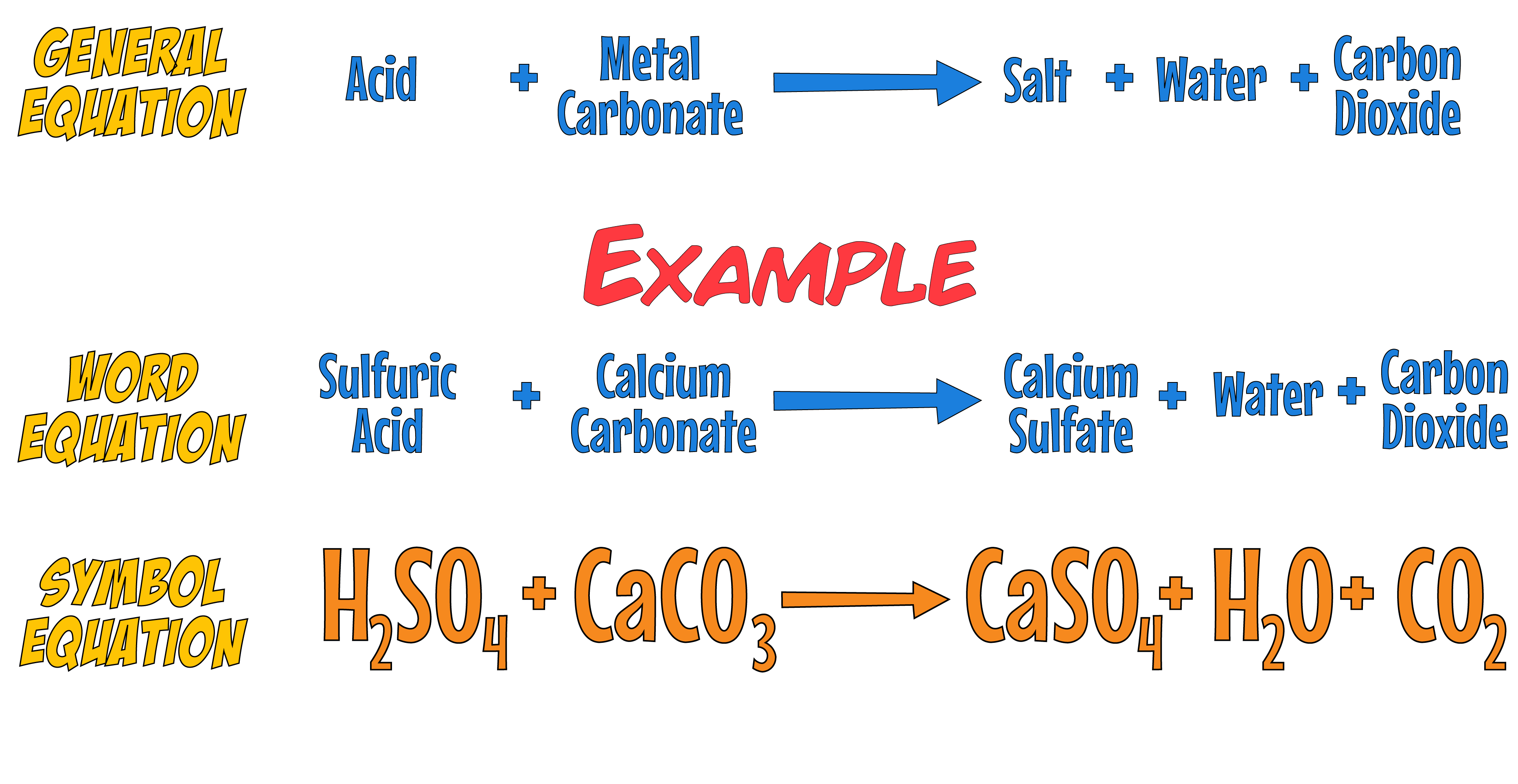
- METAL CARBONATES are also bases and their reaction with acids produces not only salt and water but also CARBON DIOXIDE gas.
- The general equation for this reaction is: