
Chemical Measurements
Error
In experiments, an ERROR is the difference between your result and the EXPECTED value.
We have two main error types: RANDOM ERRORS and SYSTEMATIC ERRORS.
Random Errors
This is when measured values vary randomly around the true value. Random error is very common in experiments due to HUMAN ERROR and RANDOM VARIATIONS. By taking many measurements and calculating the MEAN, we can overcome the issue of random errors.
Here's what might cause them:
- Trouble reading the scale of an instrument just right.
- The person taking the reading makes a mistake.
- The environment changes, like the lab getting warmer or the air moving around.
Systematic Errors
This is when an issue in experimental design or EQUIPMENT causes the measured value to be consistently too high or consistently too low. These errors are harder to identify.
Some examples include:
- Forgetting to reset a scale to zero, leading to all your weights being off.
- Not reading a measurement at the correct eye level, so it seems smaller or larger.
Uncertainty
Whenever a measurement is made there is always some uncertainty about the result obtained.
Uncertainty is all about how confident you are in your measurements. It's a number that tells you how much your results might be off by.
Analogue Instruments
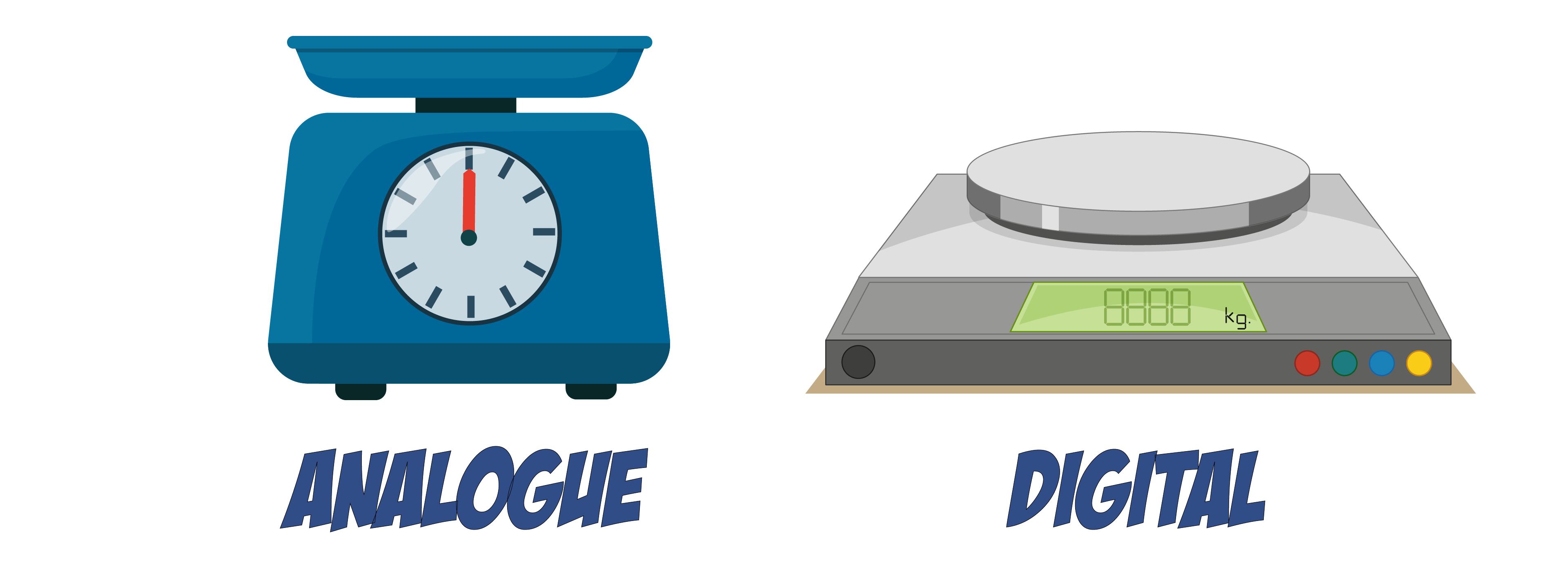
With ANALOGUE INSTRUMENTS, uncertainty is usually HALF of the smallest thing you can measure on it.
E.g. If your ruler's smallest division is 1 mm, your uncertainty is ±0.5 mm.
Digital Instruments
For DIGITAL INSTRUMENTS (like a digital clock), it's simpler: uncertainty is just the SMALLEST NUMBER it can display.
Uncertainty in results
- For results that are obtained from a series of REPEATED EXPERIMENTS, the uncertainty is ± HALF of the range of the results.
- This can be estimated by:
- Calculating the MEAN average and then determining the deviation of the highest and lowest results from the mean value.
- An alternative method is to calculate the range of the results and then DIVIDE this value by 2.