
Corrosion and Alloys
CORROSION is the destruction of materials by chemical reactions with substances in the environment.
Rusting
RUSTING is a common type of corrosion that affects IRON.
For IRON to rust, both AIR and WATER are required.
You can carry out an experiment to prove that both WATER and AIR are required for iron to RUST.
Materials Required:
- Three test tubes
- Three nails
- Water
- Drying agent (e.g., silica gel)
- Oil
Method:
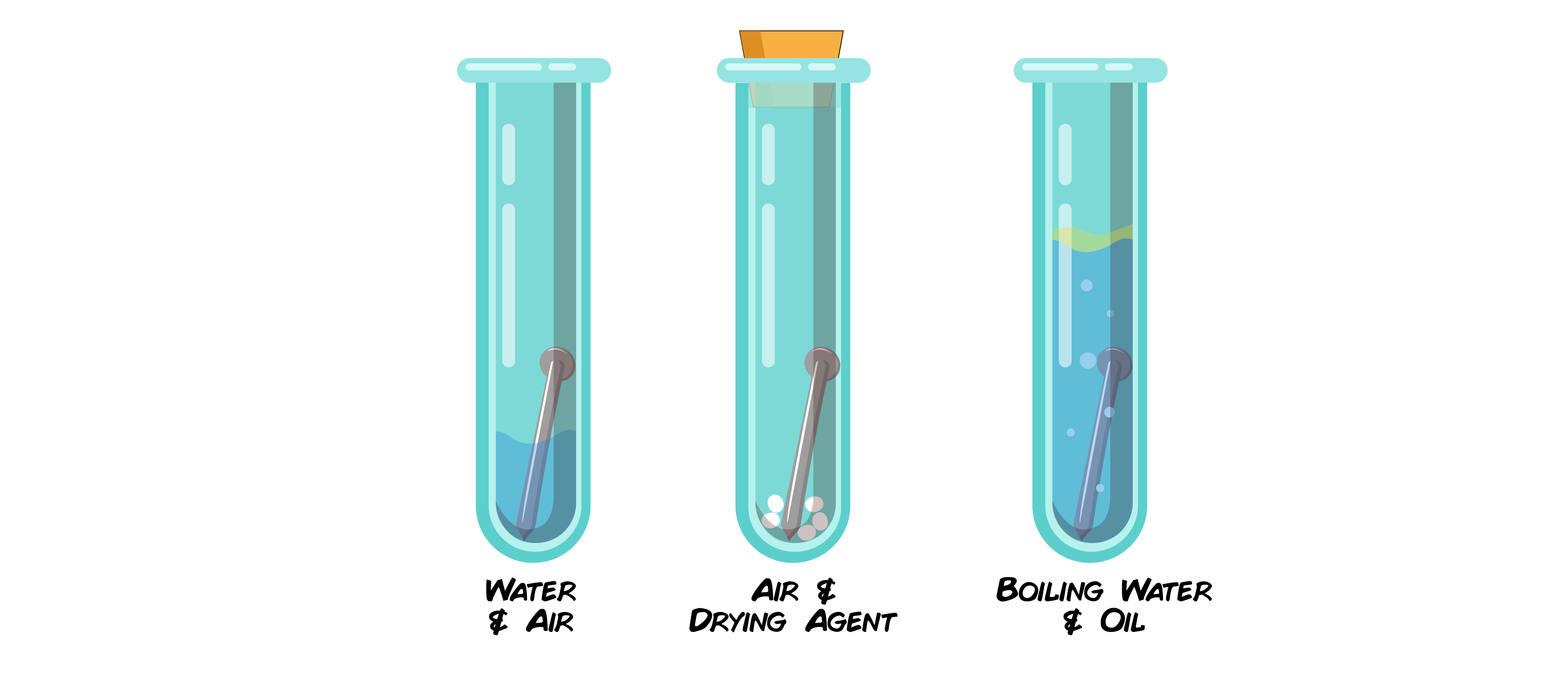
1. Prepare THREE test tubes with different conditions in each:
- Test Tube 1: Fill with water and leave open to air.
- Test Tube 2: Add a drying agent to absorb moisture from the air, and stopper the tube.
- Test Tube 3: Fill with boiled water to remove dissolved air and seal with oil to prevent air from re-entering.
2. Place one nail in each test tube.
3. Leave the test tubes undisturbed for SEVERAL DAYS.
Results:
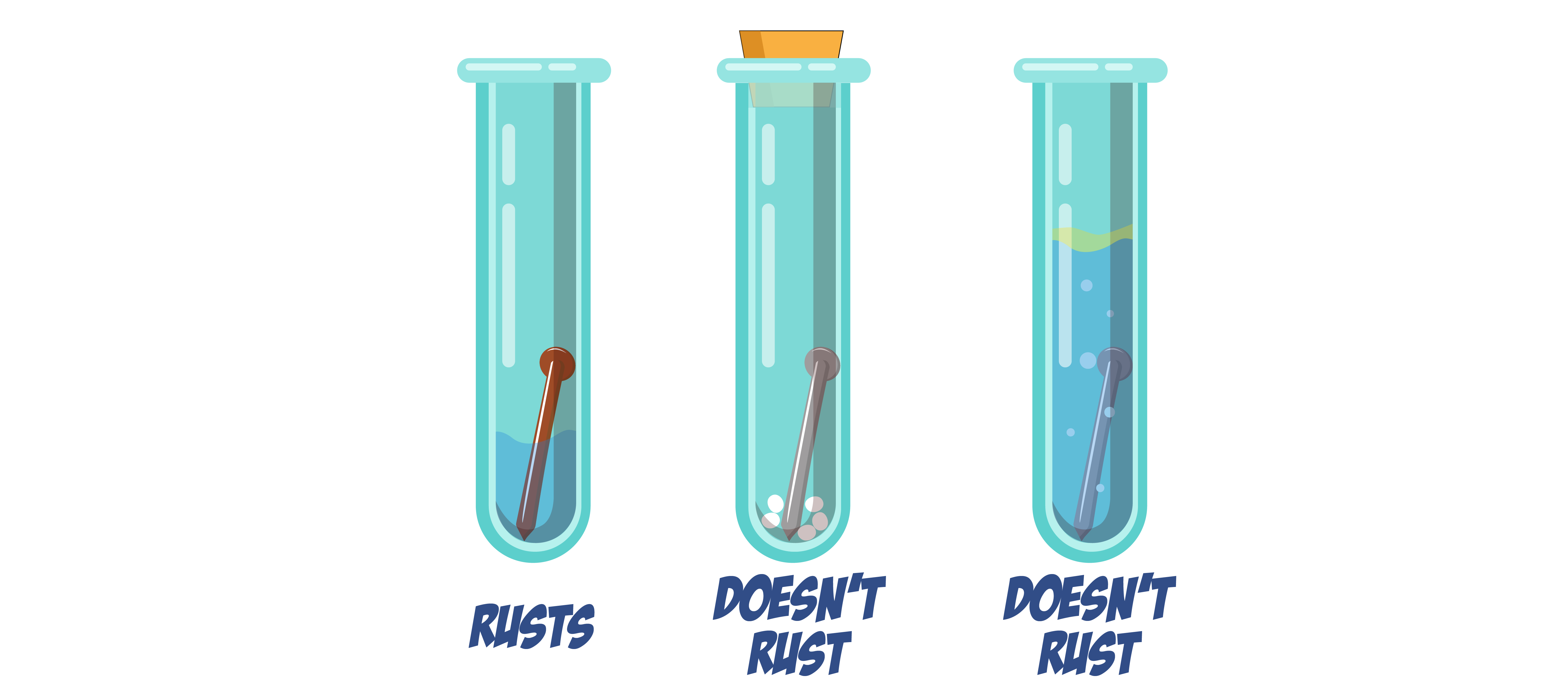
- Test Tube 1: The nail RUSTS, indicating both air and water are present.
- Test Tube 2: The nail DOES NOT RUST, suggesting the absence of AIR prevents rusting even though water is present.
- Test Tube 3: The nail DOES NOT RUST, suggesting the absence of WATER prevents rusting even though air is present.
Preventing Corrosion:
BARRIERS:
Applying protective coatings such as GREASING, PAINTING, or ELECTROPLATING can prevent corrosion.
ALUMINIUM naturally forms a barrier when exposed to air. A protective OXIDE coating forms on its surface that shields it from further damage.
SACRIFICIAL PROTECTION:
Metals can be COATED with MORE REACTIVE METALS, which means the MORE REACTIVE metal will CORRODE instead of the underlying metal.
A common example is ZINC which is used to GALVANISE IRON using this method. If the protective zinc coating is scratched, the zinc around the scratch with corrode instead of the iron.