
Life Cycle Assessments
A LIFE CYCLE ASSESSMENT (LCA) is a method used to evaluate the environmental impact of a product through all stages of its life. This includes:
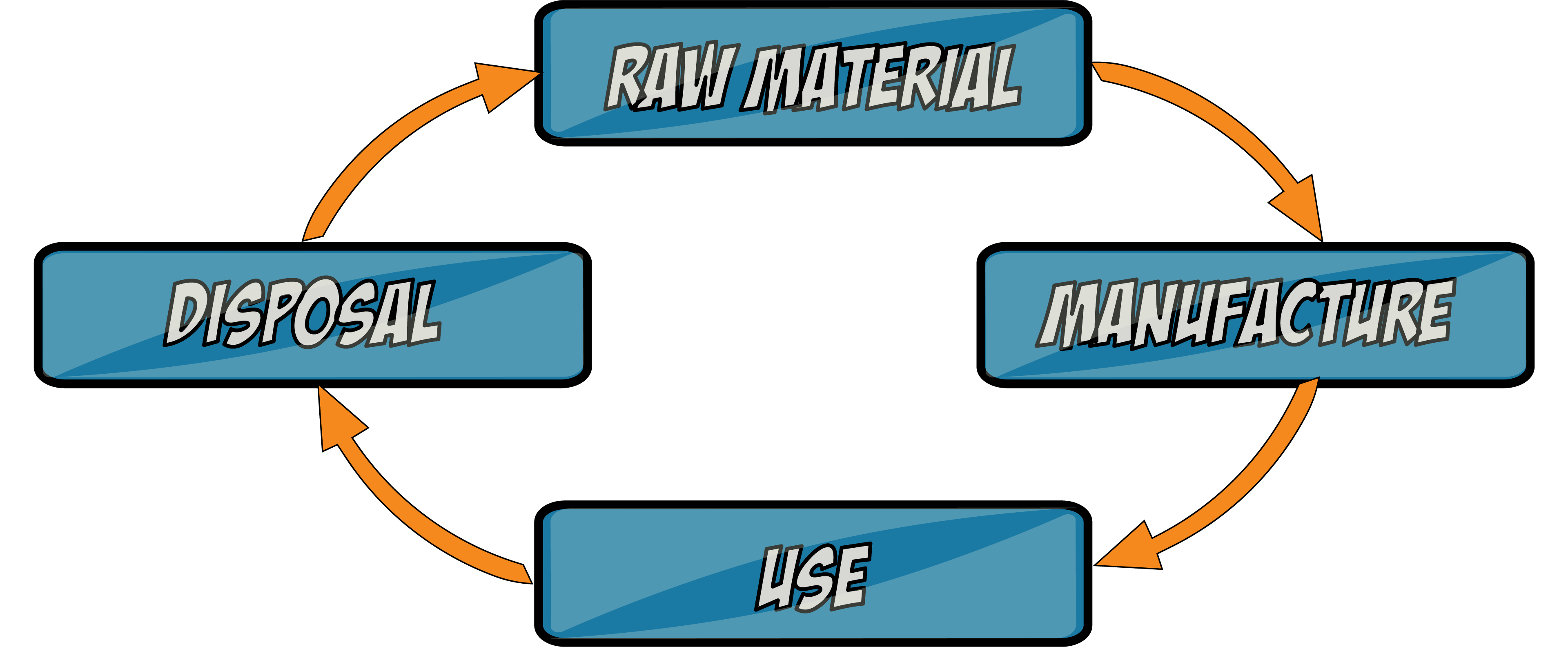
- EXTRACTING AND PROCESSING RAW MATERIALS: The initial stage where materials are collected from the environment.
- MANUFACTURING AND PACKAGING: The process of turning raw materials into finished products and preparing them for sale.
- USE AND OPERATION DURING ITS LIFETIME: How the product is used by consumers and how efficiently it operates.
- DISPOSAL AT THE END OF ITS USEFUL LIFE: What happens to the product after it can no longer be used, including the impacts of transporting the product to disposal facilities and the disposal process itself.
Example of LCAs:
You can compare the environmental impacts of SHOPPING BAGS made from plastic and paper.
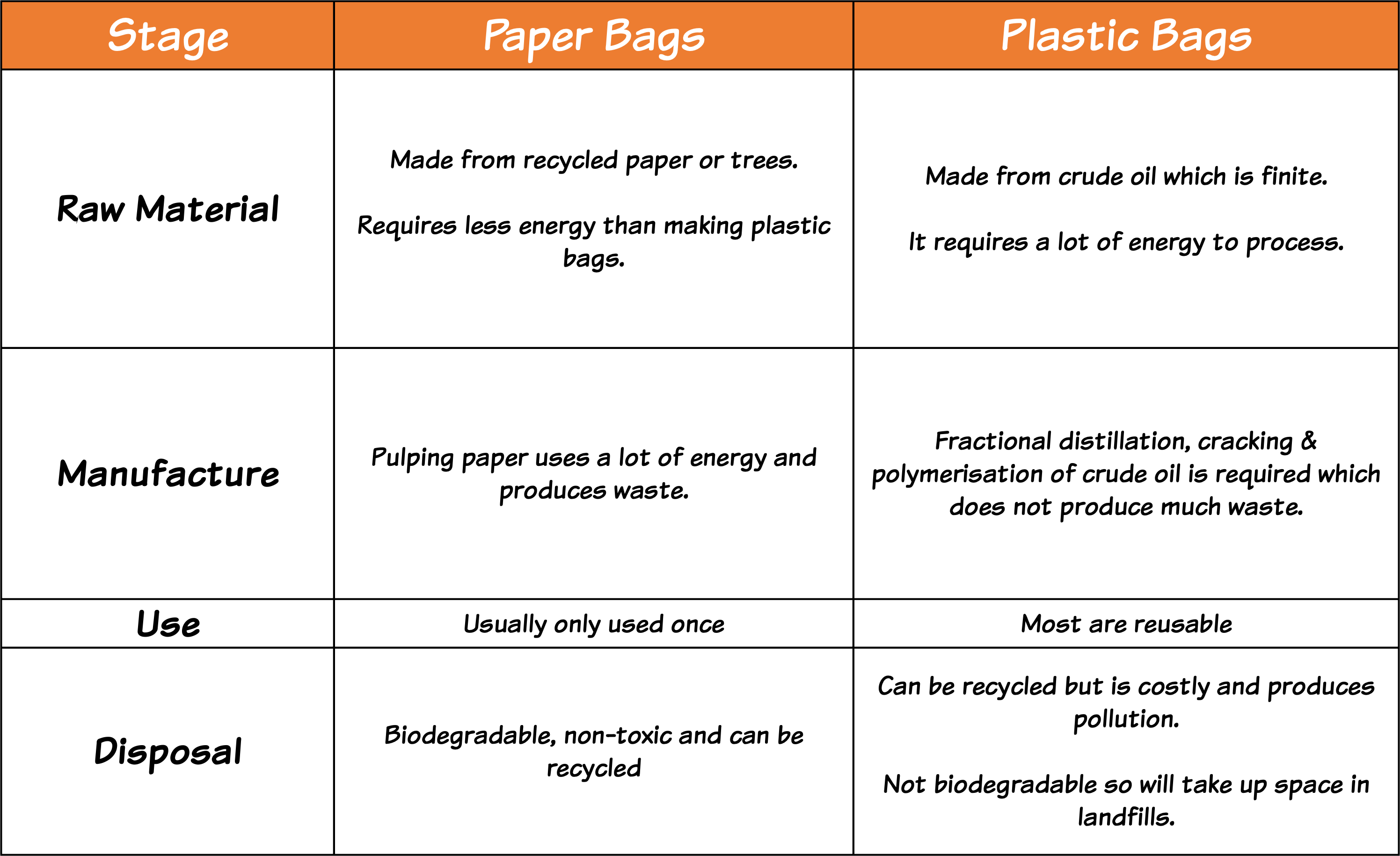
From this LCA, you can conclude that even though plastic bags are NOT biodegradable, they take LESS energy to make, and have a LONG LIFESPAN as they can be reused. This could mean that they are LESS damaging to the environment.
Quantifying Environmental Impact
In an LCA, various factors can be quantified with NUMBERS to understand a product's impact:
- WATER USAGE: The amount of water required in the product's lifecycle.
- RESOURCE CONSUMPTION: The raw materials needed for the product.
- ENERGY SOURCES: The types and amounts of energy used at each stage.
- WASTE PRODUCTION: The waste generated, including its management.
While these can often be measured in numbers, some effects such as POLLUTANT EFFECTS are more complex so it involves SUBJECTIVE measurements based on a person's JUDGEMENT. This can lead to BIAS.
Abbreviated LCAs
Sometimes, ABBREVIATED or SELECTIVE LCAs are conducted. These are simplified versions that may not include all stages of the lifecycle or may focus on specific aspects of environmental impact. However, they must be used carefully to avoid misleading conclusions, especially in advertising.