Group 7 Elements – The Halogens
- The HALOGENS are the NON-METALS found in GROUP 7.
- All halogens have SEVEN electrons in their outer shell meaning they have SIMILAR CHEMICAL properties.

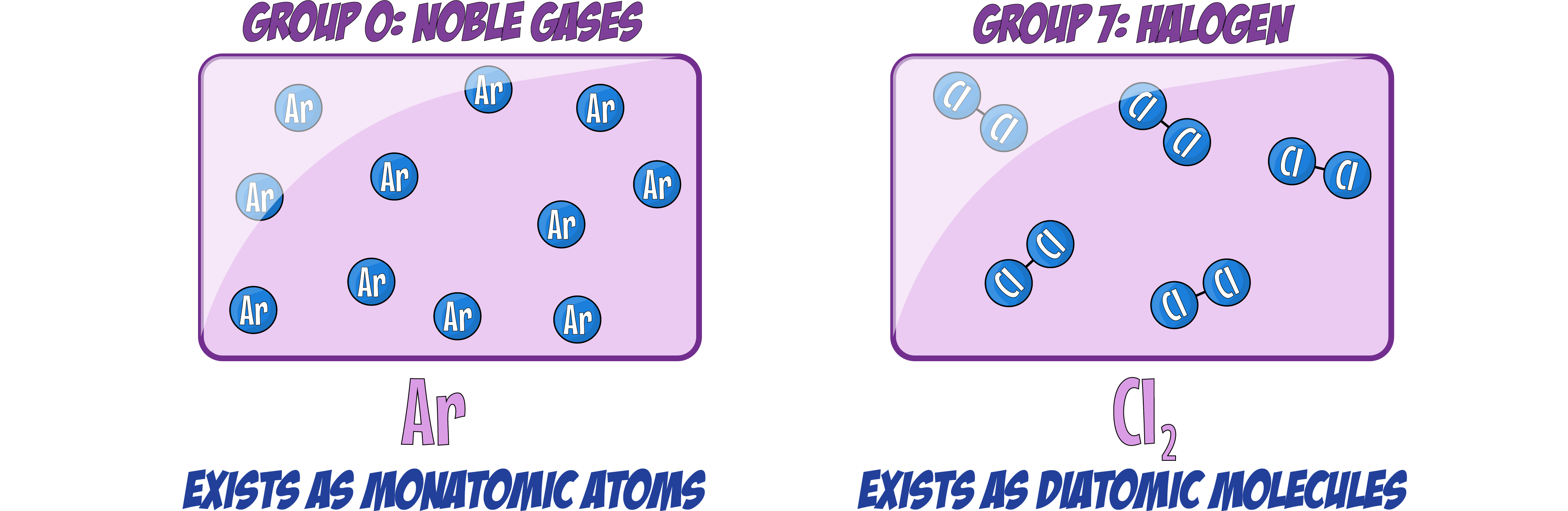
- These elements are DIATOMIC, meaning they exist naturally as molecules made of TWO ATOMS.
Trends in the Halogens
Here are the properties of the HALOGENS:
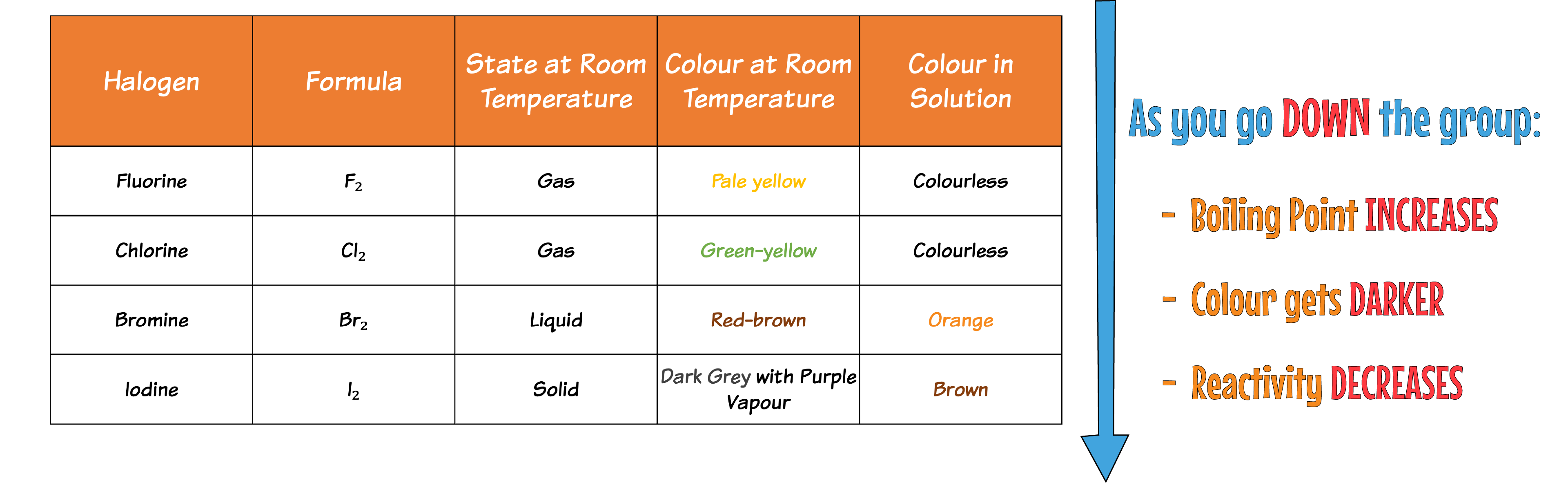
By using the trend observed, you can make PREDICTIONS about the next halogen in the group ASTATINE.
You would expect it to have a HIGHER BOILING POINT than IODINE and an even DARKER colour (dark grey-black).
Explanation of the TRENDS
As you move DOWN GROUP 7:
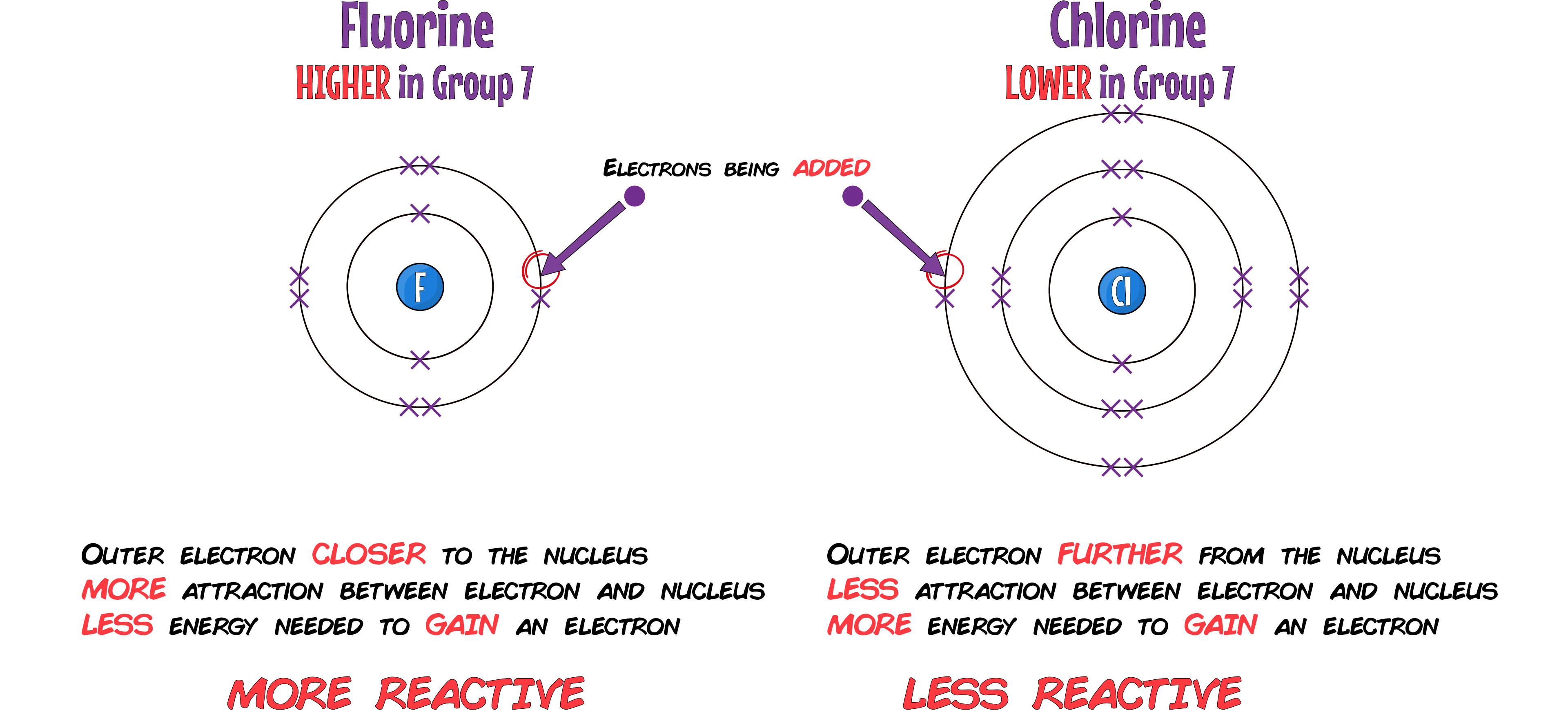
1. REACTIVITY DECREASES:
When NON METALS like HALOGENS react they need to GAIN electrons.
As you go down group 7, it becomes more DIFFICULT for them to GAIN an extra electron because the number of SHELLS INCREASES and the atom gets BIGGER.
This means there is LESS ATTRACTION between the NUCLEUS and the ELECTRON being gained making it MORE DIFFICULT to add it to its outer shell.
2. MELTING AND BOILING POINTS INCREASE:
The number of ELECTRONS in the molecules INCREASES down the group, meaning the INTERMOLECULAR FORCES between them get STRONGER.
This means MORE ENERGY is needed to break the bonds.
Chemical Properties
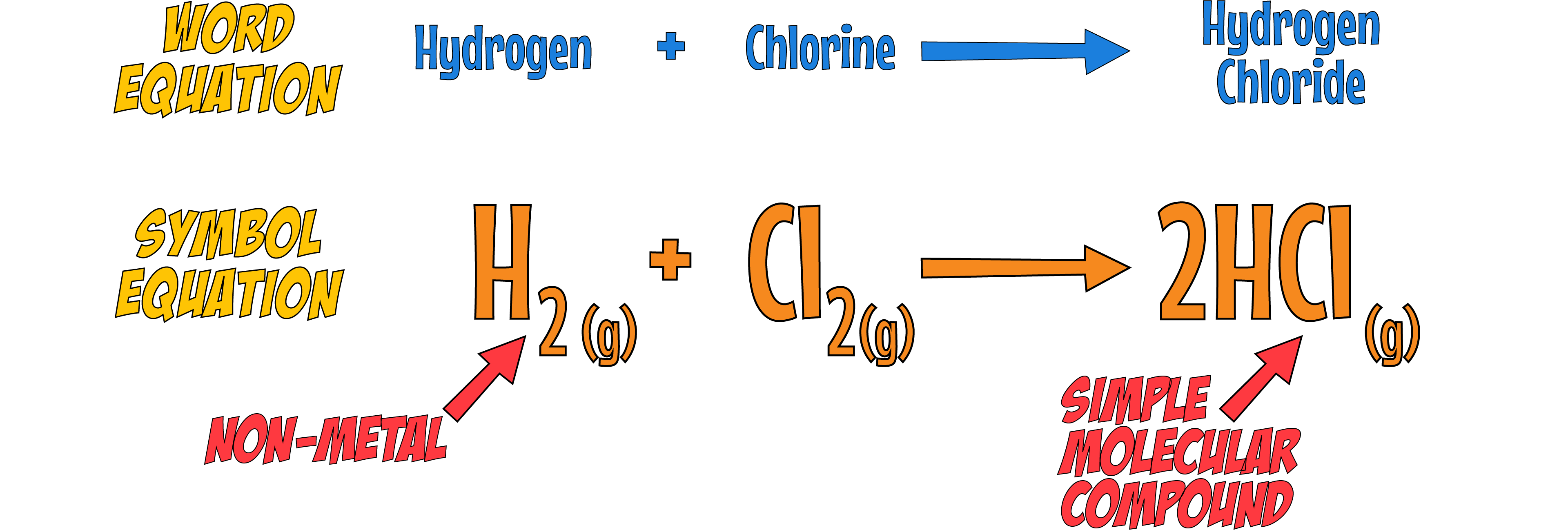
- When halogens react with NON-METALS, they form SIMPLE MOLECULAR compounds with COVALENT BONDS.
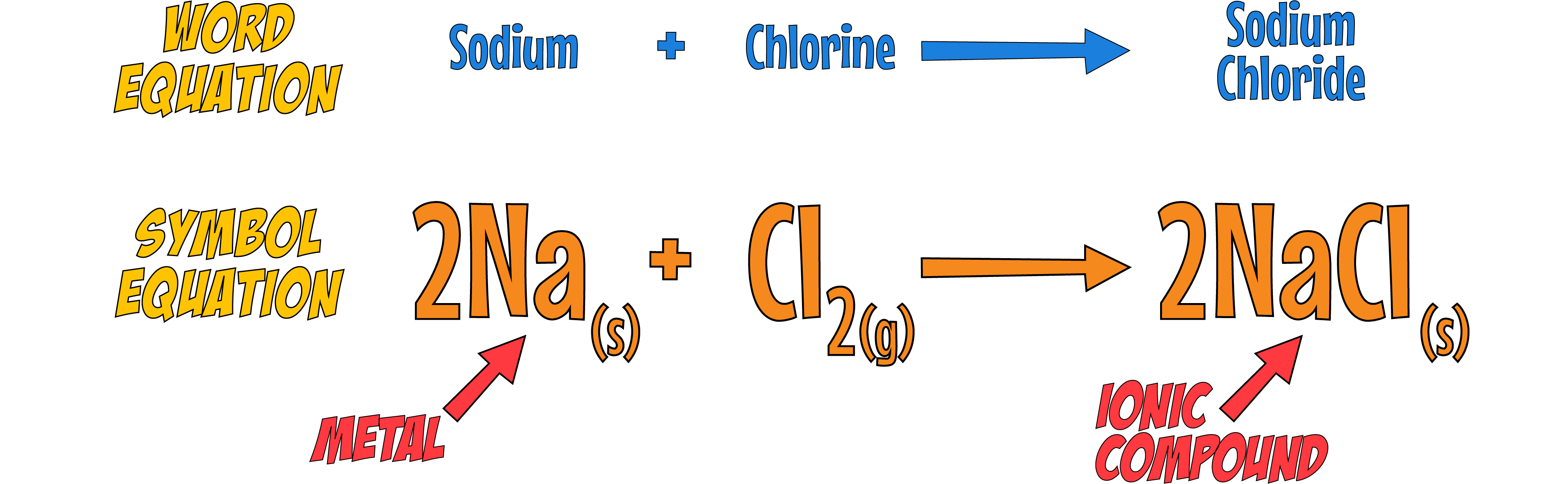
- When halogens react with METALS, they form IONIC COMPOUNDS with IONIC BONDS.
Displacement Reactions
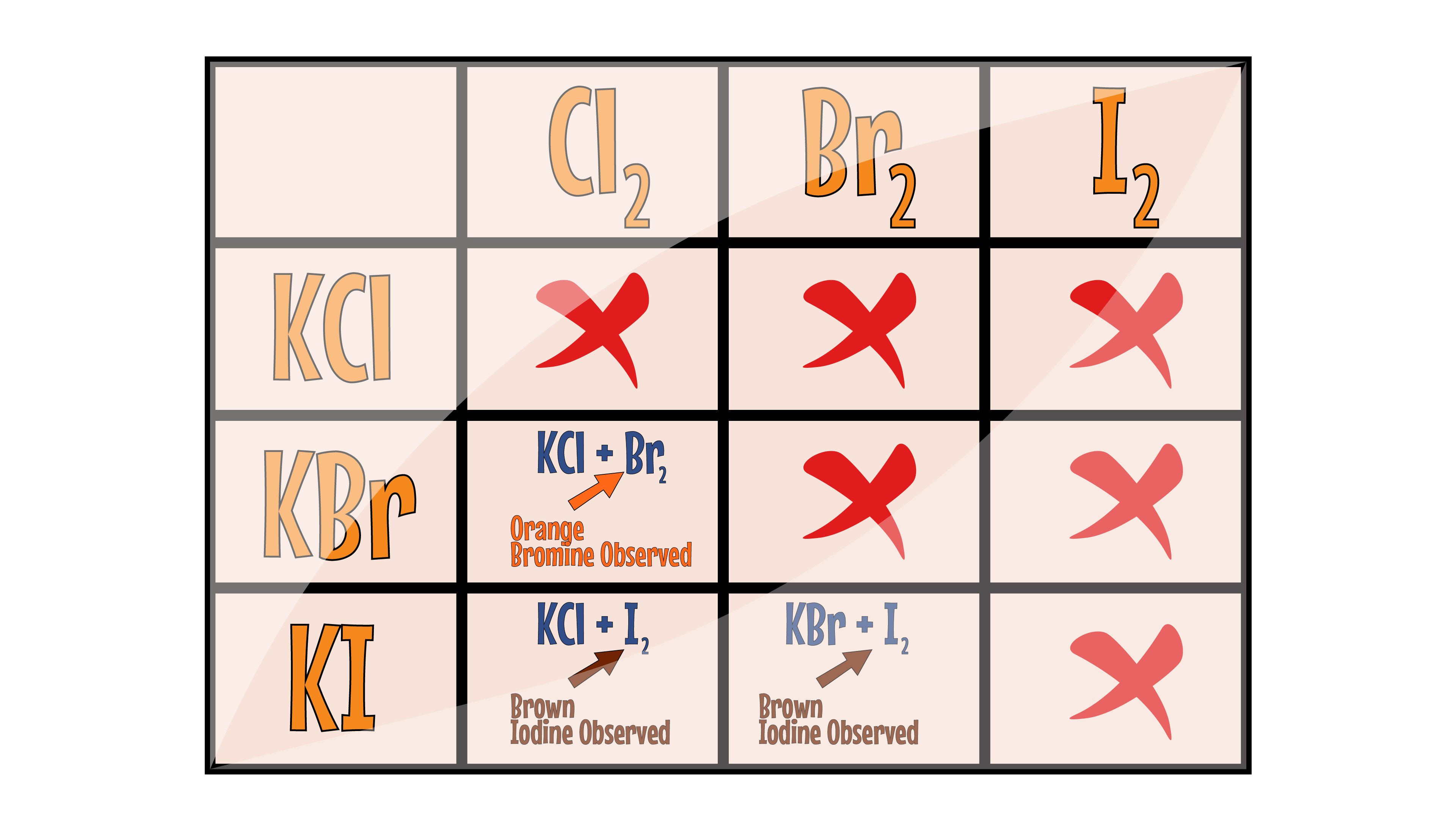
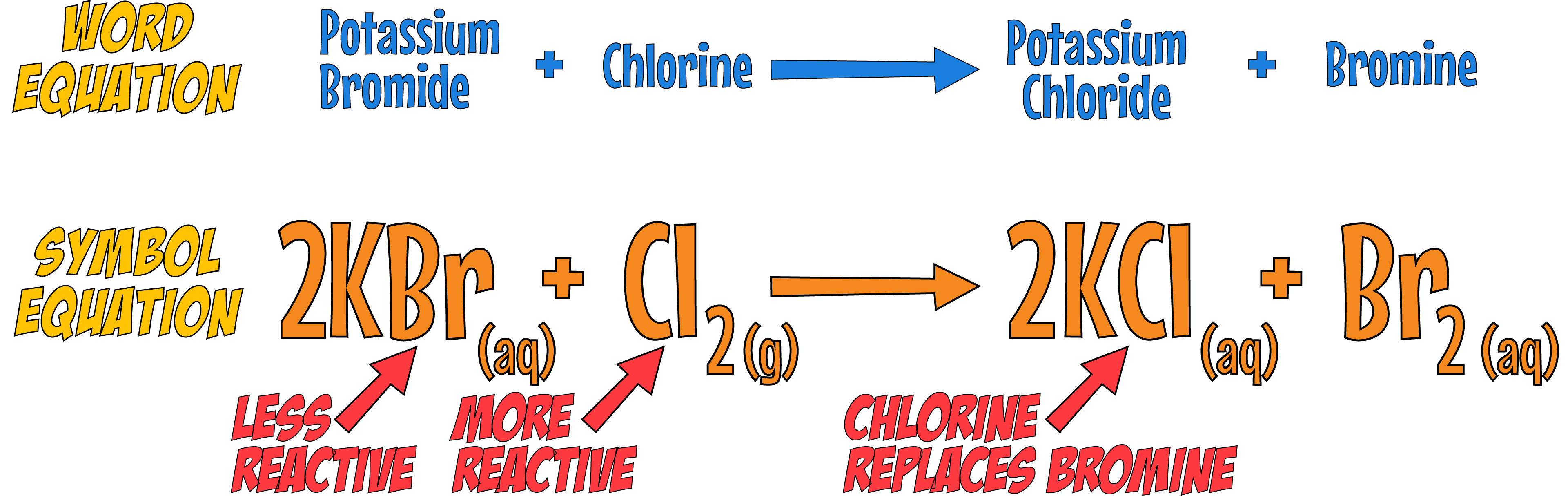
- HALOGENS undergo DISPLACEMENT REACTIONS where a MORE REACTIVE halogen REPLACES a LESS REACTIVE halogen in a compound.
- For example, Chlorine can displace Bromine in Potassium Bromide:
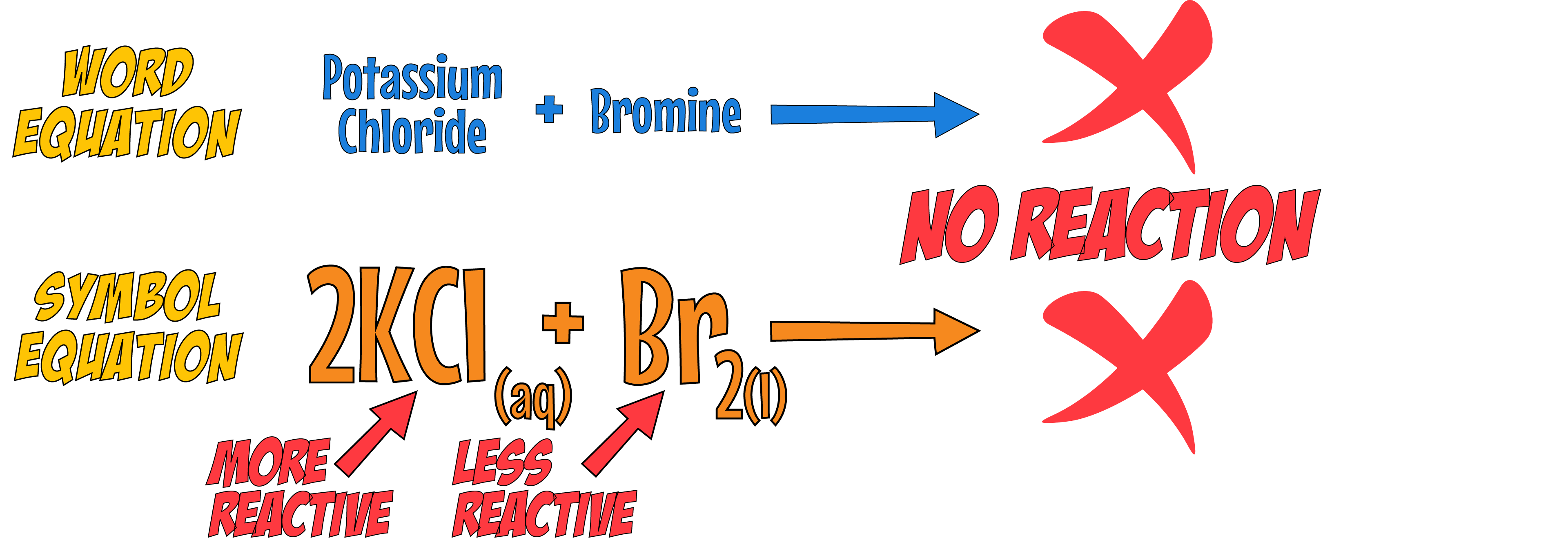
- If the halogen is LESS REACTIVE, the displacement reaction will NOT occur.
Here's a list with all the possible DISPLACEMENT reactions: