Relative Atomic Mass
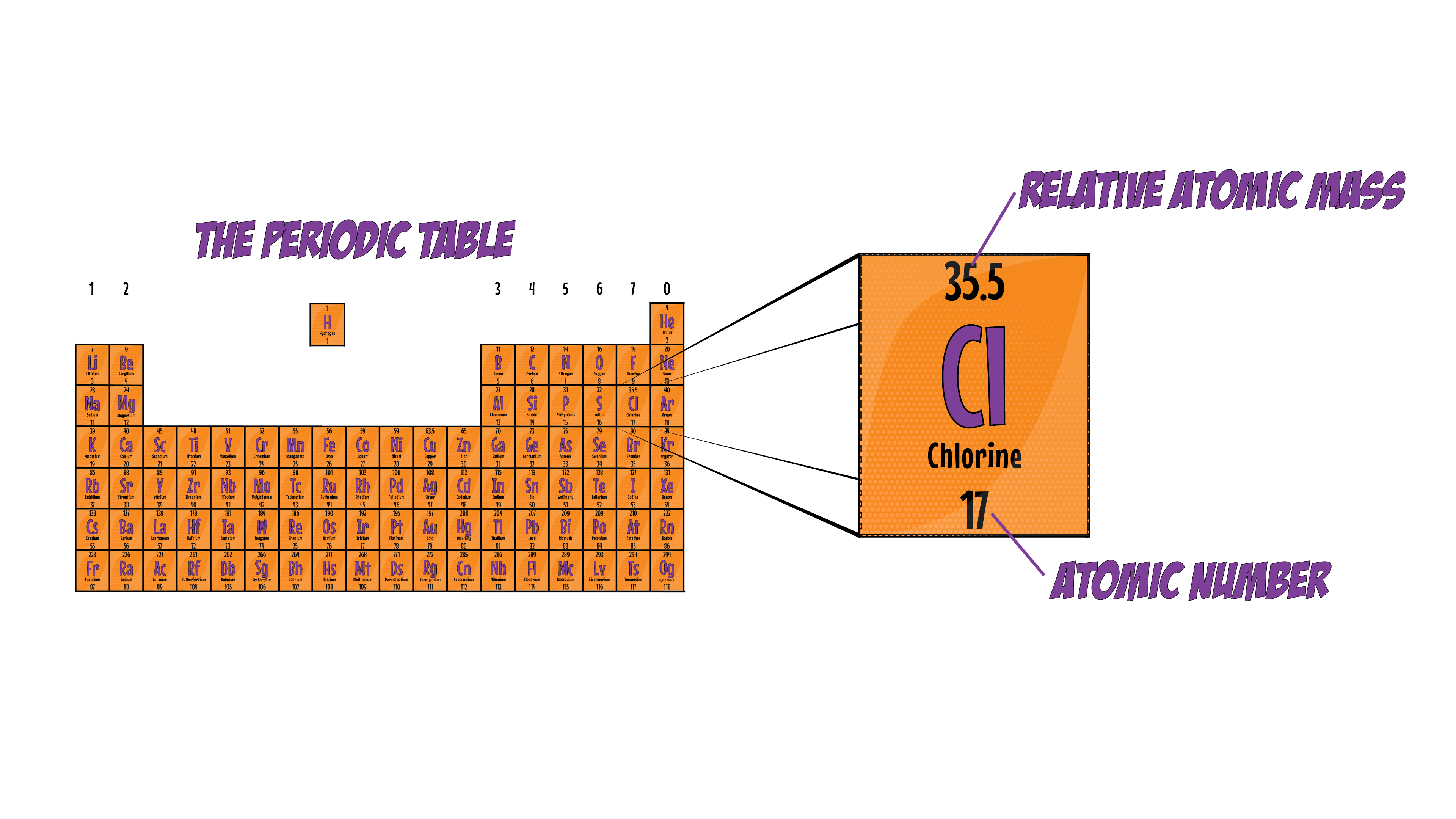
Each element that exists has its own RELATIVE ATOMIC MASS and they are found in the periodic table as the bigger number.
- The RELATIVE ATOMIC MASS (Ar) of an element is calculated as an average mass of all its ISOTOPES, taking into account their ABUNDANCE.
- The ABUNDANCE of an element is HOW COMMON a particular isotope is.
Calculating Relative Atomic Mass
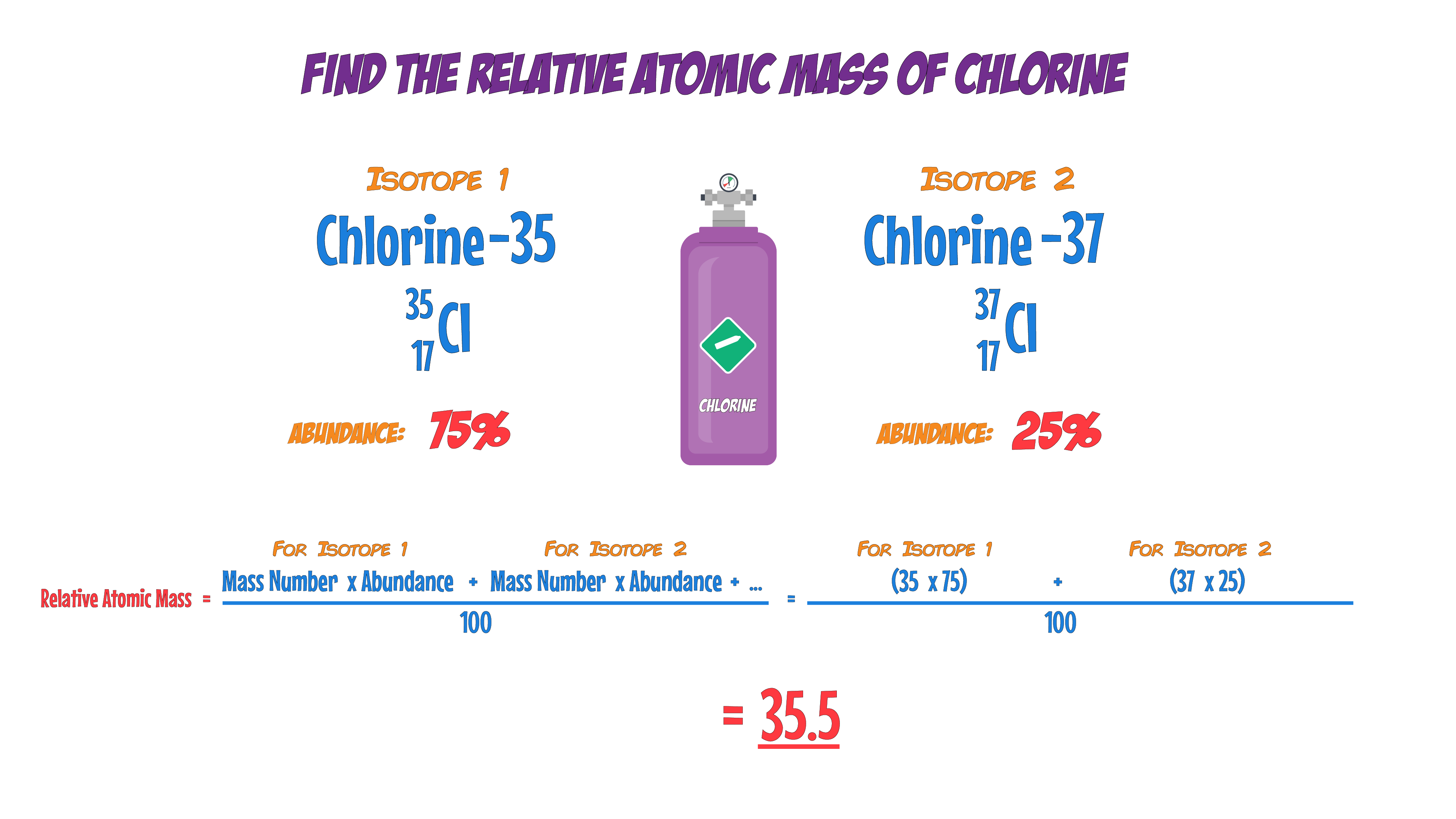
- To calculate the relative atomic mass, use the formula:

As an example let's calculate the Relative Atomic Mass of Chlorine given that there are TWO isotopes present. Chlorine-35 and Chlorine-37 which both have abundances of 75% and 25% respectively.