Biomass
ENERGY from the SUN fuels all life on Earth by providing PRODUCERS, like PLANTS and ALGAE, which have the ability to perform PHOTOSYNTHESIS.
During this process, these organisms convert light energy into GLUCOSE, a type of sugar which stores energy. However, only about 1% of the sunlight energy that hits the plant or algae is used to make glucose.
The glucose is then utilised to form BIOLOGICAL MOLECULES which make up the plant or algae’s biomass. BIOMASS is essentially the mass of living material in organisms and is vital for ecological balance as it gets transferred through the food chain.
Pyramids of Biomass
As you move up each TROPHIC LEVEL in a food chain, there is less ENERGY and less BIOMASS.
A PYRAMID OF BIOMASS visually represents the relative amount of BIOMASS in a food chain.
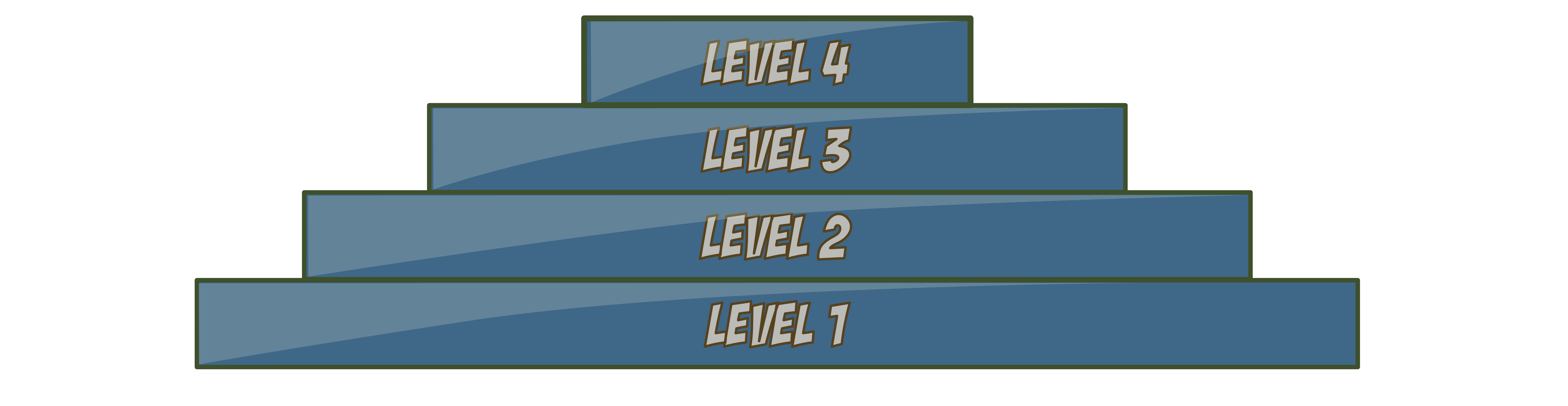
1. The length of the bars represents the amount of biomass per trophic level. This shows how much all the organisms at each level would “weigh” if combined. The larger the biomass, the bigger the bar.
2. At the base of the pyramid, you have the PRIMARY PRODUCERS (like plants or algae), followed by the PRIMARY CONSUMERS (animals eating the producers), and then SECONDARY CONSUMERS (animals eating the primary consumers) etc.
When making a pyramid of biomass:
Remember that each stage should be PROPORTIONALLY REPRESENTED by the size of its bar in the pyramid.
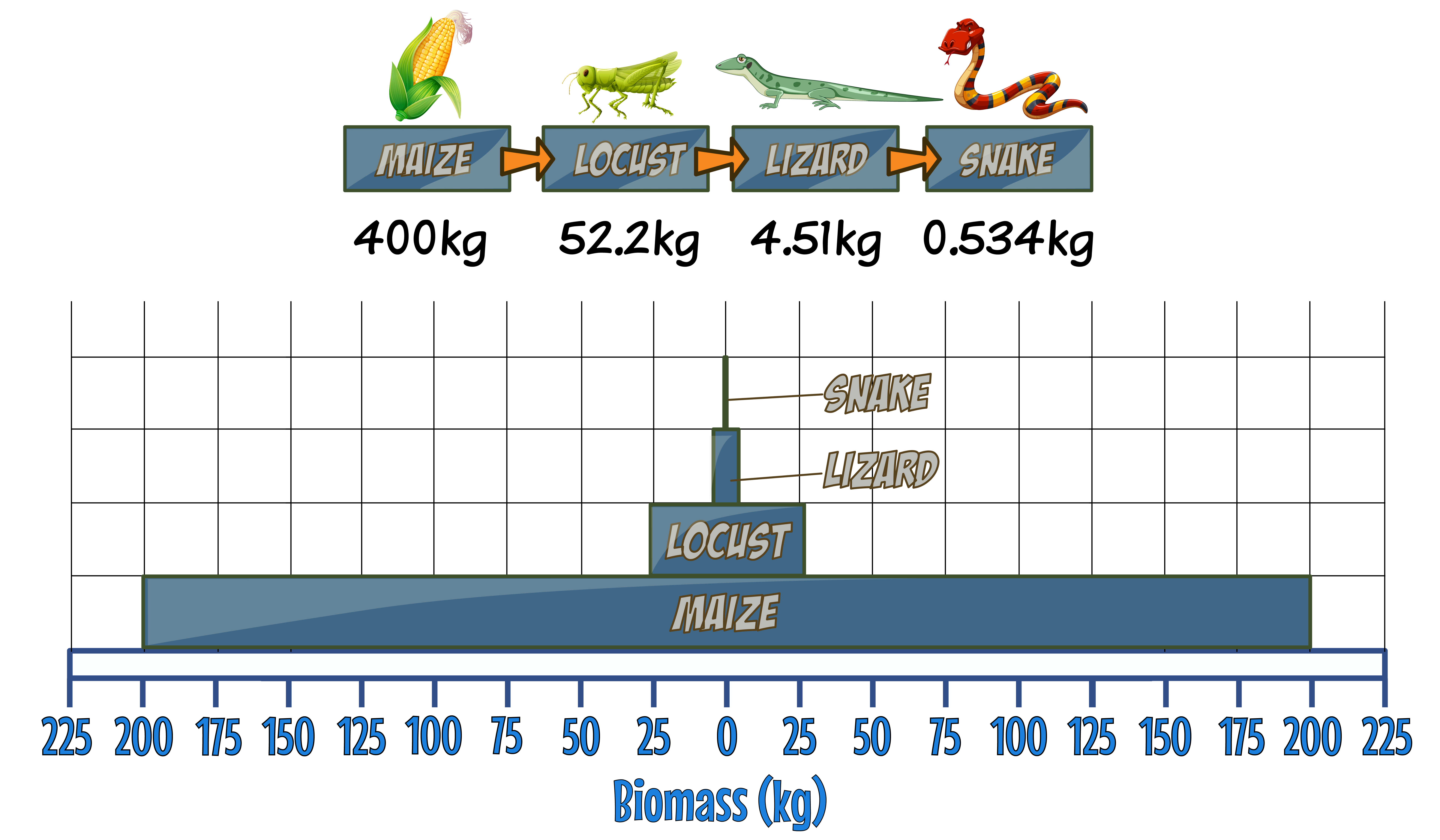
With actual numbers of biomass, you can draw bars of the correct scale to represent each trophic level.
Always maintain the order of organisms as they appear in the food chain when drawing the pyramid.
Each bar must be accurately labelled to reflect the trophic level it represents.
Here's an example:
Transfer of Biomass
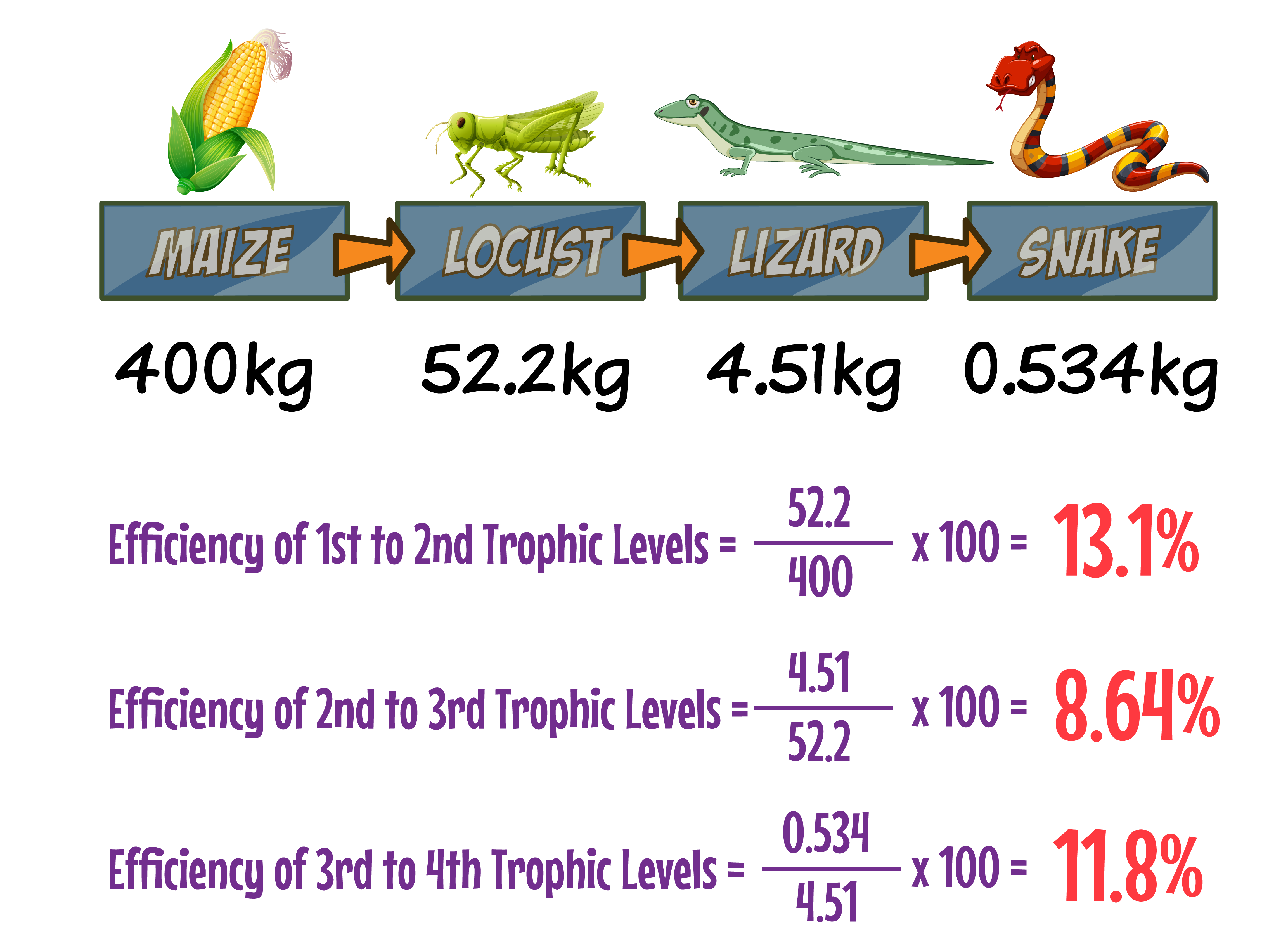
BIOMASS TRANSFER between trophic levels is highly INEFFICIENT. Typically, only about 10% of biomass from one trophic level makes it to the next level. This is because:
- A significant amount of biomass is not consumed or absorbed. Parts of plants and animals, like bones, are NOT EATEN, thus not all biomass is transferred to the next level.
- Not all ingested material is converted into new biomass. Much of it is egested as faeces or lost through metabolic processes as waste products like CARBON DIOXIDE and WATER.
- Biomass used in RESPIRATION to provide energy for movement and warmth is not available to pass on to the next trophic level.
You can calculate EFFICIENCY OF BIOMASS TRANSFER by using the following formula:

Here's an example: