
Deforestation and Land Use
Humans use land for BUILDING, QUARRYING, FARMING, and DISPOSING OF WASTE.
This reduces the land available for OTHER ORGANISMS and can lead to negative environmental effects, such as DEFORESTATION and the destruction of PEAT BOGS.
PEAT BOGS
PEAT BOGS are unique areas of land found in waterlogged and acidic areas.
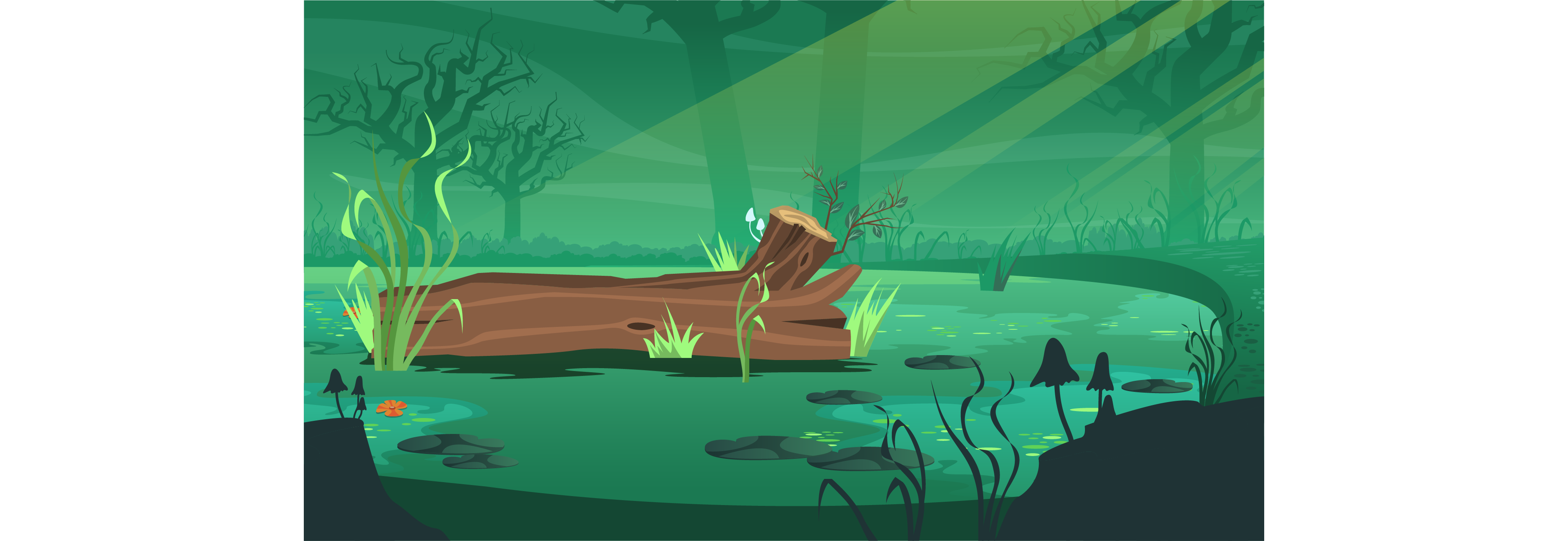
They are essential for several reasons:
- Unlike other environments, the acidic and waterlogged conditions in peat bogs mean that plant material does NOT FULLY DECAY due to a lack of oxygen.
- Over time, this partially decomposed plant matter becomes PEAT, which is a significant CARBON STORE. Instead of releasing carbon dioxide into the atmosphere during decay, peat locks it away.
- These bogs are crucial habitats for a diversity of species, including birds, and play a role in maintaining BIODIVERSITY.
However, peat bogs face threats due to HUMAN ACTIVITIES:
- They are drained for FARMING, which dries out the peat and leads to its decay, RELEASING STORED CARBON.
- Peat is also harvested as a FUEL source and for producing COMPOST, which is used to enhance soil for agricultural production.
The destruction of peat bogs has several negative impacts:
- Drained and decaying peat bogs contribute to GLOBAL WARMING by releasing carbon dioxide.
- As peat is a non-renewable resource formed over millennia, its extraction is NOT SUSTAINABLE.
- The reduction of peat bog areas leads to loss of habitats, reducing BIODIVERSITY.
- The rate of destruction often outpaces the natural formation of peat, leading to unsustainable use.