
Communities
ECOLOGY is all about ORGANISMS and their INTERACTION with the ENVIRONMENT they live in.
KEY TERMINOLOGY IN ECOLOGY
- HABITAT: The specific area where an organism lives, which provides it with its resources.
- POPULATION: All the organisms of one species living in the same habitat.
- COMMUNITY: All the populations of different species that live in the same habitat and interact with each other.
- ABIOTIC FACTORS: The NON-LIVING factors of an environment.
- BIOTIC FACTORS: The LIVING factors of an environment, including all organisms.
- ECOSYSTEM: The interaction of a COMMUNITY of living organisms (BIOTIC) with the non-living (ABIOTIC) parts of their environment.
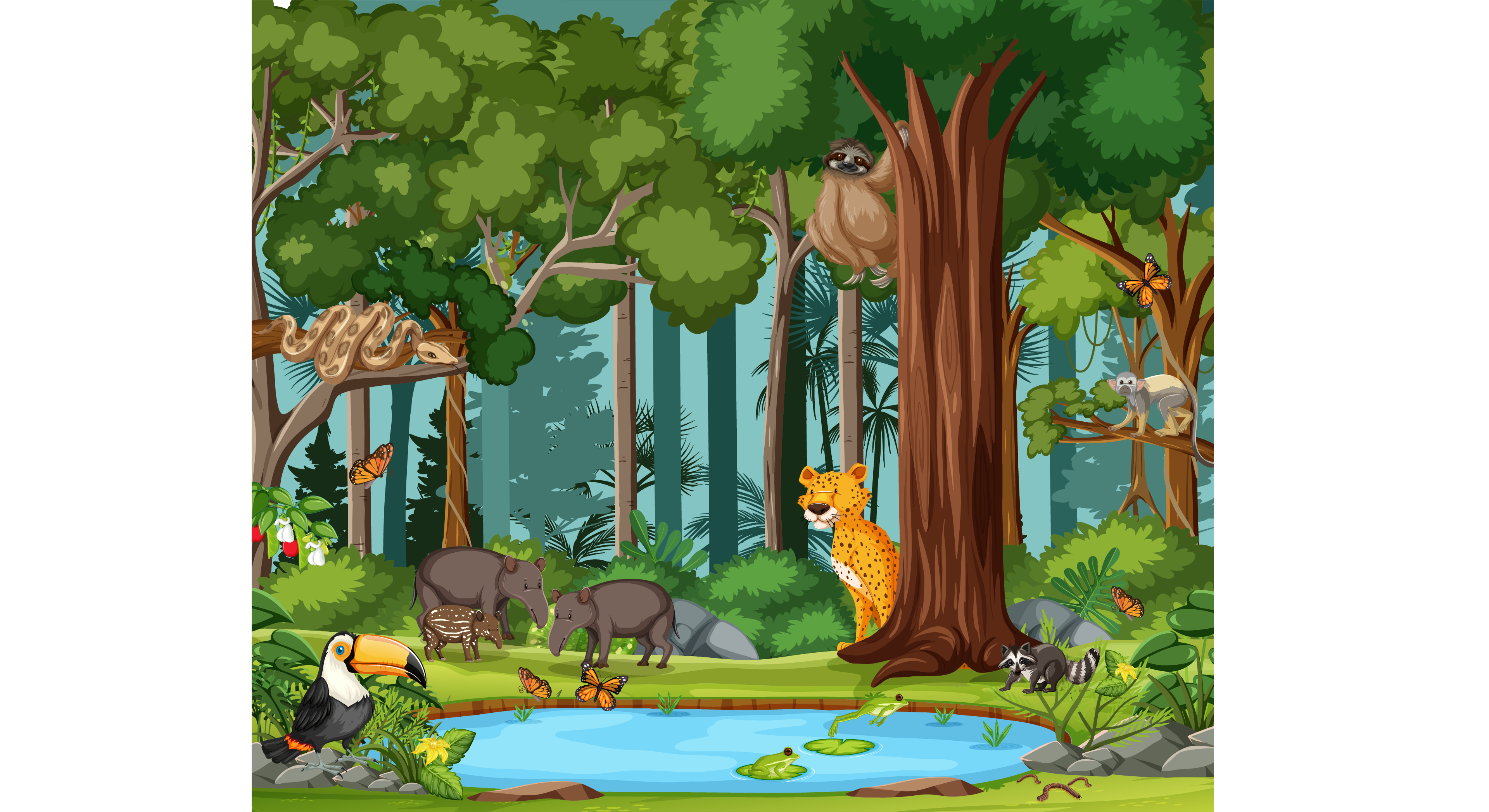
RESOURCE COMPETITION:
Organisms are ADAPTED to their environment, which allows them to survive, reproduce, and compete effectively in their given HABITAT.
But when RESOURCES in the environment are LIMITED, organism need to COMPETE with each other in order to SURVIVE and REPRODUCE.
This can be organisms competing with OTHER species or even their OWN species for the same resources.
Examples of resources include:
IN PLANTS: LIGHT, WATER, SPACE and MINERAL IONS.
IN ANIMALS: FOOD, WATER, MATES, and TERRITORY.
INTERDEPENDENCE AND COMPETITION:
INTERDEPENDENCE in a COMMUNITY, is all the organisms RELYING on each other in order to survive.
For example:
- PREDATORS need their PREY as FOOD SOURCES.
- FLOWERS need INSECTS for POLLINATION.
- PLANTS with fruit need ANIMALS for SEED DISPERSAL.
- HERMIT CRABS needing EMPTY SEASHELLS for SHELTER.
If one of these species is REMOVED from the community, it can have significant effects on the whole COMMUNITY.
A STABLE COMMUNITY is one where species and environmental factors are in equilibrium, allowing population sizes to remain fairly CONSTANT.
FOOD WEBS
Food webs show you what organisms eat what in a COMMUNITY and they can be used to show INTERDEPENDENCE.
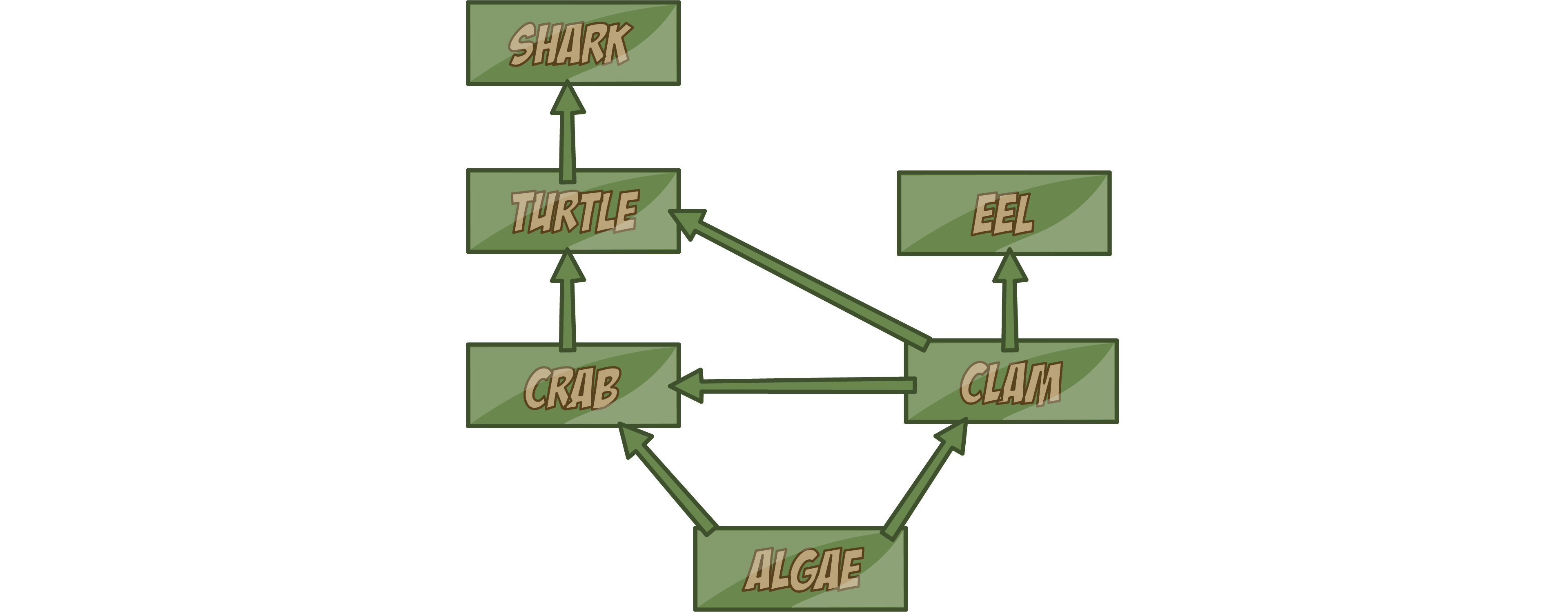
What would happen if the population of the CLAMS were to DECREASE?
- The population of EELS would DECREASE as they have less FOOD.
- The population of ALGAE would INCREASE as there are less CLAMS eating it.
- This could have knock on effects on the CRAB, TURTLE and SHARKS.