
Biological Classification
- CLASSIFICATION is a systematic approach in biology to ORGANISE all living organisms into groups.
- There are several systems we have used to classify organisms. The most used systems have changed over time as our understanding of organisms have developed:
1. LINNAEAN SYSTEM
Traditionally since the 1700s, living things have been classified into groups depending on their structure and characteristics.
The LINNAEAN SYSTEM was developed by CARL LINNAEUS and it classified all the organisms into several stages of sub-divisions.
- Starting with broad KINGDOMS, organisms are classified into progressively specific categories: PHYLUM, CLASS, ORDER, FAMILY, GENUS, and SPECIES.
- Each level of classification, groups organisms that share a set of distinctive characteristics.
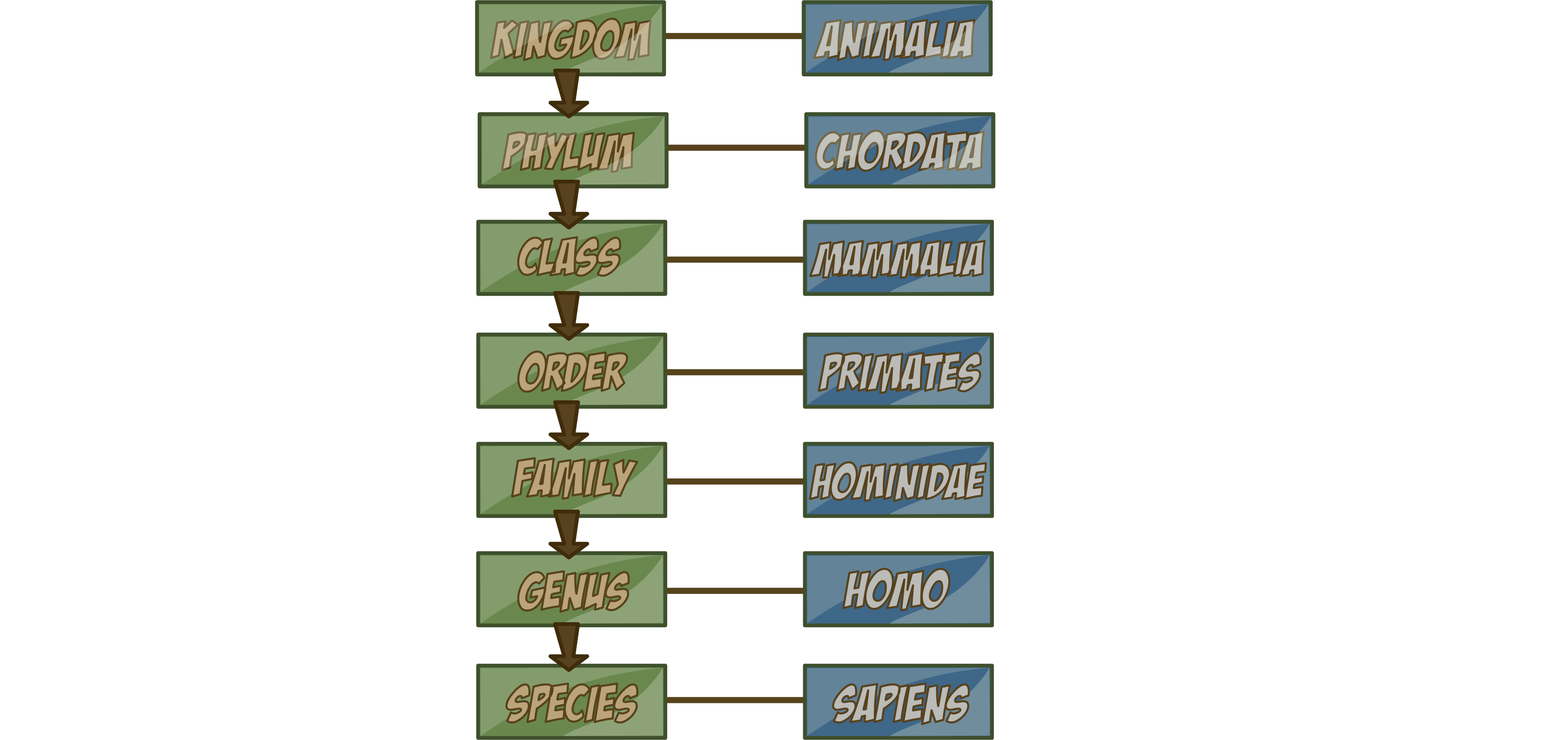
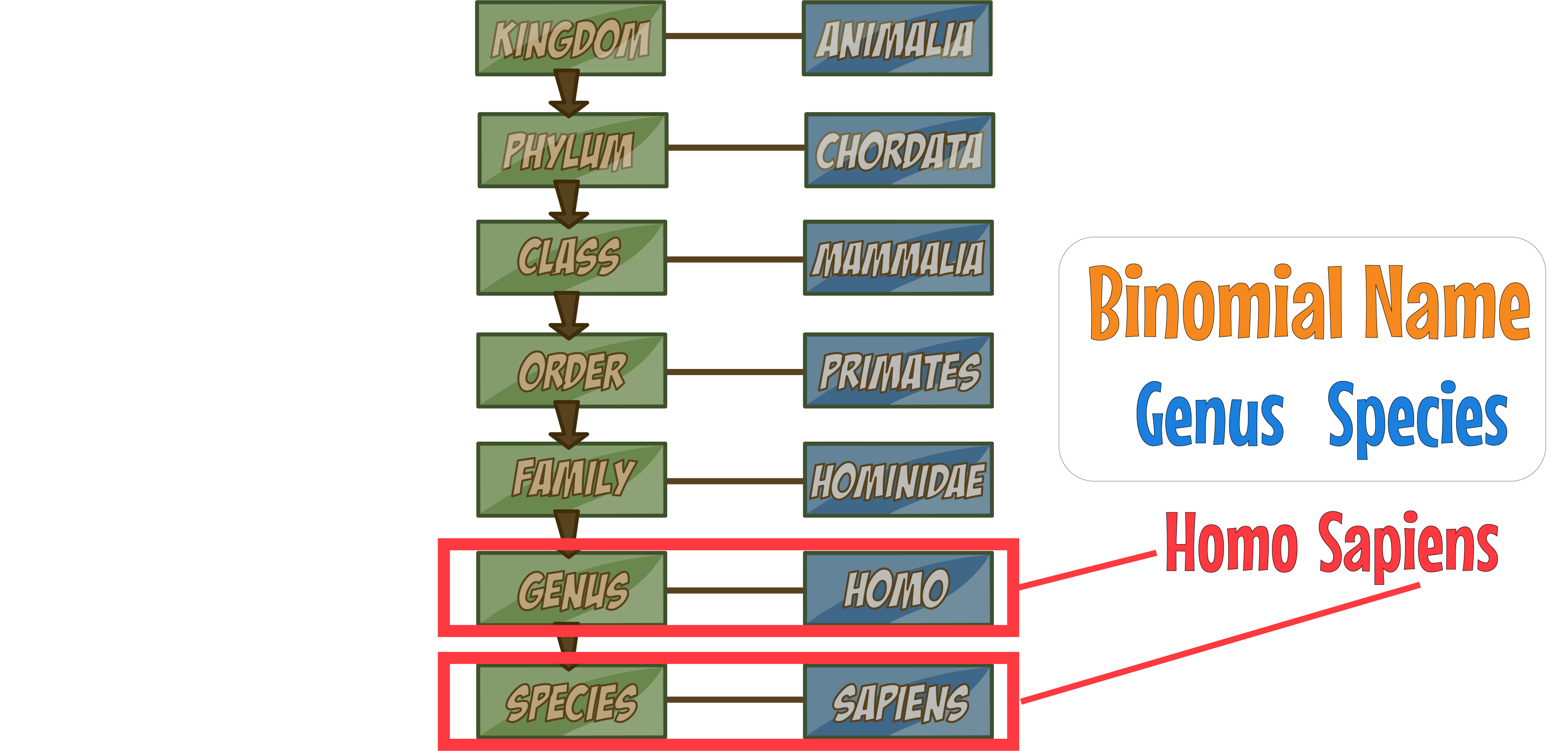
- The BINOMIAL SYSTEM is used to NAME each species by using a unique two-part Latin name, which is consistent across scientific studies and languages.
- The first part of the name is the GENUS and the second part is the SPECIES.
e.g. The binomial name for Humans is HOMO SAPIENS.
As evidence of INTERNAL STRUCTURES of cells became more developed due to improvements in MICROSCOPES, and the understanding of BIOCHEMICAL processes cells progressed, NEW MODELS of classification were proposed.
2.THE THREE-DOMAIN SYSTEM
This system was developed by CARL WOESE in 1990 and was based on evidence available from chemical analysis,
The THREE-DOMAIN SYSTEM recognises THREE fundamental groups of organisms:
- ARCHAEA: Primitive bacteria, often found in extreme environments.
- BACTERIA: True bacteria, including well-known species such as coli.
- EUKARYOTA: Diverse domain including fungi, plants, animals, and protists.
ARCHAEA and BACTERIA often look very similar but they have lots of BIOCHEMICAL DIFFERENCES.
UNDERSTANDING EVOLUTIONARY RELATIONSHIPS
- EVOLUTIONARY TREES, also known as phylogenetic trees, visualise the lineage and connections among different species.
- These diagrams illustrate how closely related different species are and imply the traits that may have been inherited from common ancestors.